Pastoral Guide

New to Catholicism: An Essential Reading & Resource Guide

For converts, returnees, and the seriously curious

16 curated items 4 sections All items on Amazon

As an Amazon Associate, CatholicSay Mart earns from qualifying purchases made through the links below, at no extra cost to you.

Whether you have recently converted, are completing RCIA, have been a nominal Catholic who is returning to the faith after years away, or are simply a serious person who is looking at the Church from outside and asking whether any of it is true — you face the same beautiful problem. The Catholic tradition is vast, centuries deep, and internally consistent in ways that take time to see. Everything connects to everything else. The sacraments explain the commandments; the commandments explain the liturgy; the liturgy explains the Creed; the Creed explains the sacraments. It is a circle, and you can enter it at any point.

The danger at the beginning is to mistake the map for the territory — to learn Catholic vocabulary and category labels without encountering the living tradition that gave rise to them. This collection is ordered to prevent that mistake. We recommend beginning not with the Catechism but with Augustine's Confessions: encounter the tradition through its greatest mind, at his most personal and vulnerable, before you study its systematic summary. Or begin with Chesterton's Orthodoxy if you approach from a background of secular scepticism. Or begin with Scott Hahn's Rome Sweet Home if you come from Evangelical Christianity and need to see how a serious biblical scholar arrived at Rome.

On sacramentals: as a new or returning Catholic, it matters what you have in your home and on your body. The tradition has always insisted that the material world — blessed objects, consecrated water, sacred images, liturgical vestments — participates in the work of sanctification. Begin with the essentials: a crucifix in your home, a Miraculous Medal, a rosary you will actually use. These are not superstitions; they are the Church's way of hallowing matter, and they have been doing real work in the lives of the faithful for centuries.

Where to Start Reading

One of these three books should be your first: Rome Sweet Home if you come from an Evangelical background; Orthodoxy if you come from secular scepticism; the Confessions if you are drawn to the great minds of the tradition and want to meet the best of them at his most honest. A Map of Life is the short overview that will give you the whole territory quickly.

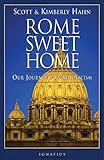
Cover of Rome Sweet Home

Rome Sweet Home

Ignatius Press

A Presbyterian theologian reads his way to Rome through the Bible alone — and takes his reluctant wife with him.

Scott Hahn was a convinced anti-Catholic Presbyterian seminarian who, while preparing a sermon against the Catholic doctrine of justification, found to his horror that the Scriptures supported the Catholic position. His conversion — and his wife Kimberly's long, agonising, ultimately joyful journey to follow him — is told here in alternating voices. It is not primarily an argument but a narrative, and it is the more persuasive for being so. It has brought more Evangelicals and Protestants into the Catholic Church than any other book of the past forty years. For Catholics who have family members in other Christian traditions, it is an invaluable gift.

View on Amazon →
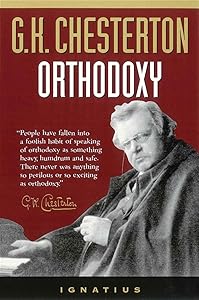
Cover of Orthodoxy

Orthodoxy

Ignatius Press

A journalist reasons his way from agnosticism to orthodoxy through pure logic, wit, and the paradoxes of the modern world.

Chesterton wrote Orthodoxy as the sequel to Heretics, in which he demolished the philosophical foundations of his contemporaries. His publisher insisted he say what he himself believed. The result is one of the most unusual works of Christian apologetics ever written: not an argument from authority or Scripture, but a demonstration that Christianity answers the questions reality poses that no secular system can. The famous chapter "The Suicide of Thought" dissects how modernism destroys the very tools of reason it claims to use. The chapter on the romance of orthodoxy argues that faith is not a cage but a dance. No book has made more converts in the twentieth century than this one.

View on Amazon →
Cover of The Confessions

The Confessions

Ignatius Press

The greatest spiritual autobiography in history — the story of a brilliant, tortured intellectual who found rest in God alone.

Written around AD 400, the Confessions is simultaneously a prayer, an autobiography, a philosophical treatise on time and memory, and the most honest account of human moral failure and divine mercy ever composed. Augustine describes his years of sexual sin, intellectual pride, his time among the Manichees, his conversion through the preaching of Ambrose and the influence of his mother Monica, and finally his encounter with the God who is "closer to me than I am to myself." The famous opening — "our heart is restless until it rests in Thee" — remains the most accurate description of the human condition in any language.

View on Amazon →
Cover of A Map of Life

A Map of Life

Ignatius Press

The most compact and clear overview of the Catholic worldview ever written — 170 pages that cover everything.

Frank Sheed was the founder of Sheed & Ward publishing and one of the great Catholic apologists of the twentieth century. A Map of Life was his first book, written when he was thirty. It covers, in 170 pages, the entire Catholic account of reality: God, creation, the soul, the Incarnation, the Church, the sacraments, the commandments, and the Last Things. It is not a deep book — it is a wide one, designed to give the newly converted or newly serious Catholic a sense of the whole territory before they begin to explore any part in depth. C.S. Lewis said it was indispensable.

View on Amazon →
Cover of Catechism of the Catholic Church: Second Edition

Catechism of the Catholic Church: Second Edition

Over 3 million copies sold! Essential reading for Catholics of all walks of life. Here it is: the first new Catechism of the Catholic Church in more than 400 years, a complete summary of what Catholics around the world commonly believe. The Catechism draws on the Bible, the Mass, the Sacraments, Church tradition and teaching, and the lives of saints. It comes with a complete index, footnotes and cross-references for a fuller understanding of every subject. The word catechism means “instruction”—this book will serve as the standard for all future catechisms. Using the tradition of explaining what the Church believes (the Creed), what she celebrates (the Sacraments), what she lives (the Commandments), and what she prays (the Lord’s Prayer), the Catechism of the Catholic Church offers challenges for believers and answers for all those interested in learning about the mystery of the Catholic faith. The Catechism of the Catholic Church is a positive, coherent, and contemporary map for our spiritual journey toward transformation. Read more if(window.mix_csa){window.mix_csa('[cel_widget_id="tell-amazon-desktop_DetailPage_5"]', '#CardInstanceZv7GoX3Y1rpM0T9YmZEF1Q')('mark', 'bb')} if(window.uet){window.uet('bb','tell-amazon-desktop_DetailPage_5',{wb: 1})} ._tell-amazon-desktop_style_tell_amazon_icon_core_report__Fs1ah{color:#0f1111;display:inline-block;height:20px;margin-right:4px;width:20px}._tell-amazon-desktop_style_tell_amazon_icon_share_sms__1ZLbZ{margin-right:8px}._tell-amazon-desktop_style_tell_amazon_modal_spinner__3bz5K,._tell-amazon-desktop_style_tell_amazon_popover_inner__3tPIV{padding:20px 24px 0;width:65vw}._tell-amazon-desktop_style_tell_amazon_modal_spinner__3bz5K{height:15vh;margin-top:10vh;text-align:center}._tell-amazon-desktop_style_tell_amazon_no_email_alert__1t6PT{margin-bottom:60px}a[id^=tellAmazonDropdown],a[id^=tellAmazon_][id*=Dropdown]{white-space:normal!important} ._tell-amazon-desktop_style_tell_amazon_component_preload__2jBs4{display:none}._tell

View on Amazon →

The Essential Reference Shelf

Every serious Catholic home needs these. You will not read the Catechism cover to cover immediately, but you will reach for it repeatedly. The Ignatius Study Bible is the essential companion to Scripture reading. On the Incarnation is the patristic text every new Catholic should read early.

Cover of Catechism of the Catholic Church (2nd Edition)

Catechism of the Catholic Church (2nd Edition)

USCCB

The authoritative summary of everything the Catholic Church teaches, promulgated by Pope St. John Paul II.

The Catechism of the Catholic Church is not a dry reference work — it is the systematic statement of the Faith in its fullness, ordered under four pillars: the Creed, the Sacraments, the Commandments, and Prayer. Pope John Paul II called it "a sure norm for teaching the faith." Every Catholic home needs a copy, and it repays careful reading rather than mere consultation. The second edition incorporates corrections and minor additions from the 1997 Latin typical edition. It is a book to live with for a lifetime.

View on Amazon →
Cover of The Ignatius Catholic Study Bible: New Testament

The Ignatius Catholic Study Bible: New Testament

Ignatius Press

The most thorough Catholic study Bible in print, with detailed commentary rooted in the Fathers and the Magisterium.

Every book of the New Testament is presented in the RSV-2CE translation alongside comprehensive introductions, verse-by-verse commentary, and word studies. Scott Hahn and Curtis Mitch draw consistently on the Church Fathers, the councils, and modern biblical scholarship — never allowing critical methodology to displace the theological reading that the Church requires. The annotations explain typological connections, address Protestant proof-texts, and integrate the patristic tradition seamlessly. This is the Bible Catholics who want to go deep should have open on their desk.

View on Amazon →
Cover of On the Incarnation

On the Incarnation

St. Vladimir's Seminary Press

The fourth-century masterwork that defined the theology of the Incarnation — written when Athanasius was a young deacon.

Written around AD 318, before Athanasius became bishop and long before the Arian controversy that would dominate his life, this short treatise is the most lucid patristic account of why God became man. C.S. Lewis wrote a famous preface for this edition, warning against the habit of reading only modern books and exhorting readers to go directly to the sources. Athanasius's argument is elegant: humanity had fallen into dissolution; only the Author of life could restore life; therefore the Creator of matter had to enter matter. Profound and accessible in a single afternoon's reading.

View on Amazon →
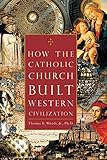
Cover of How the Catholic Church Built Western Civilization

How the Catholic Church Built Western Civilization

Regnery History

The historical case for the Church as the founding institution of universities, hospitals, science, law, and the arts.

The secular narrative holds that the medieval Church suppressed science and reason until the Enlightenment freed them. Woods dismantles this narrative chapter by chapter, drawing on mainstream academic scholarship rather than partisan sources. The Church founded the first universities, invented the hospital system, produced the scientific revolution through the work of priest-scholars like Copernicus and Mendel, developed international law through the School of Salamanca, and preserved classical civilisation through the monasteries. This is the essential historical apologetics book for Catholics who encounter the standard anti-Catholic historical arguments.

View on Amazon →
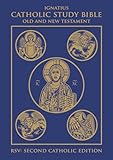
Cover of Ignatius Catholic Study Bible: Old and New Testaments

Ignatius Catholic Study Bible: Old and New Testaments

Ignatius Press

The whole of Scripture, Old Testament and New, is being published in a single volume, featuring the beautiful Revised Standard Version Second Catholic Edition (RSV2CE) translation along with introductions, outlines, and explanatory notes for each biblical book, extensive cross references to the Catechism of the Catholic Church, and an array of visual and educational aids to bring the message of Scripture into clear focus for Catholic readers.More than any other study edition of the Bible on the market, the Ignatius Catholic Study Bible is "like a householder who brings out of his treasure what is new and what is old" (Mt 13:52). It draws insights from the best of modern scholarship as well as the best of the Catholic tradition of interpretation through the ages.It explains the historical, cultural, literary, and archaeological background of Scripture, while at the same time looking to the Fathers, Doctors, and Councils of the Church for insight into its theological and spiritual teachings. The result is a veritable library of Bible study resources, all under one cover, designed to help readers understand the written Word of God and apply its lessons to their lives today. It is simply the most ambitious undertaking of its kind in our generation. Key Features:Introductions and Outlines for every book of the Bible17,500+ explanatory footnotes for every chapter of the Bible20+ topical essays on major topics in the Bible140+ word studies on the most important vocabulary in the Bible25+ charts on the chronology, kings, parables, and other features of the Bible50+ maps on the geography of the Bible  1,700+ cross-references to the Catechism of the Catholic Church10 point type size, 8 point type for footnotesThe Ignatius Press Study Bible has been developed by leading Scripture scholars:Scott Hahn, Ph.D., General Editor, St. Paul Center Curtis J. Mitch, M.A., Co-EditorContributing Authors: Kelly Anderson, S.S.L., Ph.D., Saint Charles Borromeo Seminary Michael Barber, Ph.D.,

View on Amazon →

Living the Faith: Beginning the Interior Life

Reading about the faith and living it are different things. Introduction to the Devout Life is the book specifically written for people in exactly your position: laypeople living in the world who want to be saints, not monks. Begin it early and return to it often.

Cover of Introduction to the Devout Life

Introduction to the Devout Life

Ignatius Press

The most practical guide to Catholic holiness ever written — specifically for laypeople living in the world.

Written in 1609 for Madame de Charmoisy, a lady of the French court, Introduction to the Devout Life remains the definitive manual of lay Catholic spirituality. Francis de Sales demolishes the assumption that sanctity is for monks and nuns: "It is an error, nay rather a heresy, to wish to exclude devout life from the regiment of soldiers, the mechanic's workshop, the court of princes." The book is organized in five parts covering aspiration, pruning vices, the virtues, temptation, and renewal. Part 3, Chapter 12 — on chastity — is among the most practically useful things ever written on the subject. Begin here if you are new to the interior life.

View on Amazon →
Cover of The Imitation of Christ

The Imitation of Christ

Ignatius Press

Second only to the Bible in Catholic circulation for six centuries — four books on contempt of the world and union with Christ.

No book save the Bible has been more widely read among Catholics over the past five hundred years. Written around 1420 by a Dutch Augustinian monk, it consists of four books on the interior life, interior conversation, interior consolation, and the Blessed Sacrament. Book I, Chapter 6 — on disordered affections — is perhaps the most concise and cutting diagnosis of what the spiritual tradition calls concupiscence. Book III contains the sustained interior dialogue between Christ and the soul that has formed more contemplatives than any other text outside Scripture. Read one chapter a day, slowly.

View on Amazon →

The Essential Sacramentals for a Catholic Home

A crucifix in every room, a Miraculous Medal worn daily, a rosary in your pocket, and a Brown Scapular once you are ready to make the Marian consecration it represents. These are not extras; they are the basic equipment of the Catholic life.

Cover of San Damiano Wall Crucifix (12 inch)

San Damiano Wall Crucifix (12 inch)

Autom

A reproduction of the crucifix before which Francis of Assisi heard Christ speak — the icon of Franciscan spirituality.

The San Damiano Crucifix is the icon before which Francis of Assisi was praying when, in 1205, he heard the voice of Christ saying: "Francis, repair my Church." It is a Byzantine-style painted crucifix, produced originally in the twelfth century, showing Christ robed and crowned rather than agonising — the triumphant Christus Rex who conquers death. This 12-inch reproduction is suitable for a bedroom, study, or prayer corner. A crucifix on the wall is not mere decoration; it is a daily confrontation with the central claim of Christianity — that God entered suffering and transfigured it — and it makes the rooms in which we live into places of prayer. The tradition has always recommended a crucifix in the bedroom specifically.

View on Amazon →
Cover of Sterling Silver Miraculous Medal Necklace

Sterling Silver Miraculous Medal Necklace

Bliss Manufacturing

The medal given to St. Catherine Labouré by Our Lady in 1830 — with the prayer "O Mary, conceived without sin."

The Miraculous Medal originates in a series of apparitions of Our Lady to a Vincentian novice, Catherine Labouré, in Paris in 1830. Our Lady appeared standing on a globe, rays of light streaming from rings on her fingers — those rays, she explained, were graces she obtained for those who asked for them. She directed that a medal be struck with the image and the words: "O Mary, conceived without sin, pray for us who have recourse to thee." The medal has been associated with countless remarkable conversions and healings since 1832 — including that of the Jewish banker Alphonse Ratisbonne, whose sudden conversion in Rome in 1842 is one of the best-documented in modern history. Wearing it is a constant act of invocation.

View on Amazon →
Cover of Brown Scapular of Our Lady of Mount Carmel

Brown Scapular of Our Lady of Mount Carmel

Monastery Products

The Carmelite scapular: a pledge of Marian consecration and the most ancient popular sacramental in the Western Church.

According to Carmelite tradition, Our Lady appeared to St. Simon Stock in 1251 and promised that those who died wearing the Brown Scapular would not suffer eternal fire. This is known as the Sabbatine Privilege. Whatever one makes of the private revelation, the scapular is a sacramental approved by the Church — a physical sign of consecration to Mary, of enrollment under her protection, and of a commitment to live according to her spirit. The Carmelite tradition connects it specifically with chastity and perseverance. To wear the scapular is not superstition; it is to carry a constant reminder of Marian consecration on the body. It should be blessed and enrolled in by a priest.

View on Amazon →
Cover of Bethlehem Olive Wood Rosary — Holy Land

Bethlehem Olive Wood Rosary — Holy Land

Creed

Hand-carved from Bethlehem olive wood — each bead comes from the same land where Christ walked.

Olive wood rosaries from Bethlehem are among the most meaningful sacramentals available to Western Catholics, not for any magical property but for the unmistakable sense of connection they provide. The olive tree is among the most ancient symbols in Christian iconography — the Garden of Gethsemane was an olive grove. These rosaries are hand-carved by artisans in the Bethlehem area, where the Christian community has maintained workshops producing religious goods for pilgrims and the faithful for centuries. The beads are smooth and comfortable for extended use. The cross typically features a carved image of the Holy Land. A certificate of origin is usually included.

View on Amazon →
Affiliate Disclosure

CatholicSay Mart participates in the Amazon Services LLC Associates Program, an affiliate advertising program designed to provide a means for sites to earn advertising fees by advertising and linking to Amazon.com. As an Amazon Associate, CatholicSay Mart earns from qualifying purchases. This does not affect the price you pay. All product recommendations on this page were made on the basis of pastoral and theological merit, not commercial consideration.