Pastoral Guide

Struggling with Doubt: A Catholic Resource Guide

Resources for a crisis of faith

12 curated items 4 sections All items on Amazon

As an Amazon Associate, CatholicSay Mart earns from qualifying purchases made through the links below, at no extra cost to you.

Doubt is not the opposite of faith; it is part of the human condition under faith. What the tradition distinguishes is involuntary doubt — the unsettling feeling that one's beliefs may not be true — from voluntary doubt, which is a wilful rejection of what has been established. If you are here, you are likely suffering from the former: the kind of doubt that arrives unbidden, that disturbs rather than liberates, that leaves you feeling spiritually unmoored. This form of doubt is not a sin. It may even be, as several of the Doctors of the Church have argued, a form of grace: the death of a faith that was too comfortable, too cultural, too based on feeling rather than conviction.

The Catholic intellectual tradition is the richest in Christian history, and it is extraordinarily well equipped to handle objections. Augustine was a sincere seeker who spent nine years among the Manichees before conversion. Thomas Aquinas, in the Summa, begins every article by presenting the strongest possible objections to Catholic teaching before answering them — the greatest act of intellectual honesty in theological history. Newman converted late in life after exhaustive historical study. Chesterton was a young agnostic who reasoned his way to orthodoxy. Scott Hahn was a convinced anti-Catholic seminarian who read his way to Rome through the Bible alone. You are in distinguished company.

The books here work at different levels: some are emotional and existential (Augustine, Merton, Lewis); some are rigorously intellectual (Aquinas, Chesterton); some are personal accounts of the journey from doubt to conviction (Newman, Hahn). The sacramentals recommended are not for those who already believe easily — they are for those who need something physical to hold on to while the mind works through what the heart is not yet sure of. Begin with what matches your current mood, not with what seems most respectable.

The Personal Accounts: Doubt Lived from the Inside

These are not arguments but stories — accounts of people who faced the same doubts and came through them. They are more persuasive than formal arguments precisely because they do not suppress the difficulty.

Cover of The Confessions

The Confessions

Ignatius Press

The greatest spiritual autobiography in history — the story of a brilliant, tortured intellectual who found rest in God alone.

Written around AD 400, the Confessions is simultaneously a prayer, an autobiography, a philosophical treatise on time and memory, and the most honest account of human moral failure and divine mercy ever composed. Augustine describes his years of sexual sin, intellectual pride, his time among the Manichees, his conversion through the preaching of Ambrose and the influence of his mother Monica, and finally his encounter with the God who is "closer to me than I am to myself." The famous opening — "our heart is restless until it rests in Thee" — remains the most accurate description of the human condition in any language.

View on Amazon →
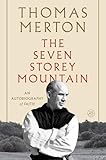
Cover of The Seven Storey Mountain

The Seven Storey Mountain

Harcourt

The most influential Catholic autobiography of the twentieth century — a Columbia intellectual's conversion and entry into a Cistercian monastery.

Merton was the son of a New Zealand painter, raised without religion, educated at Cambridge and Columbia, a man of considerable intellectual vanity and sexual disorder. His conversion to Catholicism and subsequent entry into the Trappist monastery of Gethsemani in Kentucky was, to his own contemporaries, inexplicable. The Seven Storey Mountain is his account of that journey, written before he was thirty, with the unselfconsciousness of a man still surprised by his own conversion. It sold 600,000 copies in its first year. Evelyn Waugh, who edited the British edition, called it the best spiritual autobiography since Newman's Apologia. It remains a document for any serious person considering whether the contemplative life answers the questions the secular life cannot.

View on Amazon →
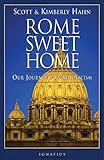
Cover of Rome Sweet Home

Rome Sweet Home

Ignatius Press

A Presbyterian theologian reads his way to Rome through the Bible alone — and takes his reluctant wife with him.

Scott Hahn was a convinced anti-Catholic Presbyterian seminarian who, while preparing a sermon against the Catholic doctrine of justification, found to his horror that the Scriptures supported the Catholic position. His conversion — and his wife Kimberly's long, agonising, ultimately joyful journey to follow him — is told here in alternating voices. It is not primarily an argument but a narrative, and it is the more persuasive for being so. It has brought more Evangelicals and Protestants into the Catholic Church than any other book of the past forty years. For Catholics who have family members in other Christian traditions, it is an invaluable gift.

View on Amazon →

The Intellectual Case: Arguments for Catholicism

For those who need reasons before they can believe, or who face a particular argument against the faith, these are the essential works. Chesterton works by logic and wit; Lewis by analogy and imagination; the Catechism by comprehensive systematic statement.

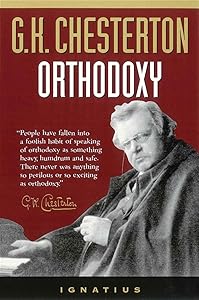
Cover of Orthodoxy

Orthodoxy

Ignatius Press

A journalist reasons his way from agnosticism to orthodoxy through pure logic, wit, and the paradoxes of the modern world.

Chesterton wrote Orthodoxy as the sequel to Heretics, in which he demolished the philosophical foundations of his contemporaries. His publisher insisted he say what he himself believed. The result is one of the most unusual works of Christian apologetics ever written: not an argument from authority or Scripture, but a demonstration that Christianity answers the questions reality poses that no secular system can. The famous chapter "The Suicide of Thought" dissects how modernism destroys the very tools of reason it claims to use. The chapter on the romance of orthodoxy argues that faith is not a cage but a dance. No book has made more converts in the twentieth century than this one.

View on Amazon →
Cover of The Everlasting Man

The Everlasting Man

Ignatius Press

The sweeping reply to materialist history: humanity is not an animal that evolved religion, and Christ is not a myth.

Written as a direct reply to H.G. Wells's Outline of History, The Everlasting Man is a two-part argument: that humanity is not a particularly clever animal (Part I) and that Christ is not a particularly important human teacher (Part II). Both arguments work by the same method: taking the secular narrative with full seriousness and then showing that it collapses under its own weight. The second part, on the Incarnation, contains what may be the most elegant argument for the uniqueness of Christ ever written by a layman. C.S. Lewis read this book as an atheist and said it began the process that ended in his conversion.

View on Amazon →
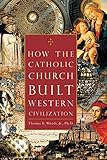
Cover of How the Catholic Church Built Western Civilization

How the Catholic Church Built Western Civilization

Regnery History

The historical case for the Church as the founding institution of universities, hospitals, science, law, and the arts.

The secular narrative holds that the medieval Church suppressed science and reason until the Enlightenment freed them. Woods dismantles this narrative chapter by chapter, drawing on mainstream academic scholarship rather than partisan sources. The Church founded the first universities, invented the hospital system, produced the scientific revolution through the work of priest-scholars like Copernicus and Mendel, developed international law through the School of Salamanca, and preserved classical civilisation through the monasteries. This is the essential historical apologetics book for Catholics who encounter the standard anti-Catholic historical arguments.

View on Amazon →
Cover of Catechism of the Catholic Church (2nd Edition)

Catechism of the Catholic Church (2nd Edition)

USCCB

The authoritative summary of everything the Catholic Church teaches, promulgated by Pope St. John Paul II.

The Catechism of the Catholic Church is not a dry reference work — it is the systematic statement of the Faith in its fullness, ordered under four pillars: the Creed, the Sacraments, the Commandments, and Prayer. Pope John Paul II called it "a sure norm for teaching the faith." Every Catholic home needs a copy, and it repays careful reading rather than mere consultation. The second edition incorporates corrections and minor additions from the 1997 Latin typical edition. It is a book to live with for a lifetime.

View on Amazon →
Cover of A Map of Life

A Map of Life

Ignatius Press

The most compact and clear overview of the Catholic worldview ever written — 170 pages that cover everything.

Frank Sheed was the founder of Sheed & Ward publishing and one of the great Catholic apologists of the twentieth century. A Map of Life was his first book, written when he was thirty. It covers, in 170 pages, the entire Catholic account of reality: God, creation, the soul, the Incarnation, the Church, the sacraments, the commandments, and the Last Things. It is not a deep book — it is a wide one, designed to give the newly converted or newly serious Catholic a sense of the whole territory before they begin to explore any part in depth. C.S. Lewis said it was indispensable.

View on Amazon →

When Doubt Comes from Suffering: The Ecclesial Crisis

For many Catholics today, doubt is not primarily philosophical — it arises from the Church's own failures: abuse, corruption, hypocrisy. These books address that form of doubt directly.

Cover of Letter to a Suffering Church

Letter to a Suffering Church

Word on Fire

A contemporary bishop addresses the crisis in the Church with clarity, anger, sorrow, and hope.

Written in the wake of the 2018 clergy abuse crisis, this short book takes head-on the question that many Catholics are quietly asking: how can I remain in a Church that has done this? Barron's answer is not complacency or institutional defensiveness. He walks through the history of corruption and reform in the Church — from the selling of indulgences to the Borgia papacy — to argue that the pattern of sin and purification is itself biblical, and that leaving the Church because of its sinful members is precisely what the enemy of souls would want. It is direct, honest, and written by a man who is clearly angry as well as faithful.

View on Amazon →
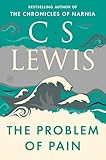
Cover of The Problem of Pain

The Problem of Pain

HarperOne

The intellectual account of suffering: why a good God permits it, and what it accomplishes in a human soul.

Written twenty years before A Grief Observed and from an entirely different vantage point, The Problem of Pain is a cool, systematic treatment of the philosophical problem of suffering. Lewis examines divine omnipotence, goodness, human wickedness, animal pain, and heaven in turn. The famous chapter on human pain argues that suffering is the only possible means by which God can communicate to a soul that has made itself its own centre. This is the book for those who need an argument before they can feel; A Grief Observed is for those who feel first and think second. Many readers benefit from both, read in sequence.

View on Amazon →

Something to Hold

When the mind is not yet persuaded and the feelings offer no consolation, physical objects of devotion can serve as anchors — visible, tangible reminders of what one is struggling to believe. The tradition has always provided these. Wear them without shame.

Cover of Sterling Silver Miraculous Medal Necklace

Sterling Silver Miraculous Medal Necklace

Bliss Manufacturing

The medal given to St. Catherine Labouré by Our Lady in 1830 — with the prayer "O Mary, conceived without sin."

The Miraculous Medal originates in a series of apparitions of Our Lady to a Vincentian novice, Catherine Labouré, in Paris in 1830. Our Lady appeared standing on a globe, rays of light streaming from rings on her fingers — those rays, she explained, were graces she obtained for those who asked for them. She directed that a medal be struck with the image and the words: "O Mary, conceived without sin, pray for us who have recourse to thee." The medal has been associated with countless remarkable conversions and healings since 1832 — including that of the Jewish banker Alphonse Ratisbonne, whose sudden conversion in Rome in 1842 is one of the best-documented in modern history. Wearing it is a constant act of invocation.

View on Amazon →
Cover of San Damiano Wall Crucifix (12 inch)

San Damiano Wall Crucifix (12 inch)

Autom

A reproduction of the crucifix before which Francis of Assisi heard Christ speak — the icon of Franciscan spirituality.

The San Damiano Crucifix is the icon before which Francis of Assisi was praying when, in 1205, he heard the voice of Christ saying: "Francis, repair my Church." It is a Byzantine-style painted crucifix, produced originally in the twelfth century, showing Christ robed and crowned rather than agonising — the triumphant Christus Rex who conquers death. This 12-inch reproduction is suitable for a bedroom, study, or prayer corner. A crucifix on the wall is not mere decoration; it is a daily confrontation with the central claim of Christianity — that God entered suffering and transfigured it — and it makes the rooms in which we live into places of prayer. The tradition has always recommended a crucifix in the bedroom specifically.

View on Amazon →
Affiliate Disclosure

CatholicSay Mart participates in the Amazon Services LLC Associates Program, an affiliate advertising program designed to provide a means for sites to earn advertising fees by advertising and linking to Amazon.com. As an Amazon Associate, CatholicSay Mart earns from qualifying purchases. This does not affect the price you pay. All product recommendations on this page were made on the basis of pastoral and theological merit, not commercial consideration.