Pastoral Guide

Struggling with Lust: A Catholic Resource Guide

Books, sacramentals, and a path forward

13 curated items 4 sections All items on Amazon

As an Amazon Associate, CatholicSay Mart earns from qualifying purchases made through the links below, at no extra cost to you.

The struggle for chastity is perhaps the defining moral battle of our age. An entertainment culture saturated in eroticism, the ubiquity of pornography, the collapse of courtship into serial cohabitation, and a social environment that treats sexual desire as having no proper order — all of this has created a generation of Catholics who suffer intensely from what the tradition called concupiscence of the flesh. This is not a new struggle; it is the oldest one. Augustine confessed it at length. Francis de Sales wrote a practical chapter on it for a French noblewoman. Thomas Aquinas gave it a precise theological analysis. But the particular intensity of the modern version — the ease of access, the neurological conditioning, the cultural affirmation — is genuinely new.

The Church's teaching on chastity is not primarily a set of prohibitions. It is, at its root, a theology of the body — the conviction that human sexuality is so sacred, so charged with meaning, so ordered toward the total self-gift of persons within the covenant of marriage (and, in another mode, toward the total self-gift of persons to God in consecrated life), that any misuse of it is not merely a rule violation but a kind of lie told in the body. This is John Paul II's great insight in the Theology of the Body: that the sexual act has a language, and that language can be spoken truthfully or falsely. Lust is the false use of that language.

The resources gathered here work at several levels simultaneously, because the struggle for chastity is not solved at one level only. It requires a positive vision (Theology of the Body), a practical method (de Sales), an interior life (Thérèse, Imitation of Christ), sacramental armor (rosary, scapular, confession), and the habit of placing certain images before the eyes and removing others. This is not a programme to complete; it is an armory to draw from. Begin wherever you are.

Build the Vision First

The most durable help is not a list of prohibitions but a positive vision so beautiful that impurity looks small by comparison. These books give you that vision. Read them not as medicine but as food.

Cover of Man and Woman He Created Them: A Theology of the Body

Man and Woman He Created Them: A Theology of the Body

Pauline Books

129 Wednesday audiences that rebuilt the entire Catholic theology of the human person, love, and sexuality.

Between 1979 and 1984, John Paul II delivered 129 Wednesday audience addresses that constitute the most thoroughgoing Catholic treatment of the human body, sexuality, marriage, celibacy, and love ever produced. He begins from the phrase "in the beginning" — from Genesis — and works forward through the Song of Songs, St. Paul's letter to the Ephesians, and the resurrection of the body to construct a unified vision: the body is not an obstacle to holiness but its medium. This is the essential Catholic response to both sexual libertinism and puritanical dualism. Read it before anything else on sexuality.

View on Amazon →
Cover of Men, Women and the Mystery of Love

Men, Women and the Mystery of Love

Servant Books

The Theology of the Body made accessible — what JPII's teaching actually means for dating, marriage, and sexual ethics.

John Paul II's Theology of the Body is not an easy text. Edward Sri, a theology professor and collaborator with Scott Hahn, distils its central insights into accessible chapters that directly address the questions young Catholics face: What is the difference between love and use? What does it mean to have custody of the eyes? Why is lust destructive even within marriage? Sri draws extensively on Karol Wojtyła's earlier philosophical work Love and Responsibility, which predates the audiences and contains important material not found in them. This is the most useful single introduction to Theology of the Body for ordinary readers.

View on Amazon →
Cover of Good News About Sex and Marriage

Good News About Sex and Marriage

Servant Books

Answers to the toughest questions about sex, contraception, pornography, and NFP — rooted in Theology of the Body.

Structured as a series of questions and answers, this book tackles directly the questions Catholics are actually asking: Why is contraception wrong? What about NFP? Is pornography really that serious? What does the Church teach about homosexuality and same-sex attraction? What is purity in marriage? West grounds every answer in John Paul II's Theology of the Body and in the Catechism, but presents it in conversational, non-technical language. It is not primarily a book to read cover to cover but to consult on specific questions, and to give to a friend who is asking hard questions about Catholic sexual ethics.

View on Amazon →

The Interior Life: Books That Form the Will

Chastity is a virtue, and virtue lives in the will. These classics of interior life train the will directly — not through suppression but through its reorientation toward what is actually desirable.

Cover of Introduction to the Devout Life

Introduction to the Devout Life

Ignatius Press

The most practical guide to Catholic holiness ever written — specifically for laypeople living in the world.

Written in 1609 for Madame de Charmoisy, a lady of the French court, Introduction to the Devout Life remains the definitive manual of lay Catholic spirituality. Francis de Sales demolishes the assumption that sanctity is for monks and nuns: "It is an error, nay rather a heresy, to wish to exclude devout life from the regiment of soldiers, the mechanic's workshop, the court of princes." The book is organized in five parts covering aspiration, pruning vices, the virtues, temptation, and renewal. Part 3, Chapter 12 — on chastity — is among the most practically useful things ever written on the subject. Begin here if you are new to the interior life.

View on Amazon →
Cover of The Imitation of Christ

The Imitation of Christ

Ignatius Press

Second only to the Bible in Catholic circulation for six centuries — four books on contempt of the world and union with Christ.

No book save the Bible has been more widely read among Catholics over the past five hundred years. Written around 1420 by a Dutch Augustinian monk, it consists of four books on the interior life, interior conversation, interior consolation, and the Blessed Sacrament. Book I, Chapter 6 — on disordered affections — is perhaps the most concise and cutting diagnosis of what the spiritual tradition calls concupiscence. Book III contains the sustained interior dialogue between Christ and the soul that has formed more contemplatives than any other text outside Scripture. Read one chapter a day, slowly.

View on Amazon →
Cover of Story of a Soul

Story of a Soul

ICS Publications

The Little Way: holiness not through great deeds but through small ones done with great love.

Thérèse of Lisieux died at twenty-four of tuberculosis having never left her Carmelite convent, having done nothing the world would call heroic, having spent years in spiritual dryness and doubt. Her autobiography — dictated to her superiors in three separate manuscripts — reveals a theological insight of startling originality: that the path to God for the spiritually weak is not heroic asceticism but absolute trust, the way of a child, the Little Way. Pope Pius X called her the greatest saint of modern times. Her doctrine on purity is inseparable from her doctrine on simplicity: impure thoughts cannot find purchase in a heart occupied entirely with love.

View on Amazon →
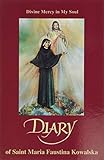
Cover of Diary: Divine Mercy in My Soul

Diary: Divine Mercy in My Soul

Marian Press

The mystical diary of the Polish visionary who gave the Church the Divine Mercy devotion.

Faustina Kowalska was a Polish nun of limited formal education whose spiritual diary — written under obedience between 1934 and her death in 1938 — is one of the most remarkable mystical documents of the twentieth century. Christ appeared to her and asked her to spread the message of Divine Mercy: that no soul who approaches Him with trust will be turned away. The diary contains visions, locutions, her account of the Chaplet of Divine Mercy, and extended meditations on trust and abandonment. It is a particularly powerful companion for those struggling with guilt, shame, or the sense that their sins have put them beyond mercy.

View on Amazon →

Sacramentals: Armor for the Body

The Catholic tradition has always provided physical armor for spiritual combat. These are not magic objects — they are consecrated instruments of grace that work through the faith of those who use them and the intercession of the saints they invoke. Wear them. Use them. Let them make the body itself a place of prayer.

Cover of Brown Scapular of Our Lady of Mount Carmel

Brown Scapular of Our Lady of Mount Carmel

Monastery Products

The Carmelite scapular: a pledge of Marian consecration and the most ancient popular sacramental in the Western Church.

According to Carmelite tradition, Our Lady appeared to St. Simon Stock in 1251 and promised that those who died wearing the Brown Scapular would not suffer eternal fire. This is known as the Sabbatine Privilege. Whatever one makes of the private revelation, the scapular is a sacramental approved by the Church — a physical sign of consecration to Mary, of enrollment under her protection, and of a commitment to live according to her spirit. The Carmelite tradition connects it specifically with chastity and perseverance. To wear the scapular is not superstition; it is to carry a constant reminder of Marian consecration on the body. It should be blessed and enrolled in by a priest.

View on Amazon →
Cover of Sterling Silver Miraculous Medal Necklace

Sterling Silver Miraculous Medal Necklace

Bliss Manufacturing

The medal given to St. Catherine Labouré by Our Lady in 1830 — with the prayer "O Mary, conceived without sin."

The Miraculous Medal originates in a series of apparitions of Our Lady to a Vincentian novice, Catherine Labouré, in Paris in 1830. Our Lady appeared standing on a globe, rays of light streaming from rings on her fingers — those rays, she explained, were graces she obtained for those who asked for them. She directed that a medal be struck with the image and the words: "O Mary, conceived without sin, pray for us who have recourse to thee." The medal has been associated with countless remarkable conversions and healings since 1832 — including that of the Jewish banker Alphonse Ratisbonne, whose sudden conversion in Rome in 1842 is one of the best-documented in modern history. Wearing it is a constant act of invocation.

View on Amazon →
Cover of St. Benedict Medal — Exorcism Medal

St. Benedict Medal — Exorcism Medal

Catholic Saint Medals

The most powerful exorcism medal in the Church's tradition — the letters on its reverse form the prayer against Satan.

The Medal of St. Benedict dates from the eleventh century and is among the most powerful sacramentals the Church possesses. The letters on the reverse — C.S.P.B., C.S.S.M.L., N.D.S.M.D., V.R.S.N.S.M.V., S.M.Q.L.I.V.B. — are the initials of the prayer: "Begone Satan, never suggest vain things to me. The drink you offer is evil; drink that poison yourself. The Cross is my light and my guide. The dragon shall never be my leader." This is not Catholic superstition; it is the Church's formal recognition that the spiritual combat is real and that sacramentals are weapons. The medal is traditionally placed in homes, worn on the body, and buried in the foundations of buildings as a dedication to God's protection.

View on Amazon →
Cover of San Damiano Wall Crucifix (12 inch)

San Damiano Wall Crucifix (12 inch)

Autom

A reproduction of the crucifix before which Francis of Assisi heard Christ speak — the icon of Franciscan spirituality.

The San Damiano Crucifix is the icon before which Francis of Assisi was praying when, in 1205, he heard the voice of Christ saying: "Francis, repair my Church." It is a Byzantine-style painted crucifix, produced originally in the twelfth century, showing Christ robed and crowned rather than agonising — the triumphant Christus Rex who conquers death. This 12-inch reproduction is suitable for a bedroom, study, or prayer corner. A crucifix on the wall is not mere decoration; it is a daily confrontation with the central claim of Christianity — that God entered suffering and transfigured it — and it makes the rooms in which we live into places of prayer. The tradition has always recommended a crucifix in the bedroom specifically.

View on Amazon →

The Rosary: Our Lady's Weapon

St. Louis de Montfort, one of the greatest Marian theologians in Church history, taught that the Rosary is the primary weapon given by Our Lady for the spiritual combat. The tradition has always connected Marian devotion specifically with the virtue of purity. Mary's intercession is particular effective in this struggle — not because she is indifferent to human sexuality but because she understands, as no one else does, what it means to offer the body wholly to God.

Cover of Ghirelli Italian Rosary — Lourdes White Pearl

Ghirelli Italian Rosary — Lourdes White Pearl

Ghirelli

Handcrafted in Italy using the traditional technique — white pearl beads, silver-finished chain, velvet pouch included.

Ghirelli rosaries are among the most respected Italian-made devotional items available on Amazon. This Lourdes edition uses white pearl beads with a silver-toned metal chain and a centerpiece featuring Our Lady of Lourdes. The Our Father beads are slightly larger for easy count. The crucifix is solid and well-finished. These rosaries are designed to be used daily and are regularly praised for durability. A velvet pouch is included. This is not a fashion accessory but a working rosary — durable, beautiful, and appropriate for daily use. The Rosary is the primary Marian weapon in spiritual combat: the tradition has associated it specifically with victory over lust, heresy, and despair since its origins with St. Dominic.

View on Amazon →
Cover of Sterling Silver and Crystal Rosary

Sterling Silver and Crystal Rosary

Bliss Manufacturing

A traditional sterling silver rosary with crystal beads — a permanent heirloom suitable for daily use or as a gift.

A rosary in sterling silver is not an extravagance — it is an investment in a devotional object that will outlast its owner and be handed on. The sterling silver chain will not tarnish as base metals do; the crystal beads are clear and satisfying to handle. The centerpiece and crucifix are well-proportioned and traditionally designed. This style of rosary has been the standard formal rosary for First Communion, Confirmation, and adult consecration for generations. It comes in a gift box and is appropriate to give to a person entering the faith or making a serious commitment to Marian devotion. A rosary like this is also more likely to be kept and used than a cheap substitute.

View on Amazon →
Affiliate Disclosure

CatholicSay Mart participates in the Amazon Services LLC Associates Program, an affiliate advertising program designed to provide a means for sites to earn advertising fees by advertising and linking to Amazon.com. As an Amazon Associate, CatholicSay Mart earns from qualifying purchases. This does not affect the price you pay. All product recommendations on this page were made on the basis of pastoral and theological merit, not commercial consideration.