Pastoral Guide

Struggling with Grief: A Catholic Resource Guide

For those who mourn — Catholic resources on loss, suffering, and hope

13 curated items 4 sections All items on Amazon

As an Amazon Associate, CatholicSay Mart earns from qualifying purchases made through the links below, at no extra cost to you.

Grief is the price of love, and the Catholic tradition takes it with full seriousness. Christ wept at the tomb of Lazarus — and He knew He was about to raise him. The Psalms contain some of the most harrowing lament literature in human history: "My God, my God, why have you forsaken me?" is not a lapse of faith; it is the prayer of the Psalmist, and Christ chose to pray it from the Cross. The tradition does not ask us to suppress grief or pretend to a peace we do not feel. It asks us to bring our grief into prayer.

The Catholic approach to suffering is not stoicism and it is not the cheap consolation of "everything happens for a reason." It is something more demanding and more real than either. It says that God Himself entered suffering — that the Incarnation was not a visit to a comfortable address, that Gethsemane and Calvary were not aberrations in an otherwise dignified narrative. The Cross is at the centre of our faith not despite its horror but because of it. The doctrine of co-redemptive suffering — that human pain, united to the Cross, becomes participation in Christ's own saving work — is not a platitude. It is a metaphysical claim: that our sorrow is not waste but offering.

The resources here serve different needs at different stages of grief. Some are raw and honest about what grief actually feels like (Lewis, Barron). Some are theological anchors that prevent the grieving soul from drifting into despair (de Caussade, John of the Cross). Some offer the long view — the mystic's understanding that desolation is not abandonment (Teresa, Faustina). The sacramentals provide physical anchoring: something to hold in the dark, something to wear as a sign that one remains in the company of the saints who have suffered before us.

Honest Accounts: Grief Without Pretence

These books do not sanitise grief. They describe it as it is — the silenced prayer, the shut door, the anger, the flatness. They are not comforting in the easy sense; they are true in a way that is ultimately more comforting than false peace.

Cover of A Grief Observed

A Grief Observed

HarperOne

The rawest honest account of grief in modern Christian writing — Lewis's journals after his wife died of cancer.

Lewis wrote these notes in exercise books in the weeks after his wife Joy died of cancer, with no intention of publishing them. He was sixty-two; she was forty-five; they had been married four years. The result is a document of extraordinary honesty about what grief does to faith: not destroying it, but stripping it of every comfortable assumption. Lewis finds that in his grief God felt like a door slammed and bolted from the inside. He works through it, slowly, until he arrives at something that is not comfortable and is not the faith of the nursery — but is real. No book prepares a grieving person better for what they will actually experience.

View on Amazon →
Cover of Letter to a Suffering Church

Letter to a Suffering Church

Word on Fire

A contemporary bishop addresses the crisis in the Church with clarity, anger, sorrow, and hope.

Written in the wake of the 2018 clergy abuse crisis, this short book takes head-on the question that many Catholics are quietly asking: how can I remain in a Church that has done this? Barron's answer is not complacency or institutional defensiveness. He walks through the history of corruption and reform in the Church — from the selling of indulgences to the Borgia papacy — to argue that the pattern of sin and purification is itself biblical, and that leaving the Church because of its sinful members is precisely what the enemy of souls would want. It is direct, honest, and written by a man who is clearly angry as well as faithful.

View on Amazon →

The Theological Anchors: Why Suffering Is Not Waste

For those who need not just consolation but understanding — who cannot rest until they have faced the question of why a good God permits this — these are the essential works.

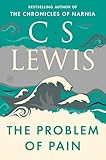
Cover of The Problem of Pain

The Problem of Pain

HarperOne

The intellectual account of suffering: why a good God permits it, and what it accomplishes in a human soul.

Written twenty years before A Grief Observed and from an entirely different vantage point, The Problem of Pain is a cool, systematic treatment of the philosophical problem of suffering. Lewis examines divine omnipotence, goodness, human wickedness, animal pain, and heaven in turn. The famous chapter on human pain argues that suffering is the only possible means by which God can communicate to a soul that has made itself its own centre. This is the book for those who need an argument before they can feel; A Grief Observed is for those who feel first and think second. Many readers benefit from both, read in sequence.

View on Amazon →
Cover of Abandonment to Divine Providence

Abandonment to Divine Providence

Doubleday Image

The spirituality of the present moment: every circumstance of life is the "sacrament of the present moment" in which God acts.

De Caussade's letters to the Visitation nuns of Nancy, compiled and published long after his death, contain a single luminous insight: that the will of God is fully present in the present moment, in whatever form it takes — prosperity or privation, health or sickness, joy or desolation. To "abandon" oneself to providence is not passivity but the highest form of active cooperation with grace. This is the book for those paralysed by grief, by uncertainty, by the feeling that God has absented Himself. The doctrine here is orthodox and classical; the prose is warm and pastoral. Read it slowly, in small doses, in the midst of whatever difficulty you are facing.

View on Amazon →
Cover of Dark Night of the Soul

Dark Night of the Soul

ICS Publications

The classic account of spiritual desolation — why God withdraws consolation, and what it means when He does.

The Dark Night is not about depression or despair; it is about God's surgical action in the soul. John of the Cross identifies two dark nights: the night of the senses (where God removes consolation from prayer, from pleasure, from the ordinary supports of spiritual life) and the night of the spirit (the deeper purification of the soul's faculties themselves). Both are signs of growth, not abandonment. Those who mistake the dark night for loss of faith or spiritual failure are in danger of abandoning the journey precisely at its most important moment. This book is indispensable for anyone in a sustained period of spiritual dryness, grief, or apparent desolation.

View on Amazon →
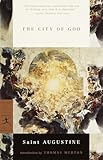
Cover of The City of God

The City of God

Modern Library

Augustine's masterwork: a sweeping theology of history, written in response to the sack of Rome.

When the Visigoths sacked Rome in 410 AD, pagans blamed the Christians for abandoning the old gods. Augustine's response took thirteen years and twenty-two books. The City of God divides all of history into two cities: the City of God, ordered to love of the divine, and the City of Man, ordered to love of self. It defines the relationship between Church and state, between secular and sacred history, for all subsequent Western thought. Books XI through XXII contain Augustine's fullest theology of creation, fall, redemption, and eschatology. It is not an easy read; it is an essential one.

View on Amazon →

The Mystics on Desolation

Teresa of Ávila and John of the Cross wrote from within sustained spiritual desolation — experiences that look, from the outside, like what we would call depression or loss of faith, but which they understood as the action of a God who was drawing the soul deeper. These books do not make the pain smaller; they make it mean something.

Cover of Interior Castle

Interior Castle

ICS Publications

The map of the interior life — seven mansions from the outer courts of prayer to transforming union with God.

Teresa of Ávila wrote the Interior Castle in 1577 under obedience to her confessor, in the midst of governing the Carmelite reform and while suffering considerable physical pain. She describes the soul as a castle of many rooms (mansions), and the spiritual life as a progressive journey inward from the outermost courts — populated by reptiles and noise — toward the innermost chamber where God dwells. The first three mansions describe the ascetical life; the fourth and fifth, the life of prayer and early contemplation; the sixth, spiritual betrothal; the seventh, transforming union. This ICS edition includes the full text with scholarly introduction and notes. It is the most systematic account of the stages of prayer in the Catholic tradition.

View on Amazon →
Cover of The Imitation of Christ

The Imitation of Christ

Ignatius Press

Second only to the Bible in Catholic circulation for six centuries — four books on contempt of the world and union with Christ.

No book save the Bible has been more widely read among Catholics over the past five hundred years. Written around 1420 by a Dutch Augustinian monk, it consists of four books on the interior life, interior conversation, interior consolation, and the Blessed Sacrament. Book I, Chapter 6 — on disordered affections — is perhaps the most concise and cutting diagnosis of what the spiritual tradition calls concupiscence. Book III contains the sustained interior dialogue between Christ and the soul that has formed more contemplatives than any other text outside Scripture. Read one chapter a day, slowly.

View on Amazon →
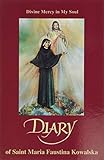
Cover of Diary: Divine Mercy in My Soul

Diary: Divine Mercy in My Soul

Marian Press

The mystical diary of the Polish visionary who gave the Church the Divine Mercy devotion.

Faustina Kowalska was a Polish nun of limited formal education whose spiritual diary — written under obedience between 1934 and her death in 1938 — is one of the most remarkable mystical documents of the twentieth century. Christ appeared to her and asked her to spread the message of Divine Mercy: that no soul who approaches Him with trust will be turned away. The diary contains visions, locutions, her account of the Chaplet of Divine Mercy, and extended meditations on trust and abandonment. It is a particularly powerful companion for those struggling with guilt, shame, or the sense that their sins have put them beyond mercy.

View on Amazon →

Sacramentals: Something to Hold

In acute grief, theological argument often cannot reach us. Physical objects of devotion — worn on the body, held in the hand during prayer, hung on the wall of the room where one weeps — serve as anchors to the community of the saints who have suffered before us and to the Mother who stood at the foot of the Cross.

Cover of Brown Scapular of Our Lady of Mount Carmel

Brown Scapular of Our Lady of Mount Carmel

Monastery Products

The Carmelite scapular: a pledge of Marian consecration and the most ancient popular sacramental in the Western Church.

According to Carmelite tradition, Our Lady appeared to St. Simon Stock in 1251 and promised that those who died wearing the Brown Scapular would not suffer eternal fire. This is known as the Sabbatine Privilege. Whatever one makes of the private revelation, the scapular is a sacramental approved by the Church — a physical sign of consecration to Mary, of enrollment under her protection, and of a commitment to live according to her spirit. The Carmelite tradition connects it specifically with chastity and perseverance. To wear the scapular is not superstition; it is to carry a constant reminder of Marian consecration on the body. It should be blessed and enrolled in by a priest.

View on Amazon →
Cover of Sterling Silver Miraculous Medal Necklace

Sterling Silver Miraculous Medal Necklace

Bliss Manufacturing

The medal given to St. Catherine Labouré by Our Lady in 1830 — with the prayer "O Mary, conceived without sin."

The Miraculous Medal originates in a series of apparitions of Our Lady to a Vincentian novice, Catherine Labouré, in Paris in 1830. Our Lady appeared standing on a globe, rays of light streaming from rings on her fingers — those rays, she explained, were graces she obtained for those who asked for them. She directed that a medal be struck with the image and the words: "O Mary, conceived without sin, pray for us who have recourse to thee." The medal has been associated with countless remarkable conversions and healings since 1832 — including that of the Jewish banker Alphonse Ratisbonne, whose sudden conversion in Rome in 1842 is one of the best-documented in modern history. Wearing it is a constant act of invocation.

View on Amazon →
Cover of Ghirelli Italian Rosary — Lourdes White Pearl

Ghirelli Italian Rosary — Lourdes White Pearl

Ghirelli

Handcrafted in Italy using the traditional technique — white pearl beads, silver-finished chain, velvet pouch included.

Ghirelli rosaries are among the most respected Italian-made devotional items available on Amazon. This Lourdes edition uses white pearl beads with a silver-toned metal chain and a centerpiece featuring Our Lady of Lourdes. The Our Father beads are slightly larger for easy count. The crucifix is solid and well-finished. These rosaries are designed to be used daily and are regularly praised for durability. A velvet pouch is included. This is not a fashion accessory but a working rosary — durable, beautiful, and appropriate for daily use. The Rosary is the primary Marian weapon in spiritual combat: the tradition has associated it specifically with victory over lust, heresy, and despair since its origins with St. Dominic.

View on Amazon →
Cover of San Damiano Wall Crucifix (12 inch)

San Damiano Wall Crucifix (12 inch)

Autom

A reproduction of the crucifix before which Francis of Assisi heard Christ speak — the icon of Franciscan spirituality.

The San Damiano Crucifix is the icon before which Francis of Assisi was praying when, in 1205, he heard the voice of Christ saying: "Francis, repair my Church." It is a Byzantine-style painted crucifix, produced originally in the twelfth century, showing Christ robed and crowned rather than agonising — the triumphant Christus Rex who conquers death. This 12-inch reproduction is suitable for a bedroom, study, or prayer corner. A crucifix on the wall is not mere decoration; it is a daily confrontation with the central claim of Christianity — that God entered suffering and transfigured it — and it makes the rooms in which we live into places of prayer. The tradition has always recommended a crucifix in the bedroom specifically.

View on Amazon →
Affiliate Disclosure

CatholicSay Mart participates in the Amazon Services LLC Associates Program, an affiliate advertising program designed to provide a means for sites to earn advertising fees by advertising and linking to Amazon.com. As an Amazon Associate, CatholicSay Mart earns from qualifying purchases. This does not affect the price you pay. All product recommendations on this page were made on the basis of pastoral and theological merit, not commercial consideration.