Pastoral Guide

Deepening Your Prayer Life: A Catholic Resource Guide

A progressive curriculum from vocal prayer to contemplation

13 curated items 5 sections All items on Amazon

As an Amazon Associate, CatholicSay Mart earns from qualifying purchases made through the links below, at no extra cost to you.

Most Catholics pray. Far fewer have ever been taught to pray — in the sense of systematic, attentive, interiorly engaged prayer that forms the person who prays. The tradition distinguishes between vocal prayer (the recitation of set prayers: the Our Father, the rosary, the Hours), mental prayer (interior meditation on Scripture or the mysteries of faith), and contemplative prayer (the quiet, loving attention to God that begins to overflow from the other two). Most Catholics never move beyond vocal prayer — not from lack of desire but from lack of instruction. The great teachers of prayer wrote to remedy exactly that lack.

The mystics of the Church — Teresa of Ávila, John of the Cross, Francis de Sales, Thérèse of Lisieux — wrote not for spiritual eccentrics but for ordinary Christians who wanted to go deeper. Their books are also, frequently, among the most beautiful works in European literature. Reading them is not merely instructive; it is itself a form of prayer. Teresa's Interior Castle describes the soul as a castle of many mansions and the spiritual life as a journey inward toward the God who dwells in the innermost room. De Sales describes the same journey in more practical, methodical terms for people who live in courts and workshops rather than Carmelite enclosures. John of the Cross describes what happens when the journey becomes difficult — when God removes the consolations of prayer and the soul must continue in naked faith.

The curriculum below is ordered progressively. Begin with de Sales and Thérèse — they are the most accessible and the most immediately practical. Move to Teresa of Ávila when you have established a regular habit of mental prayer and are ready to understand its stages. The Liturgy of the Hours should be begun as early as possible: it is the Church's official daily prayer, and praying it with the Universal Church — even one or two Hours a day — transforms the structure of the day in ways that private devotion alone cannot.

Beginning: The Daily Habits

These are the books for those who have little or no established prayer practice, or whose practice has become mechanical. De Sales gives you the method; Thérèse gives you the spirit. The Imitation of Christ is the daily companion that holds you to the interior life when enthusiasm fades.

Cover of Introduction to the Devout Life

Introduction to the Devout Life

Ignatius Press

The most practical guide to Catholic holiness ever written — specifically for laypeople living in the world.

Written in 1609 for Madame de Charmoisy, a lady of the French court, Introduction to the Devout Life remains the definitive manual of lay Catholic spirituality. Francis de Sales demolishes the assumption that sanctity is for monks and nuns: "It is an error, nay rather a heresy, to wish to exclude devout life from the regiment of soldiers, the mechanic's workshop, the court of princes." The book is organized in five parts covering aspiration, pruning vices, the virtues, temptation, and renewal. Part 3, Chapter 12 — on chastity — is among the most practically useful things ever written on the subject. Begin here if you are new to the interior life.

View on Amazon →
Cover of Story of a Soul

Story of a Soul

ICS Publications

The Little Way: holiness not through great deeds but through small ones done with great love.

Thérèse of Lisieux died at twenty-four of tuberculosis having never left her Carmelite convent, having done nothing the world would call heroic, having spent years in spiritual dryness and doubt. Her autobiography — dictated to her superiors in three separate manuscripts — reveals a theological insight of startling originality: that the path to God for the spiritually weak is not heroic asceticism but absolute trust, the way of a child, the Little Way. Pope Pius X called her the greatest saint of modern times. Her doctrine on purity is inseparable from her doctrine on simplicity: impure thoughts cannot find purchase in a heart occupied entirely with love.

View on Amazon →
Cover of The Imitation of Christ

The Imitation of Christ

Ignatius Press

Second only to the Bible in Catholic circulation for six centuries — four books on contempt of the world and union with Christ.

No book save the Bible has been more widely read among Catholics over the past five hundred years. Written around 1420 by a Dutch Augustinian monk, it consists of four books on the interior life, interior conversation, interior consolation, and the Blessed Sacrament. Book I, Chapter 6 — on disordered affections — is perhaps the most concise and cutting diagnosis of what the spiritual tradition calls concupiscence. Book III contains the sustained interior dialogue between Christ and the soul that has formed more contemplatives than any other text outside Scripture. Read one chapter a day, slowly.

View on Amazon →

The Liturgy of the Hours: Praying with the Church

The Liturgy of the Hours is not an optional extra for monks — it is the Church's official daily prayer, recommended by Vatican II to all the faithful. Morning Prayer and Evening Prayer are the two hinges of the Christian day. The compact one-volume Christian Prayer edition is sufficient to begin; the four-volume set follows when the practice is established.

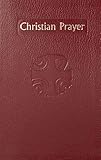
Cover of Christian Prayer: Liturgy of the Hours (Compact Edition)

Christian Prayer: Liturgy of the Hours (Compact Edition)

Catholic Book Publishing

The one-volume edition of the Church's official prayer — Morning and Evening Prayer with all four weeks of the Psalter.

The Liturgy of the Hours is the official public prayer of the Catholic Church. While the full four-volume edition is the standard, the compact one-volume Christian Prayer contains Morning Prayer, Evening Prayer, and Night Prayer for all four weeks of the Psalter, along with the Office of Readings for Sundays and solemnities. It is enough for a layperson to pray the two hinges of the Church's day — Lauds and Vespers — which the Second Vatican Council specifically recommended to all the faithful. The habit of praying the Hours transforms the structure of the day: it makes every morning an act of praise and every evening an examination of conscience.

View on Amazon →

The Interior Life: Going Deeper

For those who have established a regular prayer practice and want to understand its deeper structure — the stages, the dry periods, the movements of consolation and desolation — these are the essential guides.

Cover of Interior Castle

Interior Castle

ICS Publications

The map of the interior life — seven mansions from the outer courts of prayer to transforming union with God.

Teresa of Ávila wrote the Interior Castle in 1577 under obedience to her confessor, in the midst of governing the Carmelite reform and while suffering considerable physical pain. She describes the soul as a castle of many rooms (mansions), and the spiritual life as a progressive journey inward from the outermost courts — populated by reptiles and noise — toward the innermost chamber where God dwells. The first three mansions describe the ascetical life; the fourth and fifth, the life of prayer and early contemplation; the sixth, spiritual betrothal; the seventh, transforming union. This ICS edition includes the full text with scholarly introduction and notes. It is the most systematic account of the stages of prayer in the Catholic tradition.

View on Amazon →
Cover of Dark Night of the Soul

Dark Night of the Soul

ICS Publications

The classic account of spiritual desolation — why God withdraws consolation, and what it means when He does.

The Dark Night is not about depression or despair; it is about God's surgical action in the soul. John of the Cross identifies two dark nights: the night of the senses (where God removes consolation from prayer, from pleasure, from the ordinary supports of spiritual life) and the night of the spirit (the deeper purification of the soul's faculties themselves). Both are signs of growth, not abandonment. Those who mistake the dark night for loss of faith or spiritual failure are in danger of abandoning the journey precisely at its most important moment. This book is indispensable for anyone in a sustained period of spiritual dryness, grief, or apparent desolation.

View on Amazon →
Cover of Abandonment to Divine Providence

Abandonment to Divine Providence

Doubleday Image

The spirituality of the present moment: every circumstance of life is the "sacrament of the present moment" in which God acts.

De Caussade's letters to the Visitation nuns of Nancy, compiled and published long after his death, contain a single luminous insight: that the will of God is fully present in the present moment, in whatever form it takes — prosperity or privation, health or sickness, joy or desolation. To "abandon" oneself to providence is not passivity but the highest form of active cooperation with grace. This is the book for those paralysed by grief, by uncertainty, by the feeling that God has absented Himself. The doctrine here is orthodox and classical; the prose is warm and pastoral. Read it slowly, in small doses, in the midst of whatever difficulty you are facing.

View on Amazon →
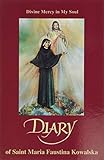
Cover of Diary: Divine Mercy in My Soul

Diary: Divine Mercy in My Soul

Marian Press

The mystical diary of the Polish visionary who gave the Church the Divine Mercy devotion.

Faustina Kowalska was a Polish nun of limited formal education whose spiritual diary — written under obedience between 1934 and her death in 1938 — is one of the most remarkable mystical documents of the twentieth century. Christ appeared to her and asked her to spread the message of Divine Mercy: that no soul who approaches Him with trust will be turned away. The diary contains visions, locutions, her account of the Chaplet of Divine Mercy, and extended meditations on trust and abandonment. It is a particularly powerful companion for those struggling with guilt, shame, or the sense that their sins have put them beyond mercy.

View on Amazon →

Praying with Mary: The Rosary

The Rosary is simultaneously the simplest Catholic prayer and the deepest school of Marian contemplation. It is not a substitute for mental prayer but a form of it: meditating on the mysteries of Christ's life while repeating the Hail Mary. Begin with one decade a day; build to five; let it reshape the quality of attention you bring to everything else.

Cover of Ghirelli Italian Rosary — Lourdes White Pearl

Ghirelli Italian Rosary — Lourdes White Pearl

Ghirelli

Handcrafted in Italy using the traditional technique — white pearl beads, silver-finished chain, velvet pouch included.

Ghirelli rosaries are among the most respected Italian-made devotional items available on Amazon. This Lourdes edition uses white pearl beads with a silver-toned metal chain and a centerpiece featuring Our Lady of Lourdes. The Our Father beads are slightly larger for easy count. The crucifix is solid and well-finished. These rosaries are designed to be used daily and are regularly praised for durability. A velvet pouch is included. This is not a fashion accessory but a working rosary — durable, beautiful, and appropriate for daily use. The Rosary is the primary Marian weapon in spiritual combat: the tradition has associated it specifically with victory over lust, heresy, and despair since its origins with St. Dominic.

View on Amazon →
Cover of Bethlehem Olive Wood Rosary — Holy Land

Bethlehem Olive Wood Rosary — Holy Land

Creed

Hand-carved from Bethlehem olive wood — each bead comes from the same land where Christ walked.

Olive wood rosaries from Bethlehem are among the most meaningful sacramentals available to Western Catholics, not for any magical property but for the unmistakable sense of connection they provide. The olive tree is among the most ancient symbols in Christian iconography — the Garden of Gethsemane was an olive grove. These rosaries are hand-carved by artisans in the Bethlehem area, where the Christian community has maintained workshops producing religious goods for pilgrims and the faithful for centuries. The beads are smooth and comfortable for extended use. The cross typically features a carved image of the Holy Land. A certificate of origin is usually included.

View on Amazon →
Cover of Sterling Silver and Crystal Rosary

Sterling Silver and Crystal Rosary

Bliss Manufacturing

A traditional sterling silver rosary with crystal beads — a permanent heirloom suitable for daily use or as a gift.

A rosary in sterling silver is not an extravagance — it is an investment in a devotional object that will outlast its owner and be handed on. The sterling silver chain will not tarnish as base metals do; the crystal beads are clear and satisfying to handle. The centerpiece and crucifix are well-proportioned and traditionally designed. This style of rosary has been the standard formal rosary for First Communion, Confirmation, and adult consecration for generations. It comes in a gift box and is appropriate to give to a person entering the faith or making a serious commitment to Marian devotion. A rosary like this is also more likely to be kept and used than a cheap substitute.

View on Amazon →

Praying Through Scripture

Lectio divina — prayerful reading of Scripture — is the oldest form of Christian mental prayer. The Ignatius Catholic Study Bible provides the tools to read Scripture not just intellectually but prayerfully, with the commentary that opens up the typological and theological dimensions that make each passage inexhaustible.

Cover of The Ignatius Catholic Study Bible: New Testament

The Ignatius Catholic Study Bible: New Testament

Ignatius Press

The most thorough Catholic study Bible in print, with detailed commentary rooted in the Fathers and the Magisterium.

Every book of the New Testament is presented in the RSV-2CE translation alongside comprehensive introductions, verse-by-verse commentary, and word studies. Scott Hahn and Curtis Mitch draw consistently on the Church Fathers, the councils, and modern biblical scholarship — never allowing critical methodology to displace the theological reading that the Church requires. The annotations explain typological connections, address Protestant proof-texts, and integrate the patristic tradition seamlessly. This is the Bible Catholics who want to go deep should have open on their desk.

View on Amazon →
Cover of Prayers and Devotions from Pope John Paul II

Prayers and Devotions from Pope John Paul II

Viking

A collection of JPII's personal prayers, meditations, and devotional texts — the interior life of a saint.

This collection, gathered from John Paul II's written and spoken prayers across his pontificate, reveals the interior life of a man who was simultaneously running the largest institution on earth and spending several hours each day on his face in prayer. His prayers are direct, personal, and theologically rich: addressed always to the Father through Christ, frequently through Mary. The prayers on suffering are particularly remarkable — written by a man who survived assassination, Parkinson's disease, and the long dying he allowed the world to witness. Reading these prayers slowly, as a form of prayerful reading (lectio divina), forms the habit of mind that underlies all serious interior life.

View on Amazon →
Affiliate Disclosure

CatholicSay Mart participates in the Amazon Services LLC Associates Program, an affiliate advertising program designed to provide a means for sites to earn advertising fees by advertising and linking to Amazon.com. As an Amazon Associate, CatholicSay Mart earns from qualifying purchases. This does not affect the price you pay. All product recommendations on this page were made on the basis of pastoral and theological merit, not commercial consideration.