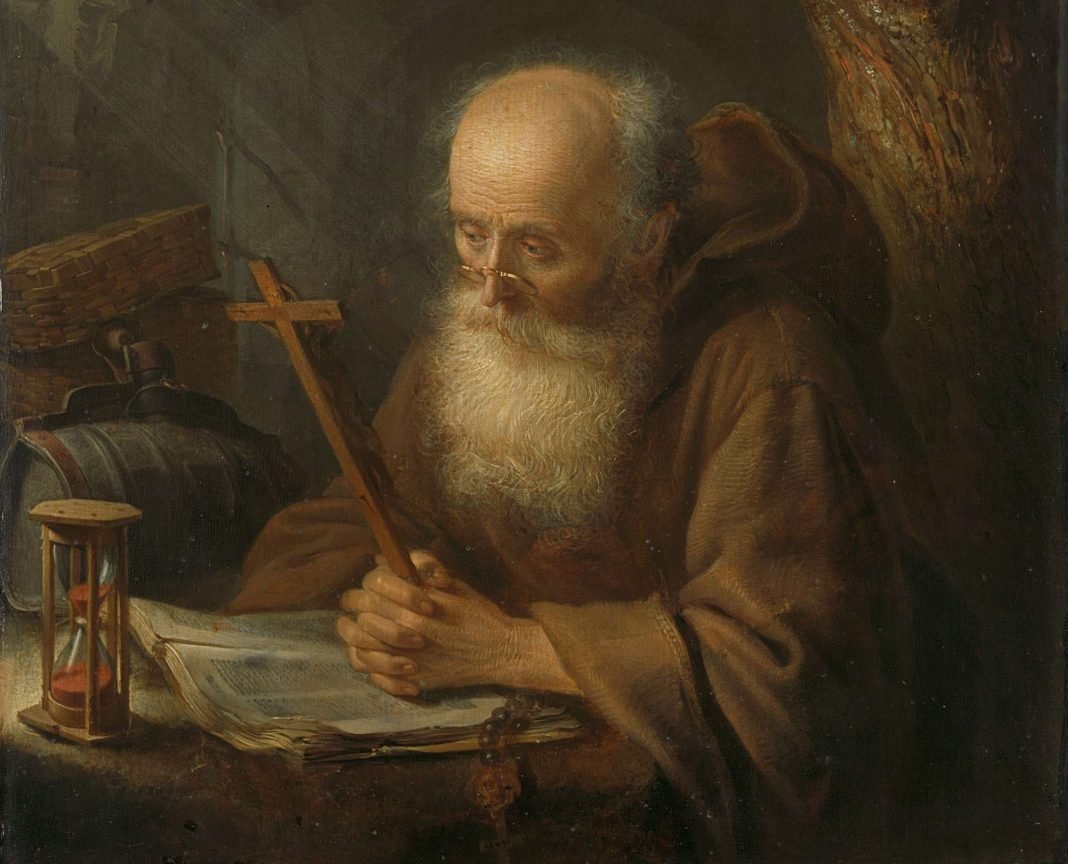


Did Early Christians Believe in Reincarnation?
The belief that early Christians embraced reincarnation, often promoted by the New Age movement, is historically unfounded. Shirley MacLaine’s claim that reincarnation was removed from the Bible during the Council of Nicaea in A.D. 553 is inaccurate. The Council of Nicaea did not address reincarnation, and neither did any other early ecumenical council. Origen, often misunderstood as a supporter of reincarnation, was actually a strong opponent of it. Claims of Origen’s teachings on reincarnation stem from speculative sources like “Reincarnation in Christianity” by Geddes MacGregor, lacking evidence to support their claims. Early Christian writings provide no support for the concept of reincarnation.
Below are some of the teachings of the Early Church Fathers on this:
Irenaeus
“We may undermine [the Hellenists’] doctrine as to transmigration from body to body by this fact—that souls remember nothing whatever of the events which took place in their previous states of existence. For if they were sent forth with this object, that they should have experience of every kind of action, they must of necessity retain a remembrance of those things which have been previously accomplished, that they might fill up those in which they were still deficient, and not by always hovering, without intermission, through the same pursuits, spend their labor wretchedly in vain. . . . With reference to these objections, Plato . . . attempted no kind of proof, but simply replied dogmatically that when souls enter into this life they are caused to drink of oblivion by that demon who watches their entrance, before they effect an entrance into the bodies. It escaped him that he fell into another, greater perplexity. For if the cup of oblivion, after it has been drunk, can obliterate the memory of all the deeds that have been done, how, O Plato, do you obtain the knowledge of this fact . . . ?” (Against Heresies 2:33:1–2 [A.D. 189]).
Tertullian
“Come now, if some philosopher affirms, as Laberius holds, following an opinion of Pythagoras, that a man may have his origin from a mule, a serpent from a woman, and with skill of speech twists every argument to prove his view, will he not gain an acceptance for it [among the pagans], and work in some conviction that on account of this, they should abstain from eating animal food? May anyone have the persuasion that he should abstain, lest, by chance, in his beef he eats some ancestor of his? But if a Christian promises the return of a man from a man, and the very actual Gaius [resurrected] from Gaius . . . they will not . . . grant him a hearing. If there is any ground for the moving to and fro of human souls into different bodies, why may they not return to the very matter they have left . . . ?” (Apology 48 [A.D. 197]).
Origen
“[Scripture says] ‘And they asked him, “What then? Are you Elijah?” and he said, “I am not”’ [John 1:21]. No one can fail to remember in this connection what Jesus says of John: ‘If you will receive it, this is Elijah, who is to come’ [Matt. 11:14]. How then does John come to say to those who ask him, ‘Are you Elijah?’—‘I am not’? . . . One might say that John did not know that he was Elijah. This will be the explanation of those who find in our passage a support for their doctrine of reincarnation, as if the soul clothed itself in a fresh body and did not quite remember its former lives. . . . [H]owever, a churchman, who repudiates the doctrine of reincarnation as a false one and does not admit that the soul of John was ever Elijah, may appeal to the above-quoted words of the angel, and point out that it is not the soul of Elijah that is spoken of at John’s birth, but the spirit and power of Elijah” (Commentary on John 6:7 [A.D. 229]).
“If the doctrine [of reincarnation] was widely current, ought not John to have hesitated to pronounce upon it, lest his soul had actually been in Elijah? And here our churchman will appeal to history, and will bid his antagonists [to] ask experts of the secret doctrines of the Hebrews if they do really entertain such a belief. For if it should appear that they do not, then the argument based on that supposition is shown to be quite baseless” (ibid.).
“Someone might say, however, that Herod and some of those of the people held the false dogma of the transmigration of souls into bodies, in consequence of which they thought that the former John had appeared again by a fresh birth, and had come from the dead into life as Jesus. But the time between the birth of John and the birth of Jesus, which was not more than six months, does not permit this false opinion to be considered credible. And perhaps rather some such idea as this was in the mind of Herod, that the powers which worked in John had passed over to Jesus, in consequence of which he was thought by the people to be John the Baptist. And one might use the following line of argument: Just as because the spirit and the power of Elijah, and not because of his soul, it is said about John, ‘This is Elijah who is to come’ [Matt. 11:14] . . . so Herod thought that the powers in John’s case worked in him works of baptism and teaching—for John did not do one miracle [John 10:41]—but in Jesus [they worked] miraculous portents” (Commentary on Matthew 10:20 [A.D. 248]).
“Now the Canaanite woman, having come, worshipped Jesus as God, saying, ‘Lord, help me,’ but he answered and said, ‘It is not possible to take the children’s bread and cast it to the little dogs.’ . . . [O]thers, then, who are strangers to the doctrine of the Church, assume that souls pass from the bodies of men into the bodies of dogs, according to their varying degree of wickedness; but we . . . do not find this at all in the divine Scripture” (ibid., 11:17).
“In this place [when Jesus said Elijah was come and referred to John the Baptist] it does not appear to me that by Elijah the soul is spoken of, lest I fall into the doctrine of transmigration, which is foreign to the Church of God, and not handed down by the apostles, nor anywhere set forth in the scriptures” (ibid., 13:1).
Lactantius
“What of Pythagoras, who was first called a philosopher, who judged that souls were indeed immortal, but that they passed into other bodies, either of cattle or of birds or of beasts? Would it not have been better that they should be destroyed, together with their bodies, than thus to be condemned to pass into the bodies of other animals? Would it not be better not to exist at all than, after having had the form of a man, to live as a swine or a dog? And the foolish man, to gain credit for his saying, said that he himself had been Euphorbus in the Trojan war, and that when he had been slain he passed into other figures of animals, and at last became Pythagoras. O happy man!—to whom alone so great a memory was given! Or rather unhappy, who when changed into a sheep was not permitted to be ignorant of what he was! And [I] would to heaven that he [Pythagoras] alone had been thus senseless!” (Epitome of the Divine Institutes 36 [A.D. 317]).
Ambrose of Milan
“It is a cause for wonder that though they [the heathen] . . . say that souls pass and migrate into other bodies. . . . But let those who have not been taught doubt [the resurrection]. For us who have read the law, the prophets, the apostles, and the gospel, it is not lawful to doubt” (Belief in the Resurrection 65–66 [A.D. 380]).
“But is their opinion preferable who say that our souls, when they have passed out of these bodies, migrate into the bodies of beasts or of various other living creatures? . . . For what is so like a marvel as to believe that men could have been changed into the forms of beasts? How much greater a marvel, however, would it be that the soul which rules man should take on itself the nature of a beast so opposed to that of man, and being capable of reason should be able to pass over to an irrational animal, than that the form of the body should have been changed?” (ibid., 127).
John Chrysostom
“As for doctrines on the soul, there is nothing excessively shameful that they [the disciples of Plato and Pythagoras] have left unsaid, asserting that the souls of men become flies and gnats and bushes and that God himself is a [similar] soul, with some other the like indecencies. . . . At one time he says that the soul is of the substance of God; at another, after having exalted it thus immoderately and impiously, he exceeds again in a different way, and treats it with insult, making it pass into swine and asses and other animals of yet less esteem than these” (Homilies on John 2:3, 6 [A.D. 391]).
Basil the Great
“[A]void the nonsense of those arrogant philosophers who do not blush to liken their soul to that of a dog, who say that they have themselves formerly been women, shrubs, or fish. Have they ever been fish? I do not know, but I do not fear to affirm that in their writings they show less sense than fish” (The Six Days’ Work 8:2 [A.D. 393]).
Make a one-time donation
Make a monthly donation
Make a yearly donation
Choose an amount
Or enter a custom amount
Your contribution is appreciated.
Your contribution is appreciated.
Your contribution is appreciated.
DonateDonate monthlyDonate yearlyDiscover more from Catholicsay
Subscribe to get the latest posts sent to your email.