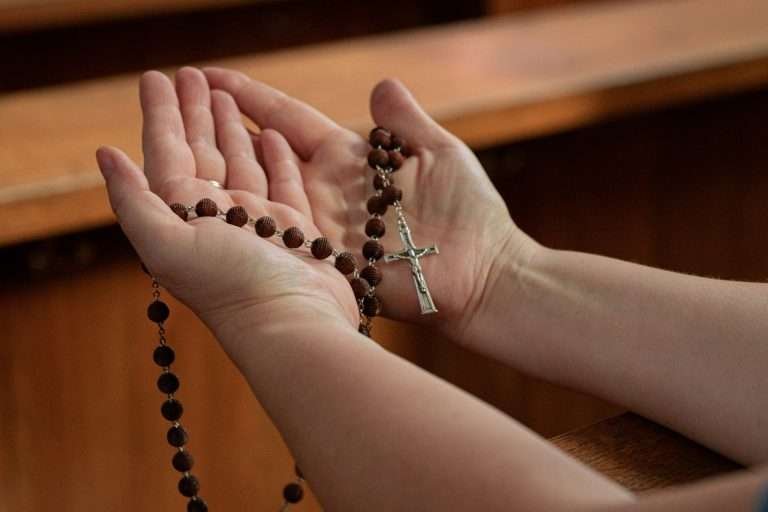
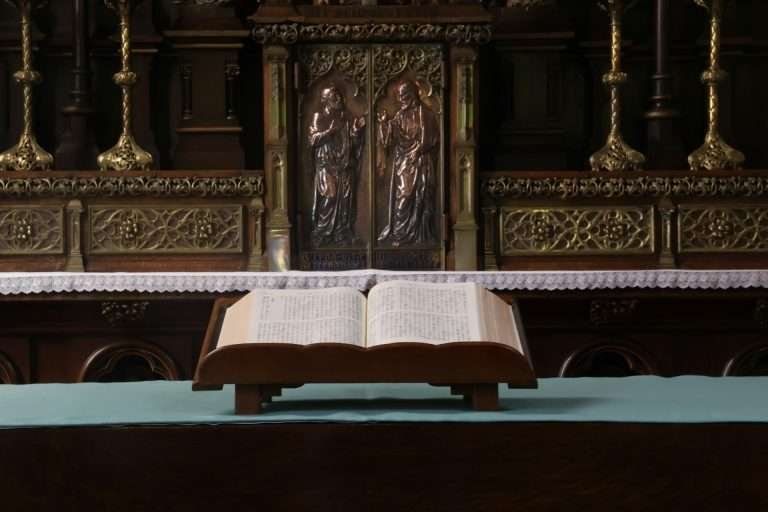
Catholics have experienced several conflicts throughout history, and the Rosary has proven a powerful weapon for peace.
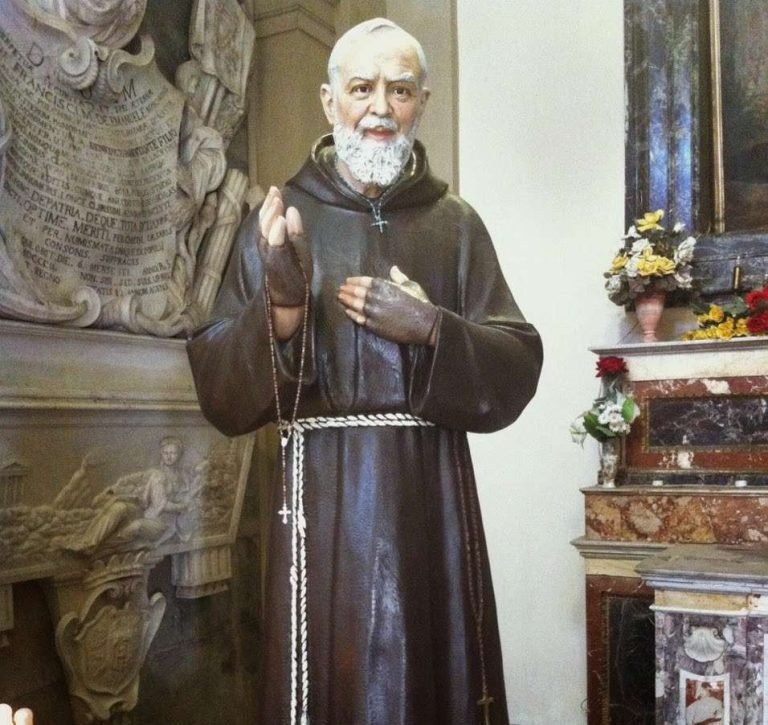
Like many saints before him, Saint Padre Pio considered the Rosary a “weapon” for such times, when conflicts overtake our daily lives. As our brothers are in strife all over the world, it might be worth remembering this weapon and wielding it more often in solidarity and support.
So many people would have loved to give more than financial donations online, some would have loved to give more. Since we can’t all be there to provide physical aid, let us turn to the spirit and implore our Lady’s help in these times.
The religious side of the war should be brought home constantly … [and Catholic meetings] should be made as far as possible to center around the great ideal of prayer for the [soldiers] who are at the front and especially for peace. The sodalities should be made to understand the preeminent place the devotion of the Mother of God has had in the great crises of the past. They need only be told of that crisis which came in the third quarter of the sixteenth century when civilization met a great enemy in the Turk and how at the battle of Lepanto it was the prayers of Catholic Europe to the Blessed Mother which brought the world victory from its foes. They need only be told of the place the Rosary has held all through the centuries in winning victory after victory for the Catholic nations of the past.
St. John Paul II also specifically highlighted this aspect of the Rosary in his encyclical Rosarium Virginis Mariae.
A number of historical circumstances also make a revival of the Rosary quite timely. First of all, the need to implore from God the gift of peace. The Rosary has many times been proposed by my predecessors and myself as a prayer for peace. At the start of a millennium which began with the terrifying attacks of 11 September 2001, a millennium which witnesses every day innumerous parts of the world fresh scenes of bloodshed and violence, to rediscover the Rosary means to immerse oneself in contemplation of the mystery of Christ who “is our peace”, since he made “the two of us one, and broke down the dividing wall of hostility” (Eph 2:14). Consequently, one cannot recite the Rosary without feeling caught up in a clear commitment to advancing peace, especially in the land of Jesus, still so sorely afflicted and so close to the heart of every Christian.
Meditation is a commonly misunderstood term. Most people do not know what this is or if they even have the ability to meditate, or whether what they do can be called meditation.
In his book “In our meditations on the Rosary mysteries”, Fr John Proctor presents a rather simple approach to understanding meditation within the context of the Rosary.
He writes:
Let no one say, “I cannot meditate.” As well might he say, “I cannot think and I cannot love”; for meditation is simply thinking and loving. First comes the thought, and from the thought the fire. Meditation enlightens the mind, and the spark from the enlightened mind sets the heart on fire. It was so in St. Dominic’s days; as St. Pius V., a son of St. Dominic, expresses it : “Christian people inflamed by these meditations and prayers became changed into other men, the darkness of heresy disappeared, and the light of the Catholic faith was revealed” (Consueverunt, Sept. 17th, 1569). So may it be in our day and in our land, if only we meditate and pray. We can all meditate; we all do meditate every day and almost all the day. Only we do not concentrate our thoughts; we let them “go astray after divers things”; and when we do concentrate our thoughts, our eyes are not lifted up to God.
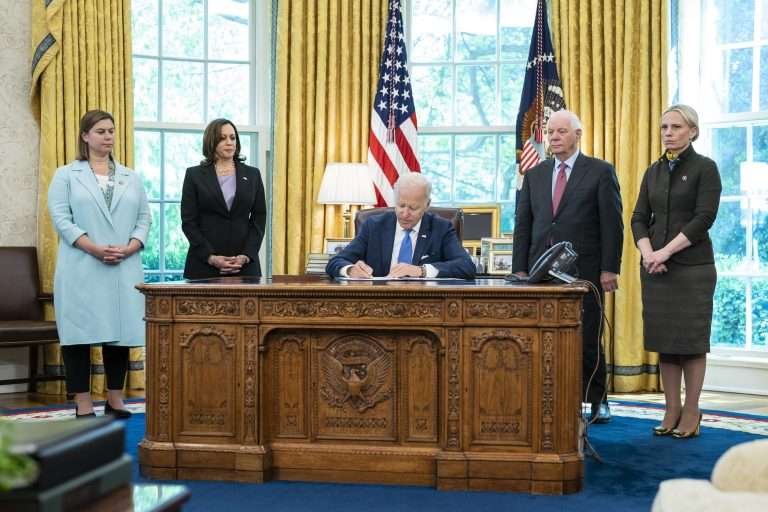
President Joe Biden signed an executive order Friday aimed at protecting abortion access in response to the Supreme Court’s decision to overturn Roe v. Wade.
“This is a choice,” he said before signing the order July 8. “A moment to restore the rights that have been taken away from us, and the moment to protect our nation from an extremist agenda that is antithetical to everything we believe as Americans.”
He repeatedly referred to abortion as “health care” and called abortion drugs “medication.”
Biden, a Catholic, has repeatedly supported abortion in contrast with the Catholic Church’s teaching that human life must be respected and protected from the moment of conception.
In the order, Biden states his administration’s policy to support “women’s right to choose” as “essential to justice, equality, and our health, safety, and progress as a Nation.”
The order focuses on four general areas, according to a White House fact sheet: access to “reproductive health care services”; patients’ privacy and access to information; the security of patients, providers, and clinics; and the coordination of federal efforts to protect “reproductive rights and access to health care.”
The order directs the HHS, among other things, to protect and expand access to contraception and abortion, particularly abortion drugs. It also calls for bringing together pro bono lawyers whose services could include “protecting the right to travel out of state to seek medical care.”
The administration also promises to protect patients seeking abortion as well as providers and clinics providing abortion, including “mobile clinics, which have been deployed to borders to offer care for out-of-state patients,” the fact sheet reads.
In his remarks, Biden added that he is asking the Justice Department “to do everything in their power to protect these women seeking to invoke their rights.”
“In states where clinics are still open, to protect them from intimidation,” he said. “To protect the right of women to travel from a state that prohibits seeking the medical attention that she needs to a state to provide that care. To protect a women’s right to FDA-approved medication that’s been available for over 20 years.”
Biden began his remarks by criticizing the Supreme Court’s “terrible, extreme, and, I think, so totally wrong-headed decision” to overturn Roe, the case that legalized abortion nationwide in 1973. The Dobbs v. Jackson Women’s Health Organization decision leaves abortion legislation up to each state.
“The practice of medicine should not be frozen in the 19th-century,” Biden said, adding that the court exercised “raw, political power.”
He called voting “the only way to fulfill and restore” the “constitutional right to choose” and codify Roe. Republicans, he said, are already putting in place laws that will “cost lives.”
He referenced the example of a 10-year-old rape victim who reportedly traveled from Ohio to Indiana for an abortion.
“We cannot allow an out-of-control Supreme Court working in conjunction with extremist elements of the Republican party to take away freedoms and our personal autonomy,” he said.
Then, as the hour of his departure was fast approaching, Francis called all the brethren to him. He consoled them with words of comfort about his death, exhorting them with fatherly tenderness to love God. He spoke for a long time about observing patience, and poverty, and fidelity to the Holy Roman Church . . . Then as all the brethren sat around him, he stretched his hands over them, crossing his arms in the likeness of the Cross, for he did always love that sign, and he blessed all the brethren, . . . Then as best he could, he broke forth into the words of [Psalm 141]: “I cried unto the Lord with my voice, with my voice unto the Lord did I make my supplication,” and went through even unto the end, saying: “The righteous shall gather round me, for you shall deal generously with me.”
– excerpt from The Life of Saint Francis of Assisi by St. Bonaventure
Bernadette Soubirous
On Easter Tuesday, [Bernadette was very ill so] the chaplain suggested to her that she prepare to make the sacrifice of her life. “What sacrifice?” Bernadette answered, “it is no sacrifice to leave this life, where it is so difficult to belong to God.” On Easter Wednesday, she requested that her crucifix to be tied to her, in case her weakening fingers became unable to hold it. She gazed at a statue of Our Blessed Lady and said, “I have seen her. How beautiful she is, and how I long to go to her.” Sister Nathalie Portat came in at about three o’clock, and Bernadette requested, “Help me to thank to the end.” Taking the crucifix, she prayed, “My God I love you, with all my heart, with all my soul, with all my strength.” Sister Nathalie began the Hail Mary. Bernadette answered clearly, “Mother of God, pray for me, poor sinner, poor sinner.” Now was the hour of her death, and like Jesus on the cross, she said, “I am thirsty.” The sisters brought some water. Bernadette made the Sign of the Cross for the last time as her Lady had taught her in the grotto. Silently she sipped a little water. Peacefully she bowed her head. Gently she surrendered her soul.
– excerpt from My Name Is Bernadette
Ignatius of Loyola
Ignatius called [his secretary Father Polanco], and, being left alone with him, told him to inform the pope that he was beyond recovery, and to ask for the papal blessing . . . Fr. Polanco asked in surprise if he were really so ill, assuring him that the doctors held another opinion, and that he trusted God would yet keep him for his service. Ignatius insisted. But so obstinate was Fr. Polanco in his optimistic trust of medical opinion that he asked if he could wait until the next day, as he had international letters to write that night. “No,” responded Ignatius, “I’d rather you did it today than tomorrow. And the sooner the better.” Nevertheless, Ignatius let Fr. Polanco do as he should think fit—he left himself entirely in his hands. It was a final effort of resignation and renouncement, since Ignatius surely must have known that the next day would be too late. Fr. Polanco consulted Doctor Petronio, who said that he might give an opinion the next day whether there was danger; today he would say nothing. Polanco decided to await the next day’s verdict, and he retired to write his letters. . . . That night Ignatius acted as he had before, except that he no longer called on the attendant brother as often, and, after midnight, he became quiet. From time to time, as the slow hours of his unguessed dying wore away, he was heard to cry, “Ay Dios!” (O God!).
– Saint Ignatius of Loyola by Francis Thompson
Joan of Arc
Joan had, at the end, such great contrition . . . that it was a thing to be admired, saying such pitiful, devout, and Catholic words, that those who saw her in great numbers wept. Even the Cardinal of England and many other English were forced to weep and to feel compassion. As I was near her at the end, the poor woman sought and humbly begged me to go into a nearby church and bring her the cross. She asked me to hold it upright on high before her eyes until the moment of death, so that the cross on which God was hanging might be continually before her eyes as long as she lived. Amidst the flames, she unceasingly called out in a loud voice the Holy Name of Jesus, imploring and invoking unceasingly the aid of the saints in paradise. As she died, she bent her head and uttered the Name of Jesus as a sign that she was fervent in the faith of God . . . Immediately after the execution, the executioner came to me and to my companion, Br. Martin Ladvenu—who was stricken and moved with a marvelous repentance and terrible contrition, quite desperate and fearing never to obtain pardon and indulgence from God for what he had done to this holy woman. The executioner said and affirmed that, despite the oil, the sulphur, and the charcoal which he had applied to Joan’s entrails and heart, he had in no way been able to burn them up, or reduce them to cinders. He was astonished at this most evident miracle.
– Br. Ysambard de la Pierre’s eyewitness testimony at her retrial in 1449
Thomas More
Early in the morning Sir Thomas Pope, his singular friend, came to Thomas More with a message from the king and his council, that he would suffer death before nine o’ clock the same morning . . . Thomas More replied, “Mr. Pope, for your good tidings I most heartily thank you. I have been always bound much to the King’s Highness for the benefits and honors which he has still from time to time most bountifully heaped upon me, and yet more bound am I to his Grace for putting me into this place, where I have had convenient time and space to have remembrance of my end. And so help me God most of all, Mr. Pope, I am bound to his Highness, that it pleased him so shortly to rid me of the miseries of this wretched world. And therefore I will not fail to pray most earnestly for his Grace both here and also in another world.” . . . And so was he brought by Mr. Lieutenant out of the Tower, and from there he was led towards the place of execution . . . There, he asked all of the people there to pray for him, and to bear witness with him, that he should then suffer death in and for the faith of the holy Catholic Church. Afterward, he kneeled down, said his prayers, and turned to the executioner, and with a cheerful expression said, “Pluck up your spirits, man, and be not afraid to do your office, my neck is very short. Take heed therefore you shoot not awry …” So passed Sir Thomas More out of this world to God.
– excerpt from The Life of Thomas More by his son-in-law, William Roper
Elizabeth of the Trinity
“Elizabeth did not try to hide from the doctor the overflowing delight that she felt because of her faith. The doctor was so astonished at her happiness that she tried to explain it to him by speaking in a moving way about how we are all God’s children. After she finished speaking, tears flowed among many of her listeners. Exhausted by her efforts, she entered for the last time into her cherished silence. We only heard her murmur in a sort of chant: ‘I am going to the light, to love, to life!’ They were her last intelligible words.”
– excerpt from The Praise of Glory: Reminiscences of Sister Elizabeth of the Trinity
The battle against abortion is never over; more and more countries are considering this a human right. This means sanctioning the deaths of millions of unborn children worldwide. We also know that Joe Biden recently signed an executive order to this effect, so now is the time to pray and not relent! Here are ways you can help with the support of Our Lady.
The Rosary:
Recommend mothers to Mary, who are confused and tempted to abort their child. Or for those who have committed. Or a few moments a day to say a few Hail Marys every day will also be helpful in the event there is not enough time for a full Rosary.
Offer your help:
With the backing of Mary’s help, give counsel to your friends on this issue when they need guidance. Many people shy away from simple truths out of fear or because it is inconvenient. You can and should be the one who is both honest and merciful. Share resources and provide as much support as you can.
Visit Our Lady’s Grotto and the Blessed Sacrament:
Pray for the world to shun the evil of abortion and for more people to realize the horror of child murder. For the conversion of key people who will serve as a light to those they have scandalized.
Offer at the Mass:
Same prayer intentions, but remember to offer your communion also to this goal.
Pray a Novena, Fast, and abstain from everyday comforts:
This is a straightforward one. Offering our simple “sufferings” can be a powerful way to augment the power of our prayers to God.
Prayer to our Lady of Guadalupe
Our Lady of Guadalupe, cast your maternal gaze
upon your children, born and unborn.
We are in such need of your protection.
The enemies of Life are strong
but you are infinitely stronger,
since God chose you
to “crush the head of the serpent,” the devil.
As we strive to overcome evil,
we remember your words of comfort
to St. Juan Diego, “Am I not here who am your mother?”
Therefore, we approach you with great confidence.
Our Lady of Guadalupe, Mother of Life, pray for us!
In 1918, Italy experienced the Spanish Flu that caused businesses and schools to shut down. It was very scary for many people at the time, so they turned to the Holy man of San Giovanni, Padre Pio.
According to one of his biographies, Padre Pio: The True Story, published by Our Sunday Visitor, his response to one of his daughters was simple but powerful:
“By September, everyone in San Giovanni Rotondo seemed to be ill, the schools were closed, and what little commerce there was in town was brought to a halt. In the next couple months, two hundred people from a population of ten thousand would perish.Padre Pio’s spiritual daughters came to him terrified, begging him to save them. “Never fear,” he assured Nina Campanile. “Put yourself under the protection of the Virgin, do not sin, and the sickness will not overcome you.” Although some of the “daughters” fell ill, none of them died.“
He also responded to tragedy that surrounded him by offering himself as a victim for the world.
“Padre Pio had already offered himself as a victim for the cessation of the war. He also offered himself as a victim for the boys of the “Seraphic College,” of which he was now serving as principal. And on September 17, he offered himself as a victim for the end of the influenza.”
It is believed that after this offering, he received the stigmata of the Lord.
This is a lesson to trust in the Lord while doing our bit to save our souls.
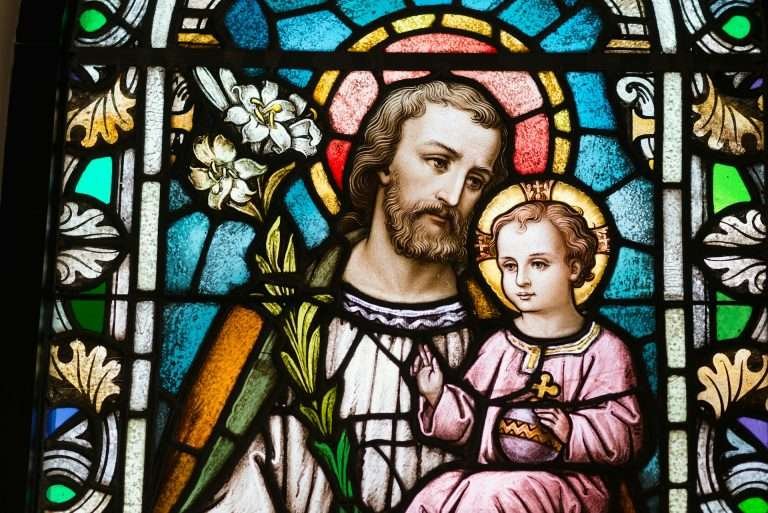
Oh glorious patriarch St. Joseph, who merited to be called “just” by the Holy Spirit, I urgently recommend to the soul of [Name], which Jesus redeemed at the price of his precious blood.Thou knowest how deplorable is the state and how unhappy the life of those who have banished this loving savior from their hearts, and how greatly they are exposed to the danger of losing him eternally.
Permit not, I beseech thee, that a soul so dear to me should continue any longer in its evil ways; preserve it from the danger that threatens it; touch the heart of the prodigal child and conduct him back to the bosom of the fondest of fathers. Abandon him not, I implore thee, till thou hast opened to him the gates of the heavenly city, where he will praise and bless thee throughout eternity for the happiness which he will owe to thy powerful intercession.
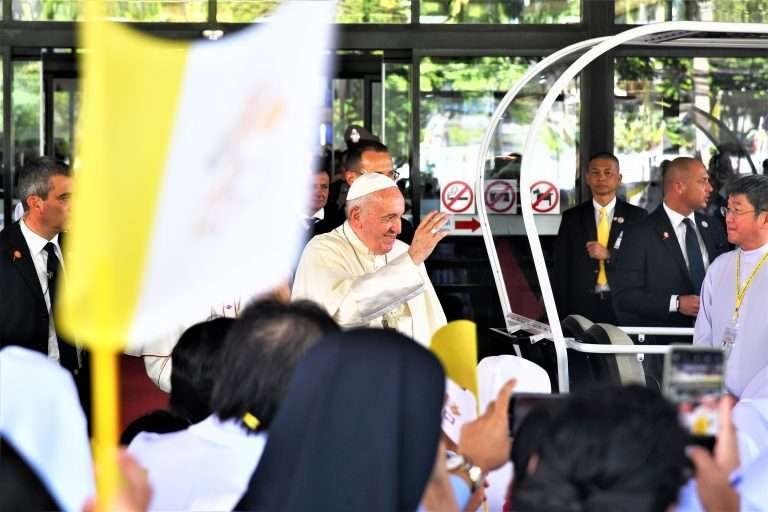
Pope Francis told Reuters in an interview published July 4 that “all of these coincidences made some think that the same ‘liturgy’ would happen. But it never entered my mind. For the moment no, for the moment, no. Really!”
The pope did say, as in the past, that he would consider resigning one day if he could no longer run the Church due to poor health, but only “God will say” when that might be.
The 90-minute interview with Reuters took place on July 2 in the Vatican’s Santa Marta guesthouse, where Pope Francis lives. He frequently holds meetings in a reception room on the building’s ground floor.
According to Reuters, the pope arrived for the interview using a cane.
He joked, “I’m still alive!” when asked how he was doing. He also explained that he had suffered “a small fracture” in his right knee after stepping wrongly with an inflamed ligament.
The fracture is healing, he said, with the help of laser and magnet therapy. “I am well, I am slowly getting better.”
Pope Francis expressed regret that, due to the knee injury, he had to cancel a trip to the Democratic Republic of Congo and South Sudan, scheduled for July 2-7, saying the decision caused him “much suffering.”
The decision came after doctors said he needs 20 more days of therapy and rest for his knee before he travels to Canada July 24-30.
The pope also brushed off rumors that he has cancer.
Some reports have claimed Francis is suffering from colon cancer after he underwent an operation to remove part of his large intestine due to diverticulitis one year ago.
“[The operation] was a great success,” he told Reuters, adding with a laugh that “they didn’t tell me anything” about the supposed cancer, which he dismissed as “court gossip.”
He added that he does not want to have surgery on his knee because of the negative side-effects of general anesthetic.
In the interview, Pope Francis also addressed the U.S Supreme Court’s recent Dobbs decision, and answered a question about pro-abortion Catholic politicians receiving Holy Communion.
He also spoke about the war in Ukraine and reiterated his desire to visit Kyiv and Moscow.
No pope has ever visited Moscow, but Francis hinted that there may now be an opening, even if Russian authorities told the Vatican several months ago it was not the right time.
“I would like to go [to Ukraine], and I wanted to go to Moscow first. We exchanged messages about this because I thought that if the Russian president gave me a small window to serve the cause of peace,” he said.
“And now it is possible,” he said, “after I come back from Canada, it is possible that I manage to go to Ukraine. The first thing is to go to Russia to try to help in some way, but I would like to go to both capitals.”
The pope said Vatican Secretary of State Cardinal Pietro Parolin has been in contact with Russian Foreign Minister Sergei Lavrov about a possible trip to the Russian capital.
“Prayer joined to sacrifice constitutes the most powerful force in human history.”
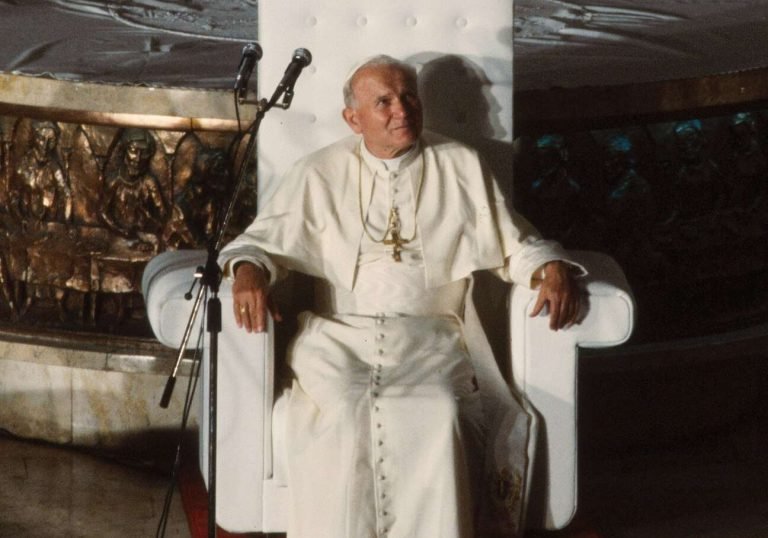
“The Rosary is my favorite prayer. A marvelous prayer! Marvelous in its simplicity and its depth. In the prayer we repeat many times the words that the Virgin Mary heard from the Archangel, and from her kinswoman Elizabeth.”
“The Rosary is a prayer both so humble and simple and a theologically rich in Biblical content. I beg you to pray it.”
“The Rosary is my favorite prayer.”
“Prayer finds its source in God’s holiness and it is at the same time our response to this holiness.”
“I hurry to express to you and your fellow citizens my profound sorrow and my closeness in prayer for the nation at this dark and tragic moment.”
“…Be holy men and women! Do not forget that the fruits of the apostolate depend on the depth of the spiritual life, on the intensity of prayer, of continual formation and sincere adhesion to the directives of the Church.”
“We must reflect the light of Christ through lives of prayer and joyful service to others.”
“What have I done with my baptism and confirmation? Is Christ really at the center of my life? Do I have time for prayer in my life? Do I live my life as a vocation and mission?”
Did the Church ever say that sex is for procreation alone?
Answer:
The Catholic Church doesn’t teach that conjugal love was for procreation only. If it did, each parish would have had all kinds of reproductive tests and mandates. But this has never been a teaching in the Catholic Church.
What the Church teaches is that conjugal love is for a unitive purpose as shown in Genesis 2:23-24:
“The man said, ‘This is now bone of my bones and flesh of my flesh;
she shall be called ‘woman,’ for she was taken out of man.’ That is why a man leaves his father and mother and is united to his wife, and they become one flesh.”
And also for procreation as shown in Genesis 1:26-28:
Then God said, “Let us make mankind in our image, in our likeness, so that they may rule over the fish in the sea and the birds in the sky, over the livestock and all the wild animals,[a] and over all the creatures that move along the ground.”
So God created mankind in his own image, in the image of God he created them; male and female he created them. God blessed them and said to them, “Be fruitful and increase in number; fill the earth and subdue it. Rule over the fish in the sea and the birds in the sky and over every living creature that moves on the ground.”
“Conjugal love involves a totality, in which all the elements of the person enter – appeal of the body and instinct, power of feeling and affectivity, aspiration of the spirit and of will. It aims at a deeply personal unity, a unity that, beyond union in one flesh, leads to forming one heart and soul; it demands indissolubility and faithfulness in definitive mutual giving; and it is open to fertility. In a word it is a question of the normal characteristics of all natural conjugal love, but with a new significance which not only purifies and strengthens them, but raises them to the extent of making them the expression of specifically Christian values.”