Saturday, April 4, 2026
11.6 C
London
Home Blog Page 170

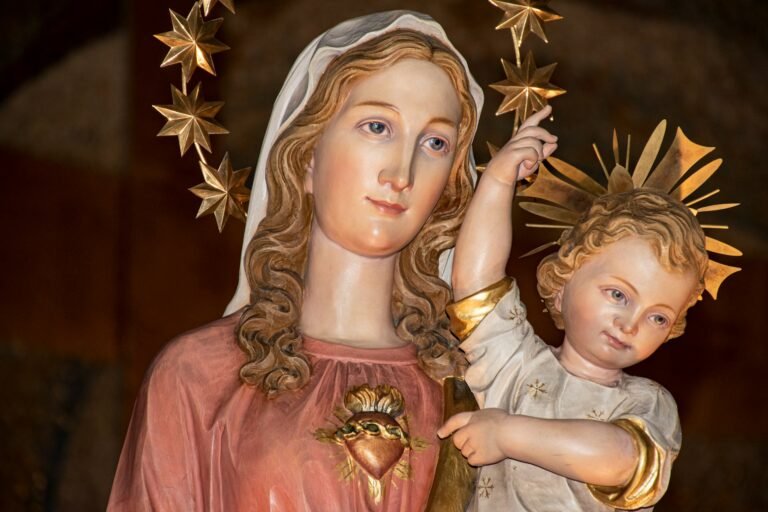
NOVENA TO MARIA BAMBINA

PRAYER


Holy Child Mary of the royal house of David, Queen of the angels,
Mother of grace and love, I greet you with all my heart.
Obtain for me the grace to love the Lord faithfully during
all the days of my life. Obtain for me, too, a great devotion
to you, who are the first creature of God’s love.

Hail Mary, full of grace………….


O heavenly Child Mary, who like a pure dove was born
immaculate and beautiful, true prodigy of the wisdom of
God, my soul rejoices in you. Oh! Do help me to preserve
the angelic virtue of purity at the cost of any sacrifice.

Hail Mary, full of grace…………….


Hail, lovely and holy Child, spiritual garden of delight, where,
on the day of the Incarnation, the tree of life was planted,
assist me to avoid the poisonous fruit of vanity and pleasures of the world.
Help me to engraft into my soul the thoughts, feelings,
and virtues of your divine Son.

Hail Mary, full of grace…………….


Hail, admirable Child Mary, Mystical Rose, closed garden,
open only to the heavenly Spouse. O Lily of paradise,
make me love the humble and hidden life;
let the heavenly Spouse find the gate of my heart always open
to the loving calls of His graces and inspiration.

Hail Mary, full of grace…………….


Holy Child Mary, mystical dawn, gate of heaven,
you are my trust and hope.
O powerful advocate, from your cradle stretch out your hand,
support me on the path of life.
Make me serve God with ardor and
constancy until death and so reach an eternity with you.

Hail Mary, full of grace…………….


Prayer

Blessed Child Mary, destined to be the Mother of God and our loving Mother, by the heavenly graces you lavish upon us, mercifully listen to my supplications. In the needs which press upon me from every side and especially in my present tribulation, I place all my trust in you.

O holy Child, by the privileges granted to you alone and by the merits which you have acquired, show that the source of spiritual favors and the continuous benefits which you dispense are inexhaustible, because your power with the Heart of God is unlimited.

Deign through the immense profusion of graces with which the Most High has enriched you from the first moment of your Immaculate Conception, grant me, O Celestial Child, my petition, and I shall eternally praise the goodness of your Immaculate Heart.


Devotion to Maria Bambina

Holy Mother Church celebrates the birthday of Our Blessed Mother Mary on the 8th of September each year, but rarely is our attention drawn to Our Lady as an infant. Devotion to Maria Bambina helps to fill that void.

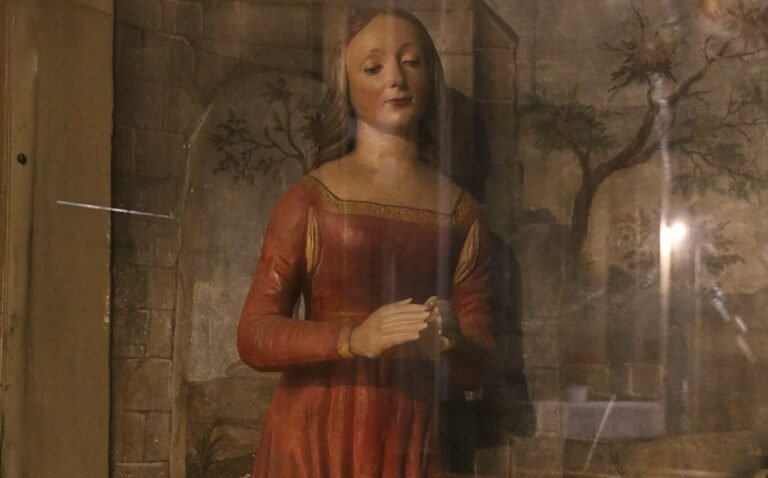
The miraculous image of Maria Bambina was made prior to 1730 by a Franciscan nun who afterwards entrusted Her to others. During the ensuing years, she came into the care of the Sisters of Charity at Lovere, Italy. In 1856, these Sisters of Charity were asked to take over the management of the Hospital of Ciceri in Milan and, in 1876, this waxen image was carried to their Mother House there at Via Santa Sofia 13, where she has remained ever since.


The beautiful image of the Maria Bambina was exposed for veneration only on the 8th of September, the Feast of Mary’s Nativity. In 1884, those who were devoted to the Maria Bambina received a reward for their devotion. Due to paralysis in her arms and feet, Sister Josephine Woinovich was bedridden and in unbearable pain. On the 8th of September, she begged the Mother General to get Maria Bambina and leave the image near her overnight. The following morning the Mother General was inspired to take the image, so old, worn and grayish colored to the other sick Sisters in the infirmary so they could kiss her.


There was in the infirmary a good novice, Giulia Macario, who was unable to move because of her serious illness, but who, overcome by her ardent faith, took the image into her arms and pleaded with her in tender and loving words for the grace for her recovery. She was immediately and miraculously cured, for such Faith moves mountains. And at the same time this image itself underwent an amazing transformation from the former dull gray color to the warm flesh hues it has today, as can be seen, where she is enshrined in the Sanctuary of the Mother House in Milan.


Many graces and miracles have come from devotion to the Maria Bambina, among them the recovery of Sister Josephine Woinovich herself. And that is why these sisters are now commonly known as the Sisters of Maria Bambina. Each year on Our Lady’s birthday, the Sisters of the Bambina touch small pieces of cotton to the miraculous image of the Maria Bambina. These pieces of cotton are then distributed as sacramentals to those who have become attached to devotion of Maria Bambina.


(Taken from information provided by the Sisters. Imprimatur: In Curia Arch Mediolani die 14-1-1931; Theresius Ferraroni)

CHAPLET OF OUR LADY OF LOURDES

PRAYER

On the medal pray:

O ever Immaculate Virgin,

Mother of Mercy,

Health of the Sick,

Refuge of Sinners,

Comfort to the Afflicted,

You know my wants, my troubles, my sufferings. Deign to cast upon me a look of Mercy. By appearing in the Grotto of Lourdes, You were pleased to make it a privileged sanctuary, whence You dispense your graces; and already many sufferers have obtained the cure of their infirmities, both spiritual and corporal.

I come, therefore, with the most unbounded confidence to implore Your maternal intercession.

Obtain, O loving Mother, the granting of my requests. Through gratitude for favors, I will endeavor to imitate your virtues that I may one day share Your glory.

Our Lady of Lourdes, pray for us. Amen.


On the large bead pray:

Our Father…


On each of the small beads pray:

Hail Mary …

In conclusion pray:

Glory be…

May God bless each one of you joining in prayers!


Lourdes and St. Bernardette Soubirous


In Lourdes, France, in 1844 a baby girl named Bernadette Soubirous was born.  Bernadette’s family was very poor, and Bernadette was responsible for looking after and caring for her brothers and sisters.

Bernadette was a good natured girl with dark eyes and a round face.  The only education Bernadette received was the Catholic teachings which she studied faithfully in the evenings.


At the age of 13, Bernadette was preparing for her First Holy Communion.  One of Bernadette’s chores was to collect wood for the fire.  On a cold day in February 1858, Bernadette and 2 companions headed off to the Gave River to collect pieces of wood.  The 2 companions ran ahead and left Bernadette struggling to keep up.  As Bernadette was taking off her shoes to make her way through the river, she was startled by a peculiar wind and rustling sound.


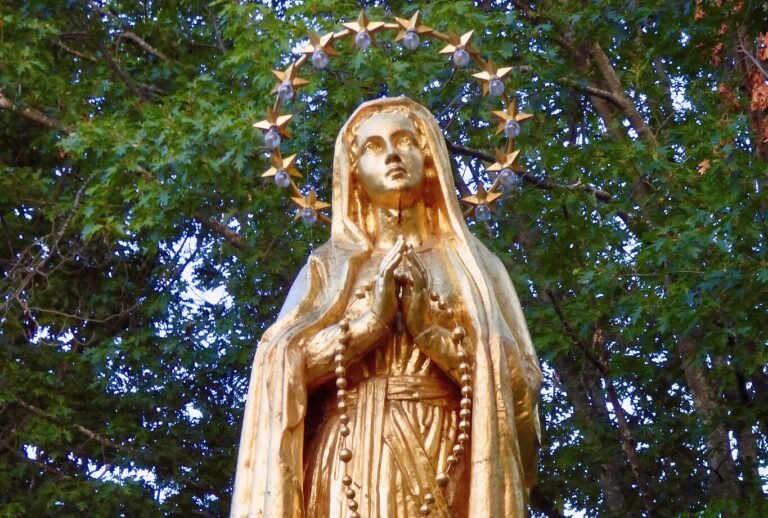
Bernadette looked up towards the grotto and the caves on the riverbank.  Near the opening of the grotto, Bernadette glanced and noticed the cave was suddenly filled with golden light.  Lifting up her eyes, she saw a lady of great beauty, dressed in a pure white robe with a blue sash, a veil over her head, a rosary clasped in her hands and yellow roses at her feet.  Bernadette rubbed her eyes.   What a beautiful lady!  But where did she come from?  And what was she doing here?


The beautiful lady smiled at Bernadette and asked her to say her rosary.  Bernadette said her prayers and when she was finished she looked up, the lady had vanished.  Bernadette caught up to her 2 friends and discovered that they were upset with her.  What have you been doing? Playing in the river, while we are out here collecting wood? Bernadette told them about the vision she had just witnessed.  The girls told Bernadette she was silly and probably just seeing things.


Bernadette felt drawn to the grotto and returned there on the next Sunday.  Again Bernadette saw the beautiful lady.  The third time Bernadette went to the grotto, the lady spoke to her.  The beautiful lady asked Bernadette to come here every day for fifteen days.  She said that she wanted Bernadette to tell the priests to build a chapel there.  She told her to drink water from the stream.  The lady also told Bernadette to pray for the conversion of sinners.  Bernadette followed the requests.


On March 25, the Lady finally told Bernadette that she was Mary, the mother of Jesus, and that her purpose in appearing to Bernadette was to warn her to pray and make sacrifices for sinners. The miracles of body and soul performed at Lourdes are the proof that this message was a true warning from the queen of heaven to her children and that she was deeply interested in their welfare.

Bernadette’s daily visits to the grotto caused quite a stir in the countryside.  Crowds of people began to gather and watch Bernadette as she examined the cave and obediently did the things the lady asked of her.  They watched Bernadette scrape away soil beside the grotto until a spring of water started to trickle out.  Would you believe this spring still provides 27,000 gallons of water everyday!


This is the sacred Lourdes water which heals all!  At first, the priests, the town’s folk, and the families doubted Bernadette’s visions and the purpose in her activities.  But Bernadette was stubborn and determined to follow Mary’s plans for her.  Eventually everyone did believe Bernadette and the grotto at Lourdes became a place of worship and the Lourdes holy water was sacred for performing miracles.


At the age of 22, Bernadette became a nun and devoted her life to Mary, to praying for the conversion of sinners and to the service of God.  Bernadette died on April 16, 1879, at the age of 36.


She will be remembered for believing in the greater glory of God as she was faithful to her mission, she was humble in glory and she was valiant in her sufferings.  Today, Lourdes remains one of the most frequented Christian shrines in the world.  More than 3 million visitors, pilgrims and tourists come each year to the Grotto of Massabielle, where the Virgin Mary appeared to Bernadette 18 times in 1858.


The Apparitions


The First Apparition – Thursday, February 11, 1858:

After dinner on the Thursday before Ash Wednesday, Bernadette’s mother told her children that there was no more wood in the house. Bernadette and her sister, Toinette, and a neighbor friend, Jeanne Abadie, went to the river Gave to gather wood. They had to cross a canal of cold water. Fearing that she would have an asthma attack, Bernadette stayed on the bank, and the other two girls crossed the stream and picked up wood under the grotto until they disappeared along the Gave.

Bernadette heard a great noise like the sound of a storm, but nothing was moving. She was frightened and stood straight up, loosing all power of speech and thought. She turned her head towards the Grotto of Massabieille and saw in the opening of the rock a rosebush, one only, moving as if it were very windy. Almost at the same time, there came out of the interior of the grotto a golden-colored cloud, and soon afterwards, a Lady, young and beautiful –exceedingly beautiful — the likes of whom she had never seen, came and placed herself at the entrance of the opening above the rosebush. She looked at Bernadette and immediately smiled and signaled her to advance, in a way that a mother motions her child to come near. Bernadette took out her rosary and knelt before the Lady, who also had a rosary on her right arm. When Bernadette tried to begin saying the rosary by making the sign of the cross, her arm was paralyzed. It was only after the Lady had made the sign of the cross herself that Bernadette was able to do the same. As Bernadette prayed the rosary, the Lady passed the beads of her rosary between her fingers, but remained silent. She did recite the Gloria’s with her, however. When the recitation of the rosary was finished, the Lady returned to the interior of the rock and the golden cloud disappeared with her.


Bernadette told her sister of the extraordinary things that had happened to her at the grotto, asking her to keep it a secret. Throughout the day the image of the Lady remained in her mind. In the evening at the family prayer Bernadette was troubled and began to cry. When her mother asked what was the matter, her sister told her everything. Bernadette’s mother told her that these were illusions, and forbid her to return to Massabieille.


Bernadette could not sleep that night. The face of the Lady, so good and so gracious, returned incessantly to her memory. It was useless to recall what her mother had said because she did not believe that she had been deceived. Her conviction of this was unshakable. She went on to describe the Beautiful Lady in detail:


“She has the appearance of a young girl of sixteen or seventeen. She is dressed in a white robe, girdled at the waist with a blue ribbon which flows down all around it. A yoke closes it in graceful pleats at the base of the neck. The sleeves are long and tight-fitting. She wears upon her head a veil which is also white. This veil gives just a glimpse of her hair and then falls down at the back below her waist. Her feet are bare but covered by the last folds of her robe except at the point where a yellow rose shines upon each of them. She holds on her right arm a rosary of white beads with a chain of gold shinning like the two roses on her feet.” On Sunday, Bernadette’s mother allowed her to return to the grotto.


The Second Apparition – Sunday, February 14, 1858:

The three little girls started out, armed with a vial of holy water. If what their elders said was true, they might need this to ward off malign influences. Instead of throwing the water at the Lady, Bernadette poured the water quietly on the ground. Then she turned and told her companion that, judging by the Beautiful Lady’s smile, She was pleased by this action. Before Jeanne Abadie, who was just arriving, could explain that she had thrown a stone for fun, the others had scattered in every direction, screaming for help as they ran. When Toinette reached the cachot (home) and poured out her story, her mother seized a switch and headed for the site. By now the whole town was talking. Fortunately for the unhappy little Bernadette, one local woman of considerable prominence interpreted the apparitions in a different light from most of the townspeople. She got Louise’s permission to let her daughter Bernadette accompany her and a friend to the grotto.


The Third Apparition – Thursday, February 18, 1858:

All three went first to early Mass. Then they set out for the grotto. Madame Millet carried a blessed candle; Antoinette Peyret a pen, paper and ink to record anything that might be said. The Beautiful Lady said to Bernadette: “There is no need for me to write down what I have to say to you. Will you be so kind as to come here every day for fifteen days?” No explicit reason was given for this request, but a definite pledge accompanied it: though she did not promise that Bernadette would be happy in the world, the Beautiful Lady gave her word that happiness would be waiting in heaven.


The Fourth Apparition – Friday, February 19, 1858:

Bernadette’s parents and her aunt accompanied her to the Grotto along with some neighbors. Shortly after Bernadette began to pray the Rosary, everyone present noticed that her face was transfigured and illuminated.


The Fifth Apparition – Saturday, February 20, 1858:

On Her fifth visit, the Beautiful Lady taught Bernadette a prayer, which she recited daily for the rest of her life. She never revealed the prayer to anyone, but she did say that she was told to always bring a blessed candle with her. Candles now burn perpetually at the Shrine.


The Sixth Apparition – Sunday, February 21, 1858:

The Beautiful Lady told Bernadette on this occasion to “pray for sinners”, which she never failed to do. Several hundred people were present on that day, including Dr. Dozous, a prominent physician in Lourdes. He told the crowd that he could find nothing abnormal about Bernadette’s physical condition, even when her mental state was trancelike: “Her pulse was regular, her respiration easy, and nothing indicated nervous excitement.”

A meeting was called by the citizens of the town, and sharp differences of opinion were expressed regarding the apparitions. They expressed concern for the dangers that could accompany gatherings of such large crowds. They persuaded the Procurer Imperial, M. Dutour, to officially forbid Bernadette to return to the Grotto. Bernadette responded that she could not give her word to refrain from going to the Grotto because she had promised the Beautiful Lady she would do so. Dutour dismissed her, and discussed this matter with two local officials: M. Jacomet, the Chief of Police; and M. Estrade, who was to become Bernadette’s and Dutour’s friend and who was also to perform an invaluable service by listening in at future conversations and scrupulously recording them word for word.


Estrade recorded a conversation between the Chief of Police and Bernadette. During that meeting, M. Jacomet deliberately tried to confuse Bernadette to change her account of the apparitions. When that attempt failed, the Chief of Police released Bernadette to the custody of her father with an admonition that he take her home and guarantee that there would be no further disturbances. But the interior call which was urging her on was stronger than any earthly admonition.


On Monday, February 22, 1858, Bernadette returned to the Grotto after school. Two policemen saw her and followed her, and so did the usual crowd. The policemen stood at respectful attention as she knelt down in her accustomed place. But as she arose, they sprang forward and asked her if she still insisted that she had seen a Beautiful Lady. “No, this time I saw nothing at all,” she answered. She was allowed to go home, but she was taunted and threatened. People said mockingly that the Beautiful Lady was afraid of the police and had found some safer place to go.


The Seventh Apparition – Tuesday, February 23, 1858:

Approximately two hundred people were present at this apparition. When Bernadette’s appearance was once more transformed, the men present removed their hats and fell to their knees. Bernadette appeared to be gravely serious and listening, and then joyful, and she would occasionally bow low. At the conclusion of the vision, which lasted an hour, Bernadette moved on her knees toward the rose bush and kissed the ground. When asked what the Lady had said, Bernadette replied that the Lady had entrusted her with three secrets, which she never revealed.


The Eighth Apparition – Wednesday, February 24, 1858:

During the eighth apparition, Bernadette turned and faced the crowd of more than four hundred people, and three times she repeated, “penitence, penitence, penitence!”


The Ninth Apparition – Thursday, February 25, 1858:

During this apparition, the Beautiful Lady told Bernadette to, “drink from the fountain and bathe in it.” Bernadette was puzzled; there had never been a fountain at Massabieille, or any kind of a natural spring. She began to scratch the loose gravel off the ground which encircled her. As she did so, she noticed that the ground beneath her was moist, and that a little pool was forming and bubbles were rising from it. She cupped her hands together and drank, and then washed her face. The next day, the pool was overflowing and water was dripping down over the rock. The following day, the trickle had become a real stream. Of course, it was immediately said — and has been said by skeptics ever since — that the spring was there all the time. The fact remains that Bernadette did find the spring as the result of a direct command.


The Tenth Apparition – Saturday, February 27, 1858:

On this occasion, the Beautiful Lady told Bernadette to “kiss the ground on behalf of sinners.” She immediately did so, and the crowd followed her example.


The Eleventh Apparition – Sunday, February 28, 1858:

There were approximately two thousand spectators at the Grotto that morning. The Lady asked Bernadette to tell the clergy to build a chapel on the site of the Grotto.


The Twelfth Apparition – Monday, March 1, 1858:

During this apparition, the Lady commented to Bernadette that she was not using her own Rosary, which was an accurate statement. Bernadette had been asked by Pauline Sans to use Pauline’s Rosary at the Grotto that day.


The Thirteenth Apparition – Tuesday, March 2, 1858:

Bernadette arrived at the Grotto early in the morning, prayed the Rosary in the presence of the Lady, who remained silent except for the Gloria’s.


The Fourteenth Apparition – Wednesday, March 3, 1858:

During this apparition, the Lady repeated that She wanted a chapel built by the clergy and, additionally, that She wanted people to come to this chapel in processional form. Bernadette was terribly afraid of the parish priest, Abbe Peyramale. It had been difficult for her to go to him the first time about building a chapel, but it took a great deal of courage for her to present herself to him a second time about processions. He dismissed her curtly, ordering her to tell the Beautiful Lady that the Cure of Lourdes was not in the habit of dealing with mysterious strangers; that if She wanted a chapel — if She had a right to one — She must reveal Her identity.


The Fifteenth Apparition – Thursday, March 4, 1858:

By now, most everyone in France knew that March 4th was the last of the fifteen days that Bernadette had promised the Lady that she would be present at the Grotto. Twenty thousand people were present that day, including an entire military garrison in full-dress uniform. As Bernadette approached the apparition site, a path was cleared for her, and the soldiers who accompanied her did so with respect. After the apparition, Bernadette told the crowd that she would continue coming to the Grotto because the Beautiful Lady had said nothing in the form of a farewell. The crowd was disappointed and disillusioned. They had seen Bernadette transfigured with a strange radiance, but they had hoped to also share her vision, to hear the same voice that she did, and they expected that, at the very least, the rosebush would burst into a sudden miraculous bloom.


The Sixteenth Apparition – Thursday, March 25, 1858:

During the sixteenth apparition, which occurred on the Feast of the Annunciation, the Beautiful Lady revealed her identity to Bernadette: “Que soy era Immaculado Conception”, I am the Immaculate Conception. Bernadette was not sure what this name meant, but people who needed no explanation flocked to Lourdes in greater numbers than ever before. Baron Massy, a local official, ordered Bernadette to be examined by three more physicians. They found her to be physically and mentally sound.


The Seventeenth Apparition – Wednesday, April 7, 1858:

Bernadette had never failed to bring a lighted candle to the Grotto since the first time she had been instructed to do so by the Beautiful Lady. During this apparition, she unconsciously placed one of her hands over the flame of the candle. People witnessed the flame burning through her fingers. Bernadette did not even hear the cries of horror which arose from the crowd. She continued to pray for at least fifteen minutes while the flame burned through her hand. She emerged quietly from prayer unscathed. Then Dr. Dozous took another candle and, without warning, touched the flame to her hand. Bernadette immediately cried out in pain. Shortly after this apparition, the Prefect took matters into his own hands and ordered the Grotto closed, and the rustic altar was dismantled.


The Eighteenth Apparition – Friday, July 16, 1858:

Bernadette seemed relieved that she was becoming less of a public figure. Several months had passed, and after receiving communion on the feast of Our Lady of Mt. Carmel, Bernadette felt an irresistible urge to return to the Grotto. Since the barricade was still in place, she and her aunt could not get as close to the sacred spot as they wanted, so they knelt in the grass, and the Beautiful Lady appeared to her one last time.


Bernardette after the apparitions

Bernadette joined the order of the Sisters of Charity. Throughout her life she remained sickly, but attended patiently to her duties as infirmarian and sacristan. She died a holy death on April 16, 1879. She was 34 years old. Bernadette was buried on the convent grounds in Nevers, France. Her body was exhumed thirty years later on September 22, 1909, in the presence of two doctors, several appointed officials, and nuns from the local convent. When Bernadette’s coffin was opened, there was no odor, and her body was completely untouched by the laws of nature.

A second exhumation took place on April 3, 1919. The body of the then declared Venerable was found in the same state of preservation as ten years earlier, except that the face was slightly discolored, due to the washing it had undergone during the first exhumation. A worker in wax was entrusted with the task of coating the face of the Saint who had been dead forty years. The sacred relic (Bernadette’s body) was placed in a coffin of gold and glass and can be viewed to this very day in the Chapel of Saint Bernadette at the motherhouse in Nevers, France.


Lourdes as a Shrine and miraculous place
 

SAN JUAN DIEGO


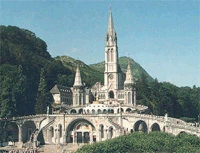
Today, around the grotto, a neo-Byzantine, three-level basilica was built. Underground is another basilica, which holds 7,000 people and has a ramp for wheelchairs. The baths, the real focal point of  the shrine, are small cubicles full of ice-cold water from the spring, in which the sick, some terminally ill, immerse themselves in hopes of being healed. Two hospitals, which care for but do not treat the sick, are part of the complex.


Of the 3 million individuals who come to Lourdes every year, 500,000 are sick people hoping to be cured miraculously. Recent data from the Lourdes Bureau Médical, 66 cases have officially been acknowledged as miraculous, from 1858 to nowadays; from the first case occurring a few days after the first apparition at Massabielle, to the last case, relating to Mr. Jean-Pierre Bély, acknowledged in 1999, versus an overall number of 7000 recoveries claimed.
Claims of miracles must go through  the study of one of the most strict group of physicians. In fact, the Lourdes National Medical Committee was established in 1947, made up by university specialists, in order for a more rigorous and independent control to better guarantee the authenticity of the possible miracles.

This committee became International (LIMC) in 1954, thus acquiring even greater authority and a universal dimensions.


At present, the Lourdes International Medical Committee (LIMC,) based in Paris,  is made up by 25 members, including physicians of international renown, university professors and  experienced and qualified medical practitioners, from different countries worldwide.

There must be medical proof that the sick person was indeed sick to begin with, that the symptoms disappeared within hours, and that the cure lasted for several years. The patient is examined on the spot by a medical bureau, which sends its conclusions to LIMC.


If the commission regards the cure as authentic, the report goes to a canonical commission in the diocese from which the cured person came, and the bishop makes a pronouncement on it. Only then the recovery is officially proclaimed a miracle.

Leave a prayer for the 100th anniversary of Joan of Arc’s canonization

0

The French Knights of Columbus will place the intentions at the same Marian shrine St. Joan of Arc prayed at before leaving to participate in the Hundred Years’ War.


The Knights of Columbus in France are commemorating the 100th anniversary of St. Joan of Arc’s canonization by bringing prayers from around the world to their country’s patron saint.  Knights from the saint’s hometown — Domrémy — are collecting prayer intentions and leaving them at the foot of the statue of Our Lady of Beaumont, the same statue St. Joan of Arc prayerfully visited before leaving her village to fight in the Hundred Years’ War. The statue is currently located in the Basilica of Bois-Chênu in Domrémy, which was dedicated to the French patron saint in the late 19th century.


“This time of confinement is a time of pain and grace,” said Arnaud Boutheon, the Knights of Columbus’ special consultant for French affairs. “We believe in the communion of saints, we believe in the power of prayer, and we know that the Blessed Virgin of Beaumont, who welcomed the prayers of little Jeanne, will know how to intercede for us with Jesus, to entrust to him our family of the Knights of Columbus and our countries.”


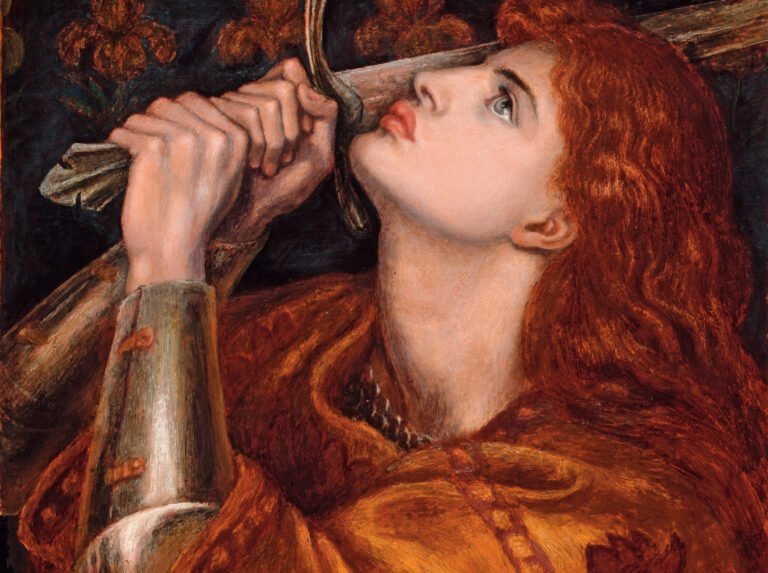
St. Joan of Arc was a shepherdess in medieval France who began hearing the voices of St. Michael the Archangel, St. Catherine of Alexandria and St. Margaret of Antioch. As a teenager, she felt called by God to help her country that was at war with England. After leading an army in support of the French king, she was condemned to death for heresy by corrupt judges and burned at the stake May 30, 1431, at age 19. 


She has since become a symbol of French nationalism, a popular subject in literature and film, but, most importantly, a powerful witness of Christ. For that, Joan of Arc was canonized by Pope Benedict XV on May 16, 1920 —nearly 500 years after she was martyred.

Boutheon believes her vocation, her patriotic duty to serve God and her country, is “universal.”


“Saint Joan of Arc gathers in her person many contemporary chivalric virtues such as boldness, charity and freedom of conscience, in the face of cowardice, predation and submission,” Boutheon said. “Through her Fiat, she was able to restore confidence, dignity and hope to men. Her word is a free word, touched by the grace, in the face of pressure from clerics, doctors and scholars.”


Patriotism is a core principle of the Knights of Columbus. During the current COVID-19 pandemic, now more than ever, the French Knights look to St. Joan of Arc’s example of service to both country and Church.


“The principle of patriotism invites us to serve our love and to place our steps in those of the saints who bequeathed the Catholic faith to us,” Boutheon said.

During the pandemic, the French Knights have helped food pantries, broadcast Masses and even served as ministers to bring the Eucharist to the sick and isolated in an effort to leave no neighbor behind.


They also co-produced a video (along with Aleteia) with testimonies about how St. Joan of Arc played a role in their lives, which was broadcast on May 1.

For Boutheon and the Knights, the event Saturday is about humbly serving their countrymen and fostering a spirit of prayer for all facing these unprecedented circumstances. And what better way than to ask for the intercession of St. Joan of Arc?


If you want prayers left at the foot of Our Lady of Beaumont, please send them to 100anssaintejeannedarc@gmail.com.

Andrew Fowler is a Content Producer with the Knights of Columbus. Send comments and stories to andrew.fowler@kofc.org

How to ask Mary for grace in a moment of desperation

A prayer recommended by Pope Francis

In moments of darkness or desperation, believers can count on the help of our Mother, the Virgin Mary. This is a prayer that Pope Francis recommends for these situations:

Holy Mary, full of God’s presence during the days of your life, you accepted with full humility the Father’s will, and the devil was never capable of tying you up with his confusion.

Once with your Son you interceded for our difficulties, and full of kindness and patience, you gave us example of how to untie the knots in our life.

By remaining forever Our Mother, you put in order and make more clear the ties that link us to the Lord.

Holy Mother, Mother of God and our Mother, to you who untie with a motherly heart the knots of our life, we pray to you to receive in your hands (the name of the person), and to free him/her of the knots and confusion with which our enemy attacks.

Through your grace, your intercession and your example deliver us from all evil, Our Lady, and untie the knots that prevent us from being united with God, so that we, free from sin and error, may find Him in all things, may have our hearts placed in Him, and may serve Him always in our brothers and sisters.

How John Paul II can help us really pray the Litany of the Sacred Heart

A litany is a tricky form of prayer


In the mid to late 80s, Pope John Paul II took three summers and dedicated his mini-reflections at the public praying of the midday Angelus to the Sacred Heart of Jesus.The Polish pope drew his reflections from the Litany of the Sacred Heart (which you can pray with the podcast here from Aleteia’s editor-at-large, Elizabeth Scalia).

As I was reading through the first several reflections from John Paul, it struck me that a litany is a tricky form of prayer.

God himself provided us with the model for litanies in Psalm 136, as the refrain “for his mercy endures forever” is repeated in each verse. Then the Sacred Liturgy gives us a kind of mini-litany at each Mass, with the Kyrie (Lord have mercy, Christ have mercy, Lord have mercy), drawn from much longer litanies of mercy in the Divine Liturgy of the Eastern tradition.

Litanies are calming, meditative prayers, helping us to really dwell on one or several key truths or petitions, letting them sink in to the heart and mind.

But the repetition can have the effect of dulling us to the depth and wealth of the truths we mention in the prayer. And hence it’s good, as St. John Paul II did, to stop and really consider each phrase.

For a long litany like the Litany of the Sacred Heart, it could be useful to dedicate a day to considering just one verse — or perhaps take the morning to dwell on one title, and then in the afternoon, move to the next one, and so on, until you’ve contemplated the whole litany.

When we stop to really think about what we’re saying, we can draw from the litany the consolation and grace God wants to give us.

John Paul II can give us a start. Here are translations of phrases taken from his reflections on some of the first few petitions.


Heart of Jesus, Son of the Eternal Father, have mercy on us.

“The infinite God has permitted that he be embraced by the Heart of a Man whose name is Jesus of Nazareth, Jesus Christ. And through the Heart of the Son, God the Father also draws near to our hearts, and comes to them.”


Heart of Jesus, formed by the Holy Spirit in the womb of the Virgin Mother, have mercy on us.

“Right now, we want to make this Heart the only custodian of our poor human hearts, of hearts tried in so many respects, oppressed in various ways.”


Heart of Jesus, infinite in majesty, have mercy on us.

“This Heart is the maximum closeness of God in relation to human hearts and human history. This Heart is the marvelous ‘condescension’ of God: the human Heart that beats with divine life; divine life beating in the human heart.”


Heart of Jesus, aflame with love for us, have mercy on us.

“A furnace burns. In burning, it sears away all that is material: brush or any other easily combustible material. The Heart of Jesus, the human Heart of Jesus, burns with the love that permeates it. And this love is love for the Eternal Father and love for men, for the adopted daughters and sons. A furnace, in burning, little by little goes out. The Heart of Jesus, instead, is an inextinguishable furnace. It resembles the burning bush of the Book of Exodus, that God revealed to Moses.”


Heart of Jesus, source of justice and love, have mercy on us.

“In You the Eternal Father has offered humanity the justice that is in the Most Holy Trinity, in God Himself. The justice that is of God is the definitive foundation of our justification. This justice comes to us through love.”


~

The text of the litany is here.

The reflections from John Paul’s Angelus addresses on the Litany of the Sacred Heart are compiled in this book.


Learn about some of the other litanies of the Church:

St. Joseph: Solace of the Wretched, Patron of the Dying … Terror of Demons?

Praying for humility when you love compliments

Want to learn more about the Holy Spirit?

PRAYERS FOR MONEY PROBLEM

The coronavirus pandemic has caused a great deal of uncertainty and confusion not only about people’s physical health, but about our economic conditions as well. Many people are losing their jobs or otherwise finding themselves out of work from shutdowns and quarantines, while others argue over some frightening choice facing us over an even greater pandemic or another great Depression.


With so much uncertainty, these prayers in times of financial difficulties  can serve as a reminder that, although, in the words of a Cyndi Lauper song “money changes everything,” in our faith it isn’t the only thing that matters, not by a long shot!


Dear Lord,

Help me find firm ground in this shaky economy.

As I seek work and assistance,

Give me strength not to be anxious when I seem to be going nowhere;

Give me patience not to despair when things look bleak;

Give me serenity to know you are here with me, helping me to carry my crosses

each day;

So that I may do Your will,

For the salvation of souls

And for my Eternal Life. Amen.


This one is slightly longer, but expresses a similar sentiment:


Dear Lord,

In this time of uncertainty,

Be my rock in a world built on sand;

Be my oasis of grace and peace in a world filled with tension and turmoil;

Help me to carry my cross gracefully, as you did in Your Passion;

Help me to follow Your beam of light in the midst of this darkness;

Help me to see Your will in all things

And show others Your comfort and strength.


Keep me calm when tempers flare up;

Keep me sane in a crazy world;

Keep me focused on the houses in Heaven

rather than the houses of cards collapsing around me;

Keep my eyes focused on the prize of Heaven

and not lose hope in You in this world or in the world to come;

Make me compassionate in dealing with others;

Let me see my travails as carrying my cross and sharing in Your Passion, for the

love of You

and for the salvation of souls, including mine.

And may all my difficulties be ultimately for my good and Your glory. Amen.


Jesus challenged us in the Gospels not to worry about what we need in terms of the necessities of life such as food and clothing, but rather to “seek first the kingdom of God….and all these things shall be added unto you” (Matt 6:33). He also advised us not to worry about tomorrow, as it would take care of itself (Matt 6:34).

That seems a lot easier said than done these days, doesn’t it? So many of our anxieties center around two words: money and jobs! And that’s in normal times.

In this pandemic world these tensions are majorly exacerbated. On our Prayer Requests page we post many notes from people wondering how they’re going to find a job or pay their bills or take care of their loved ones!

What can we do? Turn to God in prayer, again and again. Persevere in the knowledge He loves us and wants to use our trials to strengthen us emotionally and spiritually if we let him. Give Him all your anxieties and ask for His graces for yourself and your loved ones.

And, as tough as this may sound, don’t give into despair! Try to bear with your financial difficulties with equanimity saying to God, in effect, “Thy will be done.” Our pains and suffering need not be wasted or meaningless if we offer them up to our Lord for our good and for our salvation.

We can all live with less of everything, everything that is except for love. This is a time to show more compassion towards others, whenever possible, and not to give in to feelings of bitterness about being wronged.

Also it is important not to let the tension we may naturally feel about how we’re going to provide for our loved ones keep us from showing them our love.

And for those of us who never did anything shady but are still losing jobs and pensions and homes because of the misdeeds of others in this economy, we need to remember Our Lord. After all did he deserve the brutal punishment inflicted upon Him in His Passion, he who was without sin? Of course not, but he bore it anyway for our sake!

As we read in the book of Isaiah “he was wounded for our iniquities, he was bruised for our sins” (Is 53:5). Thinking about this can help keep us from nursing grudges over life’s unfairness.

This doesn’t mean of course, that we should be Pollyannas about these times of course! The pain and anxieties many of us are feeling about our financial difficulties are quite real. And not quite knowing where the light is at the end of the tunnel, or where we even are in this tunnel, doesn’t help!

Yet God is with us, especially in the midst of our sufferings, and wants to help us advance in holiness during these times if we are willing to let him do so!

This is a time for finding out what is really important in our lives and what really counts. And it’s not the false sense of security and superiority we get from keeping up with the Joneses! Do we really need to measure our self-worth by the size of our bank accounts, or our houses?

Didn’t Christ tell us instead not to store up treasures here on earth which can decay or be stolen, but rather, through living lives of holiness and true Gospel charity, to store them up in Heaven “where neither rust nor moth consumes, nor thieves break in and steal” (Matt 6:20)?

Speaking of houses, while we worry about making a living, remember what our Lord told His apostles after the Last Supper: “Let not your heart be troubled… In my Father’s house there are many mansions. If not, I would have told you: because I go to prepare a place for you” (John 14:1-2).

Perhaps you’ve read of those who have had near-death experiences or who have actually died and come back to life, describing peace and magnificent surroundings beyond anyone’s imagination here.

Granted, these are anecdotal but reflect also on the words of St. Paul who, himself once experienced heaven during his lifetime (2 Cor 12:2) and wrote elsewhere that “eye has not seen nor ear heard…what things God has prepared for those who love Him” (1 Cor 2:9).

Time and time again in scripture we read of the importance of keeping our worship focused on the Creator rather than the created, not to get too attached to the things of this world. In so doing we may better show genuine love and caring for each other.

When we act in this manner, and bear with our financial difficulties gracefully, turning them over to God, we can better assure that, whatever our financial situation might be now we have great hope that God will help turn things around for us, if not in this life, than in the Eternal one to come in heaven!

We hope these reflections, like these prayers can provide you with some comfort and strength. And remember also that everything passes away in this life, both the good and the bad, but God, his place for us, and His love last forever! All we need do is to follow Him in loving obedience. As our Lord said to His disciples after His resurrection “I am with you always” (Matt 28:20).


The Chaplet of the Seven Sorrows

This devotion goes back to the Middle Ages but has gained new popularity following the Church-approved Marian apparitions in Kibeho, Rwanda in the 1980s. In her apparitions, Our Lady of Kibeho recommended that people pray the Chaplet (or Rosary) of the Seven Sorrows to obtain the favor of repentance. 

Father Leszek Czelusniak, MIC, who is in charge of the Marian mission in Rwanda, interviewed Nathalie, one of the visionaries of Kibeho and asked her to summarize the messages of Mary. Here was Nathalie’s response:


“The Holy Virgin insisted on the need for prayer. She said that the world is bad. It is necessary to pray, to pray, to pray a lot for this world that is bad, to pray for sinners, to pray for their conversion. She insisted a lot on the need for conversion: Convert to God! Convert to God! Convert to God! While saying that people don’t respect God’s commands, that people have a hard heart, she also asked us to meditate on the mysteries of the Rosary and to recite it every day. She also taught us the Rosary of the Seven Sorrows. She asked us to pray it every Tuesday and Friday. She asked us to obey the Church, to love God in truth, and to love our neighbor in humility and simplicity. She spoke of the need for mortification, a spirit of penitence and sacrifice. She also spoke of the need for suffering, to bear our sufferings every day. She said that no one enters heaven without suffering. She also told us that acts of charity for the poor make us beautiful flowers that God likes. She wanted a chapel to be constructed here in Kibeho, so everyone would remember her visit and pray for the Church and religious. Holy Mary spoke to us in Kinyarwanda [the language of Rwanda] with her very soft voice.”


Our Lady of Kibeho

As for the Chaplet of the Seven Sorrows, it reminds us that Mary plays a key role in our Redemption and that she suffered along with her Son Jesus to save us. It is prayed using a special rosary comprised of seven “decades” containing seven beads each.


Here is how the Chaplet of Seven Sorrows is prayed:


Each group of seven is begun with an Our Father, as in the regular Rosary. Some people start with an Act of Contrition, since the devotion has a penitential aspect. Also like the regular Rosary, the groups of seven Hail Marys are an occasion for meditation on “Mysteries” — in this case, the Seven Sorrows of Mary, listed below:

The First Sorrow

The Prophecy of Simeon

Reading: Luke 2:25-35.

When Mary and Joseph present the infant Jesus in the temple, Simeon predicts that a “sword” (of sorrow) will pierce Mary’s soul.

The Second Sorrow

The flight into Egypt

Reading: Matthew 2:13-15.

When King Herod orders the death of all male children age two or younger, Mary and Joseph flee to Egypt with the infant Jesus.

The Third Sorrow

The Child Jesus Lost in the Temple

Reading: Luke 2: 41-50.

Mary and Joseph search for the child Jesus for three days, finding Him at last — after agonizing sorrow — in the temple.

The Fourth Sorrow

Mary meets Jesus carrying the cross

Reading: Luke 23: 27-29.

As Jesus makes His way to Calvary, condemned to crucifixion, He meets His mother, Mary. He is bruised, derided, cursed and defiled and her sorrow is absolute as Jesus drags His own cross up the hill of His crucifixion.

The Fifth Sorrow

Mary at the foot of the cross

Reading: John 19: 25-30.

Mary stands near her dying Son unable to minister to him as He cries “I thirst.” She hears Him promise heaven to a thief and forgive His enemies. His last words, “Behold your mother,” charge us to look on Mary as our mother.

The Sixth Sorrow

Mary receives the body of Jesus

Reading: Psalm 130.

Jesus is taken down from the cross and His body is placed in Mary’s arms. The passion and death are over, but for His mother, grief continues. She holds His body in her arms.

The Seventh Sorrow

Mary witnesses the burial of Jesus

Reading: Luke 23: 50-56.

The body of Jesus is laid in the tomb. The most tragic day in history ends, Mary alone in sorrow, awaiting the Resurrection.

THE LITANY OF THE SACRED HEART OF JESUS

The Litany of the Sacred Heart of Jesus is a moving way to express devotion to Our Lord by making reparation through adoration for the offenses committed against His Sacred Heart. Saint Margaret Mary Alacoque, a 17th century nun, made devotion to the Sacred Heart of Jesus best known after He revealed His desire to her in visions that we all acknowledge His tremendous love for us.

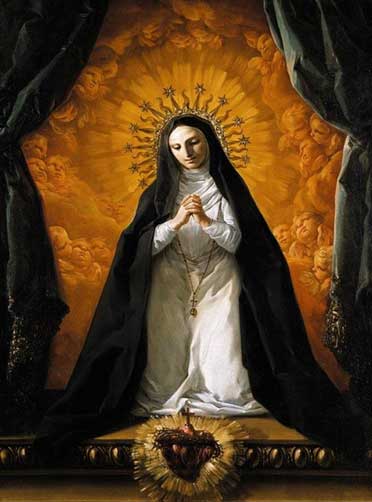
The symbolic image of Christ’s heart burning with love for us, even while pierced with the thorns of our indifference and ingratitude, as in the painting above, is also associated with this devotion.

Faithful Catholics around the world show Jesus their love in prayers such as the Litany of the Sacred Heart. Many also visit Him in the Blessed Sacrament in this devotion and receive Communion at Mass on the First Friday of each month in a spirit of reparation for the hostility and indifference he suffers from unrepentant sinners.

The Litany of the Sacred Heart is one of six litanies approved for public use by the Church and is often prayed during First Friday services. When prayed publicly, the congregation’s lines are in italics.


Lord, have mercy on us.

Christ, have mercy on us.

Lord, have mercy on us. Christ, hear us.

Christ, graciously hear us. 

God the Father of Heaven, have mercy on us. 

(Repeat have mercy on us. after each line)

God the Son, Redeemer of the world,

God the Holy Spirit,

Holy Trinity, one God,

Heart of Jesus, Son of the Eternal Father,

Heart of Jesus, formed by the Holy Spirit in

the Virgin Mother’s womb,

Heart of Jesus, substantially united to the

Word of God,

Heart of Jesus, of infinite majesty,

Heart of Jesus, holy temple of God,

Heart of Jesus, tabernacle of the Most High,

Heart of Jesus, house of God and gate of heaven,

Heart of Jesus, glowing furnace of charity,

Heart of Jesus, vessel of justice and love,

Heart of Jesus, full of goodness and love,

Heart of Jesus, abyss of all virtues,

Heart of Jesus, most worthy of all praise,

Heart of Jesus, King and center of all hearts,

Heart of Jesus, in whom are all the treasures

of wisdom and knowledge,

Heart of Jesus, in whom dwells all the fullness of the Godhead,

Heart of Jesus, in whom the Father was well pleased,

Heart of Jesus, of whose fullness we have all received,

Heart of Jesus, desire of the everlasting hills,

Heart of Jesus, patient and rich in mercy,

Heart of Jesus, rich to all who call upon You,

Heart of Jesus, fount of life and holiness,

Heart of Jesus, propitiation for our offenses,

Heart of Jesus, overwhelmed with reproaches,

Heart of Jesus, bruised for our iniquities,

Heart of Jesus, obedient even unto death,

Heart of Jesus, pierced with a lance,

Heart of Jesus, source of all consolation,

Heart of Jesus, our life and resurrection,

Heart of Jesus, our peace and reconciliation,

Heart of Jesus, victim for our sins,

Heart of Jesus, salvation of those who hope in You,

Heart of Jesus, hope of those who die in You,

Heart of Jesus, delight of all saints,

Lamb of God, who takest away the sins of the world,

Spare us, O Lord.

Lamb of God, who takest away the sins of the world,

Graciously hear us, O Lord. 

Lamb of God, who takest away the sins of the world,

Have mercy on us. 

Jesus, meek and humble of Heart,

Make our hearts like unto Thine.


Let us pray.

Almighty and eternal God, look upon the Heart of Thy most beloved Son and upon thepraises and satisfaction which He offers Thee in the name of sinners; and to those who implore Thy mercy, in Thy great goodness, grant forgiveness in the name of the same Jesus Christ, Thy Son, who livest and reignest with Thee forever and ever. Amen.


The Litany of the Sacred Heart gives us many striking images of our Lord and His love for us. Christ’s heart is a “burning furnace of charity” “bruised for our iniquities” and yet still the source of “our life and resurrection” if we love and follow Him as best we can in our daily lives.

For those days that you feel anything but holy, incidentally, Saint Margaret Mary Alacoque had this advice: “If you feel yourself frail and weak, lapsing into faults at every moment, go to the Sacred Heart and draw from it the strength which will invigorate and revive you.” Praying the Litany of the Sacred Heart, whether publicly or in private, can help you tap into our Lord’s “source of all consolation,” His Sacred Heart!

12 PROMISES OF THE SACRED HEART OF JESUS (With Prayer)

Jesus appeared to St. Margaret Mary, requesting a Feast to be Celebrated after the Octave of Corpus Christi to Honor his Heart, and that reparation would be made by receiving Him in Holy Communion and making an act of Reparation. Below is a beautiful prayer of Reparation in the next post. May the Sacred Heart of Jesus be Praised, Adored and Loved and may you receive many Graces today!

“Behold this Heart, Which has loved men so much, that It has spared nothing, even to exhausting and consuming Itself, in order to testify to them Its love; and in return I receive from the greater number nothing but ingratitude by reason of their irreverence and sacrileges, and by the coldness and contempt which they show Me in this Sacrament of Love. But what I feel the most keenly is that it is hearts which are consecrated to Me that treat Me thus. Therefore, I ask of thee that the Friday after the Octave of Corpus Christi be set apart for a special feast to honour My Heart, by communicating on that day and making reparation to It by a solemn act, in order to make amends for the indignities which It has received during the time It has been exposed on the altars. I promise thee that My Heart shall expand Itself to shed in abundance the influence of Its divine love upon those who shall thus honour It, and cause It to be honored.” – Jesus’ Words to St. Margaret Mary


12 PROMISES OF THE SACRED HEART OF JESUS


1. I will give them all the graces necessary in their state of life.

2. I will establish peace in their homes.

3. I will comfort them in all their afflictions.

4. I will be their secure refuge during life, and above all, in death.

5. I will bestow abundant blessings upon all their undertakings.

6. Sinners will find in my Heart the source and infinite ocean of mercy.

7. Lukewarm souls shall become fervent.

8. Fervent souls shall quickly mount to high perfection.

9. I will bless every place in which an image of my Heart is exposed and honored.

10. I will give to priests the gift of touching the most hardened hearts.

11. Those who shall promote this devotion shall have their names written in my Heart.

12. I promise you in the excessive mercy of my Heart that my all-powerful love will grant to all those who receive Holy Communion on the First Fridays in nine consecutive months the grace of final perseverance; they shall not die in my disgrace, nor without receiving their sacraments. My divine Heart shall be their safe refuge in this last moment.


Keep in mind in the 12th Promise that our Lord asks us to receive Him in Holy Communion in a state of grace on the First Friday of each of nine consecutive months, a First Friday devotion.

If you have any serious sins on your soul, it’s important to have them absolved in the Sacrament of Penance (Confession) first. (If for some reason you miss a month, the following month becomes your first again, but considering the graces Jesus offers us here, it’s more than worth following this schedule!)

As with all of God’s graces, these promises are contingent on our obeying His Will for us through prayer, the sacraments, reading and studying about our faith, and listening to His Holy Spirit. This is not as difficult as it may sound, however. What it involves, after all, is trying our best to live a good life pleasing to God, in obedience to Him, and sharing His love with others!

Think also of those parables in the Gospels in which Jesus spoke approvingly of the good and faithful servants who served their master diligently and thus were rewarded when he returned (Matt 24:45-47 and 25:14-30 ).

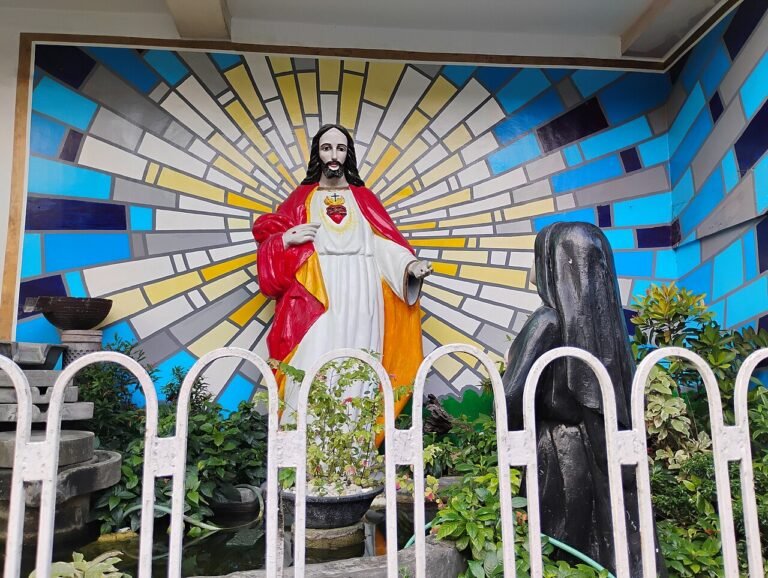
The ninth promise, incidentally can help with the seventh and eighth. Just as looking at a crucifix can remind you of the immense depth of God’s love for us, so can looking at an image of our Lord and His Sacred Heart such as the one above further personalize that love for each of us, and for you in particular.

Seeing His Sacred Heart ablaze with love and light can be a source of great consolation after a hard day or during a trying time in this often loveless world! And remember, His love is not just for us sinners or for fallen humanity in the abstract, but for you as well!

These promises, like this devotion, remind us that God’s love for us is such that he doesn’t want to lose any of us to Satan and Perdition. The Good Shepherd will search after His lost sheep, but, we must want to be found.

As St. Augustine, the 5th Century bishop of Hippo, one of our greatest theologians and a Doctor of the Church once said about God “He who created us without our help will not save us without our consent.”


ACTS OF CONSECRATION TO THE SACRED HEART OF JESUS


These two prayers below are Acts of Consecration to the Sacred Heart of Jesus. They can help you fill an important need in Jesus’ heart and yours as well!

Clearly, our Lord wishes us to join our will to His in love for Him and each other on our earthly pilgrimage to Heaven. And what better way than to appeal to our hearts, where our most sincere feelings and desires reside.

So too with Jesus, who we must remember, as man as well as God comes to us in Communion at Mass and in Adoration before the Blessed Sacrament with His heart filled with immense love and longing for us!

The first prayer prayer is an “Act of Consecration of the Human Race to the Sacred Heart of Jesus”:

Most sweet Jesus, Redeemer of the human race, look down upon us humbly prostrate before Thy altar. We are Thine, and Thine we wish to be; but, to be more surely united with Thee, behold each one of us freely consecrates himself today to Thy Most Sacred Heart. Many indeed have never known Thee; many too, despising Thy precepts, have rejected Thee. Have mercy on them all, most merciful Jesus, and draw them to Thy Sacred Heart.

Be Thou King, O Lord, not only of the faithful who have never forsaken Thee, but also of the prodigal children who have abandoned Thee; grant that they may quickly return to their Father’s house lest they die of wretchedness and hunger.

Be Thou King of those who are deceived by erroneous opinions, or whom discord keeps aloof; call them back to the harbor of truth and unity of faith, so that soon there may be but one flock and one Shepherd.

Be Thou King of all those who are still involved in the darkness of idolatry or of Islamism; refuse not to draw them all into the light and kingdom of God. Turn Thine eyes of mercy toward the children of that race, once Thy chosen people: of old they called down upon themselves the Blood of the Savior; may it now descend upon them a laver of redemption and of life.

Grant, O Lord, to Thy Church assurance of freedom and immunity from harm; give peace and order to all nations, and make the earth resound from pole to pole with one cry: Praise to the Divine Heart that wrought our salvation; to It be glory and Honor forever. Amen


This prayer below is a little closer to home in that it involves each of us looking into our own hearts, individually in order to draw closer to Jesus in His Sacred Heart.

This “Act of Consecration to the Sacred Heart of Jesus” was composed by St. Margaret Mary Alacoque, a 17th Century French nun and mystic (pictured above) who saw our Lord in numerous visions. She was instrumental in spreading devotion to His Sacred Heart after He conveyed His wish for her to do so.

In one vision she actually saw Jesus’ Sacred Heart with flames protruding from it to show His great love for us! The burning love he showed her from His Sacred Heart certainly must have inspired her.


I (N.), give and consecrate to the Sacred Heart of our Lord Jesus Christ, my person, my life, my actions, my pains and sufferings, so that I may be unwilling to make use of any part of my being save to honor, love, and glorify the Sacred Heart. It is my unchanging intention to be all His and to do all for love of Him. I renounce at the same time with all my heart whatever can displease Him.

I, therefore, take You, O Sacred Heart, for the only object of my love, the protector of my life, the pledge of my salvation, the remedy of my weakness and inconstancy, the atonement for the faults of my life, and the secure refuge at the hour of my death.

Be then, O Heart of goodness, my justification before God the Father, and turn away from me the punishment of His just anger. O Heart of love, I put my confidence in You, because I fear everything from my own sinfulness and weakness. I hope for all things from Your mercy and generosity.

Destroy in me all that can displease or resist Your holy Will. Let Your pure love impress You so deeply upon my heart that I may never forget You or be separated from You. May my name, by your loving kindness, be written In You, because in You I desire to place all my happiness and all my glory in living and dying in very bondage to you.


It is important to note that this “bondage” St. Margaret Mary refers to in this act of consecration is one of love for God! Speaking also of another kind of bondage, St. Paul wrote in his letter to the Romans of how we who were once slaves to sinful behavior could now be servants of righteousness instead through Christ, and attain Eternal life with Him (Rom 6:22-23).

Note also the importance St. Margaret Mary places in that righteousness as coming from God, not solely from her own efforts when she says “I fear everything from my own sinfulness and weakness. I hope for all things from Your mercy and generosity.” (She expresses a similar thought in her prayer of trust in Jesus’ Sacred Heart.)

As our Lord said in the Gospels “I am the vine; you are the branches. Whoever abides in me and I in him, bears much fruit. For without me, you can do nothing” (John 15:5).

Jesus once told St. Margaret Mary something quite similar when He said “Without me you can do nothing, but I will never let you lack help as long as you keep your weakness and nothingness buried in My strength.”

Our Lord wishes us to approach Him for help and love in humility, even when we’re feeling most uncertain or useless. Don’t be afraid to offer up your own weaknesses and anxieties to Him! He’ll be more than happy to fill your “nothingness” with His awesomeness!

THE PRAYER, MARY, HELP OF THOSE IN NEED

1

Holy Mary,

help those in need,

give strength to the weak,

comfort the sorrowful,

pray for God’s people,

assist the clergy,

intercede for religious.

Mary all who seek your help

experience your unfailing protection. Amen.