Saturday, April 4, 2026
9.9 C
London
Home Blog Page 169

A SHORT NIGHT PRAYER

In the name of the Father † and of the Son, and of the Holy Spirit. Amen.God is for us a refuge and strength, a helper close at hand, in time of distress, so we shall not fear though the earth should rock, though the mountains fall into the depths of the sea; even though its waters rage and foam, even though the mountains be shaken by its waves…


Come to visit us, Lord, this night, so that by your strength we may rise at daybreak to rejoice in the resurrection of Christ, your Son, who lives and reigns for ever and ever. Amen.Save us, Lord, while we are awake; protect us while we sleep; that we may keep watch with Christ and rest with him in peace.


The Lord grant us a quiet night and a perfect end. Amen.

Prayer to St. Luke for those going into surgury

Most charming and saintly Physician, you were animated by the heavenly Spirit of Love. In faithfully detailing of the humanity of Jesus, you also showed His divinity and His genuine compassion for all human beings. Inspire our physicians with your professionalism and with the divine compassion for their patients. Enable them to cure the ills of both body and spirit that afflict so many in our day. Amen.


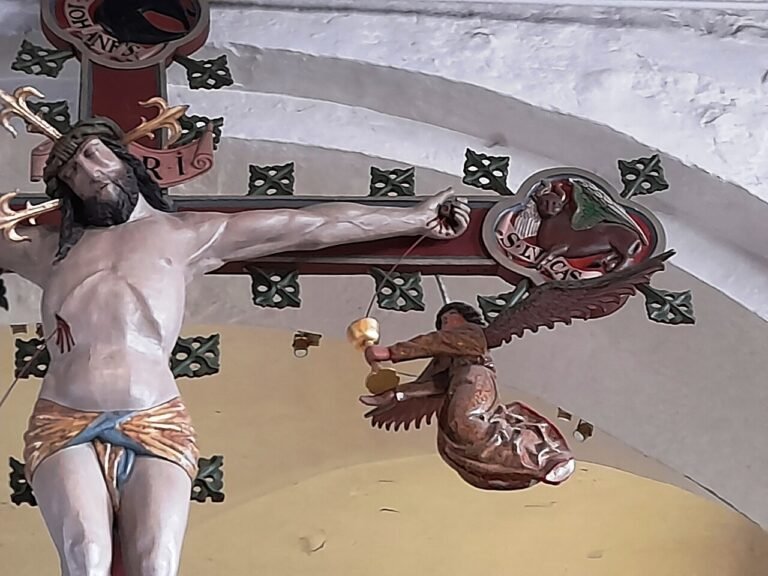
SAINT LUKE 


Luke, the writer of the Gospel and the Acts of the Apostles, has been identified with St. Paul’s “Luke, the beloved physician” (Colossians 4:14). We know few other facts about Luke’s life from Scripture and from early Church historians.


It is believed that Luke was born a Greek and a Gentile. In Colossians 10-14 speaks of those friends who are with him. He first mentions all those “of the circumcision” — in other words, Jews — and he does not include Luke in this group. Luke’s gospel shows special sensitivity to evangelizing Gentiles. It is only in his gospel that we hear the parable of the Good Samaritan, that we hear Jesus praising the faith of Gentiles such as the widow of Zarephath and Naaman the Syrian (Lk.4:25-27), and that we hear the story of the one grateful leper who is a Samaritan (Lk.17:11-19). According to the early Church historian Eusebius Luke was born at Antioch in Syria.


In our day, it would be easy to assume that someone who was a doctor was rich, but scholars have argued that Luke might have been born a slave. It was not uncommon for families to educate slaves in medicine so that they would have a resident family physician. Not only do we have Paul’s word, but Eusebius, Saint Jerome, Saint Irenaeus and Caius, a second-century writer, all refer to Luke as a physician.


We have to go to Acts to follow the trail of Luke’s Christian ministry. We know nothing about his conversion but looking at the language of Acts we can see where he joined Saint Paul. The story of the Acts is written in the third person, as an historian recording facts, up until the sixteenth chapter. In Acts 16:8-9 we hear of Paul’s company “So, passing by Mysia, they went down to Troas. During the night Paul had a vision: there stood a man of Macedonia pleading with him and saying, ‘Come over to Macedonia and help us.’ ” Then suddenly in 16:10 “they” becomes “we”: “When he had seen the vision, we immediately tried to cross over to Macedonia, being convinced that God had called us to proclaim the good news to them.”


So Luke first joined Paul’s company at Troas at about the year 51 and accompanied him into Macedonia where they traveled first to Samothrace, Neapolis, and finally Philippi. Luke then switches back to the third person which seems to indicate he was not thrown into prison with Paul and that when Paul left Philippi Luke stayed behind to encourage the Church there. Seven years passed before Paul returned to the area on his third missionary journey. In Acts 20:5, the switch to “we” tells us that Luke has left Philippi to rejoin Paul in Troas in 58 where they first met up. They traveled together through Miletus, Tyre, Caesarea, to Jerusalem.


Luke is the loyal comrade who stays with Paul when he is imprisoned in Rome about the year 61: “Epaphras, my fellow prisoner in Christ Jesus, sends greetings to you, and so do Mark, Aristarchus, Demas, and Luke, my fellow workers” (Philemon 24). And after everyone else deserts Paul in his final imprisonment and sufferings, it is Luke who remains with Paul to the end: “Only Luke is with me” (2 Timothy 4:11).


Luke’s inspiration and information for his Gospel and Acts came from his close association with Paul and his companions as he explains in his introduction to the Gospel: “Since many have undertaken to set down an orderly account of the events that have been fulfilled among us, just as they were handed on to us by those who from the beginning were eyewitnesses and servants of the word, I too decided, after investigating everything carefully from the very first, to write an orderly account for you, most excellent Theophilus” (Luke 1:1-3).


Luke’s unique perspective on Jesus can be seen in the six miracles and eighteen parables not found in the other gospels. Luke’s is the gospel of the poor and of social justice. He is the one who tells the story of Lazarus and the Rich Man who ignored him. Luke is the one who uses “Blessed are the poor” instead of “Blessed are the poor in spirit” in the beatitudes. Only in Luke’s gospel do we hear Mary ‘s Magnificat where she proclaims that God “has brought down the powerful from their thrones, and lifted up the lowly; he has filled the hungry with good things, and sent the rich away empty” (Luke 1:52-53).


Luke also has a special connection with the women in Jesus’ life, especially Mary. It is only in Luke’s gospel that we hear the story of the Annunciation, Mary’s visit to Elizabeth including the Magnificat, the Presentation, and the story of Jesus’ disappearance in Jerusalem. It is Luke that we have to thank for the Scriptural parts of the Hail Mary: “Hail Mary full of grace” spoken at the Annunciation and “Blessed are you and blessed is the fruit of your womb Jesus” spoken by her cousin Elizabeth.


Forgiveness and God’s mercy to sinners is also of first importance to Luke. Only in Luke do we hear the story of the Prodigal Son welcomed back by the overjoyed father. Only in Luke do we hear the story of the forgiven woman disrupting the feast by washing Jesus’ feet with her tears. Throughout Luke’s gospel, Jesus takes the side of the sinner who wants to return to God’s mercy.


Reading Luke’s gospel gives a good idea of his character as one who loved the poor, who wanted the door to God’s kingdom opened to all, who respected women, and who saw hope in God’s mercy for everyone.

The reports of Luke’s life after Paul’s death are conflicting. Some early writers claim he was martyred, others say he lived a long life. Some say he preached in Greece, others in Gaul. The earliest tradition we have says that he died at 84 Boeotia after settling in Greece to write his Gospel.


A tradition that Luke was a painter seems to have no basis in fact. Several images of Mary appeared in later centuries claiming him as a painter but these claims were proved false. Because of this tradition, however, he is considered a patron of painters of pictures and is often portrayed as painting pictures of Mary.

He is often shown with an ox or a calf because these are the symbols of sacrifice — the sacrifice Jesus made for all the world.


Luke is the patron of physicians and surgeons.

PRAYER FOR PEACE AND JOY IN FAMILY

Loving Heavenly Father,The Word of God says, “Be anxious for nothing, but in everything by prayer and supplication, with thanksgiving, let your requests be made known to God; and the peace of God, which surpasses all understanding, will guard your hearts and minds”.

Even now, we pray with one accord that You may pour Your divine peace in our family.
Lord, we believe that You dwell in the high and holy place, with them who have a contrite and humble spirit. You have assured us that if two of us agree on earth concerning anything that we ask, it will be done.

So we come to Your presence with all humility and with oneness of mind that You may dwell with us and be the Head of this family. Riches and honor, enduring riches and righteousness are with You, Lord.

Bless us with all abundance and joy. Be with us and guide us in all that we do. May Your name be glorified in our family, now and forever. Amen.

“NOW THEREFORE, LET IT PLEASE YOU TO BLESS THE HOUSE OF YOUR SERVANT, THAT IT MAY CONTINUE FOREVER BEFORE YOU; FOR YOU, O LORD GOD, HAVE SPOKEN IT, AND WITH YOUR BLESSING LET THE HOUSE OF YOUR SERVANT BE BLESSED FOREVER.”
– 2 Samuel 7:29


The example of the Holy Family: Do you follow it?


The Holy Family is our model of how to be.

There is no community as sacred as the family. When we reflect on the Holy Family, Jesus, Mary and St. Joseph, we see modeled for us how to be as a member of our own family. Whether we’re a father, a mother, or a child, the Holy Family shows us how to be. It is important we remind ourselves of this often.


June is Heartbeat of the Family month on Catholic Online and it is a special campaign where we honor the role of the family in our lives. All of us are members of a family. Even if our parents are gone and we live alone, we are still members of the human family. We belong to a Church community, or at least one is available to us. And of course, most of us do have family members about us.


The question we must always keep before us is, how to be as a member of this family? When we make choices, those choices do not simply affect us, but they affect our family as well. For example, when we choose what hobbies to pursue or what programs to watch on television, we impact our family. When we decide what music will be allowed in our house or which websites to visit, these decisions are not made in a vacuum.


While our first duty is always to God, a close second is to our family. It is important that we take time to reflect on our choices and what impact those choices have on our family. Am I serving my family with the choices I make?


And if I am single, am I serving my human family by the choices I make? Can the reflection of my parish family be seen in how I behave?

Families are busy, and we often leave little room for reflection and for God. Mass becomes secondary to Sunday activities and we can be so busy, so in a hurry to eat that we skip praying before meals, assuming that God knows our gratitude. We refuse to pray in public because we don’t want to offend anybody and we listen to the music we like and watch television we find entertaining, regardless of the values it imparts because it’s fun and easy to let things be.


However, we are not called to follow an easy example.

The Holy Family was devoted to duty. Joseph reported for Octavian’s census, traveling with his family a great distance to comply. Mary was a doting mother, always caring for her Son, even after his crucifixion. Joseph was loyal, he respected Mary’s obligation to God, her chastity and vocation. Joseph followed a vocation of his own, teaching his son carpentry and certainly protecting him as he grew.


We too are called to do the same. We must respect our spouses and the vows they make with respect to God. We must care for our children, teaching them, providing for them, and raising them up in the faith which will make all the difference in their lives to come. As children, we must be obedient and respectful, honoring our fathers and our mothers.


To commemorate the family, Catholic Shopping .com has a selection of family products available for those who wish to be always reminded of the example we should follow. Every household should have a small shrine, or at least a single item to serve as a reminder of the importance of the Holy Family.


Browse the Heartbeat of the Family collection today and choose your item of remembrance. Honor the Holy Family and your own.

May your family know the peace and wisdom of the Lord and remain strong as long as you shall live.

PRAYER TO PADRE PIO FOR HEALING

https://youtu.be/6F4yShshYxs

PRAYER

Beloved Padre Pio,

Today I come to add my prayer to the thousands of prayers offered to thee every day by those who love and venerate thee. They ask for cures and healings, earthly and spiritual blessings, and peace for body and mind. And because of thy friendship with the Lord, He heals those thou doth ask to be healed, and forgives those thou forgiveth.

Through thy visible wounds of the Cross, which thou didst bear for fifty years, thou wert chosen in our time to glorify the crucified Jesus. Because the Cross has been replaced by other symbols, please help us to bring it back in our midst, for we acknowledge it is the only true sign of salvation.

As we lovingly recall the wounds that pierced thy hands, feet and side, we not only remember the blood thou didst shed in pain, but thy smile, and the invisible halo of sweet-smelling flowers that surrounded thee, the perfume of sanctity.

In thy kindness, please help me with my own special request:
[mention here your petition, making the Sign of the Cross]

Bless me and my loved ones. In the name of the Father, the Son and the Holy Spirit. Amen.


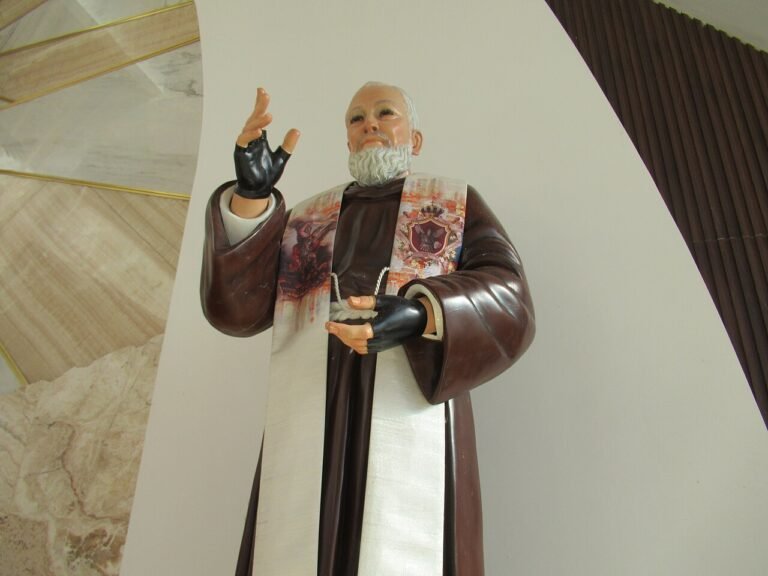
St. Padre Pio


St. Padre Pio was an Italian priest who was known for his piety and charity, as well as the gift of the stigmata, which has never been explained.

St. Padre Pio was born Francesco Forgione, on May 25, 1887, in Pietrelcina, Italy. His parents were peasant farmers. He had an older brother and three younger sisters, as well as two other siblings who died in infancy. As a child, he was very religious and by the age of five he reportedly made the decision to dedicate his life to God.


Fortunately, his parents were also very religious and they supported his Catholic development. His family attended daily Mass. Francisco served as an altar boy at his local parish. Francisco was known for taking on penances and his mother once scolded him for sleeping on a stone floor.

Francisco’s community was also supportive. Saint’s days were popular celebrations and commonly celebrated in his town.


From his tender age, Francisco had a peculiar ability. He could see guardian angels, spoke with Jesus and the Virgin Mary. This was not something taught to him, but occurred so naturally that he assumed other people could see them too.

Although Francisco and his family was very religious, they were also very poor, which required that he work. He spent many years as a child tending to a small flock of sheep owned by his family. Unfortunately, the work meant he was unable to attend school regularly, so he quickly fell behind other kids his age.


Francisco was sickly as a child. He suffered an attack of gastroenteritis at age six and when he was ten, he had typhoid fever.

In 1897, after three years of schooling, Francisco expressed to his parents that he wanted to become a friar. His parents traveled to a nearby community of monks and asked if Francesco could join them. He was evaluated, despite his young age, and was told that he needed more education before he could join.


To prepare Francesco, his parents decided to hire a private tutor. To pay the cost of the tutor, Francesco’s father traveled to America to find work, and sent the money home.

At the age of 15, Francisco was finally ready and he entered the novitiate of the Capuchin friars at Morcone. He took the name of “Pio” in honor of Pope Pius I, whose relic he often saw at his local chapel.


At the age of 17, Brother Pio became extremely ill and could only digest milk and cheese. He was sent to the mountain for better air, and when this did not work, he was sent home to his family. Amid all this, he continued to study for the priesthood.

On one occasion during prayer, a fellow monk astonishingly reported he saw Pio levitate during an episode of ecstasy.


Brother Pio became a priest in 1910, but was permitted to remain at home because of his poor health.

In 1915, with World War I afflicting the world, Padre Pio was summoned for military service. He was compelled to leave a tiny community of monks, with whom he was then housed, and drafted into medical service. However, he was so sickly that he was often sent home, only to then be recalled for service. In March 1916, he was finally dismissed because of his poor health.


On September 20, Padre Pio was hearing confessions when he felt pain in his hands and feet. He noticed the stigmata, the wounds of Christ, appearing on his hands and feet. The experience was painful. Bleeding occurred. The wounds smelled of roses, and although they continued to weep, they never became infected. Doctors who later examined the stigmata were amazed at their perfectly round shape.

By 1919, word began to spread about Padre Pio’s stigmata and people came from far away to examine him.


Padre Pio became popular with the people he encountered and soon began to attribute supernatural occurrences to him. For example, he was said to levitate, and able to perform miracles.

His popularity became a source of concern for the Church and the Vatican began to restrict his activities to minimize public interaction. Padre Pio himself was uncomfortable with his newfound popularity and the attention he received because of his stigmata. A Church investigation into his stigmata concluded that his condition was not faked.


By 1934, the Vatican began to change its attitude towards Padre Pio and he was again allowed to perform public duties. He could preach, despite never being officially licensed by the Church to do so. Pope Pius XI encouraged people to visit him.

In 1947, Fr. Karol Wojtyla visited Padre Pio who prophetically told him he would rise to the highest post in the Church.” Fr. Karol Wojtyla became Pope John Paul II in 1978.


Padre Pio used his newfound popularity to open a hospital in San Giovanni Rotondo. The facility opened in 1956.

Pope Paul VI reviewed the controversies surrounding Padre Pio and dismissed any concerns over his conduct and the authenticity of his stigmata.


Padre Pio became internationally famous. He was known for his piety, charity and the quality of his preaching. He famously advised, “Pray, hope and don’t worry.”

He had other illnesses, as well, including cancer which was miraculously healed after just two treatments. Other problems, such as arthritis, which plagued him in his later years, never went away.


Padre Pio died on September 23, 1968. His funeral was attended by over 100,000 people.

Pope John Paul II recognized Padre Pio as a saint on June 16, 2002. His feast day is September 23. He is the patron of civil defense volunteers, adolescents, and the village of Pietrelcina.

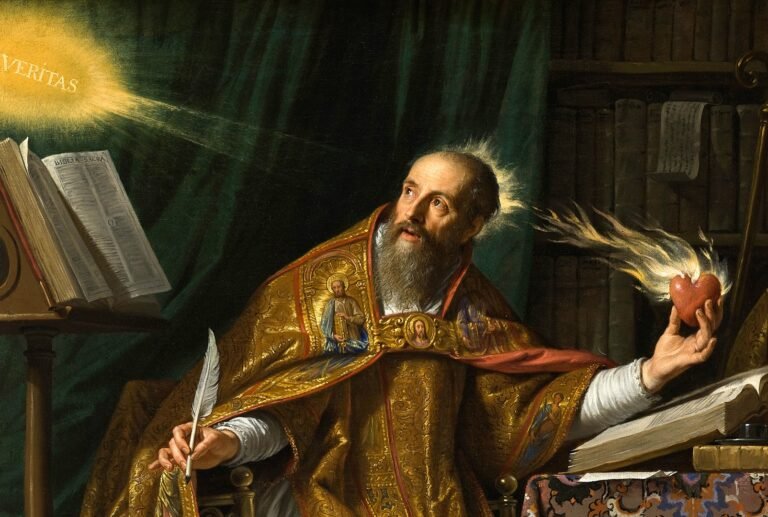
St. Augustine’s short, simple prayer that leads to holiness

Let us hunger and thirst for holiness, and we shall be satisfied …

Breathe in me, O Holy Spirit,

that my thoughts may all be holy.

Act in me, O Holy Spirit,

that my work, too, may be holy.


Draw my heart, O Holy Spirit,

that I love but what is holy.


Strengthen me, O Holy Spirit,

to defend all that is holy.


Guard me, then, O Holy Spirit,

that I always may be holy. Amen.


SAINT AUGUSTINE OF HIPPO


https://youtu.be/VDdi3O4EM0w


St. Augustine of Hippo is the patron of brewers because of his conversion from a former life of loose living, which included parties, entertainment, and worldly ambitions. His complete turnaround and conversion has been an inspiration to many who struggle with a particular vice or habit they long to break.


This famous son of St. Monica was born in Africa and spent many years of his life in wicked living and in false beliefs. Though he was one of the most intelligent men who ever lived and though he had been brought up a Christian, his sins of impurity and his pride darkened his mind so much, that he could not see or understand the Divine Truth anymore. Through the prayers of his holy mother and the marvelous preaching of St. Ambrose, Augustine finally became convinced that Christianity was the one true religion. Yet he did not become a Christian then, because he thought he could never live a pure life. One day, however, he heard about two men who had suddenly been converted on reading the life of St. Antony, and he felt terrible ashamed of himself. “What are we doing?” he cried to his friend Alipius. “Unlearned people are taking Heaven by force, while we, with all our knowledge, are so cowardly that we keep rolling around in the mud of our sins!”


Full of bitter sorrow, Augustine flung himself out into the garden and cried out to God, “How long more, O Lord? Why does not this hour put an end to my sins?” Just then he heard a child singing, “Take up and read!” Thinking that God intended him to hear those words, he picked up the book of the Letters of St. Paul, and read the first passage his gaze fell on. It was just what Augustine needed, for in it, St. Paul says to put away all impurity and to live in imitation of Jesus. That did it! From then on, Augustine began a new life.


He was baptized, became a priest, a bishop, a famous Catholic writer, Founder of religious priests, and one of the greatest saints that ever lived. He became very devout and charitable, too. On the wall of his room he had the following sentence written in large letters: “Here we do not speak evil of anyone.” St. Augustine overcame strong heresies, practiced great poverty and supported the poor, preached very often and prayed with great fervor right up until his death. “Too late have I loved You!” he once cried to God, but with his holy life he certainly made up for the sins he committed before his conversion. His feast day is August 28th.

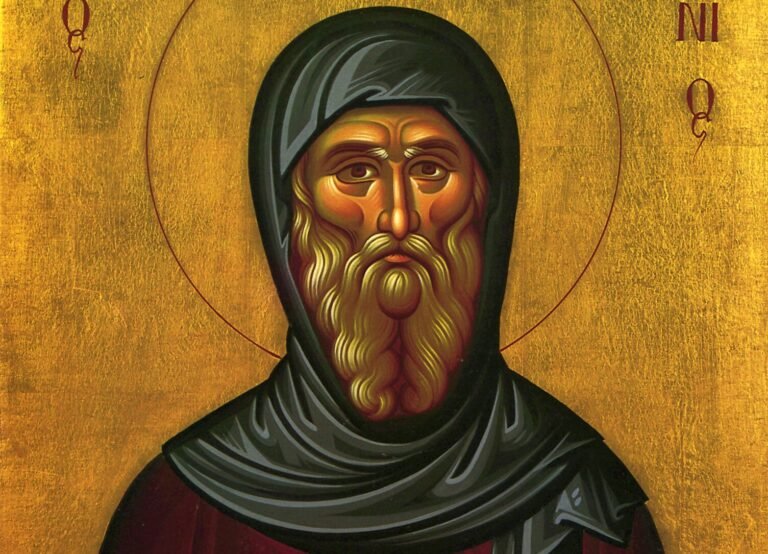
This prayer to St. Anthony is called the “Miracle Prayer”

St. Anthony is not only effective at finding lost things, but also at interceding before God for miracles.


St. Anthony of Padua is known around the world as a miracle-worker. Some even invoke him under the name, “St. Anthony, Performer of Miracles.”
One of the reasons for this appellation is because thousands of people have asked his intercession over the centuries and have received a miraculous response to their prayers.


However, it is important to remember that God is the author of the miracle, while St. Anthony is simply an instrument. God’s response may not always be what we expected or wanted, but he always grants us exactly what we need, and sometimes in a miraculous way.


Here is a popular prayer to St. Anthony that is called by many the “Miracle Prayer.”

Dear St. Anthony, your prayers obtained miracles during your lifetime. You still seem to move at ease in the realm of minor and major miracles. St. Anthony, Performer of Miracles, please obtain for me the blessings God holds in reserve who serve Him. Pray that I may be worthy of the promises my Lord Jesus attaches to confident prayer.


Read more:
Here’s why St. Anthony is invoked to find lost things

Read more:
Prayer to Saint Anthony, Performer of Miracles

A beautiful prayer to Mary left by St. John Paul II as a legacy to families

This private devotion was one of the secrets to his pontificate.


Everyone knows the deep love St. John Paul II had for Mary. On the 100th anniversary of his birth in this month of May dedicated to the Mother of God, we invite you to embrace this prayer for families that the Holy Father addressed to the Blessed Virgin.


From his childhood to his final days, St. John Paul II maintained a special relationship with the Virgin Mary. For, indeed, the Mother of God played a large role in the life of little Karol, and then in his life as a priest and cardinal. As soon as he was elected to the See of St. Peter, he placed his pontificate under the protection of the Mother of God.


“In this grave hour which gives rise to trepidation, we cannot do other than turn our mind with filial devotion to the Virgin Mary, who always lives and acts as a Mother in the mystery of Christ, and repeat the words ‘Totus tuus’ (all thine),” he proclaimed in St. Peter’s Square in Rome on the day of his installation, October 16, 1978. Then on May 13, 1981, the pontiff miraculously survived an assassination attempt, and it was to Our Lady of Fatima that he attributed this miracle.


Throughout his life, he composed many prayers to the Mother of God, including this one, which families can use in their evening prayers during this month of May (and beyond …).


May the Virgin Mary, Mother of the Church, be also mother of the domestic church.

Through her maternal help, may every Christian family

truly become a little church

which reflects and relives the mystery of the Church of Christ.

May you who are the servant of the Lord, be our example

of a humble and generous welcome of the will of God!

You who are the mother of sorrows at the foot of the cross,

be there to lighten our loads,

and wipe away the tears of those afflicted by family difficulties.

May Christ the Lord, King of the Universe, King of families,

be present, as at Cana, in every Christian home,

to communicate his light, joy, serenity, and strength.

May every family generously add its share

to the coming of his kingdom on earth.

To Christ and to you, Mary, we entrust our families.

Amen.

INVOCATIONS TO THE PRECIOUS BLOOD OF JESUS

These Invocations to the Precious Blood of Jesus are an especially good way to acknowledge Christ’s sacrifice for us at Calvary. Each of them make good short prayers that can be easily memorized (also known as Aspirations). And together they form a touching and timeless prayerful tribute to our Lord’s saving graces 2000 years ago and today as well!


They provide some moving material for meditation on His Passion, as well as on our need for His love and mercy as we seek to do His will.

The line about the Sacred Heart of Jesus reminds us of a well-known devotion to our Lord’s Sacred Heart in mentioning that wondrous event when Longinus thrust his spear into our Lord’s side upon His death and blood and water flowed out (John 19:34).


When we read of dying to self-love, incidentally, this does not in any way contradict the one of the two Great Commandments Jesus referred to in his words to a Scribe to love your neighbor as yourself (SOURCE). This refers rather to the kind of concupiscent “me first” kind of selfish love we all fall prey to at one time or another.


We get a wonderful sense in some of these lines of the life source and force that is Jesus’ Precious Blood. And the beauty of this is that His Precious Blood was not just depleted from His Sacred Body on our behalf almost 2000 years ago in His ignominious crucifixion. We can partake of it as Baptized Catholics in a state of grace free from mortal sin in the host we consume in Holy Communion at Mass!


The final line makes an especially good Aspiration you can say at any time of the day to help the Church as well as yourself and your fellow sinners!


Precious Blood of Jesus, shed in the Circumcision, make me chaste of mind, heart and body.

Precious Blood, oozing from every pore in the Agony of Jesus, grant me to love above all things the holy and Adorable Will of God.

Precious Blood, flowing abundantly in the Scourging at the Pillar, inspire me with a keen sorrow for my sins and a love of suffering.

Precious Blood, falling in profusion from the Crown of Thorns, grant me a love of humiliations.

Precious Blood, furrowing the way to Calvary, fill me with courage to walk unfalteringly in the bloody footsteps of Jesus.

Precious Blood, shed so profusely in the Crucifixion of my Jesus, make me die entirely to self-love.

Precious Blood, shed to the very last drop by the opening of the Sacred Heart of Jesus, give me that generous love that sacrifices all for God.

Precious Blood, sacred source from whence flow all graces, apply Thine infinite merits to my soul.

Precious Blood, Whose virtue animates and vivifies our actions, apply Thine infinite merits to all our works.

Life-Giving Fountain, in which the soul fully slakes its thirst, saturate me with pure love.

O Divine Blood of my Jesus, I adore Thee from the depths of my heart. Thee I fervently invoke, for Thou art my salvation, and by Thee I hope to obtain the joys of Paradise.

Eternal Father, be merciful, for the sake of the Blood of Thine only-begotten Son; we beseech Thee, show us Thy mercy.

Most Precious Blood of Jesus, cry to the Heavenly Father for mercy for us, and deliver us.

Eternal Father, I offer Thee the Precious Blood in atonement for my sins and for the needs of Holy Church

The Immaculate Heart of Mary

Historically, devotion to the Heart of Mary grew up in parallel, but at a lesser intensity than that of devotion to the Heart of Jesus, only starting to become more prominent during the time of St John Eudes. John Eudes was born in 1601 in Normandy, France. He entered the Congregation of the Oratory of France, founded in 1611 by Cardinal de Berulle and was ordained to the priesthood on December 20, 1625.

St. John brought people to love Christ and the Virgin Mary by speaking tirelessly about their Heart, the sign of the love God shows for us and the communion to which we are called.

To offer them liturgical worship, he composed Masses and Offices in their honor and had the first Feast of the Holy Heart of Mary celebrated on February 8, 1648, at Autun (France,) and the Feast of the Heart of Jesus celebrated on October 20, 1672.

He died on August 19, 1680 and was canonized by Pope Pius XI on May 31, 1925.

Nevertheless, it was not until after the Apparitions at Rue du Bac concerning the “Miraculous Medal” made to Catherine Labouré in 1830, and the establishment of a society dedicated to the Immaculate Heart of Mary, at the Church of Our Lady of Victories in Paris in 1836, that this particular devotion became really well known.

Since then devotion to the Immaculate Heart of Mary, has gradually grown more widespread in the Church, particularly since the apparitions at Fatima.

The main difference between the devotions to the hearts of Jesus and Mary is that the one concerned with Jesus emphasizes his divine heart as being full of love for mankind, but with this love for the most part being ignored or rejected, while devotion to Mary’s heart is essentially concerned with the love that her heart has for Jesus, for God.

Therefore, it is not an end in itself, so the love of her heart is meant to be a model for the way we should love God. The fact that her heart is immaculate, that is sinless, means that she is the only fully human person who is able to really love God in the way that he should be loved.

Honoring Mary’s Immaculate Heart is really just another way of honoring Mary as the person who was chosen to be the Mother of God, recognizing her extraordinary holiness and the immense love she bestowed on Jesus as his mother, the person who was called to share in and co-operate in his redemptive sufferings.

The aim of the devotion is to unite mankind to God through Mary’s heart, and this process involves the ideas of consecration and reparation. A person is consecrated to Mary’s Immaculate Heart as a way of being completely devoted to God. This involves a total gift of self, something only ultimately possible with reference to God; but Mary is our intermediary in this process of consecration.

Because of the strong analogy between Jesus and Mary, the consecration to Mary’s Immaculate Heart is closely linked to the consecration to Jesus’ Sacred Heart, although it is subordinate and dependent on it. That is, although the act of consecration is ultimately addressed to God, it is an act that is made through Mary.


Prayer to the Immaculate Heart of Mary


O Immaculate Heart of Mary, Heavenly beauty and splendor of the Father, You are the most valued Heavenly treasure.

New Eve, immaculate in soul, spirit and body, Created of the godly seed by the Spirit of God, You are the spiritual Mother of mankind.

Pure Virgin, full of grace then and now, Your whole being was raised Heavenly in full glory, To be elevated above all the hosts within the Kingdom of God.

O Heavenly Mother, Queen of Heaven and earth, I recognize the glory of your highest title, The Immaculate Heart of Mary!

Loving Mother, dispenser of endless blessings, You who continuously intercedes on our behalf, Please present my need before your loving Son Jesus.

(In your own words, make your special request here. Do not just mention a word. Speak to the Immaculate Heart of Mary as you would speak to another person, begging your Heavenly Mother to plea to Jesus on your behalf, that you be granted this special request.)

O Immaculate Heart of Mary, I know that you are now presenting my need before Jesus, For you have never turned away those in dire need.

Mother dearest, I await your favorable answer, Submitting myself to the Divine will of the Lord, For all glories are His forever and ever.

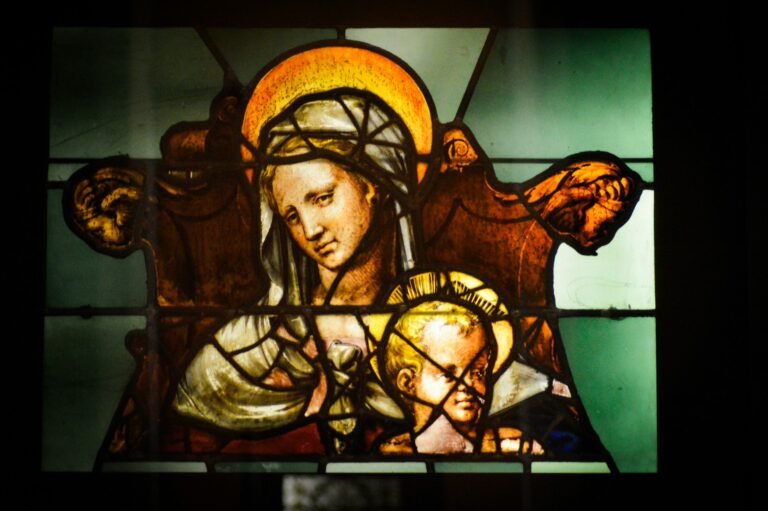
Our Lady of Perpetual Help

Also known as Our Lady of Perpetual Succour, is celebrated on June 27 by the universal Church.


The devotion to this Marian advocation revolves around the picture of Our Lady of Perpetual Succour, painted on wood, with background of gold. It is Byzantine in style and is supposed to have been painted in the thirteenth century. It represents the Mother of God holding the Divine Child while the Archangels Michael and Gabriel presenting Him the instruments of His Passion. Over the figures in the picture are some Greek letters which form the abbreviated words Mother of God, Jesus Christ, Archangel Michael, and Archangel Gabriel respectively.

The icon was brought to Rome towards the end of the fifteenth century by a pious merchant, who, dying there, ordered by his will that the picture should be exposed in a church for public veneration. It was exposed in the church of San Matteo in the famous Roman street of Via Merulana, which connects the basilicas of Saint Mary Major and Saint John Lateran. Crowds flocked to this church, and for nearly three hundred years many graces were obtained through the intercession of the Blessed Virgin. The picture was then popularly called the Madonna di San Matteo. The church was served for a time by the Hermits of Saint Augustine.

These Augustinians were still in charge when the French invaded Rome (1812) and destroyed the church. The picture disappeared; it remained hidden and neglected for over forty years, but a series of providential circumstances between 1863 and 1865 led to its rediscovery in an oratory of the Augustinian Fathers at Santa Maria in Posterula.

Pope Pius IX, who as a boy had prayed before the picture in San Matteo, became interested in the discovery. But at that time, the ruins of San Matteo were in the grounds of a convent of the Redemptorists -the Congregation of the Most Holy Redeemer-, founded by St. Alphonsus Liguori (1696-1787).

The Father General of the Redemptorists, Most Rev. Nicholas Mauron, decided to bring the whole matter to the attention of the Pope. The Pope listened attentively and felt sure it was God’s will that the icon should be gain exposed to public veneration and the logical site was their church of St. Alphonsus, standing as it did between the Basilicas of St. Mary Major and St. John Lateran. The Holy Father at once took a piece of paper and wrote a short memorandum ordering the Augustinian Fathers of St. Mary in Posterula to surrender the picture to the Redemptorists, on condition that the Redemptorists supply the Augustinians with another picture of Our Lady or a good copy of the icon of Perpetual Help.

The Icon meant much to the Augustinians, but when the two Redemptorists came armed with the Pope’s signed memorandum, what could they do but obey? On January 19, 1866, Fathers Marchi and Bresciani brought the miraculous picture to St. Alphonsus’ church. Preparations were now made to inaugurate the new public reign of Our Lady of Perpetual Help. On April 26th, a great procession was staged in which the picture was carried throughout the Esquiline region of Rome. Upon returning to the church, the picture was enthroned over the high altar, in a resplendent shrine-niche especially constructed for it.

The report of marvelous healings spread rapidly throughout the city of Rome and people came by the hundreds to visit the shrine. Soon the whole area around the altar was filled with abandoned crutches and canes and several whole glass-covered cabinets were filled with gold and silver thanksgiving offerings in the shapes of miniature hearts, arms, legs and other votive offerings. Scarcely two weeks after the solemn exposition of the picture, Pope Pius IX himself came to visit the shrine. He stood quietly before it for a long time and then exclaimed: “How beautiful she is!”.

Pope Leo XIII, the next pontiff, had a copy of the picture on his desk so that he might see it constantly during his working day. St. Pius X sent a copy of the icon to the Empress of Ethiopia and granted an indulgence of 100 days to anyone who repeated the phrase: “Mother of Perpetual Help, pray for us.”

Pope Benedict XV had the picture of Our Lady of Perpetual Help placed immediately over his chair of state in the throne room. Here it could be seen by all just over his head, as if to say: “Here is your true Queen!”.

Pope Pius IX told the Redemptorists, in speaking to them of the treasure he had committed to their care: “Make her known!” It seems as though they hardly needed the exhortation. In the United States, they built the first Our Lady of Perpetual Help church in the Roxbury section of Boston, and it was eventually raised to the honor of a “Papal Basilica” by Pope Pius XII.


Symbolism of the icon of Perpetual Help

The influence of Eastern icons in the West, around the XII and XIII centuries brought a class of icons called Cardiotissa, from the Greek word kardia, meaning heart. Cardiotissa means “having a heart” or showing sympathy and mercy and compassion. In them the face of Our Lady appears full of sorrow, yet supremely dignified in her contemplation of the sufferings of her Son. His passion is represented by angels holding instruments of His passion, most often the cross, the lance, the sponge, and the nails.

The Our Mother of Perpetual Help icon is of this type. The angels holding the instruments of the Passion have their hands covered with a protecting veil as a sign of reverence in handling sacred objects.

The Child Jesus is shown with an adult face and a high brow, indicating His divine Mind of infinite intelligence. As God, He knew that the angelic apparition was prophetic of His future passion. Yet in His human nature as a small child, He is frightened and runs to His Mother for protection. Our Lady hastily picks Him up and clasps Him to her bosom. This action is indicated by the fact that the Lord’s right foot is nervously curled about the left ankle and in such haste that His right sandal has become loosened and hangs by a single strap. Further action is indicated by the way the Child Jesus clasps His Mother’s right hand with both of His, holding tightly to Our Lady’s thumb.

Our Lady is clothed in a dress of dark red which was long reserved in the Byzantine world for the Empress alone, indicating the Queenship of Mary.

Some commentators on color claim that bluish purple became the color of penance in the Western Church (during Lent and Advent) because purple is a combination of blue and red. The blue reminds us of heaven, to which we wish to arrive by our penance, and the red recalls martyrdom, because all penance requires a dying to oneself, especially mortifying inordinate desire for food and pleasure. The archangels Gabriel and Michael were tunics of purple since they carry the instruments of the passion and death of Christ. The figures of the icon are identified with abbreviations of their names and Mary is designated by her chief title to glory: Mother of God.

Our Lady’s face is of unspeakable majesty and calm and yet her large eyes, partly closed, express ineffable sorrow and sympathy. Our Lady is not looking at Jesus, but rather to us, to express compassion for us in our fears and sorrows.


CONSECRATION TO OUR LADY OF PERPETUAL HELP


My Queen and my Mother, before Your throne of mercy, I come for help and intercession. I beg for mercy and healing touch upon me and those that are sick, especially those that are terminally ill. Mother of mercy present all those that are sick before your Son; our lord Jesus Christ, who is the greatest physician; for miraculous cure and wholeness. Uproot every infirmity in our lives and grant us divine healing.


Mother of perpetual help, intercede for me now and always, be my constant and sure aid in times of need, trouble or affliction. Help me to always serve, love and obey your Son; my lord Jesus Christ. lead me by the hand in this life that I live, that I may not stray from the path of life, but live according to the will of God, in order to have a blessed life here on Earth and to rejoice also in the afterlife.


I commit to You today my life. I pray that You sustain and increase all sources of my joy and happiness and remove every form of discomfort and pain which is not of God in my life. Give me the grace to serve and please God that He may bless, favour and guard me in all that I do.


I pray for the grace to always be your devotee and to always call on you in my daily life. I consecrate my family to you, asking you to always intercede on our behalf in every moment and at all time and I ask you to preserve our soul and lead us to your son; our Lord Jesus Christ. I give you my whole life and my entire being asking you to take strict possession of me from now hence forth as your property. I also consecrate today, all members of my family wherever they are, asking you to take over their entire lives.


Mother of perpetual help, I give you my heart and my soul. Preserve them in love and for the love of Your Son my lord and saviour Jesus Christ. Make my heart fear God and desist from displeasing and hurting God as long as I live. Give me the grace to love Him truly with all my heart, my mind and my strength and my neighbour as myself. Mother, preserve me in my earthly journey so that I can attain salvation at the end of my life, there to rejoice forever with you and the heavenly host. Amen