Friday, April 3, 2026
8.5 C
London
Home Blog Page 22

Prayer for Tuesdays

0

Tuesdays โ€“ The Holy Angels

O God, who dispose in marvelous order ministries both angelic and human, graciously grant that our life on earth may be defended by those who watch over us as they minister perpetually to you in heaven.

O Lord, under the faithful protection of your Angels, may we advance boldly along the way of salvation.

3 Powerful Must-Have Sacramentals for Your Home

1

3 Powerful Must-Have Sacramentals for Your Home: A Complete Catholic Guide

Introduction

In the busy rhythm of daily life, our homesโ€”our places of rest, family, work, and prayerโ€”often lack reminders of the sacred. Yet the Church gives us wonderful tools to sanctify every event of our lives through material signs.

The Catechism of the Catholic Church teaches:
โ€œHoly Mother Church has, moreover, instituted sacramentals. These are sacred signs which bear a resemblance to the sacraments. They signify effects, particularly of a spiritual nature, which are obtained through the intercession of the Church. By them men are disposed to receive the chief effect of the sacraments, and various occasions in life are rendered holy.โ€ (CCC 1667)

What does this mean for your home? It means that blessed objects or actions, when used with faith, can help your household become a little domestic Church, a place where grace meets the everyday. Sacramentals echo Israelโ€™s ancient use of physical signs, such as the mezuzah and fringes, which served to remind the faithful of Godโ€™s commands and presence. Building on this biblical tradition, sacramentals in Catholicism continue to link us to salvation history. While they do not replace the sacraments, sacramentals dispose the soul to receive God’s grace (CCC 1670).

In this article, weโ€™ll explain what sacramentals are, why they matter in your home, and then spotlight three powerful sacramentals you should consider placing in your household. Weโ€™ll include quotes from popes, saints, and Church teaching, practical how-to guidance (including blessing and use), and tips to avoid the pitfalls of superstition.

What Are Sacramentals?

Definition

As the Catechism outlines:

  • Sacramentals are sacred signs instituted by the Church which bear a resemblance to the sacraments (CCC 1667).
  • They are instituted for the sanctification of certain ministries of the Church, certain states of life, and various circumstances in Christian life (CCC 1668).
  • They do not confer the Holy Spirit in the way the sacraments do, but by the Churchโ€™s intercession they prepare us to receive grace and dispose us to cooperate with it (CCC 1670).

Key Characteristics

  • A sacramental always involves a prayer or blessing, often a sign such as crossing oneself or sprinkling holy water (CCC 1668).
  • They draw their power from the Paschal mystery of Christ: for the well-disposed faithful, the liturgy of the sacraments and sacramentals sanctifies almost every event of life with divine grace (CCC 1670).
  • They must always be used with the proper attitudeโ€”faith, hope, and devotion.

Why We Use Them in the Home

  • To remind us that we are Christians and that the world is sacred.
  • To create “sacred space” in the domestic setting: a home altar, blessed items, and prayers at mealsโ€”all help domestic life become intentionally Christian. Just as the altar in the church is the center of liturgical celebrations, the family table can become a focal point of spiritual life, reflecting the Eucharistic table. By perceiving mealtime as an extension of liturgical worship, it infuses daily routines with sacramental significance, turning ordinary meals into opportunities for grace and thanksgiving.
  • To receive the Churchโ€™s blessing on ordinary things (rooms, objects, meals, journeys) and thus live the Christian life in the everyday.
  • As part of popular piety: the Catechism says that forms of devotion, properly ordered, extend the liturgical life of the Church (CCC 1674-1675).

Avoiding Superstition

It is absolutely important to stress that sacramentals are not talismans. Some people fall into the error of believing an object itself has magic power. The Church teaches that the difference between correct use and superstition lies in one’s inner attitude.

Consider the story of Maria, who once believed that simply placing a blessed rosary under her pillow would ensure success in her exams. She was disappointed each time it did not work. Over time, she realized that the rosaryโ€™s purpose was not to grant requests like magic but to remind her to center her thoughts on prayer and trust in God’s will. With this understanding, Maria started to use the rosary as a way to calm her mind and seek God’s guidance, rather than expecting it to directly solve her problems. This shift in perspective brought peace and a deeper connection to her faith.

The power is not in the object itself, but in the Church’s intercession and the faithful disposition of the one using it. Objects must be blessed, used with faith, and ordered to Christ and the sacraments. The sacraments remain primary; sacramentals assist, but cannot substitute for them (CCC 1678).

Three Must-Have Sacramentals for Your Home

1. Holy Water & a Home Holy-Water Font

Why it matters:
Water blessed by a priest connects us to our Baptism. When we enter a church or our home and make the sign of the cross with holy water, we recall the day we were brought into Godโ€™s family and prepare ourselves to live as His children.

The Catechism teaches that sacramentals prepare us to receive the chief effect of the sacraments, and through them, occasions in life are rendered holy (CCC 1667).

How to use in your home:

  • Place a small holy-water font or bowl with blessed water near the entrance of your home or by your prayer area.
  • Upon entering or leaving your home, bless yourself with the sign of the cross using the holy water.
  • Before bed or when beginning family prayers, sprinkle a little water in each room, saying a short blessing such as, โ€œMay this water remind us of our Baptism in Christ and bring peace to this home.โ€
  • Ensure the water is regularly refreshed and the font kept clean and reverent.

Tradition & quotations:
St. Teresa of รvila wrote: โ€œFrom nothing do evil spirits flee more, never to return, than from holy water.โ€
St. Josemarรญa Escrivรก recommended: โ€œLet everyone keep holy water in their room โ€ฆ with which they sprinkle the bed before going to sleep, and with which they sign themselves with the sign of the Cross.โ€
Pope Francis reminds us: โ€œMaking the sign of the Cross when we wake, before meals, in facing danger โ€ฆ means telling ourselves and others whom we belong to.โ€

Practical tip:
If you travel, bring a small blessed bottle of water to use in hotel rooms. Encourage family membersโ€”children includedโ€”to bless themselves with it.

2. A Crucifix (or an Image of the Sacred Heart) in a Prominent Place

Why it matters:
The crucifix reminds us of the central mystery of Christian faithโ€”the Passion, Death, and Resurrection of Christ. It is the visible sign of Godโ€™s love.

St. John Vianney taught: โ€œEverything is a reminder of the Cross. We ourselves are made in the shape of a cross.โ€

How to use in your home:

  • Hang a crucifix in a central area of your homeโ€”living room, dining room, or prayer corner.
  • At night or before family prayer, gather around the crucifix, make the sign of the cross, and say a short reflection such as, โ€œLord Jesus, may this crucifix remind us of Your love and give us courage to live for You.โ€
  • If you have an image of the Sacred Heart, treat it with the same reverenceโ€”placing it not as decoration but as devotion.
  • Teach children to pause and look at the crucifix when passing by it, to remember Christโ€™s sacrifice.

Tradition & quotations:
St. Thomas Aquinas said: โ€œIf you seek patience, you will find no better example than the cross.โ€
St. Augustine wrote: โ€œAs He was once fixed to the cross in every part of His body for you, so He may now be fixed in every part of your soul.โ€

Practical tip:
Keep the area around the crucifix uncluttered. Light a small candle or place a fresh flower. Use it as the focal point for family prayers or thanksgiving after meals.

3. Family Rosaries and/or a Blessed Scapular or Medal

Why it matters:
Devotional items like the rosary, medals, and scapulars are rooted in the Churchโ€™s sacramental life and popular piety. They are not mere accessories but reminders of our belonging to God. They help raise mind and heart to Heaven.

While the rosary is more a devotion than a sacramental object, when blessed it becomes a cherished instrument of grace. Similarly, a scapular or medal blessed by a priest becomes a sign of Christian identity and protection.

How to use in your home:

  • Obtain a rosary and have it blessed by your priest. Store it in your prayer nook or family altar. Encourage each family member to have their own.
  • Establish a short family rosary time, even if only a decade after dinner.
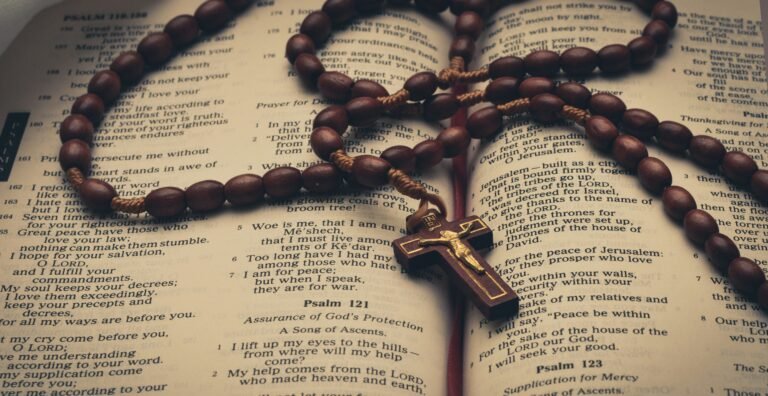
  • Choose a blessed medal or scapular such as the Saint Benedict Medal, and have each member wear one or keep it near their bedside.
  • When putting it on, say a brief prayer such as, โ€œI belong to Christ Jesus.โ€
  • Keep extra rosaries available for guests or family members.

Tradition & quotations:
The Church teaches that sacramentals can bring actual graces, forgiveness of venial sins, and protection from evil spirits when used devoutly.

Practical Tip:
Keep a small rosary pouch in your car or bag. When someone is anxious or ill, offer them the rosary to hold and pray for them.

Blessing Your Home & Objects: A Short Guide

Ask your parish priest to bless your rosaries, medals, crucifixes, or your home. Many parishes offer house blessings that include sprinkling holy water and praying in each room. These blessings are not only rituals but also acts of renewal, affirming the covenant your family has with God.

FAQs

Do sacramentals replace the sacraments?
No. They assist and support the sacramental life but do not replace it (CCC 1678).

What if I use a sacramental and nothing seems to happen?
The effect depends on your faith, your disposition, and cooperation with grace. The inner attitude matters more than external gestures.

Do I have to buy expensive items?
No. The value lies not in the price but in the blessing and faith with which it is used.

How do I dispose of old sacramentals?
If a blessed item is broken or worn out, dispose of it reverentlyโ€”by burning or buryingโ€”never by throwing it away carelessly.

Conclusion

In your pursuit of holiness, your home is sacred ground. It is where faith lives, grows, and is tested. The Church, in her wisdom, gives us sacramentals so that our ordinary spaces become extraordinaryโ€”infused with divine presence and ordered to Christ.

By adopting these three powerful sacramentalsโ€”the holy-water font, the crucifix, and the rosary or blessed medalโ€”you give your household tangible signs of faith, anchoring your familyโ€™s life in Christ and inviting His grace into every room.

May God bless your home, your family, and every heart within it. May the intercession of the saints and the blessing of Holy Mother Church protect you always. Amen.

Suggested Reading

Powerful prayer to defeat the works of Satan

Four practical ways to break free from sin

Prayer for Mondays

Prayer for Mondays: TO THE MOST HOLY TRINITY

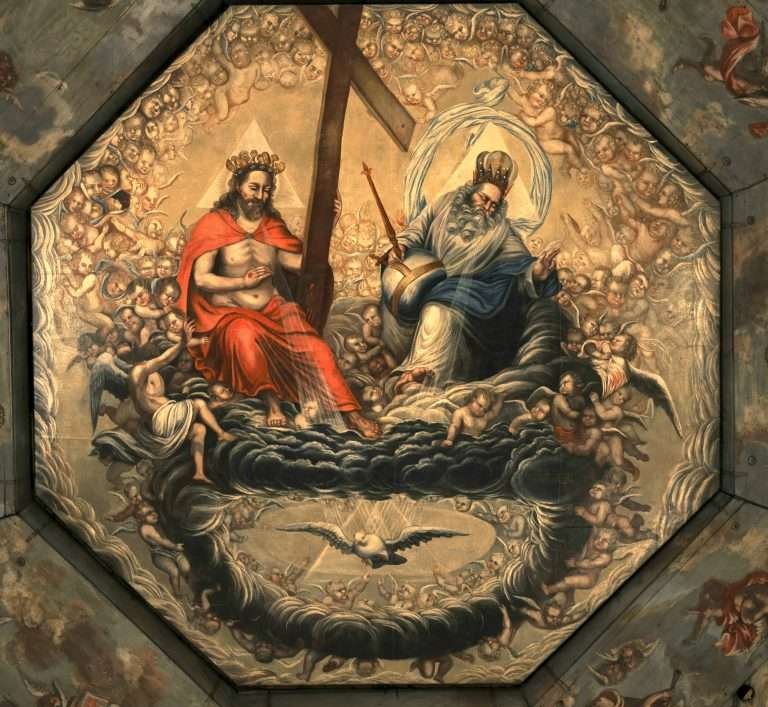
The mystery of the Most Holy Trinity is the heart of our faith โ€” one God in three divine Persons: Father, Son, and Holy Spirit. Every Christian prayer begins and ends in this mystery of love. As St. Augustine wrote, โ€œIf you see charity, you see the Trinity.โ€ In the unity of the Trinity, we behold perfect communion, eternal love, and unbroken peace โ€” the divine pattern after which we are made.

Let us adore the Father who created us, the Son who redeemed us, and the Holy Spirit who sanctifies us.

Prayer

God our Father, who, by sending into the world the Word of truth and the Spirit of sanctification, made known to the human race your wondrous mystery, grant us, we pray, that in professing the true faith we may acknowledge the Trinity of eternal glory and adore your Unity, powerful in majesty. Amen

May the Father, Who created us in love, bless our day with His providence.
May the Son, Who redeemed us by His Cross, guide our hearts in truth.
May the Holy Spirit, Who sanctifies and strengthens us, dwell within us always.
One God, living and reigning forever and ever. Amen.

When You Attack the Assumption of Mary, You Attack the Resurrection Itself

0

When You Attack the Assumption of Mary, You Attack the Resurrection Itself

All Christians await the resurrection of the body; the Assumption simply anticipates that promise. Some argue that the Assumption is not recorded in the Bible and would not hold to it, which I can sympathize with. However, Christians who claim that the Assumption is wrong, demonic, or even pagan are some of the strangest voices I’ve ever encountered. Declaring the Assumption as ‘pagan’ is shocking because the destiny of Mary being assumed into Heaven is the destiny promised to every Christian at the end of the age.

The New Testament is clear that:

Our bodies and souls will be transformed and glorified in Heaven:

โ€œFor the trumpet will sound, and the dead will be raised imperishable, and we shall be changedโ€ (1 Corinthians 15:52). (In the first century, the sound of a trumpet often signified an important announcement or divine intervention, while ‘imperishable’ suggested a state of eternal, incorruptible life. Jewish expectations of bodily resurrection were reinforced by such symbolism, indicating a transformation awaiting believers.)

โ€œHe will change our lowly body to be like his glorious body, by the power which enables him even to subject all things to himselfโ€ (Philippians 3:21).

We will reign with Christ forever:

โ€œIf we endure, we shall also reign with himโ€ (2 Timothy 2:12).

โ€œThey shall reign for ever and everโ€ (Revelation 22:5).

If this is our future, why should it be called โ€œpaganโ€ that God granted this reality to His Mother first, as a sign of hope for the rest of us? The very Christian idea that the body will be raised and glorified is what the Assumption proclaims. To deny this truth in Mary is, in a strange way, to undermine the Christian hope for all.

And what about the accusation that the title “Queen of Heaven” makes Mary a pagan goddess? That logic is deeply flawed. Scripture itself uses titles like “Lord” for false gods, as seen in the high places of Baal where sons and daughters were offered to Molech (Jeremiah 32:35), yet we still call Christ Lord because He alone fulfills it in truth. Unlike ancient goddesses who ruled capriciously, the woman of Revelation 12 reigns through maternal fidelity, highlighting how biblical titles redeem rather than borrow. Likewise, the fact that pagans misused a title does not make it evil. Christ is Lord in the true sense, and Mary is Queen of Heaven in the true sense because “a great sign appeared in heaven: a woman clothed with the sun, with the moon under her feet, and on her head a crown of twelve stars” (Revelation 12:1).

The tragedy is that in trying to attack Catholic teaching, many end up wounding the very fabric of Christianity itself. Deny the Assumption, and you implicitly deny the resurrection of the body. Attack Maryโ€™s Queenship, and you ignore the biblical witness that those who share in Christโ€™s victory also share in His reign.

It pains me to see Christians slander Mary, the Mother of our Lord, out of a misguided attempt to distance themselves from Catholics. In doing so, they risk not only dishonoring her, but also undermining their own faith in the promises of Christ.

Recommended Reading

The Hidden Sin in Calling Any Valid Mass “Ugly”

12 Essential Rules Every Catholic Must Live By

0

12 Essential Rules Every Catholic Must Live By

Living as a faithful Catholic today requires clarity, discipline, and love for God. These twelve essential rules are not mere traditionsโ€”they are a roadmap to holiness, drawn from Scripture, the Catechism, and the wisdom of the Saints.

1. Attend Mass Faithfully

The Holy Mass is the heart of Catholic life. It is where heaven meets earth, and we encounter Christ Himself.

โ€œOn the first day of the week, when we were gathered together to break bread,โ€ โ€” ACTS 20:7 (RSVCE)


โ€œThe Sunday Eucharist is the foundation and confirmation of all Christian practice.โ€ โ€” CCC 2181

St. Padre Pio said, โ€œIt would be easier for the world to survive without the sun than to do without Holy Mass.โ€

Missing Sunday Mass without a serious reason is a grave sin because it rejects the worship due to God.

2. Receive the Sacraments Regular

The Sacraments are Godโ€™s visible signs of invisible grace. They keep the soul alive.

โ€œUnless you eat the flesh of the Son of Man and drink his blood, you have no life in you.โ€ โ€” John 6:53 (RSVCE)


โ€œThe confession of sins, even from a simply human point of view, frees us and facilitates our reconciliation with others.โ€ โ€” CCC 1455

St. John Vianney taught, โ€œThe soul that approaches the Eucharist frequently and worthily is like a beautiful flower that lives in the sunshine.โ€

Frequent Confession and Holy Communion strengthen the soul and deepen union with Christ.

3. Observe Fasting and Abstinence

Fasting is not about punishmentโ€”it is about purification. It reminds us that man does not live by bread alone.

โ€œWhen you fast, do not look dismal, like the hypocrites, for they disfigure their faces that their fasting may be seen by men.โ€ โ€” Matthew 6:16 (RSVCE)


โ€œFasting expresses conversion in relation to oneself, to God, and to others.โ€ โ€” CCC 1434

Through fasting and abstinence, we share in Christโ€™s sacrifice and learn compassion for the poor.

4. Follow Catholic Moral Teachings

Morality is not an obstacle to freedomโ€”it is the path to it.

โ€œIf you love me, you will keep my commandments.โ€ โ€” John 14:15 (RSVCE)


โ€œTo love is to will the good of another.โ€ โ€” St. Thomas Aquinas

The Ten Commandments and the moral teachings of the Church protect the dignity of life and direct us toward heaven.

5. Support the Church

Supporting the Church is part of belonging to her mission.

โ€œThe laborer deserves his wages.โ€ โ€” Luke 10:7 (RSVCE)


โ€œThe faithful are obliged to assist with the needs of the Church so that she has what is necessary for divine worship, for apostolic works and works of charity.โ€ โ€” CCC 2043

Your givingโ€”whether time, skill, or financial helpโ€”builds the Body of Christ and keeps her mission alive.

6. Pray Every Day

Prayer is the soulโ€™s oxygen. Without it, faith withers.

โ€œPray constantly.โ€ โ€” 1 Thessalonians 5:17 (RSVCE)

St. Teresa of Avila said, โ€œPrayer is nothing else than an intimate sharing between friends.โ€

Make time daily to speak with God, listen to Him, and allow His presence to shape your heart.

7. Honor Marriage and Family Life

The family is the first Church, where love and faith take root.

โ€œTherefore what God has joined together, let no man put asunder.โ€ โ€” Mark 10:9 (RSVCE)


โ€œThe family is the original cell of social life.โ€ โ€” CCC 2207

St. John Paul II said, โ€œAs the family goes, so goes the nation and so goes the whole world.โ€

Be faithful in marriage, remain open to life, and raise children to know and love God.

8. Defend and Share the Faith

Faith must be lived and proclaimed with courage.

โ€œAlways be prepared to make a defense to anyone who calls you to account for the hope that is in you.โ€ โ€” 1 Peter 3:15 (RSVCE)

St. Catherine of Siena urged, โ€œProclaim the truth and do not be silent through fear.โ€

Learn the faith, live it joyfully, and share it with gentleness and confidence.

9. Reject Superstition and False Beliefs

Superstition replaces trust in God with false powers and illusions.

โ€œYou shall have no other gods before me.โ€ โ€” Exodus 20:3 (RSVCE)


โ€œAll forms of divination are to be rejected.โ€ โ€” CCC 2116

Reject horoscopes, charms, fortune-telling, and occult practicesโ€”they open the door to deception, not truth.

10. Practice Charity Daily

Love is the measure of every Christian life.

โ€œSo faith by itself, if it has no works, is dead.โ€ โ€” James 2:17 (RSVCE)


โ€œCharity is the form of all the virtues.โ€ โ€” CCC 1827

St. Teresa of Calcutta said, โ€œIt is not how much we do, but how much love we put into what we do.โ€

Be merciful, generous, and kindโ€”especially when it costs you something.

11. Grow in Virtue

Virtue is the art of becoming good by habit.

โ€œMake every effort to supplement your faith with virtue, and virtue with

knowledge.โ€ โ€” 2 Peter 1:5 (RSVCE)

St. Gregory of Nyssa wrote, โ€œThe goal of a virtuous life is to become like God.โ€

Virtue transforms the soul, bringing peace and interior freedom.

12. Stay Close to the Sacraments

The Sacraments are encounters with the living Christโ€”real sources of grace.

โ€œDo this in remembrance of me.โ€ โ€” Luke 22:19 (RSVCE)


โ€œThe sacraments are powers that come forth from the Body of Christ.โ€ โ€” CCC 1116

St. Ambrose said, โ€œBecause you receive the Body of Christ, you become what you receive.โ€

Through the Sacraments, grace renews the soul and keeps it alive in divine friendship.

Final Reflection

These twelve rules are not a checklistโ€”they are a way of life. To live them faithfully is to walk daily toward heaven, growing in holiness through grace, truth, and love.

โ€œHe who endures to the end will be saved.โ€ โ€” Matthew 24:13 (RSVCE)

Suggested Reading:

Four practical ways to break free from sin
The Hidden Sin of Calling Any Valid Mass โ€œUglyโ€

0

The Hidden Sin of Calling Any Valid Mass Ugly

I have attended both the Novus Ordo and the Tridentine Mass. I genuinely believe the latter is richer in beauty and expression. However, a Mass does not cease to be beautiful simply because another might seem more so. What truly crowns every Mass with beauty is the presence of Christ Himself, in the minister, the people, the readings, and most especially, the Eucharist. To call any valid Mass โ€œuglyโ€ is ultimately to insult Christ, whose presence is the heart of every celebration. Jesus is present; what could possibly be more beautiful than that?

If you had any faith, you would know that Christโ€™s presence, even in the muddiest environment, brings light. Imagine a small chapel in a prison or a makeshift altar in a field hospital during war. In such places, where despair and neglect seem to reign, the light of Christ still dispels every darkness, at least for those with eyes to see. Nothing in that place remains as it was. The fire and light of God transfigure all they touch. Any objective ugliness is overpowered and made beautiful by the presence of the Lord of Hosts.

God has communed with humanity in many ways, with His Incarnation being the most profound. Jesus did not choose the glory of kingship but the humility of a carpenter and the shame of the Cross. This humility continues in the Mass, where we offer simple gifts of bread and wine that become His Body and Blood. The same pattern of divine humility and glory is found in every sacrament: simple matter, divine power.

Everything associated with Christ becomes beautiful because of who He is. Consider Mary: though a creature in need of redemption, she was raised to a perfection beyond all angels. The presence of Christ in her womb transformed her being. Catholics rightly defend her honor when others dismiss her as a mere vessel, because to belittle what God has sanctified is to misunderstand His way of exalting the lowly.

To claim that a valid Mass, where Christ is born anew upon the altar, is โ€œuglyโ€ is to misunderstand what makes the Mass beautiful. No place where God dwells can be ugly. The beauty of our churches, chalices, and rites flows from the beauty of God Himself. If the source of all beauty descends to our altars, then the true beauty of each Mass flows first and foremost from His presence.

We must, of course, still strive for visible beauty in worship. Not to do so would mean withholding our best from God. But if all we have to offer is simple and poor, He accepts it and makes it whole.

I have also defended the idea of using precious metals during Mass in a post I will share below.

Someone commenting on a facebook post made by a monk about the chalices in their monastery said:

And Jesus did not use a chalice at his Last Passover meal when he instituted Holy Communion. But is was a clay cup used at that time. I wonder what his reaction would be of someone gave him a gold chalice at the time.

โ€” Ernie Carlbom

I responded:

Maybe Christ wouldโ€™ve accepted a golden chalice the same way He accepted the expensive oil poured on His feet. The point of using gold in worship isnโ€™t showing off, itโ€™s about giving God the best of what weโ€™ve got. We give Him the best songs, the best effort, the best of our hearts, so why not the best materials too?

God Himself commanded gold to be used in worship in the Old Testament. That hasnโ€™t changed. The fact that Christ may have used something simple doesnโ€™t cancel that out. And honestly, we donโ€™t even know what kind of cup He used, the Bible never says it was clay.

What doesnโ€™t make sense is this: people wear gold jewelry to Mass but then argue that the chalice for the Blood of Christ should be made of wood. Thatโ€™s just crazy. If thereโ€™s anything in this world that deserves gold, itโ€™s the vessel that holds His covenant.

Abuses in the Novus Ordo

People often cite abuses in the Novus Ordo, which is problematic because it implies such abuses are exclusive to it. Yet there were also abuses in the Latin Mass at various times in history. The difference is that we now live in an age of smartphones, so such incidents are easier to record and share. Moreover, because the Mass today is in the vernacular, the faithful can recognize when a priest says something he should not, unlike in the past, when most people did not understand Latin and had no way to document what they witnessed.

This does not mean there are no issues inherent in the post-conciliar reforms. There are indeed many โ€œleaksโ€ to plug. But these are typically matters of reception and interpretation, not of the reforms themselves. Every major reform in Church history has seen initial misuse. This is true of almost every council, not only Vatican II.

What the Church needs now is a faithful implementation of the Councilโ€™s documents, and continued renewal toward a richer, more authentic expression of the Divine Liturgy. Abuses, however, never invalidate the Mass or make the Eucharist any less Christ. They wound hearts, cause scandal, and must be eradicated. For that purification, we must keep praying.

Conclusion

A person may prefer one form of the Mass or find certain expressions outwardly more beautiful than others. But it is essential never to diminish the excellence of the Mass itself, so long as it is valid. Since Christ descends upon the altar, every Mass is an event of infinite worth and grace. To attach words like โ€œuglyโ€ to it is, at the very least, to tread close to sin.

I personally hope that, in time, the Churchโ€”perhaps under Pope Leo XIVโ€”might consider restoring broader access to the Latin Mass for those who desire it. Yet I also trust that such decisions rest in the Holy Spiritโ€™s guidance. Above all, the charity owed to God must be expressed in the reverence we show toward everything set apart for Him: the Mass, the saints, and especially the ordained ministers of His Church, above all the Pope.

God bless.

3 Subtle Ways We Reject God Without Realizing It

1

3 Subtle Ways We Reject God Without Realizing It

We all struggle, no matter how much we know, or how well we think we act, we struggle to maintain a lively faith without the contamination of errors or doubts, to maintain a burning love without the coldness of selfishness and hate, and to keep the life of grace without the corruption and death of sin. It is hard work, but thankfully, it is not all our work; it is Godโ€™s primary work, and all we need to do is trust and obey Him and exercise our wills in a way that we keep saying yes to him.

And each time we fall, we run back to Him and ask for His mercy, which He always gives to those who come with genuine contrition. There are, however, ways we can make things hard for God, making it impossible for His light to penetrate our hearts and His fire to burn brightly and steadily in us. We do this by reviving this very mercy we stand in need of so much.

The first way we reject God’s mercy is by denying that we are sinners in need of help.

When we deny we are sinners, we make God a liar. This would also deny the need for Christ and make His coming unnecessary. It would mean putting oneself outside His saving love and power. It is choosing to walk the long road of the afterlife alone, instead of with Christ. Christ died and rose from the dead to become a sure path to God for humanity. “Who was put to death for our trespasses and raised for our justification.” – Romans 4:25

We acknowledge our sinfulness before Him. And recognize that all we do is at best imperfect and, at worst, evil. We are incapable of worshipping Him perfectly. So, even when we set out to do good, we fail without His help. When we acknowledge this, it is a sign that His Spirit is already at work in us. He sets our souls in order and prepares us for His mercy. This mercy comes only to those who humble themselves. God shows His power to the weak (cf 2 Cor 12:9).

He opens His riches to the poor. He pours mercy on the contrite and lifts those who are cast down (cf Luke 1:52, Isaiah 57:3-21). If someone is strong, they have no need of God. And if they are rich, God will not give His riches to them. If they are proud, Godโ€™s mercy cannot touch them. If they are standing, God will not lift them up, for they see no need for Him (cf James 4:6).

The second way is by consciously refusing to let go of sin.

Even when we acknowledge our sinfulness and poverty before Him, cast ourselves to the ground in hope of being lifted up by His merciful power, we sin grievously when we refuse to let go of sin, no matter how “small” the sin might appear to us. When we refuse, we are putting into practice the rejection of God and the need for His mercy.

While we do not admit to this evil in words, we put it into practice when we hold onto sin, mortal or venial. We hold onto sin when it is no longer a matter of weakness but of free choice to keep this or that and refuse to let them go. When we hear the truth and contradict it for our own selfishness. When we  argue against Godโ€™s law and refuse it because we believe it is too hard. It is better we accept in obedience, do our best, and fail than deny and shake our fists against our God.

Destroy your enemies

When we hold onto the instruments of sin while promising ourselves future forgiveness, we show that we do not value God’s mercy and do not acknowledge the difficulty and unspeakable pain it took Christ to purchase for us the sacrament of penance. So even when our resolution is weak, God welcomes us in His arms. Even when we are scared, we may fall back into sin, but he forgives us as long as right here and now we have decided to quit.

No matter how bad it is, we must keep purifying our lives by throwing away anything that leads us into mortal sin and rejecting any attachments to venial and mortal sins. We also reject and remove every affection for sin, irrespective of how little it seems. So we cannot glory in them or eat the fruits of sin. We reject all, cast them all, and pursue the enemies of our souls until they are utterly destroyed. No rest, this is warfare.

Grow

Do not welcome the preaching of those who say “take everything easy every time, do only little things for the rest of your life”. Those preachings may sometimes come from a place of care, but they are not wise for those who want to mature in the faith. It is a good start, but we must not remain babies in the faith. We practise all with discretion, but we must also grow and mature so that we can give God more. More of our time, attention, mind, and heart. shoot for perfection in all things.

The third way is by refusing to forgive others after we have been forgiven.

When we hold onto grudges, consciously refusing to forgive those who wrong us, we reject God’s mercy. Godโ€™s mercy cannot coexist with our hatred or vengeance. However much we flatter ourselves that our case is different or that someone crossed the line, the harm we suffer does not compare to our sins against God, who is more innocent to us than we have been to others. God has also been more generous to us than we have been to others. And He is infinitely higher in dignity and power.

So there is no comparison, and making such comparisons is itself sinful because of the gap between our finitude and God’s infinity. Even comparing our dignity to that of Mary, a mere creature who is before God as nothing, would be a crime. Since she far exceeds us in dignity and excellence. Imagine, then, how evil it is to compare ourselves to God and act as though the wrongs done to us are unforgivable.

Forgiveness is hard but required, so we ask God for help. Even when angry, we choose to do good to our enemies and pray for them. Christ didn’t say we cannot feel anger, but we must will their good and help them in any way we can, regardless of the wounds we bear from their harm. Once we can choose their good, we should be assured that we have fulfilled our duty. We continue to pray for healing and wait patiently for when His Divine Majesty grants us relief from our trials.

Recommend Reading

5 Powerful Customs of a Catholic Family

Recommended Books

As an Amazon Associate, I may earn a commission from qualifying purchases at no extra cost to you.

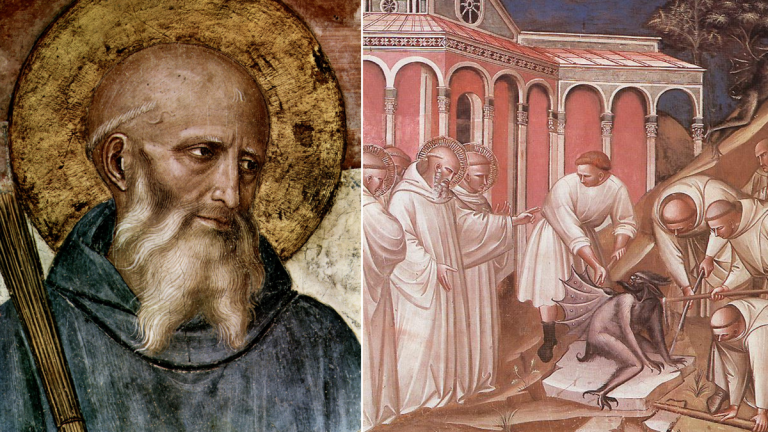
Prayer of Saint Benedict of Nursia

0

O Lord, I place myself in your hands and dedicate myself to you.

I pledge myself to do your will in all things: To love the Lord God with all my heart, all my soul, all my strength.
Not to kill. Not to steal. Not to covet. Not to bear false witness. To honor all persons. Not to do to another what I would not wish done to myself. To chastise the body. Not to seek after pleasures. To love fasting. To relieve the poor. To clothe the naked. To visit the sick. To bury the dead. To help in trouble. To console the sorrowing. To hold myself aloof from worldly ways. To prefer nothing to the love of Christ. Not to give way to anger. Not to foster a desire for revenge. Not to entertain deceit in the heart. Not to make a false peace. Not to forsake charity. Not to swear, lest I swear falsely. To speak the truth with heart and tongue. Not to return evil for evil. To do no injury: yea, even to bear patiently any injury done to me. To love my enemies. Not to curse those who curse me, but rather to bless them. To bear persecution for justice’ sake. Not to be proud. Not to be given to intoxicating drink. Not to be an over-eater. Not to be lazy. Not to be slothful. Not to be a murmured. Not to be a detractor. To put my trust in God. To refer the good I see in myself to God. To refer any evil in myself to myself. To fear the Day of Judgment. To be in dread of hell. To desire eternal life with spiritual longing. To keep death before my eyes daily. To keep constant watch over my actions. To remember that God sees me everywhere. To call upon Christ for defense against evil thoughts that arises in my heart. To guard my tongue against wicked speech. To avoid much speaking. To avoid idle talk. To read only what is good to read. To look at only what is good to see. To pray often. To ask forgiveness daily for my sins, and to seek ways to amend my life. To obey my superiors in all things rightful. Not to desire to be thought holy, but to seek holiness. To fulfill the commandments of God by good works. To love chastity. To hate no one. Not to be jealous or envious of anyone. Not to love strife. Not to love pride. To honor the aged. To pray for my enemies. To make peace after a quarrel, before the setting of the sun. Never to despair of your mercy, O God of Mercy. Amen.

Prayer of thanksgiving to the Holy Trinity

O Eternal God! O Eternal Trinity! Through the union of Thy divine nature Thou hast made so precious the Blood of Thine only-begotten Son! O eternal Trinity, Thou art as deep a mystery as the sea, in whom the more I seek, the more I find; and the more I find, the more I seek. For even immersed in the depths of Thee, my soul is never satisfied, always famished and hungering for Thee, eternal Trinity, wishing and desiring to see Thee, the True Light.

O eternal Trinity, with the light of understanding I have tasted and seen the depths of Thy mystery and the beauty of Thy creation. In seeing myself in Thee, I have seen that I will become like Thee. O eternal Father, from Thy power and Thy wisdom clearly Thou hast given to me a share of that wisdom which belongs to Thine Only-begotten Son. And truly hast the Holy Spirit, who procedeth from Thee, Father and Son, given to me the desire to love Thee.

O eternal Trinity, Thou art my maker and I am Thy creation. Illuminated by Thee, I have learned that Thou hast made me a new creation through the Blood of Thine Only-begotten Son because Thou art captivated by love at the beauty of Thy creation.

O eternal Trinity, O Divinity, O unfathomable abyss, O deepest sea, what greater gift could Thou givest me then Thy very Self? Thou art a fire that burns eternally yet never consumed, a fire that consumes with Thy heat my self-love. Again and again Thou art the fire who taketh away all cold heartedness and illuminateth the mind by Thy light, the light with which Thou hast made me to know Thy truth.

By this mirrored light I know Thou are the highest good, a good above all good, a fortunate good, an incomprehensible good, an unmeasurable good, a beauty above all beauty, a wisdom above all wisdom, for Thou art wisdom itself, the food of angels, the fire of love that Thou givest to man.

Thou art the garment covering our nakedness. Thou feedest our family with Thy sweetness, a sweetness Thou art from which there is no trace of bitterness. O Eternal Trinity! Amen.

5 Powerful Customs of a Catholic Family

0

5 Powerful Customs of a Catholic Family

The Catholic family is called the domestic Church โ€” a sacred place where faith is lived daily. Saint John Paul II taught, โ€œThe future of humanity passes by way of the familyโ€ (Familiaris Consortio, paragraph 86). Here are five powerful customs that can shape a family into a true school of holiness.

1. Daily Prayer and Sunday Mass
The family that prays together, stays together. Prayer should be woven into the fabric of each day: morning prayers, grace before meals, the Rosary, and evening prayers. Above all, the Eucharist must be the heart of family life. The Catechism teaches, โ€œThe Eucharist is the source and summit of the Christian lifeโ€ (paragraph 1324). Making Sunday Mass non-negotiable forms children to put God first.

2. Celebrate the Liturgical Year
The Churchโ€™s calendar is a school of faith. Advent wreaths, Christmas customs, Lenten sacrifices, Easter joy, and saintsโ€™ feast days all teach that time belongs to God. Pope Benedict XVI said, โ€œThe family is the first place where the celebration of faith is found in the rhythms of daily life and the great feasts of the Churchโ€ (Angelus, Dec 31, 2006). Living the liturgical year in the home sanctifies time itself.

3. Sacred Reminders in the Home
A Catholic home should look Catholic. Crucifixes in every room, holy images, a family prayer corner or small altar proclaim that Christ is the heart of the house. Scripture says, โ€œYou shall write them on the doorposts of your house and on your gatesโ€ (Deuteronomy 6:9). Visible reminders sanctify the environment, lifting minds to God.

4. Scripture and Saints
Reading the Bible and the lives of the saints together nourishes faith. Saint Jerome declared, โ€œIgnorance of Scripture is ignorance of Christโ€ (Commentary on Isaiah). Children who hear Scripture and see saintsโ€™ lives learn that holiness is real and attainable. Hebrews 12:1 reminds us, โ€œWe are surrounded by so great a cloud of witnessesโ€ โ€” the saints encourage us in our journey.

5. Faithful Conversation and Virtue
Faith must be the language of the home. Speak about forgiveness, gratitude, Godโ€™s providence, and the virtues in daily conversations. Saint John Chrysostom urged parents: โ€œLet everything take second place to our care of our children, our bringing them up in the discipline and instruction of the Lordโ€ (Homily on Ephesians 21.1). The Catechism adds, โ€œParents have the first responsibility for the education of their children in the faithโ€ (paragraph 2223).

A Catholic family that lives these customs becomes a school of love, faith, and discipleship. It is here, in the ordinary, that saints are raised. As Pope Francis said, โ€œThe home is the place where we learn to live with others despite our differences and to belong to one anotherโ€ (Amoris Laetitia, paragraph 276). The domestic Church is not just a phrase โ€” it is Godโ€™s plan for holiness lived daily.


The Holy Family Prayer


JESUS
, Son of God and Son of Mary, bless our family. Graciously inspire in us the unity, peace, and mutual love that you found in your own family in the little town of Nazareth.

MARY, Mother of Jesus and Our Mother, nourish our family with your faith and your love. Keep us close to your Son, Jesus, in all our sorrows and joys.

JOSEPH, Foster-father to Jesus, guardian and spouse of Mary, keep our family safe from harm. Help us in all times of discouragement or anxiety.

HOLY FAMILY OF NAZARETH, make our family one with you. Help us to be instruments of peace. Grant that love, strengthened by grace, may prove mightier than all the weaknesses and trials through which our families sometimes pass. May we always have God at the center of our hearts and homes until we are all one family, happy and at peace in our true home with you. Amen.