Saturday, April 4, 2026
9.5 C
London
Home Blog Page 41

Prayer of today – Friday, December 16th

0

Be with Me Today, O Lord.

May all I do today begin with you, O Lord.
Plant dreams and hopes within my soul,
revive my tired spirit:
be with me today.

May all I do today continue with your help, O Lord.
Be at my side and walk with me:
Be my support today.

May all I do today reach far and wide, O Lord.
My thoughts, my work, my life:
make them blessings for your kingdom;
let them go beyond today,

O God Today is new unlike any other day,
for God makes each day different.
Today God’s everyday grace falls on my soul like abundant seed,
though I may hardly see it.

Today is one of those days Jesus promised to be with me,
a companion on my journey,
And my life today, if I trust him,
has consequences unseen.
My life has a purpose.

“I have a mission…
“I am a link in a chain,
a bond of connection between persons.
God has not created me for naught…
Therefore I will trust him.
Whatever, wherever I am, I can never be thrown away.
God does nothing in vain.

“He knows what he is about.”

(Author: J. H. Newman)

A few tips to make this Christmas special

0

A few tips to make this Christmas special

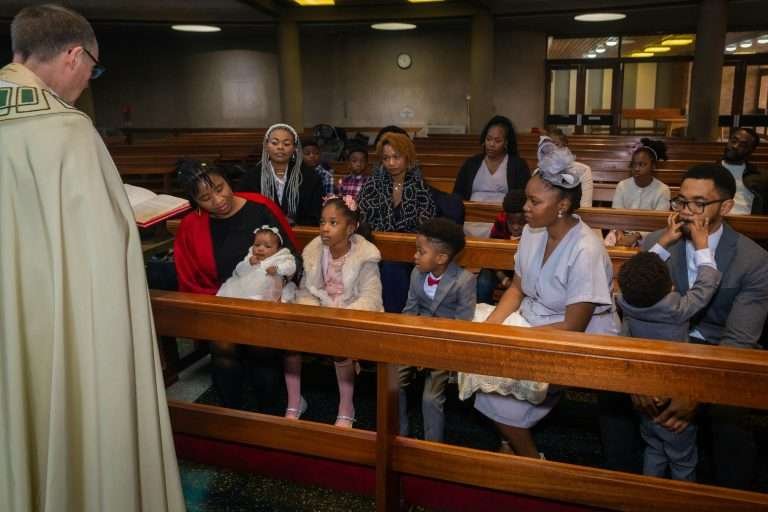
Attend Mass on Christmas Eve or Christmas Day:

Attending Mass on Christmas Eve or Christmas Day is an important way to celebrate Christmas as a Catholic. Christmas Mass is a special celebration of the birth of Jesus and an opportunity to receive the Eucharist, which is the body and blood of Jesus. Attending Mass can help you to feel connected to the wider community of believers, and can also help you to focus on the true meaning of Christmas: the birth of Jesus, who came to save us from our sins and offer us the gift of eternal life.

If you are unable to attend Mass in person due to sickness or other reasons, you may be able to participate in a virtual Mass or watch a Mass on television. Many churches also offer online resources for prayer and reflection during the Christmas season.

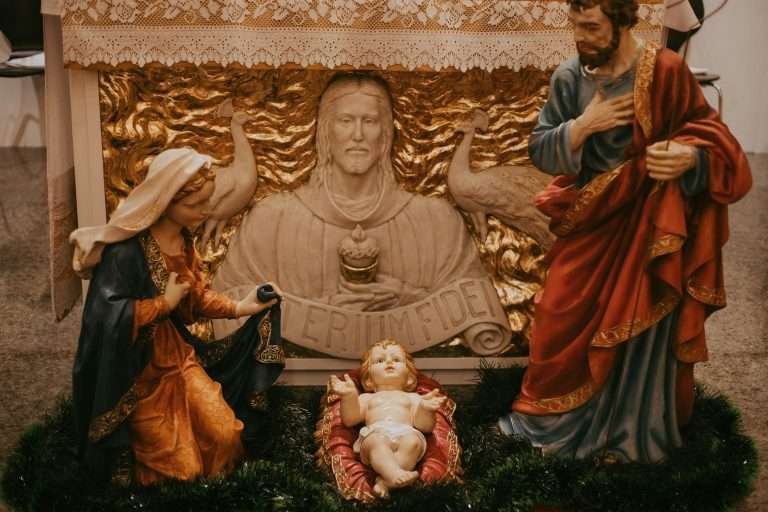
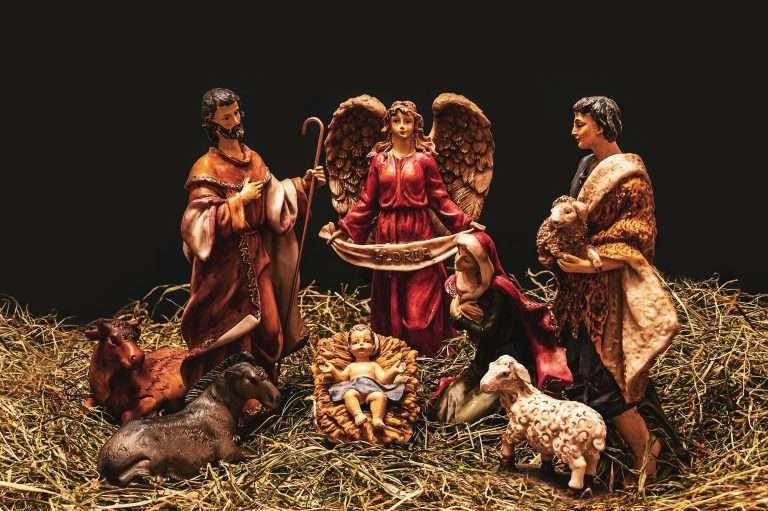
Set up a nativity scene:

Setting up a nativity scene in your home can be a beautiful way to remember the true meaning of Christmas. You can also include other religious Christmas decorations, such as a Christmas tree, lights, and Christmas wreaths.

Spend time with family and friends: Christmas is a time to be with the people you love.

Spending time with family and friends is an important part of celebrating Christmas for many people. Christmas is a time to be with the people you love, to share in the joy of the season, and to create special memories together.

There are many ways to spend time with your family and friends during the Christmas season. Some ideas might include:

  • Having a Christmas dinner or potluck
  • Going caroling or singing Christmas songs together
  • Doing a holiday-themed activity, such as making gingerbread houses or watching a Christmas movie
  • Taking a walk or going on a drive to look at Christmas lights
  • Exchanging gifts or sending cards to loved ones

It’s important to remember that spending time with family and friends doesn’t have to be complicated or expensive. The most important thing is to be present and to enjoy each other’s company.

Reflect on the true meaning of Christmas:

Take some time to meditate on the reason for the season: the birth of Jesus. Read the Christmas story from the Bible, and consider how you can bring more love, joy, and peace into the world in honor of Jesus’s birth. The point of it all is that God became man for you. So be a little selfish and consider how this affects you in particular. That Jesus came for you. And let this fill you with gratitude and generosity.

Perform acts of Kindness:

Performing acts of kindness is a great way to make your Christmas more beautiful and to spread the joy of the season to others. There are many ways to do this, and it doesn’t have to be a big or elaborate gesture. Here are a few ideas:

  • Donate to a charity or non-profit organization that helps those in need. This could be a food bank, a shelter, or an organization that provides assistance to people experiencing homelessness.
  • Buy a gift for someone who might not otherwise receive one. This could be a child in need, a senior citizen, or someone who is struggling financially.
  • Volunteer your time. Many organizations need extra help during the holiday season. Consider volunteering at a soup kitchen, a toy drive, or an organization that provides assistance to those in need.
  • Be kind to those around you. Pay for someone’s coffee in line behind you, leave a note of encouragement for someone, or simply offer a smile and a kind word to someone who looks like they could use it.

Remember that acts of kindness don’t have to be big or elaborate. Even the smallest gestures can make a difference and help to spread joy and love during the holiday season.

Pray and meditate:

Praying and meditating is a wonderful way to draw closer to God and to find peace and joy during the Christmas season. Here are a few suggestions for ways to pray and meditate during Christmas:

  • Read the Christmas story from the Bible. You can find the story of Jesus’s birth in the Gospels of Matthew and Luke.
  • Spend time in quiet reflection. Set aside sometime each day to sit in quiet and reflect on the love and grace that God has given us through his son, Jesus. You might try using guided meditation or prayer or simply sit in silence and enjoy for God’s presence.
  • Pray the Rosary. Contemplate on the joyful mysteries and focus particularly on the nativity and its implications for you, your family and the world. This is the beginning of the journey of salvation. Be thankful for it.
  • Attend a Christmas service or retreat. Many churches offer special Christmas services or retreats that provide opportunities for prayer and reflection. Ask your pastor or catechist.

Reading of today – Friday 16th December 2022

0

Friday of the Third Week in Advent

Lectionary: 191

Reading 1

Is 56:1-3a, 6-8

Thus says the LORD:
Observe what is right, do what is just;
for my salvation is about to come,
my justice, about to be revealed.
Blessed is the man who does this,
the son of man who holds to it;
Who keeps the sabbath free from profanation,
and his hand from any evildoing.
Let not the foreigner say,
when he would join himself to the LORD,
“The LORD will surely exclude me from his people.”

The foreigners who join themselves to the LORD,
ministering to him,
Loving the name of the LORD,
and becoming his servants–
All who keep the sabbath free from profanation
and hold to my covenant,
Them I will bring to my holy mountain
and make joyful in my house of prayer;
Their burnt offerings and sacrifices
will be acceptable on my altar,
For my house shall be called
a house of prayer for all peoples.
Thus says the Lord GOD,
who gathers the dispersed of Israel:
Others will I gather to him
besides those already gathered.

Responsorial Psalm

Ps 67:2-3, 5, 7-8

R. (4) O God, let all the nations praise you!
May God have pity on us and bless us;
may he let his face shine upon us.
So may your way be known upon earth;
among all nations, your salvation.
R. O God, let all the nations praise you!
May the nations be glad and exult
because you rule the peoples in equity;
the nations on the earth you guide.
R. O God, let all the nations praise you!
The earth has yielded its fruits;
God, our God, has blessed us.
May God bless us,
and may all the ends of the earth fear him!
R. O God, let all the nations praise you!

Alleluia

R. Alleluia, alleluia.
Come, Lord, bring us your peace
that we may rejoice before you with a perfect heart.
R. Alleluia, alleluia.

Gospel

Jn 5:33-36

Jesus said to the Jews:
“You sent emissaries to John, and he testified to the truth.
I do not accept testimony from a human being,
but I say this so that you may be saved.
John was a burning and shining lamp,
and for a while you were content to rejoice in his light.
But I have testimony greater than John’s.
The works that the Father gave me to accomplish,
these works that I perform testify on my behalf
that the Father has sent me.”

How to keep your mind pure

0

How to keep your mind pure

“More souls go to hell because of sins of the flesh than for any other reason.”

Our Lady of Fatima

As a Catholic, there are many ways to keep your mind pure and focused on the teachings of the faith. One of the most important ways is to pray and meditate regularly. This can help to remind you of the principles and values that are at the heart of the Catholic faith, and can help to keep your thoughts focused on what is good and pure.

One way to pray is to set aside time each day to spend in quiet contemplation or meditation. This can be a time to reflect on the teachings of the Bible or the writings of the saints, to listen for the voice of God, or to simply be still and quiet in His presence.

Another way to pray is to participate in the liturgical life of the Church. This can include attending Mass on Sundays and holy days of obligation, as well as praying the liturgy of the hours, which is a daily cycle of prayers that has been practiced by Catholics for centuries.

In addition to prayer, there are also other things that you can do to keep your mind pure. One of these is to avoid exposure to harmful or immoral influences. This can include avoiding violent or sexually explicit media, as well as avoiding situations or environments that might tempt you to sin or engage in behavior that goes against the teachings of the Catholic faith.

Another way to keep your mind pure is to surround yourself with people who share your values and who can support and encourage you in your efforts to live a virtuous life. This can include family members, friends, and other members of your faith community who can offer guidance and support as you strive to grow in holiness.

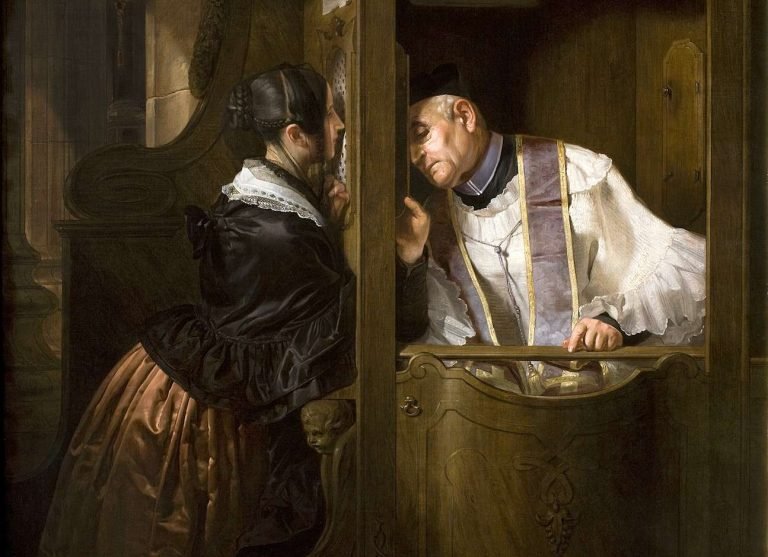
Finally, it is also important to regularly confess your sins and seek the sacraments of the Church. This can include participating in the sacrament of reconciliation, also known as confession, in which you confess your sins to a priest and receive absolution. It can also include regularly receiving the Eucharist, which is the sacrament in which Catholics receive the body and blood of Christ.

By participating in these practices, you can help to keep your mind pure and focused on the teachings of the Catholic faith. In doing so, you can grow in holiness and become a better witness to the love of Christ in the world.

Words of the Saints on Purity:


St Teresa of Calcutta

“Purity is the fruit of prayer.”

“A clean heart is a free heart. A free heart can love Christ with an undivided love in chastity, convinced that nothing and nobody will separate it from his love. Purity, chastity, and virginity created a special beauty in Mary that attracted God’s attention. He showed his great love for the world by giving Jesus to her.”

St John Henry Newman

“Purity prepares the soul for love, and love confirms the soul in purity.”

St. John Bosco

“Holy Purity, the queen of virtues, the angelic virtue, is a jewel so precious that those who possess it become like the angels of God in heaven, even though clothed in mortal flesh.”

St. Josemaria Escriva

“As soon as you willfully allow a dialogue with temptation to begin, the soul is robbed of peace, just as consent to impurity destroys grace.”

“Temptation is necessary to make us realize that we are nothing in ourselves.”

“That conversation . . . was as dirty as a sewer! It is not enough for you to take no part in it. You must show your repugnance to it strongly!”

“Never talk of impure things or events, not even to deplore them. Look, it’s a subject that sticks more than tar. Change the conversation, or if that’s not possible, continue, but speaking of the need and beauty of holy purity–a virtue of the men who know what their souls are worth.”

“I have never talked about impurity. . . . But I have spoken many times, as I have to do, about chastity, purity, and the joyful affirmation of love.”

St. Clement of Alexandria

“Filthy talk makes us feel comfortable with filthy action. But the one who knows how to control the tongue is prepared to resist the attacks of lust.”

St. John Vianney

The man of impure speech is a “person whose lips are but an opening and a supply pipe which hell uses to vomit its impurities upon the earth.”

St. Jerome

“Either we must speak as we dress, or dress as we speak. Why do we profess one thing and display another? The tongue talks of chastity, but the whole body reveals impurity.”

Four practical ways to break free from sin

1

Four practical ways to break free from sin

As a Catholic, one way to break free from sin is to confess your sins to a priest in the Sacrament of Reconciliation. This sacrament allows you to confess your sins to a priest and receive forgiveness from God. The priest will give you guidance and advice on how to avoid committing those sins in the future and assign you a penance to help you grow in your faith and strengthen your resolve to avoid sin. It’s important to remember that we all struggle with sin, but through prayer, regular participation in the sacraments, and a commitment to living a life in accordance with the teachings of the Catholic Church, we can overcome our sinful tendencies and grow closer to God.

But I am assuming you knew that part already. Now here are practical steps to take or things to keep in mind.

God always forgives:

It does not matter how many times you fall, as long as you struggle to keep yourself from falling and you confess with true contrition, God always forgives no matter how serious the sin.

“Come now, let us settle the matter,” says the LORD. “Though your sins are like scarlet, they shall be as white as snow; though they are red as crimson, they shall be like wool.

Isaiah 1:18

The temptation the enemy will come with:

  • God has abandoned you and can never forgive you: If you struggle with a habitual sin, keep the word of God close to your mouth and your heart. This is how to combat the enemy – word for word. Remember Jesus in the wilderness when the devil tempted him? Jesus cast him out using the word of God (though he was himself the Word). You too should do the same as the word of God is a weapon against the enemy.

  • Sit in the sin a while longer or you have started, you may as well finish or do more and confess later: you must realize that each sin digs your soul deeper into a pit, so never give in to committing more or sitting in your sins longer. Once you realize yourself, move.

  • The priest is judging you, you should be ashamed of yourself: This is a major one but there are two solutions. The first is the best – get over yourself and learn to keep one confessor. This is really powerful as having one wise priest to confess to will help measure your progress out of a sinful habit. It’s like the accountability people feel in AA meetings, it is really a powerful way that God works through communities. Use it and do not let the enemy take that from you. Secondly, if you find that you cannot go to the priest at your parish, go outside. If you cannot confess to the same priest, go to a random priest then. Start from there but work your way to the first option as this has to be your ultimate goal. Oh, the priest is never judging you since he himself has a lot to deal with too. I used to have a priest friend to whom I confessed. I would talk for over an hour on regular topics and we’d joke. Then I’d ask for confession and he’d leave me about 20 minutes to pray and collect myself and then I’d confess to him. It helped my spiritual life a whole lot as we saw each other almost every day! Imagine being exposed to the Sacraments every day! The devil would be weeping!

Never store an instrument of sin:

This is a no-brainer but you must destroy everything that led you to the sin you confess. Everything includes unnecessary friendships and sinful relationships. This should be a goal you must have in your heart. If you cannot modify that relationship to stop leading you to sin, then it must be cut off. Remember Jesus’ words?

“And if your eye causes you to stumble, pluck it out. It is better for you to enter the kingdom of God with one eye than to have two eyes and be thrown into hell”

Mark 9:47

Run to Mary and Jesus in the Eucharist

Receiving the body of Christ often, daily if possible is a powerful way to fortify your heart to withstand temptations. Also praying through Mary in the Holy Rosary and meditating the mysteries therein. A powerful way to fill your mind with holy things and to allow the Spirit of God permeat more and more areas of your soul in your daily affair.

Practise. Show mercy:

Practice the gospel of love by seeing Jesus in the people you meet. Showing them mercy and forgiveness. This does not mean becoming a doormat, because many people do not know the difference between humility and fear. Forgiveness means that you ignore unimportant things like insults from random people. But for those with whom you have permanent ties, you correct them without anger. It is something to be practiced and there is a chance you may never get it right. It is one of the many goals you must have on your road to recovery. Forgiving people and asking for forgiveness helps you heal, and you must remember this.

I would love to create a forum for people to chat about their addictions to several sins and encourage each other. Share materials and the like. But I would like to be sure enough people care about such things, so if you are interested. Please leave a comment here or send an email to yeahcatholic[at]gmail[dot]com. Email is written that way to avoid spam.


God bless you.

Never say these things to your kids

0

Never say these things to your kids

There are several things that a parent should never say to their child. These include:

  1. “I wish you were never born.” This is a hurtful and damaging statement that can have long-lasting effects on a child’s self-esteem and sense of worth.
  2. “You’re just like your [parent, sibling, etc.]” Comparing a child to someone else, especially in a negative way, can make them feel inadequate and unable to live up to expectations.
  3. “You’re not good at [something].” Putting a child down and telling them that they are not good at something can discourage them from trying and can damage their confidence.
  4. “I’m disappointed in you.” This statement can make a child feel like they have failed their parent and can lead to feelings of guilt and inadequacy.
  5. “You’re too [young, old, etc.] to understand.” Dismissing a child’s thoughts and feelings because of their age can make them feel unimportant and can hinder their ability to express themselves.

When it comes to raising children, it’s important for parents to be supportive and encouraging. This means avoiding hurtful language and instead focusing on building their child’s self-esteem and fostering a positive relationship.

One way to do this is by using positive reinforcement. This means praising your child for their efforts and accomplishments, rather than focusing on their mistakes or shortcomings. This can help to boost their confidence and motivate them to continue trying and improving.

It’s also important to listen to your child and validate their feelings. Let them know that their thoughts and emotions are important and that you are there to support them. This can help to build trust and improve communication in your relationship.

Additionally, it’s important to set boundaries and provide clear expectations for your child’s behavior. This can help them to understand what is acceptable and what is not, and can give them a sense of structure and security.

Overall, raising a child is a challenging but rewarding task. By being supportive and encouraging, and by setting clear boundaries and expectations, parents can help their child to grow and develop into a confident and capable individual.

Five things that will definitely ruin your marriage

0

Five things that will definitely ruin your marriage

There are definitely a lot more, but these are among some of the ones i think are worth repeating very often as we have treated quite a few here in the past.

Not communicating openly and honestly with your partner:

Poor communication is often cited as a major contributor to relationship problems and can lead to misunderstandings, resentment, and a lack of intimacy.

Not making an effort to compromise or resolve conflicts:

Every couple will have disagreements, but it is important to be willing to listen to your partner’s perspective and to try to find a solution that works for both of you. Avoiding or ignoring conflicts can cause them to fester and grow into bigger problems.

Not showing appreciation or support for your partner:

It is important to regularly show your partner that you value and appreciate them. This can involve expressing gratitude for the things they do for you, supporting their goals and dreams, and being there for them when they need you.

Not making time for each other or for the relationship:

It is easy for the busyness of everyday life to get in the way of spending quality time with your partner. But making time for each other and for your relationship is crucial for maintaining a strong and healthy bond. This can involve setting aside regular date nights, engaging in activities together, and simply making an effort to prioritize each other.

Not being faithful to your partner:

Infidelity can be one of the most damaging things to a relationship and can lead to feelings of betrayal, hurt, and loss of trust. Being faithful to your partner means being committed to the relationship and not engaging in any kind of romantic or sexual activity outside of the relationship. This is a fundamental part of maintaining a strong and healthy marriage.

Ai answers: Who founded the Catholic Church among Others

0

Ai answers: Who founded the Catholic Church among Others

We asked an Ai (ChatGPT) who founded the Catholic Church and a number of other Churches. Here are its responses:

Who founded the Eastern Orthodox Church?

The Eastern Orthodox Church was not founded by any one person. It developed out of the Christian communities of the eastern Mediterranean region in the centuries following the life of Jesus Christ and the spread of Christianity. The Orthodox Church considers itself to be the continuation of the historical Christian Church established by Jesus and his apostles. The Orthodox Church considers the bishop of Rome, the pope, to be the leader of the worldwide Catholic Church, but it is not in communion with the Catholic Church and has its own hierarchy of bishops and leaders.

Who founded the Anglican Church

The Anglican Church, also known as the Church of England, was not founded by any one person. It emerged as a distinct church in the 16th century, during the reign of King Henry VIII, as a result of political and religious changes in England. Henry VIII sought to break with the Catholic Church and establish the Church of England as a national, independent church under his control. This led to the creation of the Anglican Church, which retained many of the beliefs and practices of the Catholic Church but was no longer under the authority of the pope. The Church of England has since evolved and developed, and it is now the mother church of the worldwide Anglican Communion.

Who founded the Latter-Day Saints Church?

The Church of Jesus Christ of Latter-day Saints, commonly known as the LDS Church or the Mormon Church, was founded by Joseph Smith in the early 19th century. Smith claimed to have received a series of revelations from God that guided him in the establishment of the church. The LDS Church is based on Smith’s teachings and the revelations he claimed to have received, which are recorded in the Book of Mormon. Smith and a small group of followers organized the church in 1830, and it has since grown to become a global religious movement with millions of members.

Who founded the Lutheran Church?

The Lutheran Church was founded by Martin Luther, a German monk, theologian, and religious reformer who lived in the 16th century. Luther was critical of many of the practices and beliefs of the Catholic Church and began to teach and write about his ideas, which were inspired by his study of the Bible. These teachings and writings led to the formation of the Lutheran Church, which emphasized the importance of faith in Jesus Christ and the authority of the Bible. The Lutheran Church was officially established in 1530 with the publication of the Augsburg Confession, a statement of beliefs and practices. It has since grown to become a global church with millions of members.

Who founded the Catholic Church?

The Catholic Church was founded by Jesus Christ, who appointed the apostle Peter as the first leader of the Church. Peter is known as the first pope, and the Catholic Church traces its leadership and authority back to him. The exact details of the early history of the Church are not well-known, but it is believed that the apostles and their followers spread the teachings of Jesus throughout the Roman Empire and beyond, leading to the growth and development of the Catholic Church.

Are there really sins that cannot ever be pardoned?

0

Are there really sins that cannot ever be pardoned?

ANSWER:

“but anyone who blasphemes the Holy Spirit will never be forgiven. This is a sin with eternal consequences.” Mark 3:29.

IMPLICATION:

The above texts are words of Christ on this subject, showing that there are “Unpardonable sins”, which are sins against the Holy Spirit. Some years ago, I asked a priest, “Does this mean that God refuses to forgive this sin?”

The priest could not give a clear and conclusive reply. After years of study and prayer, I finally stumbled on an explanation that made sense.

HERE IS WHAT I LEARNED:

God does not REFUSE forgiveness. Rather, when one sins against the Spirit of God, he deliberately hardens his heart, shuts himself to God’s light, and refuses the very grace that makes repentance possible. Such a person becomes unable — not unwilling — to ask for mercy, because he has rejected the interior movement of the Holy Spirit that leads a person to repentance.

The “Unpardonable” does not mean God changes from a “Forgiving Father” to an “Unforgiving Judge”, as though He turns His face away from someone weeping for mercy. No. He is always forgiving. The tragedy is that the sinner who commits this sin never wants to weep anymore. Even those who are in Hell cannot ask for pardon; not because God withholds mercy, but because they have eternally closed themselves to it.

The grace of remorse/contrition is a very expensive gift of the Holy Spirit, given to the sincerely repentant. There are people who, through long and stubborn resistance to grace — for example, by receiving the Sacraments carelessly, or by persisting in serious sin without any desire to change — slowly deaden their conscience. With time, such sins begin to feel “normal”, even “a way of life.”

This grace is meant to sharpen our sensitivity to sin and move us to sorrow. But when someone persistently kills the light of conscience, he eventually loses the capacity to feel genuine contrition. He may even boast about his sins to his friends and feel like a “big shot.”

This is what it means to commit an “Unpardonable” sin: a final, hardened refusal of repentance. But whenever such a sinner even slightly opens his heart to God’s light and sees his miserable state, and confesses with sincerity, God forgives instantly and completely, for He has promised:

“Even if your sins be as red as scarlet, I shall make you as white as wool.”

So the key thing is this: for the sin to be truly “unpardonable,” the sinner must persist in this hardened refusal of repentance until death.

Why do we celebrate Jesus’ birth on December 25th?

0

Why do we celebrate Jesus’ birth on December 25th?

Full Question

Someone told me Jesus was likely born in the summer. Why do Catholics celebrate him on December 25th?

Answer

No one knows exactly when Jesus was born. All the dates people give are mere guesses. The choice of December 25th could be random but there is another explanation for why it makes sense that the Church chose this time.

It is likely its proximity to the winter solstice. After that date, the days start becoming longer and is thus at the beginning of a season of light entering the world. (John 1:5 The light shines in the darkness, and the darkness has not overcome it.). The summer solstice after which the days start getting shorter falls near June 24 on which the Church celebrates the birth of John the Baptist, who had said of Christ: “He must increase, but I must decrease” (John 3:30).