Saturday, April 4, 2026
9.5 C
London
Home Blog Page 40

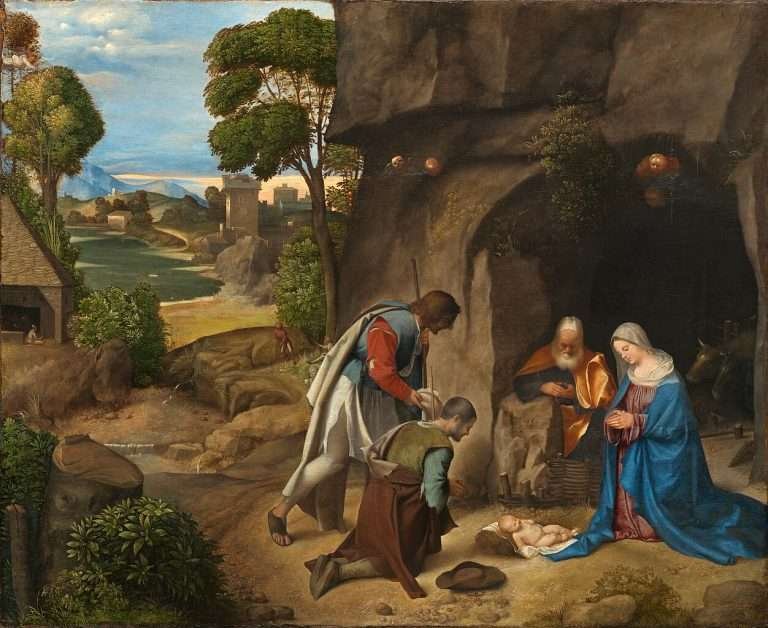
Events surrounding the birth of Jesus

Events surrounding the birth of Jesus

The engagement of Mary and Joseph:

According to the biblical accounts, Mary and Joseph were engaged to be married. This was a common practice in Jewish culture, in which a couple was considered legally married, although they did not live together or consummate the marriage until later.

“Now the birth of Jesus Christ took place in this way. When his mother Mary had been betrothed to Joseph, before they came together she was found to be with child from the Holy Spirit.”

Matthew 1:18

The announcement of Mary’s pregnancy:

Before Mary and Joseph were married, Mary discovered that she was pregnant. This was surprising because they had not yet consummated their marriage. Mary told Joseph that she was pregnant through the power of the Holy Spirit, and Joseph believed her.

“And the angel said to her, ‘Do not be afraid, Mary, for you have found favor with God. And behold, you will conceive in your womb and bear a son, and you shall call his name Jesus.'”

Luke 1:30-31

The visit of the angel to Joseph:

An angel of the Lord appeared to Joseph in a dream and told him that the child Mary was carrying was the son of God and that he should name him Jesus. The angel also told Joseph that Jesus would be born in Bethlehem and that he should go there to register for the census, which was being conducted at the time.

“But as he considered these things, behold, an angel of the Lord appeared to him in a dream, saying, ‘Joseph, son of David, do not fear to take Mary as your wife, for that which is conceived in her is from the Holy Spirit. She will bear a son, and you shall call his name Jesus, for he will save his people from their sins.'”

Matthew 1:20-21

The journey to Bethlehem:

Joseph and Mary journeyed to Bethlehem, a town located in the Roman province of Judea, to register for the census. According to the Gospel of Luke, this was where Jesus was born.

“And Joseph also went up from Galilee, from the town of Nazareth, to Judea, to the city of David, which is called Bethlehem, because he was of the house and lineage of David, to be registered with Mary, his betrothed, who was with child.”

Luke 2:4-5

The birth of Jesus:

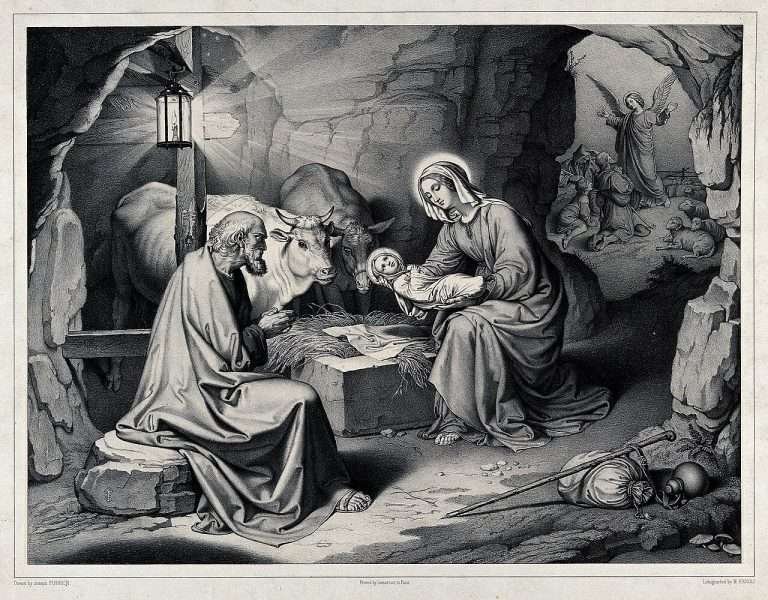
When they arrived in Bethlehem, Mary and Joseph could not find a place to stay. They ended up staying in a stable, where Jesus was born. He was wrapped in swaddling clothes and placed in a manger, a feeding trough for animals.

“And she gave birth to her firstborn son and wrapped him in swaddling cloths and laid him in a manger, because there was no place for them in the inn.”

Luke 2:7

The announcement of Jesus’ birth to the shepherds:

An angel appeared to shepherds who were tending their flocks in the fields nearby and announced the birth of Jesus to them. The angel told the shepherds that a savior had been born, and they were directed to the stable where they would find the baby.

“And there were shepherds out in the field, keeping watch over their flock by night. And an angel of the Lord appeared to them, and the glory of the Lord shone around them, and they were filled with fear. And the angel said to them, ‘Fear not, for behold, I bring you good news of great joy that will be for all the people. For unto you is born this day in the city of David a Savior, who is Christ the Lord.'” –

Luke 2:8-11

The visit of the wise men:

Some time after Jesus was born, wise men from the East came to Jerusalem, following a star that they believed signaled the birth of a king. They presented gifts of gold, frankincense, and myrrh to Jesus and then returned home, guided by the star.

“Now after Jesus was born in Bethlehem of Judea in the days of Herod the king, behold, wise men from the East came to Jerusalem, saying, ‘Where is he who has been born king of the Jews? For we saw his star when it rose and have come to worship him.'”

Matthew 2:1-2

The celebration of Christmas:

The birth of Jesus is celebrated by Christians around the world on December 25th, known as Christmas Day. This holiday is a time of celebration, marked by the exchange of gifts, the singing of carols, and the attendance of church services.

“And when they saw it, they made known the saying that had been told them concerning this child. And all who heard it wondered at what the shepherds told them. But Mary treasured up all these things, pondering them in her heart.”

Luke 2:17-19

A Stolen Nativity Scene Jesus Returned after 90 Years

0

A Stolen Nativity Scene Jesus Returned after 90 Years

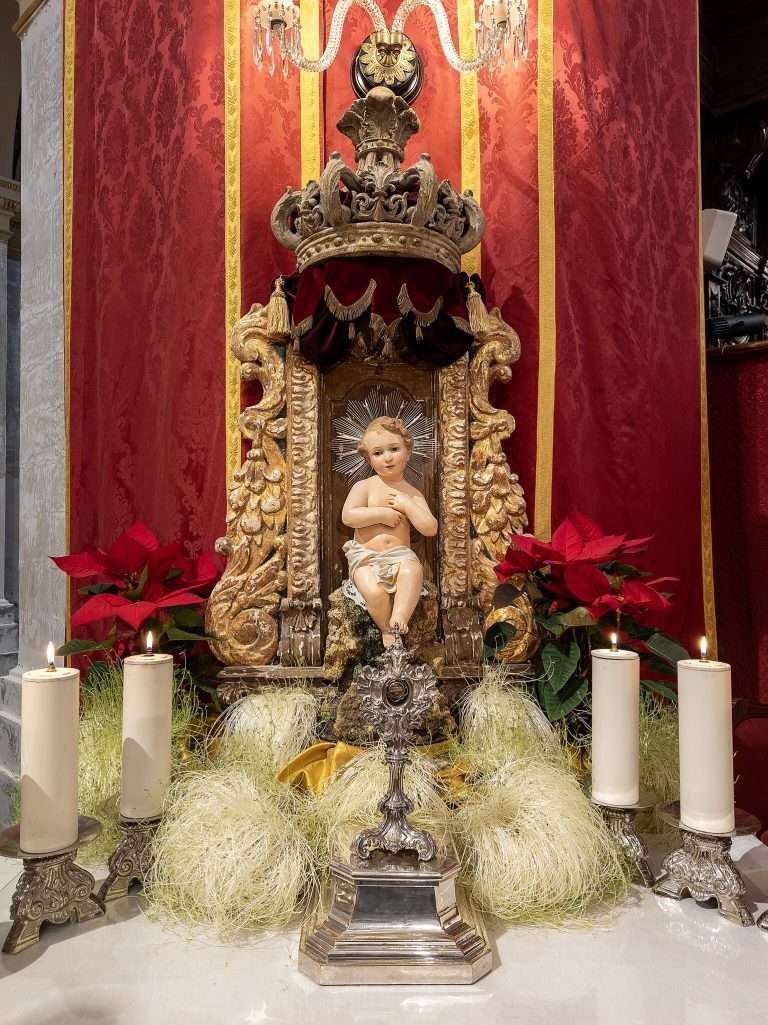
Throughout the United States as well as the rest of the world, countless stories exist about baby Jesuses that have been stolen from Nativity scenes. While the act of stealing a baby Jesus from a manager is not a rare occurrence, it’s extremely rare that a baby Jesus is returned, especially after 90 years. But it is exactly what happened at Hoboken’s Our Lady of Grace Church, though.

In 2018, a statue of a baby Jesus was returned to a church 90 years after the statue was stolen. Staff at the church discovered the package around Christmas and found that it had no return address. As a result, the statue was brought to the attention of the church’s reverend, who initially had reservations because he lacked a name or an address. Fortunately, the post office later tracked the origins of the package down to Crystal Springs, Florida.

Hoboken Police and emergency workers later scanned the package with a heat-seeking device. After determining that nothing explosive was inside, the box was opened carefully, and a baby Jesus statue was found inside with a note. The note explained that the statute had become something of a family heirloom after being stolen from a Nativity display in the 1930s. The statue then, instead of being returned, was passed down through the family. The current owner felt that the statue should be returned to the church.

Full story here

Top 10 Addictions in the U.S

0

Addiction is a complex and often misunderstood issue that can affect people in different ways. In the United States, there are several common addictions that can have significant negative impacts on individuals and their loved ones. Here are the top 10 addictions in the U.S. and some important information about each one:

Internet addiction:

It’s hard to imagine going a day without using the internet, as it has become an integral part of our lives. However, excessive internet use can become an addiction, interfering with daily activities, relationships, and personal hygiene. Internet addiction can manifest in various ways, including cyber relationship addiction, obsessive information seeking, and online gaming. In 2021, the Pew Research Center reported that about 77% of Americans use the internet daily.

Food addiction:

Food is necessary for survival, but it can also be addictive. Food addiction is a little-understood but serious issue that affects around 5% of the U.S. population, with higher rates among women than men. Food addiction can lead to cravings, tolerance, and negative consequences, and may be caused by genetics, brain chemistry, and stress eating.

Gambling addiction:

The accessibility of betting sites and apps has contributed to the widespread issue of gambling addiction in the U.S. While gambling is legal in most cases, it can become a problem for some people, with an estimated 6 million Americans struggling with a gambling addiction. Gambling addiction can lead to decreased quality of life, substance abuse, depression, relationship problems, and increased risk of mental health and drug abuse in children. It is also linked to increased crime rates.

S*x and p*rnography addiction:

S*x and p*rnography addiction are controversial topics, with some experts disagreeing on what constitutes an addiction to adult content. However, it is estimated that between 3% and 6% of the U.S. population struggles with s*x or p*rnography addiction, with about 35% of all internet downloads related to p*rnography. Addiction to s*x or p*rnography can involve obsessive-compulsive viewing, risky behavior, and negative consequences, and may be linked to deeper psychological issues. This addiction is particularly dangerous as it destroys love relationships and reduces people to objects. It also distances us from God in a serious way and can be a horror to combat.

Alcohol addiction:

Alcohol is legal and widely available, but it can also be addictive. Alcohol addiction, or alcoholism, affects about 15 million people in the U.S. and can lead to physical and psychological problems, including liver damage, impaired judgment, and social and relationship problems.

Drug addiction:

Drug addiction, also known as substance abuse disorder, is a serious issue that affects millions of people in the U.S. Different drugs can have different effects and can be addictive in varying degrees. Drug addiction can lead to physical and psychological harm, as well as social and legal problems.

Smoking addiction:

Smoking is a well-known addiction that affects millions of people in the U.S. and is linked to numerous health problems, including lung cancer and heart disease. Smoking addiction can be difficult to overcome, but there are various resources and treatments available to help people quit.

Shopping addiction:

Shopping can be a pleasurable activity, but it can also become an addiction that interferes with daily life and financial stability. Shopping addiction, also known as compulsive buying disorder, affects about 6% of the U.S. population and can lead to debt and relationship problems.

Exercise addiction:

Exercise can be beneficial for physical and mental health, but it can also become an addiction. Exercise addiction, also known as compulsive exercise, involves an obsessive focus on exercise and can lead to physical and psychological harm, as well as social and relationship problems.

Social media addiction:

Social media has become a central part of modern life, but it can also be addictive. Social media addiction means allowing the use of Facebook, Instagram, and Twitter to affect our day-to-day lives, our work, and our relationships. This is a serious problem as it may result in depression from alienating loved ones and from comparing yourself to others. We treated this separately here.

Read More

Check yourself for social media addiction

0

Check yourself for social media addiction

Social media addiction is a phenomenon that refers to the excessive use of social media platforms such as Facebook, Instagram, and Twitter, to the point where it begins to negatively impact a person’s daily life. It is often characterized by an inability to limit the amount of time spent on these platforms, a constant need to check for updates and notifications, and feelings of anxiety or FOMO (fear of missing out) when unable to access social media.

There are several factors that can contribute to social media addiction. For some people, the rush of endorphins that comes from receiving likes, comments, and other forms of social validation can be highly addictive. For others, social media may provide a sense of escape from real-world problems or a way to connect with others and feel a sense of belonging.

However, excessive use of social media can have negative consequences. It can lead to a decrease in face-to-face communication and real-life social interactions, which can have a negative impact on mental health. It can also contribute to the comparison trap, where people constantly compare their own lives to the carefully curated and often overly positive portrayals of others on social media, leading to feelings of inadequacy and low self-esteem.

If you think you may be struggling with social media addiction, there are steps you can take to help reduce your reliance on these platforms. These may include setting limits on the amount of time you spend on social media, taking regular breaks from your devices, and finding alternative activities to fill your time. It can also be helpful to seek support from friends and loved ones, and to consider seeking professional help if your social media use is causing significant problems in your life.

There are several signs that you may be addicted to social media:

  1. You feel the need to check social media constantly, even when you’re doing other things or you’re in a social situation where it’s inappropriate to do so.
  2. You feel anxious or uncomfortable when you’re unable to access social media.
  3. You find that you spend more time on social media than you intended to.
  4. You feel the need to post updates or content constantly in order to get likes or comments.
  5. You compare your life to others’ online and feel envious or dissatisfied with your own life as a result.
  6. Your relationships or work suffer because of your social media use.

If you’re experiencing any of these signs, it may be helpful to take a break from social media and consider setting limits on your use. It’s important to balance the benefits of social media with the potential negative effects it can have on your mental health and well-being.

Cardinal Ouellet is suing for defamation over accusations of sexual assault

0

Cardinal Ouellet is suing for defamation over accusations of sexual assault

Cardinal Marc Ouellet has filed a defamation lawsuit in Quebec, Canada, stating that a woman falsely accused him of sexual assault in a class-action sex abuse lawsuit against the Archdiocese of Quebec. In a statement, the cardinal said he has never engaged in such behavior and that the accusations against him were constructed and spread for improper purposes.

The 78-year-old cardinal served as archbishop of Quebec from 2002 to 2010. He is currently prefect of the Dicastery for Bishops, a key Vatican body that helps the pope evaluate prospective candidates to be named Catholic bishop.

The defamation lawsuit was filed in the civil division of the superior court in the District of Montreal and seeks CAD 100,000 in compensatory damages. The lawsuit alleges that the “false allegations” against the cardinal “have caused and continue to cause serious damage” to his personal and professional reputation and that he has suffered “significant psychological anguish.” Cardinal Ouellet stated that any financial compensation he may receive from the lawsuit will be donated in its entirety to support the fight against the sexual abuse of Indigenous peoples in Canada.

The woman, identified as “F.” in the class-action suit, alleged that the cardinal, who served as archbishop of Quebec from 2002 to 2010, sexually assaulted her on multiple occasions while she worked as a pastoral intern for the Quebec Archdiocese between 2008 and 2010. She claimed that the misconduct included kissing her and sliding his hand down her back to her buttock.

The class-action suit against the archdiocese includes the testimony of 101 people who say they were sexually assaulted by clerics or Church staff from 1940 to the present. Eighty-eight clerics are accused in the suit. Justin Wee, one of the lawyers representing the plaintiffs in the lawsuit, told CBC News that his client “F.” had heard about the defamation lawsuit online and had not seen the motion to initiate the lawsuit.

The Vatican conducted a preliminary investigation in August and Pope Francis determined that there was not sufficient evidence to begin a canonical investigation against Cardinal Ouellet for sexual assault.

According to the cardinal’s defamation lawsuit, the alleged incidents occurred at four different public events: a Sisters of Charity event in Beauport in the fall of 2008; a pastoral appointment ceremony in November 2008; a meeting at an event in a church basement; and during a diaconal ordination at a church in February 2010. The defamation lawsuit states that the cardinal “has no recollection of ever having met Mrs. F. He does not know her.” It also claims that her accounts are inconsistent with the nature of the cardinal’s interactions in public settings and that, at these events, he would make a customary greeting “either by shaking hands or by a kiss on the cheek and would attempt to personalize each interaction in a manner consistent with the behavior of any person in a public representation role.”

The defamation lawsuit further contends that even if the alleged acts took place, which the cardinal denies, they did not constitute “touching of a sexual nature” or sexual assault. It claims that the accuser’s comments are contradictory.

The defamation lawsuit also alleges another legal fault in that the allegations came in the context of “other allegations involving other members of the clergy” in the class-action suit, which it claims were made “in bad faith and with the intention of harming the reputation of the members of the clergy and the Church.” It states that these allegations were made “without any concrete or credible evidence.”

4 statues vandalized outside of Chester County church; images of suspect released

0

Four statues at St. Joseph Parish in Downingtown, Pennsylvania were vandalized between December 10 and 11, and the Downingtown Police Department is seeking the public’s help in identifying the perpetrator, who was captured on surveillance footage.

The statues, of St. Anthony, St. Joseph, Our Lady of Lourdes, and the Holy Family, were damaged, with those of St. Anthony and St. Joseph being completely destroyed. The statue of Our Lady of Lourdes was tipped over but landed safely without being damaged, while the statue of the Holy Family was bent to the side but held in place by a metal bar. No graffiti or other messages were left at the scene, and the cost of damages is unclear.

The perpetrator also vandalized Downingtown West High School, which is located approximately two minutes from the parish. A Nativity display at the church was unaffected by the vandalism. The church, which is the second-largest parish in the Archdiocese of Philadelphia with more than 5,000 families, has called for the perpetrator to be caught and for forgiveness in the wake of the incident.

Pope Francis has named Father Patrick Neary as the new bishop of St. Cloud, Minnesota

0

Pope Francis has named Father Patrick Neary as the new bishop of the Diocese of St. Cloud, Minnesota. This announcement was made by Archbishop Christophe Pierre, the apostolic nuncio to the United States. Father Neary, 59, has been serving as the pastor of Holy Redeemer Catholic Church in Portland, Oregon since 2018. He is a priest of the Congregation of Holy Cross and was ordained in 1991. Prior to his current assignment, Neary has served as a campus minister and residence hall rector at the University of Notre Dame, director of the McCauley House of Formation in Nairobi, Kenya, and district superior of East Africa for the Congregation of Holy Cross. He received a master of divinity degree in theology from the Jesuit School of Theology in Berkeley, California in 1990, after earning his undergraduate degree at the University of Notre Dame in South Bend, Indiana in 1985.

Father Neary’s appointment as the 10th bishop of the Diocese of St. Cloud follows the acceptance of Bishop Donald Kettler’s resignation by Pope Francis. Bishop Kettler, 78, has been serving as bishop of St. Cloud since 2013 and submitted his letter of resignation in accordance with canon law, which requires bishops to do so when they reach the age of 75. Bishop Kettler welcomed Father Neary to the diocese, stating that he is “tremendously qualified with his experiences as a pastor, seminary rector, formation director, and missioner.” Father Neary is set to be installed as the bishop of St. Cloud on February 14, 2023. He has expressed surprise at being chosen for this role, but added that he trusts that “Christ has guided me through every stage of my life as a priest.” He asked for prayers from the diocese, stating, “Please pray for me that I can be a faithful and loving servant to all of you.” The Diocese of St. Cloud consists of 131 parishes in 16 central Minnesota counties and has a Catholic population of over 125,000.

Instructions for Reciting the ‘Christmas Novena,’ a 300-Year-Old Prayer Tradition

0

An Italian priest named Father Charles Vachetta is credited with writing a novena in 1721 to inspire his parishioners during Advent. Today, that novena is known as the “Christmas Novena.”

The nine-day prayer begins on Dec. 16 and concludes on Christmas Eve. Drawing from the Psalms and Old Testament prophecies foretelling the coming of the Messiah, the novena includes a daily Scripture reading, a meditation, an antiphon, the Magnificat, intercessions, and a closing prayer.

Vachetta, the pastor of the Church of the Immaculate in Turin, Italy, also composed an included canticle, or hymn, called “Let the Heavens Be Glad.”

The novena overlaps with the “O Antiphons” of Advent, prayers that are recited or chanted in an ancient tradition leading up to Christmas. The novena below has been edited for brevity.

The Christmas Novena

If the novena is led by a priest, the Blessed Sacrament is exposed.

Hymn (Optional)

(Sung to the melody of “Creator of the Starry Skies”)

Behold a thrilling voice calls out

And chides the darkened shades of earth

Pale dreams are gone, dim shadows fly

Christ in his might now shines on high!

The Lamb of God is sent below

Himself to pay the debt we owe.

O for this gift let every voice

With songs and prayers to God rejoice.

The Blessed Author of our race

Took human form to bring us grace

Lest lost should be those whom he made,

And he with love our sin repaid.

And see! with heavenly grace instilled,

A Mother’s loving heart is filled.

Behold a Virgin’s body bears

The mystery of endless years!

The Mother makes her spotless breast

A temple for the child to rest.

This Virgin loved the Holy One

And she conceived the Eternal Son.

To him who comes the world to free,

To God the Son, all glory be,

To Father, Maker of us all

And Holy Spirit, God, we call.

R. Drop down dew from above, you heavens, and let the clouds rain the just one.

V. Let the earth be opened and bud forth the Savior.

Christmas prophecies

R. Our Lord and king is drawing near; O come let us adore him!

V. Our Lord and king is drawing near; O come let us adore him!

Rejoice, Daughter of Sion, and exult Daughter of Jerusalem! Behold the Lord comes, and there will be a great light in that day, and the mountains shall drop down sweetness. The hills shall flow with milk and honey, for in that day the great prophet will come and he will renew Jerusalem (cf. Zeph 3:14-18).

Our Lord and King …

Behold the God-Man of the house of David will come to sit upon the royal throne and you will see him and your heart will rejoice. (cf. Jer 23:5-8)

Our Lord and King …

The Lord our protector will come, the Holy One of Israel, wearing a crown upon his royal brow. And he will reign from sea to sea and from the river to the ends of the earth. (cf. Is 33:22)

Our Lord and King …

The Lord will appear, and he will not deceive; if he should delay, wait for him to come. He will surely come and will not tarry. (cf. Hab 2:3)

Our Lord and King …

The Lord will come down like rain upon the fleece of Gideon. Justice will reign and an abundance of true peace. All the kings of the lands will adore him and every nation will serve him. (cf. Jdg 6:38; Ps 72:3-4; Is 2:3)

Our Lord and King …

A child will be born to us, and he will be called God the almighty; he will sit upon the royal throne of David his father, and he will hold sway, the sign of his power on his shoulder. (cf. Is 9:6-7)

Our Lord and King …

Bethlehem, city of the Most High God, from you will come forth the king of Israel, and he will proceed forth from his eternity and he will be greatly praised in the midst of the entire universe. And there will be peace in our land when he will have come. (cf. Mic 5:2-5)

Our Lord and King …

To be recited or sung on the last day of the novena:

Tomorrow the wickedness of the whole world will be destroyed, and over us will reign the Savior of the world.

R. Our Lord and king is drawing near; O come let us adore him!

V. Near at last is Christ our king; O come let us adore him!

Let the Heavens Be Glad

(Canticle or song-prayer)

Let the heavens be glad and the earth rejoice,

O all you mountains praise the Lord.

Drop down dew from above you heavens,

And let the clouds rain the just one.

Let the earth be opened,

And bud forth the Savior!

Remember us, O Lord,

And visit us in your salvation.

Show your mercy to us, O Lord,

and grant us your salvation.

Send forth, O Lord, the Lamb, the ruler of the earth,

from the rock in the desert to the Mount of Sion.

Come to free us, O Lord God of hosts;

show your face and we shall be saved.

Come, O Lord, and visit us in peace,

so that we may rejoice before you with a perfect heart.

May we know on earth, O Lord, your way,

your salvation among all nations.

Put forth, O Lord, your strength,

and come to save us.

Come, O Lord, and do not hesitate;

pardon the sins of your people.

O that you would rend the heavens and come down,

the mountains would melt in your presence.

Come and show us your face, O Lord,

you who sit upon the cherubim.

Glory to the Father and to the Son and to the Holy Spirit; As it was in the beginning, is now and will be forever. Amen.

Let us pray. Christ the Lamb, who existed before time, in time, and exists for all time, will come to us again. He has been made high priest forever. He is the true king of justice and his reign will have no end.

R. Drop down dew from above you heavens and let the clouds rain the just one.

V. Let the earth be opened and bud forth the Savior.

‘O Antiphons’

From Dec. 17 to 23, the liturgy uses seven short prayers that have special richness and importance. Known as the “O antiphons” or the “greater antiphons,” these prayers compress and express the Old Testament Messianic hope for Christ. These antiphons are read each day at vespers and are used as the alleluia verse of the Advent Masses.

Each antiphon is a mosaic of biblical references, collected and written in a style called anthological. The unknown author of these beautiful prayers lived around the sixth or seventh century. The author chose seven titles whose first letters are S-A-R-C-O-R-E. Read in reverse order, these letters form the two Latin words “ero cras,” meaning “Tomorrow I shall be.”

Note: In this edition we are using a poetic translation of the “O antiphons” from the original Latin.

December 16

Scripture reading: Isaiah 56:6–7

Consideration

Advent prepares our minds and hearts for the coming of the Word of God. It is a gentle time, a time to watch that the word of Scripture does not fall on the rocky ground of distraction, nor by the wayside with our many cares, nor among thorns, caught up in flashy advertisements. It is to fall upon the rich soil of our minds and hearts where the Word of God can bury itself deep and bring forth fruit. The Lord is already near! Let us admit that we need his power and help. Come, Lord Jesus! Give us the gift of yourself.

Antiphon

Behold the king will come, the Lord of the earth, and he will remove from us the yoke of our captivity. (cf. Hab 2:3; 1 Cor 4:5)

Magnificat

Intercessions

Jesus, light of the world, we wait in darkness, but also in hope for your coming;

— show yourself to us in mercy and love.

Lord of Israel, you showed yourself to Moses in a burning bush;

— stretch forth your mighty arm and come to save us.

Jesus, born of Mary, we pray with joyful hearts and wait with her in prayer;

— come, Adonai!

Jesus, life of our bodies and souls,

— by your coming let us be immersed in the mystery of your incarnation.

Closing Prayer

(To be said after the intercessions each day of the novena)

Christ goes before us. He is the Lamb without sin who will open to us the gates of heaven. He is the high priest forever according to the order of Melchisedech. He is the king of justice and his reign is eternal.

December 17

Scripture reading: Genesis 49:2, 8–10

Consideration

When we read Scripture and yearn for the coming of the divine, powerful Wisdom who will teach us how to live throughout our life, we think of Mary, the humble Mother of God who always waited upon the Lord as his handmaid.

Let us pray: Father, you spoke, and your Word became man, born of the Virgin Mary. Christ humbled himself to share our human nature. We humble ourselves before the child and ask for faith and love.

Antiphon

O Wisdom eternal, proceeding from the mouth of the Most High, you reach from end to end and order all things mightily and sweetly; come now to direct us in the way of holy prudence. (cf. Sir 24; Wis 6-9)

Magnificat

Intercessions

Christ our Redeemer, your law is a light to our path;

— teach us always to walk in the light of your law.

Coming Savior, dawn on us in radiant beauty,

— so that we may receive you with loving devotion at your birth.

God of Jacob, you desire that all might be saved;

— bring all people safely into the kingdom of heaven.

Lord of nations, show us your glory and give us true faith and love;

— protect us from harm and let us live in peace with each other.

Lord of ages, you desired to become one like us;

— may the revelation of your humanity free us from our sinfulness.

Closing Prayer

December 18

Scripture reading: Jeremiah 23:5–8

Consideration

God of Israel, you appeared to Moses in the burning bush. You delivered the Israelites from bondage in Egypt by parting the sea and blessed your people with a covenant as a bridegroom marries his bride. Redeeming Lord, come to save us from the folly of our sins. Give us the blessing of a new covenant written in our hearts for all times. Rescue us with your mighty power!

Antiphon

O Lord and leader of the house of Israel, who once appeared to Moses and spoke to him from a bush aflame, and on the peak of Sinai gave him the law; come now, bring us your redemption with your mighty outstretched arm. (cf. Ex 3, 15, 24; Deut 5)

Magnificat

Intercessions

Light of the world, dispel our darkness,

— and make us worthy of your coming.

Key of David, unlock the mystery of your incarnation for all people,

— so that all humanity may praise you together in loving joy.

Eternal Son, let your face shine upon the sick,

— so they may serve you worthily in their infirmity.

Son of David, remember all those who are to die today,

— and bring them into your perfect light.

Closing Prayer

December 19 

Scripture reading: Luke 1:5–14

Consideration

The infant king will stand as a sign in full view of all the nations. This king will be a sign not only for the Israelites, but also for the Gentiles. All people shall come to him. Our hearts call out, “Come Lord, save your people, do not delay, for we are ready to receive you; we desire to see you face to face.”

Antiphon

O root of Jesse, standing an ensign of the people, before whom even kings silent will remain, whom the Gentiles, too, shall beseech, come now to deliver us all; delay no longer. (cf. Is 11)

Magnificat

Intercessions

Son of Man, may we celebrate your birth, you who are the Lamb of God;

— you take away our sins and the sins of the world.

Son of Mary, while in your Mother’s womb you were welcomed by Elizabeth and her infant son, John;

— though hidden, may we always recognize you and welcome you into our hearts.

God our Counselor, come; tell us that your kingdom is at hand;

— protect the Church and the pope. Keep the Church as your spotless bride.

Root of Jesse, you humbled yourself to share our human nature;

— come and save us without delay.

Closing Prayer

December 20

Scripture reading: Luke 1:26–38

Consideration

The original reference for the fourth “O antiphon” is Isaiah, chapter 22. “Key of David” refers to the one with authority over the royal house of David. The antiphon begs Christ to come and unlock the doors for his people who sit in religious darkness and in the shadows of death. We must wait with longing for our Lord.

Mary’s fiat — her total acceptance of God’s will — brings us the glimmer of light and hope for the coming of Emmanuel, God among us. Mary carries the key of David who will free us forever. Hail, full of grace!

Antiphon

O key of David, royal scepter of Israel, you who open and no one closes; who close and no one can open, come now, and free humanity from its bonds in prison, where it sits in darkness and the shadow of death. (cf. Is 22; Rev 3:7)

Magnificat

Intercessions

Adonai! Son of the living God! The day of the Lord draws near;

— he comes as the one who is to save us through his suffering, death, and resurrection.

Virgin Mary, Mother of the Savior, we wait with you quietly for the birth of your Son,

— who will set us free from ignorance and darkness.

Virgin Mother, you placed yourself at God’s service and conceived his Son first in your heart, then in your womb;

— show us how to open our hearts and receive your Son, for we have a deep bond with you, Christ’s Mother and our Mother, too.

Mary, our Mother, give doctors and nurses strength to bring their patients to health,

— that the ill might know the joy of good care in their infirmities.

Closing Prayer

December 21

Scripture reading: Luke 1:39–45

Consideration

Mary and Elizabeth were deeply rooted in faith and love of God, and both responded wholeheartedly to God’s plans. They are a sublime sign of hope for the whole human race. Families all over the world look to their example as they await the blessing of a new baby in their own homes. May they build a foundation of love for the child to come and correspond with joy to God’s plans. Mary, the Morning Star, heralds the coming of her Son; Elizabeth is the first to understand. Her own son leaps for joy in her womb, and the two women embrace because God is in their midst.

Antiphon

O radiant dawn, splendor of eternal light and bright sun of justice, come now and enlighten those who sit in darkness and in the shadow of death. (cf. Zech 3:8; 6:12; Is 9:2; 60:1-3; Wis 7:26; Lk 1:78; Heb 1:3)

Magnificat

Intercessions

Ruler of Jacob’s house, teach us to guard what is good in ourselves,

— that we may cherish all that you have given to us, for you are our salvation.

God of power and might, help us to be patient and steady our hearts, because the coming of the Lord is at hand;

— drop down dew from above and let the clouds rain down the just one.

Lord, the one foretold by the prophets,

— be mindful of your promises to Abraham and his children.

Messiah, king of glory, you are the fulfillment of the Scriptures,

— grant that all people may recognize you as their Savior and Lord.

Closing Prayer

December 22

Scripture reading: Luke 1:46–55

Consideration

In the Magnificat, Mary draws on the Old Testament prophecies and exults in praise of God. Mary’s Son is destined to fulfill God’s promises to his people. Mary rejoices in the deliverance of God’s people and in his care for the poor and destitute of society. Her song bears another hymn that runs like a golden thread through the readings and antiphons. The expected Messiah will be the Lord of the Gentiles as well as of the Jews. We pray in today’s antiphon, “Come, king of all nations.” Christ is the peacemaker, the bond of unity among all peoples.

Antiphon

O king of all nations, the one for whom they have been yearning, the cornerstone who unites all of them in perfect union, come now, and rescue poor humanity, which from dust you have fashioned. (cf. Jer 10:7; Hg 2:8; Is 28:16, Gen 2:7, Eph 2:14)

Magnificat

Intercessions

Wonderful, Counselor, Prince of Peace! In your great love for us you were born of the Virgin Mary;

— may her prayers for us be our joy and consolation at all times.

Mary has given birth to the Savior, splendor of the rising sun;

— bring those who have died into your light through the intercession of Mary your Mother.

The angels proclaim a mystery today while shepherds hurry to a cave. Mary has given birth to a child in a cold, bare stable;

— we are ready to warm you, holy child, with our hearts. Let us honor you by our lives and deeds, singing glory to God in the highest and peace to all people of goodwill.

Christ, Emmanuel, Mary cared for you in joy and Joseph provided for all the needs of his family;

— help families to love one another and bond them together in love.

Hail, full of grace, the Lord is with you! Blessed are you among women and blessed is the fruit of your womb;

— truly blessed is she who bore the Son of God, and blessed too are those who hear the word of God — and keep it.

Closing Prayer

December 23

Scripture reading: Malachi 3:1–4; 4:5–6

Consideration

Malachi prophesies the birth and mission of John the Baptist. Like a new Elijah, John will go before the Messiah and prepare the people for the Lord’s coming. A spirit of joy and wonderment pervades today’s prophecy, for the hand of God is active in Israel. The people wonder what it will all mean for their future. What does it mean for us today? The seventh “O antiphon” climaxes the series. The Messiah is addressed in human form. He is asked to remain with us as Emmanuel. May our hearts be ready to receive the Lord into our small, personal world, as he once came to the little town of Bethlehem. Emmanuel — God is with us! God, stay with us.

Antiphon

O Emmanuel, our ruler and lawgiver, the expected of the nations and the Redeemer of all, come now to deliver us, O our Lord and our master. (cf. Is 7:14; Is 33:22; Gen 49:10; Zech 9:9; Jn 20:28)

Magnificat

Intercessions

King of kings, direct the minds and hearts of those who hold authority;

— let justice and peace prevail and let goodwill reign forever.

Lord Jesus, through your saving grace and power,

— may your Church continue to spread until it embraces every nation.

Jesus, prince of peace, you are meek and humble of heart;

— teach us to be thankful for all the blessings you bestow upon us.

Jesus, source of light and growth, increase vocations in your Church, like a gentle rain falling upon the earth;

— the harvest is great and your word must be announced through all the world until your kingdom comes.

Closing Prayer

December 24

Scripture reading: Luke 1:56; 67–80

Consideration

Come, O Lord, for the whole world breathlessly waits for your birth. This one happy moment contains all ages — past, present, and future — bonding eternal peace between heaven and earth through a newborn child. We bow in adoration and joy. In calm and peace we look into ourselves and present to the infant our thoughts and sentiments.

Lord, today your goodness overflows and a branch springs forth from the root of Jesse. The bud of salvation unfolds itself from the Virgin’s womb in the dead of winter. The seed entrusted to earth breaks forth in our cold, frozen hearts and warms them with the presence of God in human form.

Antiphon

O Emmanuel, our ruler and lawgiver, the expected of the nations and the Redeemer of all, come now to deliver us, O our Lord and our master.

Magnificat

Intercessions

Father of the Word made flesh, bring us joy and peace;

— help us to live united in respect and love for each other.

We await the coming of your Son,

— for you are faithful to your promises of salvation and eternal life.

May we prepare ourselves for the birth of your Son,

— by meditating upon your word.

Through the Word made flesh may we learn to love each other,

— so Christ will find all of us waiting for him in joyful prayer at the second coming.

Adonai, God of love and mercy, help us follow the example of Mary,

— who believed the angel, hastened to help Elizabeth, and welcomed your Son in a cold, bare stable, warming him only with her exceeding love.

Closing Prayer

Let us pray. Come to live among us, Lord, so that we may always receive your forgiveness and mercy. Jesus our king, clothed in a robe of flesh, give us love, wisdom, and understanding at your birth. Reveal to us the mystery of your life, then send us forth to reveal your Word over all the earth.

You who live and reign with God the Father in the unity of the Holy Spirit, world without end. Amen.

Pope Francis to give Greek Orthodox archbishop fragments of Parthenon sculptures from Vatican Museums

Pope Francis to give Greek Orthodox archbishop fragments of Parthenon sculptures from Vatican Museums

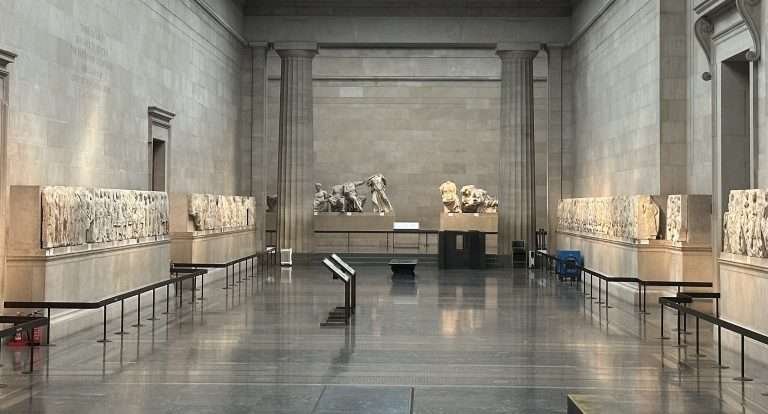
Pope Francis has announced that he will give three fragments of Parthenon sculptures, which have been in the Vatican Museums for many years, to His Beatitude Ieronymos II, the Greek Orthodox archbishop of Athens and All Greece. The Vatican stated that the gift is intended to be “a concrete sign of a sincere desire to continue on the ecumenical journey of witness to the truth.”

The Parthenon is a temple in Athens dedicated to the Greek goddess Athena, built in the mid-5th century BC. The temple was part of a larger complex called the Acropolis, which housed a number of other significant structures and served as a symbol of the city’s power and wealth. The Parthenon itself was adorned with elaborate sculptures, many of which depicted the gods and goddesses of Greek mythology.

The three marble fragments that Pope Francis has decided to gift to the Greek Orthodox archbishop include part of a horse’s head from a sculpture of Athena’s chariot, as well as the heads of two male sculptures. These fragments arrived in the Vatican’s collection in the 19th century, and have been housed in the Vatican Museums since then. The Vatican Museums are a collection of art and cultural artifacts that have been assembled over the centuries by the Catholic Church. They include a wide range of items, from ancient Greek and Roman sculptures to Renaissance paintings and modern artworks.

Pope Francis’s decision to gift these Parthenon fragments to the Greek Orthodox archbishop is part of a larger effort to promote ecumenism, or the unity of Christians across different denominations. The Catholic Church and the Orthodox Church have a long and complex history, with periods of conflict and periods of closer cooperation. In recent years, Pope Francis has made a number of gestures aimed at improving relations between the two churches, including his visit to Greece in December 2021, during which he apologized for past actions by the Catholic Church that had “little or nothing to do with Jesus and the Gospel, but were instead marked by a thirst for advantage and power [and] gravely weakened our communion.”

This is not the first time that Pope Francis has made an ecumenical gesture with a centuries-old gift. In 2019, he gave Orthodox Patriarch Bartholomew I a relic of St. Peter, which was seen as “a confirmation of the journey that our Churches have made in drawing closer to one another.” Pope Francis has also made efforts to improve relations with other denominations, including Protestant churches, and has frequently emphasized the importance of unity among Christians.

The Parthenon sculptures that Pope Francis is gifting to the Greek Orthodox archbishop are just a small part of the vast collection of art and cultural artifacts housed in the Vatican Museums. However, their symbolism is significant, as they represent a tangible connection to the rich cultural heritage of ancient Greece, a civilization that has had a profound influence on Western culture and thought. By gifting these fragments to the Greek Orthodox Church, Pope Francis is not only making an ecumenical gesture, but also acknowledging the shared cultural roots of the Catholic and Orthodox traditions.

Possible ‘miracle’ attributed to St. John Paul II parents’ intercession to be verified

0

Possible ‘miracle’ attributed to St. John Paul II parents’ intercession to be verified

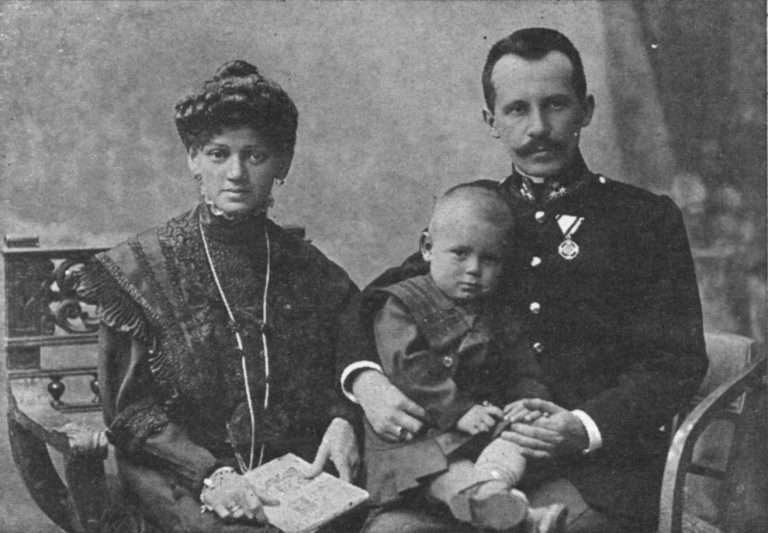
The parents of St. John Paul II, Emilia and Karol Wojtyła, may be the subject of a study on a possible miracle, according to Msgr. Sławomir Oder, postulator of the couple’s beatification cause. In an interview with the Catholic news agency KAI, Msgr. Oder revealed that he had received several reports of miraculous healings connected with the Wojtyłas. He stated that he is currently awaiting medical records for expert review, but did not provide further details on the reported healing.

The beatification process, which is the first step towards sainthood in the Catholic Church, requires the documentation of a candidate’s reputation for holiness, known as “fama sanctitatis,” as well as the documentation of at least one authenticated miracle attributed to the candidate’s intercession. The process begins at the diocesan level, with the gathering of evidence and witness testimonies. If the diocesan phase is successfully completed, the documents are sent to the Vatican’s Dicastery for the Causes of Saints, where they are reviewed by theologians and bishops before being presented to the pope. If the pope decides to move forward with the beatification, he issues a decree recognizing the candidate as having practiced heroic virtue and granting them the title “Venerable.”

The final step in the process of being recognized as a saint is canonization, which also requires the documentation of a miracle. Msgr. Oder mentioned that the initial phase of the Wojtyła’s beatification process, which was formally launched in the Archdiocese of Kraków in May 2020, has been “practically completed.” This suggests that the necessary evidence of the couple’s “fama sanctitatis” has been gathered and that the next step will be to investigate any reported miracles.

Emilia Kaczorowska was born in Kraków, southern Poland, in 1884, the fifth of 13 children. In 1906, she married Karol Wojtyła, who was five years older and serving as a soldier in the Austro-Hungarian Army. The couple had three children together. Their first child, Edmund, was born in 1906 and grew up to be a doctor. He died in 1932 after contracting scarlet fever from a patient. A conference in Warsaw earlier this month heard that he could be a candidate for beatification under the “offering of life” category introduced by Pope Francis.

The couple’s second child, Olga Maria, died in infancy in 1916. Their third child, Karol, was born in 1920. Emilia was reportedly advised by a doctor to have an abortion due to her frail health, but she refused. Karol would later serve as pope from 1978 to 2005 and was canonized in 2014.

Emilia worked as a seamstress and died of myocarditis and renal failure on April 13, 1929, in the town of Wadowice, shortly before her younger son’s ninth birthday. Karol senior died on February 18, 1941, in Kraków, which was then under Nazi occupation.

John Paul II would later recall the deep impression his father made on him, stating: “Day after day I was able to observe the austere way in which he lived. By profession he was a soldier and, after my mother’s death, his life became one of constant prayer. Sometimes I would wake up during the night and find my father on his knees, just as I would always see him kneeling in the parish church. We never spoke about a vocation to the priesthood, but his example was in a way my first seminary, a kind of domestic seminary.”

The process of beatification and canonization in the Catholic Church is a lengthy and thorough one, designed to ensure that only those who have lived lives of exceptional holiness and virtue are recognized as saints. While the investigation into the alleged miracle attributed to the intercession of Emilia and Karol Wojtyła is just one step in the process, it is an important one. If the reported miracle is deemed authentic, it could be a significant factor in the couple’s eventual beatification and, ultimately, canonization.

It is worth noting that the investigation into the alleged miracle is being conducted by experts, who will carefully review the medical records and other relevant evidence to determine the authenticity of the miracle. This process is designed to be objective and unbiased, with the goal of ensuring that only those who truly deserve to be recognized as saints are elevated to that status.

The beatification and canonization process is not only about recognizing the holiness of individual Catholics, but also about providing role models and inspiration for the faithful. By studying the lives of Emilia and Karol Wojtyła, Catholics around the world can learn about the virtues that these two individuals exemplified and strive to emulate them in their own lives. If the couple is ultimately recognized as saints, it will be a testament to their ability to inspire others to live lives of faith and holiness, even in the face of adversity.

Overall, the investigation into the alleged miracle attributed to the intercession of Emilia and Karol Wojtyła is an important step in the process of recognizing these two individuals as saints in the Catholic Church. While the outcome of the investigation is not yet known, it is clear that these two individuals have left a lasting legacy of faith and holiness that continues to inspire Catholics around the world.