Tuesday, April 7, 2026
18 C
London
Home Blog Page 122

A heartfelt plea to Our Lady of Sorrows written by St. Bonaventure

The prayer invokes the powerful intercession of the Virgin Mary, who suffered greatly at the foot of the cross.


It is difficult to imagine the amount of sorrow that the Blessed Mother experienced on Calvary. She witnessed the mutilation of her Divine Son and his public humiliation on the cross. It pierced her heart, but as Simeon prophesied, this occurred “that thoughts out of many hearts may be revealed” (Luke 2:35).Therefore, it is with confidence that we bring our petitions before the feet of our Sorrowful Mother, uniting ourselves with her suffering, making her tears our own.


St. Bonaventure wrote a heartfelt prayer to Our Lady of Sorrows, invoking her intercession while also pledging to stand with the Virgin Mother in her grief. Through this union, it is hoped that we are brought closer to Christ and keep the glory and joys of Heaven always in our sights.


O most holy virgin, mother of our Lord Jesus Christ: by the overwhelming grief you

experienced when you witnessed the martyrdom, the crucifixion, and the death of your

divine Son, look upon me with eyes of compassion and awaken in my heart a tender

commiseration for those sufferings, as well as a sincere detestation of my sins, in order

that, being disengaged from all undue affections for the passing joys of this earth, I may

long for the eternal Jerusalem, and that henceforth all my thoughts and all my actions

may be directed toward this one most desirable object.


Honor, glory, and love to our divine Lord Jesus, and to the holy and immaculate mother of

God.

Amen.


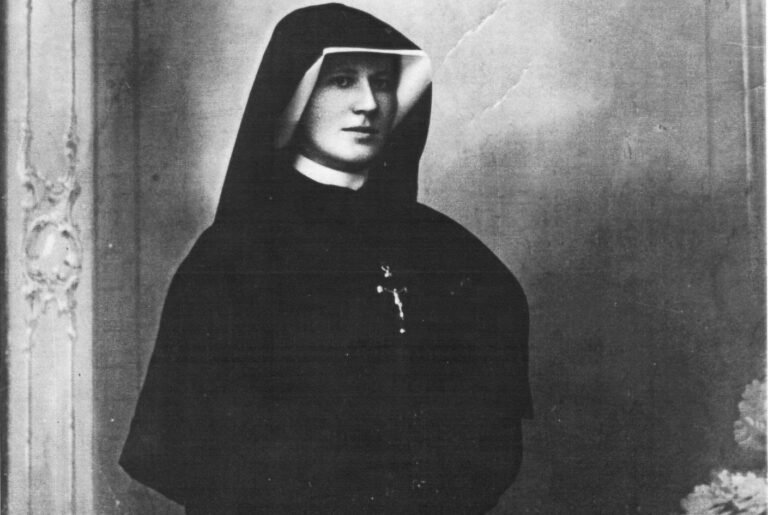
Feeling alone or isolated? Pray this prayer by St. Faustina

Her words can be a comfort to anyone who is struggling with loneliness.


Loneliness and isolation are difficult to bear. As humans, we innately crave human affection, and feelings of loneliness can even occur with a family living in the same house.Whatever your situation may be, St. Faustina provides for us a powerful prayer from her Diary that speaks right to the heart. It reminds us that Jesus is there for us and is our friend when all other friends have left us.


Jesus, Friend of a lonely heart, You are my haven, You are my peace.

You are my salvation, You are my serenity in moments of struggle and amidst an ocean of doubts.

You are the bright ray that lights up the path of my life.

You are everything to a lonely soul.

You understand the soul even though it remains silent.

You know our weaknesses, and like a good physician, You comfort and heal, sparing us sufferings — expert that You are.


What is Jesus doing in the tabernacle? The Bible’s answer

There’s actually a figure from the Old Testament who gives us a clue …


Somewhere, in one of his numerous books, the Catholic philosopher Peter Kreeft asks this question: “What is Jesus doing in heaven right now?” The answer is classic Kreeft, at once pithy and profound: “Praying for you.” The only real way to improve upon Kreeft’s answer is simply to draw a further inference: If Christ is praying for us right now in heaven, then he is also praying for us right now in the tabernacles of the Catholic churches on earth.We are sometimes tempted to think of the Eucharist as something holy yet inert, kind of like Sleeping Beauty. But that is incorrect; we should strive to change our habits of thought in this regard. To enter into the presence of the Eucharist is, instead, to enter into the presence of a Person who knows us and is praying for us at that very moment. Christ’s prophetic words about the Temple in Jerusalem find their fulfillment in your local parish church: “My house shall be a house of prayer” (Luke 19:46).


Christ never ceases praying for each of us before God the Father, whether on earth or in heaven. The Catechism of the Catholic Church makes this point in #662, “Christ permanently exercises his priesthood, for he ‘always lives to make intercession’ for ‘those who draw near to God through him.’” Again, let that thought sink in: Christ doesn’t stop praying for us. Ever.


The need for someone like this, someone who loves us and literally never stops asking God for good things for us, is revealed even in the Old Testament. In Exodus 33:7-11, the intimate prayer of Moses with God is described. A designated place for prayer, a “tent of meeting,” was set up outside of the Israelite camp. As Moses would enter this tent, a “column of cloud” would descend upon it, signaling the presence of the Lord, to whom Moses would then speak “face to face, as one man speaks to another.” With their intercessor standing before God, the Israelites would then begin to pray “at the entrance of their own tents.”

Yet the Sacred Scriptures include one additional detail, one that foreshadows the unceasing prayer of Christ: Although the prayer of Moses would eventually end, and he would return to camp, his young assistant Joshua “would not move out of the tent.” In the abiding presence of Joshua there is a suggestion that intercession to God on our behalf should not actually come to an end. While we exist, it is fitting that our existence should be lifted to God in prayer. It is fitting that anytime we pray—whether “at the entrance to our tent,” or anywhere else—our intercessor should be standing before God.


But we can dig deeper still. Why is it fitting to have an intercessor before God as we pray? Or, putting the question back in terms of the story from Exodus, why did the Israelites rise and pray at the entrance of their own tents as Moses prayed? Why did that somehow seem like the right time for personal prayer? Surely it was because of that “column of cloud” that indicated the special presence of God. While the people might have known in some abstract way that God was always present to them, the cloud was a tangible reminder, a summons to prayer. In this sense, the prayer of Moses enabled the people’s prayer. His prayer called down the presence of God in their midst, prompting them to pray.
Yet what is only prefigured in Moses and Joshua is fulfilled in Christ. Christ’s unceasing prayer before God the Father is truly what enables our own prayer. In praying, Christ gives us the gift of prayer.


How does Christ do this? How does he give us the gift of prayer? Again, the presence of God is the key. We can say that Moses “made God present” to the people in a visible but sporadic way through the column of cloud that descended upon the tent of meeting. But Christ makes God present for us in a lasting and personal way by unceasingly asking the Father to send the Holy Spirit into our hearts. Christ is the mediator “who assures us of the permanent outpouring of the Holy Spirit”


The Holy Spirit is the fire Christ wishes to cast upon the earth (Luke 12:49), the one who teaches us to pray and unites us to Christ. In receiving the Holy Spirit, we receive the gift of prayer at its very source, God himself.


Give Me Strength, Lord

Lord, you are Holy above all others, and all of the strength that I need is in your hands.

I am not asking, Lord, that you take this trial away. Instead, I simply ask that Your will be done in my life.

Whatever that means, that is what I want.

But I admit that it’s hard, Lord.

Sometimes I feel like I can’t go on.

The pain and the fear are too much for me, and I know that I don’t have the strength on my own to get through this.

I know that I can come to you, Jesus, and that you will hear my prayer.

I know that it is not your intent to bring me to this point just to leave me in the wilderness alone.

Please, Lord, give me the strength that I need to face today.

I don’t have to worry about tomorrow.

If you just give me the strength that I need today that is all I need.

Keep me from sinning during this trial.

Instead, help me to keep my eyes on you.

You are the Holy Lord, and all of my hope rests in you.

Thank you for hearing my prayer.

In Jesus’ name.

Amen.


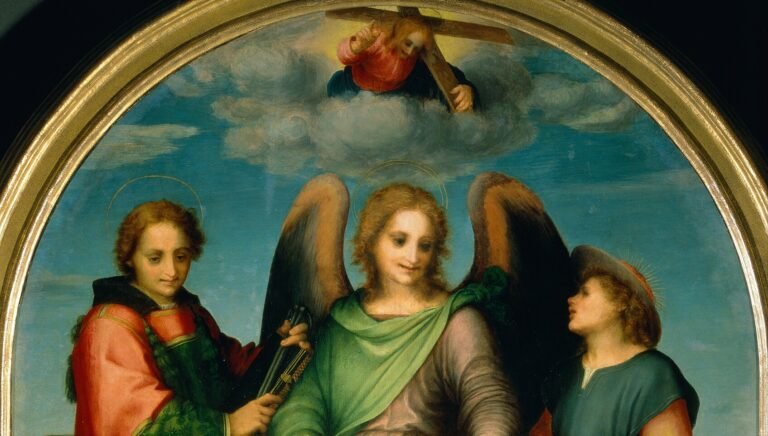
How to make a special consecration to St. Raphael the Archangel

The consecration prayer calls on St. Raphael’s assistance in the “struggle against the world, the flesh, and the devil.”


Within the Catholic Church, there are various devotional traditions with which you can consecrate yourself and your family to God, invoking the special intercession of a saint. One of the most popular consecration prayers is that of the “Total Consecration to Jesus through Mary” promoted by St. Louis de Montfort.


A consecration prayer essentially places your soul (and the souls of your family members) in the spiritual hands of a heavenly helper. This invokes their spiritual assistance and develops a close relationship with a particular saint.


Besides consecrating oneself to Jesus through Mary, many people throughout history have performed a consecration to God through St. Raphael the Archangel. This is a special consecration that invokes his aid in the “struggle against the world, the flesh, and the devil.”


Furthermore, St. Raphael is often invoked as a daily guide on our pilgrimage of life, based on his role in the life of Tobias.


Below is a daily consecration prayer that will place yourself underneath the wings of St. Raphael, patron saint of travelers, the blind, bodily ills, happy meetings, nurses, physicians and medical workers.


Holy Archangel Raphael,

standing so close to the throne of God

and offering Him our prayers,

I venerate you as God’s special Friend and Messenger.

I choose you as my Patron

and wish to love and obey you as young Tobias did.

I consecrate to you my body and soul,

all my work, and my whole life.

I want you to be my Guide and Counsellor

in all the dangerous and difficult problems

and decisions of my life.

Remember, dearest Saint Raphael,

that the grace of God preserved you with the good angels in heaven

when the proud ones were cast into hell.

I entreat you, therefore,

to help me in my struggle against the world,

the flesh, and the devil.

Defend me from all dangers

and every occasion of sin.

Direct me always in the way of peace, safety, and salvation.

Offer my prayers to God as you offered those of Tobias,

so that through your intercession

I may obtain the graces necessary for the salvation of my soul.

Remember me and always entreat for me

before the Face of the Son of God.

Help me to love and serve my God faithfully,

to die in His grace, and finally to merit to join you

in seeing and praising God forever in heaven.

Amen.


PRAYER FOR THIS EVENING (SUNDAY, OCTOBER 4)

Prayer for the Evening


God will deliver our souls in peace:

let us give thanks and praise.


Glory to the Father, and to the Son,

and to the Holy Spirit, as it was in the beginning,

is now, and will be for ever. Amen. Alleluia!


HYMN


At midnight, so the sages tell,

When David slept profound,

A harp suspended o’er his couch

Gave forth a trembling sound.


Up sprang the royal bard, inspired;

His fingers touched the chord,

And with strange gladness in his soul,

In psalms he praised the Lord.


At midnight, when dark doubts assail,

And anxious fears surround,

O soul of mine, amid the gloom

Give forth a joyous sound.


O bid me seize the harp of faith

And sing a holy strain

Until each day my life and thought

Resound in glad refrain.


PSALM 55:2-4, 17-18b, 23, 24d


Cast all your worries upon God because he cares for you. (cf. 1 Pt 5:7)


Anxiety focuses our attention on ourselves. Saint Paul proposes that we drive it out by turning to God in prayer “in all things.” Then we will be ruled by the peace that frees us to bear good fruit through love for God and our neighbor.


O God, listen to my prayer,

do not hide from my pleading,

attend to me and reply;

with my cares, I cannot rest.


I tremble at the shouts of the foe,

at the cries of the wicked;

for they bring down evil upon me.

They assail me with fury.


As for me, I will cry to God

and the Lord will save me.

Evening, morning and at noon

I will cry and lament.


He will deliver my soul in peace

in the attack against me:

for those who fight me are many,

but he hears my voice.


Entrust your cares to the Lord

and he will support you.

He will never allow

the just man to stumble.


O Lord, I will trust in you.


Glory to the Father….


Word of God (1 Thessalonians 5:14-18)


We urge you, brothers, admonish the idle, cheer the fainthearted, support the weak, be patient with all. See that no one returns evil for evil; rather, always seek what is good [both] for each other and for all. Rejoice always. Pray without ceasing. In all circumstances give thanks, for this is the will of God for you in Christ Jesus.


Rejoice in hope, endure in affliction,

persevere in prayer. (Rom 12:12)


CANTICLE OF MARY


May the Lord be blessed day after day./ He bears our burdens, God our savior. (Ps 68:20)


My soul proclaims the greatness of the Lord,

my spirit rejoices in God my Savior

for he has looked with favor on his lowly servant.


From this day all generations will call me blessed:

the Almighty has done great things for me,

and holy is his Name.


He has mercy on those who fear him

in every generation.


He has shown the strength of his arm,

he has scattered the proud in their conceit.


He has cast down the mighty from their thrones,

and has lifted up the lowly.


He has filled the hungry with good things,

and the rich he has sent away empty.


He has come to the help of his servant Israel

for he has remembered his promise of mercy,

the promise he made to our fathers,

to Abraham and his children for ever.


Glory to the Father…


INTERCESSIONS 


In peace, let us pray:


R/May the peace of God guard our hearts and minds in Christ Jesus.


When anxiety afflicts us,

– may we turn to you in prayer: R/


When fear assails us,

– may we put our trust in you: R/


When the shadow of death falls upon us,

– may we entrust our lives to you: R/


(Personal intentions)


Our Father….


May the God of peace himself make us perfectly holy and may we entirely, spirit, soul, and body, be preserved blameless for the coming of our Lord Jesus Christ. Amen. (cf. 1 Thes 5:23)


MARIAN ANTIPHON


Antiphon for the Memorial of

Our Lady of the Rosary,

October 7


The daughters of Zion saw her flourishing

in blossoms of roses,

and pronounced her most blessed.


Salve, Regina, mater misericordiae;

vita, dulcedo, et spes nostra, salve.

Ad te clamamus, exsules filii Evae.

Ad te suspiramus, gementes et flentes

in hac lacrimarum valle.


Eia ergo, advocata nostra,

illos tuos misericordes oculos

ad nos converte.

Et Iesum, benedictum fructum ventris tui,

nobis post hoc exsilium ostende.

O clemens, O pia, O dulcis Virgo Maria.


Hail, holy Queen, mother of mercy,

our life, our sweetness, and our hope.

To you do we cry,

poor banished children of Eve.

To you do we send up our sighs,

mourning and weeping in this valley of tears.

Turn then, O most gracious advocate,

your eyes of mercy toward us,

and after this our exile

show unto us the blessed fruit of your womb, Jesus.

O clement, O loving, O sweet Virgin Mary.


V/ Pray for us, O holy Mother of God,

R/ That we may be made worthy of the promises of Christ.

This beautiful prayer asks Jesus to drive sin away

“Burn thou the thorns of all my transgressions… Show me to be a Tabernacle of thy Spirit only, and in no wise the dwelling-place of sin.


Attributed to Symeon Metaphrastes, this beautiful prayer asks Jesus to make every evil deed and every passion flee from us as from fire. Symeon, who lived in the 10th century, authored a 10-volume Greek collection of saints’ lives. We know little else about him.


But he is honored as a saint in the Eastern Orthodox Church, and is celebrated November 9.


Here is one of his prayers, particularly appropriate for after receiving Holy Communion.


O Thou who willingly dost give thy flesh to me as food, Thou who art a Fire, consuming

the unworthy, consume me not, O my Creator, but rather pass through all my body parts,

into all my joints, my veins, my heart.


Burn thou the thorns of all my transgressions. Cleanse my soul, and hallow thou my

thoughts. Make firm my knees, and my bones likewise. Enlighten as one my five senses.

Establish me wholly in thy fear. Ever shelter me, and guard and keep me from every soul-

corrupting deed and word. Chasten me, purify me, and control me. Adorn me, teach me,

and enlighten me.


Show me to be a Tabernacle of thy Spirit only, and in no wise the dwelling-place of sin,

that from me, thy habitation, through the entrance of thy Communion, every evil deed and

every passion may flee as from fire.


As intercessors I bring to thee all the Saints, both the Angelic Leaders of the Bodiless

Powers, thy Fore-runner, and thy wise Apostles. And besides these, thine immaculate

and chaste Mother.


Do thou accept their prayers, my Christ, who art Compassionate, and make thy servant to

be a child of the light: For thou alone, Good Lord, are the sanctification and splendor of

our souls.


And to thee as God and Master, day by day, duly we all ascribe glory, now and ever and

unto the ages of ages.

Amen.


How to spend an hour in adoration

Taking time to be with Jesus in the Eucharist is a recipe for finding the peace your soul needs.


Adoration is one of the most beautiful ways to spend time in prayer. It refers to time spent with Jesus in the Eucharist. Usually the Blessed Sacrament is exposed, with the white Host visible within a golden or silver display case called a monstrance. Even when the Blessed Sacrament is not exposed, you can pray before Jesus’ presence in the tabernacle.Often, the faithful spend an hour in Adoration. This is for practical purposes: Churches that have 24-hour adoration organize schedules so that the Blessed Sacrament is never left alone, and generally do so in one-hour increments.


But it’s also spiritual: Christ in Gethsemane asked, “So, could you not watch with me one hour?”


For beginners at Adoration, these tips might be helpful:


First, remember that the Lord is spending this hour with you. Let Him look at you. Begin with adoration. How do we adore? On our knees, in our hearts rejoicing, is one way, but the interior method should mirror how we love others.


As a groom staring at his bride walking up the aisle, as a mother gazing at her newborn, as a son or daughter returning home after a long journey, these are the ways we should approach our Lord. Anyone who ever fell in love knows the feeling of staring into the eyes of the other, and wanting to just drink them up. So also, we should seek that level of intimacy, silence of the self, and joy when we come to adoration. If we don’t feel it, know that the Lord does. He is far more delighted to be in our presence than we could ever be at being in His.
Why should we go to adoration? To learn how to sit at the feet of Jesus, to chose the better portion, and to help attune our ears to God’s words and our eyes to God’s gaze so we can do what we pray in the Our Father: “thy will be done on earth as it is in Heaven.” Sitting before the Eucharist is being granted an audience with the King of Heaven. Why would we keep away?


Don’t know what to do? Don’t know what to say? All relationships start with being willing to participate, to spend time. Go and if it’s your first time sitting, let yourself sit and contemplate, this is Christ. This is what love looks like.


We’re called — whether married, consecrated religious, or single — to be like Christ. Christ allows Himself to be broken, poured out to the last drop. As fallen creatures, we always tend to hold some of ourselves back in reserve. Sitting before the Eucharist will help us to understand that love is always service, love is always a gifting of the whole self.
Pray the Scriptures. Read them, steep in them, reflect on them. Ask the Holy Spirit to help you see, read, hear and understand. Read them again. I tell my children when they cook to read the recipe three times before starting, so that it sinks in, so that they can begin the work with some pre-knowledge of what will be required. Three times through the Scripture is an equally good means of forcing yourself not to skim, but rather to enter into the words being spoken.
pray the Rosary. No one knows her son better than the Blessed Mother, and she can teach you how to gaze at her Son on the Cross, how to sit at the foot of Her son at the Mount, and how to kneel next to Him in adoration. Pray with Her, and she will help you to “do whatever He tells you.”


Sing in your heart. Many of us lack beautiful singing voices except in our heads.  Here’s your chance to sing your favorite song from church (regardless of the season), in your head, all the verses, to Our Lord. You’ll have all the accompaniment your heart imagines, and you can praise God as you would if that singing voice existed in real life. As an added bonus, you’ll find when you return from adoration, it’s easier to sing in the pews regardless of the song.


“Could you not spend an hour?” Christ asks, and we, like the apostles, must somehow rouse ourselves and respond.
Don’t feel like you have time to spend an hour? Yes, we’re all very busy, but offer God 12 minutes each day before you begin your commute, or the same time at the end of your work, and in a week, you’ll have spent 60 minutes outside of Mass, contemplating Our Lord. You’ll also find that coming and staying becomes easier, as you enter deeper and deeper into the mystery of being in Christ’s presence.


Come. Let us adore Him.


This popular prayer for peace can transform a person’s heart

Frequently attributed to St. Francis, the prayer contains a powerful message for us all.


Throughout the centuries, St. Francis of Assisi has remained a powerful symbol of peace, both in the spiritual realm and the world at large. He was a zealous knight who put down sword in favor of a life dedicated to God and the poorest of society.He fully embodied a peaceful heart and greatly desired an end to all strife between warring nations. One of the most famous episodes in his life was his effort to negotiate a brief respite of peace between Christian armies and Muslim forces in the Holy Land.


This example of peace inspired an anonymous writer at the beginning of the 20th century to write a prayer that has since been attributed to St. Francis. It is now called the “Peace Prayer of St. Francis,” while originally it was called “A Beautiful Prayer to Say During the Mass” in a French magazine in the early 1900s. The prayer gained popularity during the Second World War and was distributed in English as being the “Peace Prayer of St. Francis.”


While it wasn’t written by the hand of St. Francis, the prayer summarizes his spirituality and contains a powerful message. It challenges us to be an “instrument of peace” in the world and the frequent recitation of this prayer can transform our hearts, softening any hatred within us, making within us a “channel” for the grace of God to flow.


Here is the prayer, which continues to inspire people of different faiths around the world.


Lord, make me an instrument of your peace:

where there is hatred, let me sow love;

where there is injury, pardon;

where there is doubt, faith;

where there is despair, hope;

where there is darkness, light;

where there is sadness, joy.

O divine Master, grant that I may not so much seek

to be consoled as to console,

to be understood as to understand,

to be loved as to love.

For it is in giving that we receive,

it is in pardoning that we are pardoned,

and it is in dying that we are born to eternal life.

Amen.


How to celebrate a Liturgy of the Word at home

Without access to the Eucharist, families can honor the Sabbath by reciting the readings normally scheduled for Mass.


When the lay faithful are not able to attend Mass on Sunday (such as during the coronavirus quarantine), there are many different options on how to honor the Sabbath.
One of those ways is by celebrating a Liturgy of the Word. This the name for the first half of the Mass, primarily composed of reading short selections from the Bible.


In the Liturgy of the Word, the Church feeds the people of God from the table of his Word. The Scriptures are the word of God, written under the inspiration of the Holy Spirit. In the Scriptures, God speaks to us, leading us along the path to salvation.


Celebrating a Liturgy of the Word is reserved for times when the parish is without a priest and normally led by an official “leader of prayer.” However, when that is not even possible, a member of the family can step in for a condensed version inside the home.


The primary part of this celebration will consist of reading out loud the selected readings for Mass.
for Laypersons. At the same time, it should be noted that various prayers and gestures reserved to the priest should be omitted.


There should be no confusion among the faithful between this celebration and a Eucharistic celebration (Mass). To that end, nothing that is proper to the Mass, particularly the presentation of the gifts and the Eucharistic Prayer, should be inserted into this celebration. Further, lay leaders are to omit the words, gestures, vestures, rites, etc., which are proper to an ordained minister.


Alternatively, a common celebration of the Liturgy of the Hours can be a way to honor Sunday in a more liturgical manner.


Above all, keep in mind that God asks us all to “Keep holy the Sabbath,” and when access to Mass is impossible, the lay faithful should find ways best for their situations.