Friday, April 3, 2026
14.7 C
London
Home Blog Page 29

AN ACT OF CONSECRATION IN THE UNIVERSAL CALL TO HOLLINESS

0

AN ACT OF CONSECRATION IN THE UNIVERSAL CALL TO HOLLINESS

Act of consecration Catholic prayer.

O Lord, Jesus Christ, my Savior, my Master, my Love, I give myself entirely to You this day in an act of offering to consecrate myselfโ€“all that I am, all that You have given meโ€“in union with Your Sacrifice of the Cross.Lord Jesus, I offer myself for the salvation of souls and the consecration of all the world in Your holiness. Accept me as a living victim of Your Love, so that Your Church may be transformed in Your holiness to be a sign of salvation for all the world.Master, I offer myself for your Vicar on earth, for all bishops, priests, deacons, religious, and for all your faithful people, so that we all may have hearts made only for love. Help us to be victims of love, one for the other, as You have given Yourself in love for us. As a member of Your Mystical Body, grant that I may participate in Your Eucharistic Sacrifice with even greater love and reverence.Take me, Lord Jesus, and with me Your Church and all of the world in Your Love to Your Father, in the power of the Holy Spirit, now and forever. Amen.

Acceptance of God’s will

0

In all things may the most holy, the most just, and the most lovable will of God be done, praised, and exalted above all for ever. Your will be done, O Lord, your will be done. The Lord has given, and the Lord has taken away; blessed be the name of the Lord now and always. Amen.

Why Do Catholics Call Priests โ€œFatherโ€?

0

Some Protestants accuse Catholics of disobeying Christ by calling priests โ€œFather,โ€ pointing to Jesusโ€™ words in Matthew 23:9: โ€œAnd call no man your father on earth, for you have one Father, who is in heaven.โ€ (RSVCE)

On the surface, this might seem like a straightforward command. But taken literally, we would also have to avoid calling our biological dads โ€œfatherโ€โ€”a conclusion that Jesus clearly didnโ€™t intend. Why? Because He also says just two verses earlier: โ€œBut you are not to be called rabbi, for you have one teacher, and you are all brethren.โ€ (Matthew 23:8). Yet we still use the title โ€œteacherโ€ in Christian and secular contexts, even among those who make this accusation.

So what did Jesus mean?


1. Christ Was Condemning Pride, Not Vocabulary

Jesus was rebuking the scribes and Pharisees for their pride and love of honors. The key is in the context:

โ€œThey love the place of honor at feasts and the best seats in the synagogues, and salutations in the marketplaces, and being called rabbi by men.โ€ (Matthew 23:6โ€“7, RSVCE)

Our Lord was condemning the spirit of vanity in leadershipโ€”not the use of words like โ€œfatherโ€ or โ€œteacher.โ€ This aligns with His many other teachings on humility, such as:

โ€œWhen you are invited, go and sit in the lowest place… For everyone who exalts himself will be humbled, and he who humbles himself will be exalted.โ€
(Luke 14:10โ€“11, RSVCE)

The Church Fathers understood this clearly. St. John Chrysostom writes:

โ€œHe forbade them to call any man โ€˜fatherโ€™ not because the name was unlawful, but because it was being used in a bad sense… He does not prohibit the title, but the spirit of pride.โ€
(Homilies on the Gospel of Matthew, Homily 72)


2. The Early Church Called Spiritual Leaders โ€œFatherโ€

Far from being an innovation, calling spiritual leaders โ€œfatherโ€ began immediately in the New Testament Church.

St. Paul writes to the Corinthians:

โ€œFor though you have countless guides in Christ, you do not have many fathers. For I became your father in Christ Jesus through the gospel.โ€
(1 Corinthians 4:15, RSVCE)

He also tells Timothy:

โ€œTo Timothy, my true child in the faith: Grace, mercy, and peace from God the Father and Christ Jesus our Lord.โ€
(1 Timothy 1:2, RSVCE)

St. John likewise writes:

โ€œI am writing to you, little children, because your sins are forgiven for his sake.โ€
(1 John 2:12, RSVCE)

These apostles were not breaking Christโ€™s command. They understood that spiritual fatherhood, exercised in humility and service, was not only permissibleโ€”it was essential.


3. Priests Imitate Christ the Good Shepherd

We call priests โ€œfatherโ€ first and foremost because they stand in the place of Christ, the Good Shepherd. Jesus Himself said:

โ€œI am the good shepherd. The good shepherd lays down his life for the sheep.โ€
(John 10:11, RSVCE)

Priests mirror this sacrificial role. They feed the flock with the Word and the Eucharist, tend the wounded through Confession, and shepherd the faithful to heaven. Pope St. John Paul II wrote:

โ€œThe priest is called to be the living image of Jesus Christ, the Spouse of the Church. His mission is to lay down his life for the flock, as Christ did.โ€
(Pastores Dabo Vobis, 22)

This paternal care is real, spiritual, and life-giving. The priest doesnโ€™t just represent the Churchโ€”he acts in persona Christi, in the person of Christ.


4. God Gave Us Fatherhood and Family as Reflections of Himself

God is the original Father. Earthly fatherhood is not man-madeโ€”it is patterned after the divine:

โ€œFor this reason I bow my knees before the Father, from whom every family in heaven and on earth is named.โ€
(Ephesians 3:14โ€“15, RSVCE)

This truth extends to the spiritual realm. The Church is our mother (Galatians 4:26), and priests are rightly called โ€œfathersโ€ within her, as they guide, nourish, and protect the faithful. St. Cyprian of Carthage, writing in the third century, said:

โ€œHe can no longer have God for his Father, who has not the Church for his mother.โ€
(On the Unity of the Church, 6)

Just as God shares His creative power with earthly fathers in biological life, He shares His redemptive power with priests in spiritual life.


5. Priests Bear Fruit Through Their Union with the Church

A priest is not a bachelor. He is a spouseโ€”joined in spiritual union to the Church, his bride. Through this nuptial bond, he becomes fruitful. As Pope Benedict XVI taught:

โ€œCelibacy, for the sake of the Kingdom of heaven, is not a rejection of sexuality, but a profound affirmation of the nuptial character of the priestโ€™s missionโ€ฆ he becomes a spiritual father of many.โ€
(Homily, February 14, 2005)

The priest’s ministry bears spiritual children through the sacramentsโ€”most especially Baptism and the Eucharist. His fatherhood is not symbolic. It is real, active, and fruitful. The Catechism of the Catholic Church affirms this:

โ€œThe priest, by virtue of the sacrament of Holy Orders, acts in the person of Christ the Head.โ€
(CCC 1548)

Thus, to call a priest โ€œfatherโ€ is not flatteryโ€”itโ€™s theology.


Conclusion

When Jesus said โ€œcall no man father,โ€ He was condemning prideful ambitionโ€”not forbidding spiritual fatherhood. The apostles themselves called believers their children. God gave us fatherhood, both natural and spiritual, as a reflection of His own identity. Priests, acting in the person of Christ, are fathers because they teach, feed, protect, and sacrifice for the family of God.

To deny them this title is to deny the reality of what they doโ€”and the One who acts through them.

Why Distort the Church Fathers?

Why Distort the Church Fathers?

Against the revisionist reading of the Church Fathers, apostolic succession has always meant a visible, historical, and institutional continuity with the apostlesโ€”through the bishops. It was never just a vague โ€œspiritual connectionโ€ or ideological alignment. That modern reinterpretation is exactly the kind of self-invented teaching the early Church explicitly rejectedโ€”and the very reason the term โ€œapostolic successionโ€ was coined in the first place.

A Protestant told me today that apostolic succession simply means staying true to the apostlesโ€™ teaching, not who ordained whom. But thatโ€™s exactly backwards. The Fathers never separated sound teaching from apostolic lineage. Succession wasnโ€™t a competitor to truthโ€”it was the means by which truth was preserved and protected.

No Church Father ever taught that apostolic succession was anything but visible and physical. It was through this public, traceable line of bishops that the Church identified where the true doctrine remained. This is why Irenaeus, writing against the Gnostics, appealed to the line of bishops, especially those in Rome, as the safeguard against false teaching.

In Against Heresies (Book 3, Chapter 3, ยง2), he writes that it is a necessity for every Church to agree with the Church of Rome, โ€œon account of its preeminent authority,โ€.

How can anyone read that and still pretend Irenaeus has nothing to do with the Catholic Church? At this point, itโ€™s not about denominational preferenceโ€”itโ€™s about honesty. You canโ€™t claim fidelity to the Fathers while rejecting the very Church they said you must be in communion with.

POPE LEO XIV AT ST PAULโ€™S TOMB: GRACE, FAITH, AND LOVE

0

Grace, faith, and loveโ€”Pope Leo XIV visited the tomb of St Paul and prayed, “May the Lord grant me the grace to respond faithfully to His call.”

In his homily, he reflected on Paulโ€™s life and three key themes: grace, faith, and justification.

Grace, he said, is God’s love reaching us first. As St Augustine wrote, we cannot love unless we are first loved.

Faith is our free response to God. “The just shall live by faith” (Romans 1:17).

Justification is the transformation that follows. Paul, once a persecutor, became a martyr for Christ.

Quoting Pope Benedict XVI, he said: “God loves us. This is the great truth of our life; it is what makes everything else meaningful.”

May we, like St Paul, let that love change us.

Pope Francis has died on Easter Monday at age of 88

0

At 9:45 AM, Cardinal Kevin Farrell, Camerlengo of the Apostolic Chamber, announced the death of Pope Francis from the Casa Santa Marta, expressing deep sorrow with the following words:

“Dearest brothers and sisters, with profound sadness, I must inform you of the death of our Holy Father Francis. At 7:35 this morning, the Bishop of Rome, Francis, returned to the Fatherโ€™s house. His entire life was dedicated to serving the Lord and His Church. He taught us to live the Gospel values with fidelity, courage, and universal love, especially for the poorest and most marginalized. With immense gratitude for his example as a true disciple of the Lord Jesus, we commend the soul of Pope Francis to the infinite merciful love of the One and Triune God.”

Pope Francis was admitted to the Agostino Gemelli Polyclinic Hospital on February 14, 2025, after battling bronchitis for several days. His condition gradually worsened, and by February 18, bilateral pneumonia was diagnosed. After 38 days in the hospital, he returned to his Vatican residence at the Casa Santa Marta to continue his recovery.

Pope Francis had a history of respiratory issues, dating back to 1957 when, in his early 20s, he underwent surgery in Argentina to remove part of a lung damaged by a severe infection. As he aged, he frequently suffered from respiratory illnesses, including a cancelled trip to the United Arab Emirates in November 2023 due to influenza and lung inflammation.

In April 2024, Pope Francis approved an updated edition of the liturgical book for papal funeral rites, which will guide the Mass for his funeral, the date of which has not yet been announced. The second edition of the Ordo Exsequiarum Romani Pontificis introduces new elements, including how the Popeโ€™s mortal remains are to be handled after death. The death is officially declared in the chapel, not in the room where he passed, and his body is placed immediately in the coffin.

Archbishop Diego Ravelli, Master of Apostolic Ceremonies, shared that Pope Francis had requested simplified funeral rites that emphasize the faith of the Church in the Risen Body of Christ. He stated, โ€œThe renewed rite aims to highlight that the funeral of the Roman Pontiff is that of a pastor and disciple of Christ, not a powerful figure of this world.โ€

Powerful prayer to defeat the work of Satan

0

O Divine Eternal Father, in union with your Divine Son and the Holy Spirit, and through the Immaculate Heart of Mary, I beg You to destroy the Power of your greatest enemy โ€” the evil spirits.ย Cast them into the deepest recesses of hell and chain them there forever! Take possession of your Kingdom which You have created and which is rightfully yours.

Heavenly Father, give us the reign of the Sacred Heart of Jesus and the Immaculate Heart of Mary.
I repeat this prayer out of pure love for You with every beat of my heart and with every breath I take.
Amen

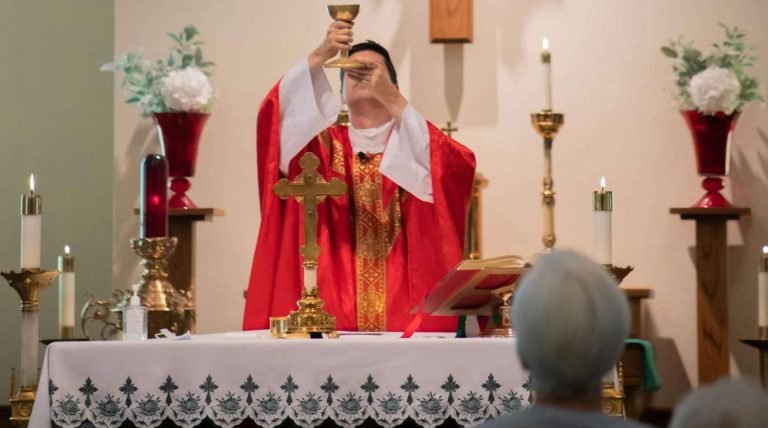
Biblical proof: the Mass is the true Worship of God

Biblical proof: the Mass is the true Worship of God


Many people claim that we no longer need sacrifices to worship God. They argue that altars, offerings, or practices resembling Old Testament liturgy have no place in Christian worship. This claim, however, makes little sense. Why? Because the Old Testament was a prefiguration of the New Testament, revealing what it truly means to worship God.

From the beginning of human history, as far back as Cain and Abel, sacrifice has been central to worshipโ€”not just prayer. In the Old Testament, God was precise about how He wanted to be worshipped. He even struck down the sons of Aaron for offering sacrifices improperly (Leviticus 10:1-2). God took sacrifices and worship very seriously.

But today, many assume He no longer cares. If that were true, what purpose did Old Testament liturgy serve, and why would its significance disappear entirely in the New Covenant? Furthermore, the New Testament worship prefigures the heavenly liturgyโ€”where we again see altars, incense, and sacrifices. It would make no sense for the Old to have these elements, the New to lack them, and the heavenly to restore them.

Letโ€™s explore key texts from the Bible to see how Old Testament worship prefigures New Testament worship, and how both point to the heavenly liturgy.


Old Testament Prefigurations

The Old Testament contains types and shadows of the Eucharist and Christโ€™s ultimate sacrifice, pointing directly to the Holy Mass.

1. Genesis 14:18

“And Melchizedek king of Salem brought out bread and wine; he was priest of God Most High.”
This prefigures the Eucharist, as Melchizedek offers bread and wineโ€”a foreshadowing of Christโ€™s sacrifice.

2. Exodus 12:5-7, 12-13 (The Passover)

“Your lamb shall be without blemish, a male a year old… Then they shall take some of the blood and put it on the two doorposts and the lintel of the houses in which they eat them… The blood shall be a sign for you… and when I see the blood, I will pass over you.”
This prefigures Christ as the unblemished Lamb of God. The saving blood of the Passover lamb points to the Eucharist, where Christโ€™s Blood is lifted up and remembered in the Holy Mass.

3. Leviticus 16:15-16 (Day of Atonement)

“Then he shall kill the goat of the sin offering… sprinkling it over the mercy seat… Thus he shall make atonement for the holy place, because of the uncleannesses of the people of Israel and because of their transgressions, all their sins.”
This foreshadows Christ, the true High Priest, offering Himself for the sins of the worldโ€”a reality made present in the Holy Mass.

4. Malachi 1:11

“For from the rising of the sun to its setting my name is great among the nations, and in every place incense is offered to my name, and a pure offering.”
This prophecy clearly refers to the Eucharistic sacrifice, a universal offering celebrated “from the rising of the sun to its setting.”

5. Psalm 110:4

“The Lord has sworn and will not change his mind, ‘You are a priest forever after the order of Melchizedek.'”
Christโ€™s eternal priesthood is fulfilled in His offering of bread and wine in the Eucharist.


New Testament Fulfillment

1. Luke 22:19-20

“And he took bread, and when he had given thanks he broke it and gave it to them, saying, ‘This is my body, which is given for you. Do this in remembrance of me.’โ€
Jesus establishes the perpetual celebration of the Eucharist, commanding His disciples to continue this act of worship.

2. John 6:53-56 (Bread of Life Discourse)

“Truly, truly, I say to you, unless you eat the flesh of the Son of man and drink his blood, you have no life in you… For my flesh is food indeed, and my blood is drink indeed.”
Jesus emphasizes the necessity of consuming His Body and Blood for eternal life, fulfilled in the Eucharist.

3. 1 Corinthians 10:16-17

“The cup of blessing which we bless, is it not a participation in the blood of Christ? The bread which we break, is it not a participation in the body of Christ?”
St. Paul teaches that partaking in the Eucharist is true communion with Christโ€™s Body and Blood.

4. 1 Corinthians 11:23-26

“For as often as you eat this bread and drink the cup, you proclaim the Lordโ€™s death until he comes.”
The Eucharist is both a memorial of Christโ€™s sacrifice and a proclamation of His death and resurrection.

5. Hebrews 9:12

“He entered once for all into the Holy Place, taking not the blood of goats and calves but his own blood, thus securing an eternal redemption.”
Christโ€™s sacrifice replaces Old Covenant sacrifices, and the Eucharist makes it present in every age.


The Heavenly Liturgy

1. Revelation 5:6-8

“And between the throne and the four living creatures and among the elders, I saw a Lamb standing, as though it had been slain… with golden bowls full of incense, which are the prayers of the saints.”
The heavenly worship of the Lamb mirrors the liturgy of the Mass, with incense and offerings.

2. Revelation 8:3-4

“And another angel came and stood at the altar with a golden censer… with the prayers of all the saints upon the golden altar before the throne.”
This image of incense and altar echoes the sacrificial worship of the Mass.


Eating the Sacrifice

1. John 6:53-56

“Truly, truly, I say to you, unless you eat the flesh of the Son of man and drink his blood, you have no life in you.”
Consuming Christโ€™s Body and Blood is essential for participation in His sacrifice.

2. 1 Corinthians 10:18

“Consider the people of Israel: are not those who eat the sacrifices partners in the altar?”
Eating the sacrificial offering signifies participation in its spiritual benefits, a principle fulfilled in the Eucharist.

3. 1 Corinthians 10:19-21

“What pagans sacrifice they offer to demons… You cannot drink the cup of the Lord and the cup of demons.”
Paul warns against participating in pagan sacrifices, contrasting it with the true worship of the Eucharist.

4. 1 Corinthians 11:27-29

“Whoever… eats the bread or drinks the cup of the Lord in an unworthy manner will be guilty of profaning the body and blood of the Lord.”
The sacredness of the Eucharist requires worthy participation, as it involves communion with Christโ€™s sacrifice.


Conclusion

The Bible makes it clear that worship has always involved sacrifice, from the Old Testament to the New, and into the heavenly liturgy. The Eucharist fulfills and perfects the sacrifices of old, allowing us to participate in Christโ€™s eternal offering. The question remains: if sacrifices were essential to worship in the Old Testament and in heaven, why would they not be central in New Testament worship? The Holy Mass is the answer.

What Is Pope Francisโ€™s Salary?

0

The Surprising Truth About Pope Francisโ€™s Salary: A Life of Service and Simplicity

When you think about the Pope, itโ€™s easy to assume that such an important role comes with a hefty paycheck. After all, leading over 1.3 billion Catholics worldwide, making big decisions on faith and morality, and being a spiritual guide to millions is no small job. But hereโ€™s the twist: Pope Francis doesnโ€™t actually earn a salary. Not a dime. And the reason behind it might surprise you.

No Paycheck? Really?

Back in 2001, there were rumors that Pope John Paul II was earning a modest salary. But the Vatican quickly shut that down. Joaquรญn Navarro-Valls, a Vatican spokesman at the time, made it clear: โ€œThe pope does not and has never received a salary.โ€ Fast forward to today, and Pope Francis follows the same tradition. Thatโ€™s rightโ€”the leader of the Catholic Church doesnโ€™t get paid for his work.

A Jesuitโ€™s Commitment to Poverty

Pope Francisโ€™s decision to live without a salary isnโ€™t just a Vatican traditionโ€”itโ€™s deeply personal. Before becoming Pope, he was Jorge Mario Bergoglio, a Jesuit priest. As a member of the Society of Jesus, he took a vow of poverty, meaning he gave up personal wealth and material possessions. Even as Pope, heโ€™s stayed true to that vow. Instead of living in the lavish Apostolic Palace, he chose to stay in the Vatican guesthouse, Casa Santa Marta, where he lives in a simple room.

Now, donโ€™t get me wrongโ€”the Pope isnโ€™t exactly roughing it. The Vatican covers all his basic needs, like food, housing, and travel. He doesnโ€™t have to worry about bills or groceries, but he also doesnโ€™t have a personal bank account or a credit card for online shopping sprees. His life is focused entirely on his role as a spiritual leader, not on accumulating wealth.

Using Wealth to Help Others

While Pope Francis doesnโ€™t have a salary, he does have access to something much bigger: charitable funds. One of the main sources is โ€œPeterโ€™s Pence,โ€ an annual collection taken up by Catholics around the world. This money isnโ€™t for the Popeโ€™s personal useโ€”itโ€™s meant to help those in need. And Pope Francis has used it generously.

For example, in 2020, he donated $500,000 from the Peterโ€™s Pence fund to help nearly 75,000 people in Mexico who were struggling due to the COVID-19 pandemic. The money went toward food, medical supplies, and other essentials. Heโ€™s also directed funds to support refugees, victims of natural disasters, and communities hit by war or famine. In short, heโ€™s using the Churchโ€™s resources to make a real difference in the world.

Following Jesusโ€™s Example

Pope Francisโ€™s approach to money and wealth isnโ€™t just about tradition or personal choiceโ€”itโ€™s deeply rooted in the teachings of Jesus. In the Bible, Jesus lived a simple life, relying on the generosity of others to meet his needs. He famously said, โ€œFoxes have dens, and birds have nests, but the Son of Man has no place to lay his headโ€ (Matthew 8:20). By living without a salary and focusing on helping others, Pope Francis is trying to follow that example.

A Contrast to Other Religious Leaders

This approach stands in stark contrast to some other religious leaders, especially in the world of megachurches and televangelism. Over the years, there have been plenty of headlines about pastors living in mansions or flying private jets, all while preaching about faith and charity. Pope Francisโ€™s lifestyle is a powerful reminder that religious leadership doesnโ€™t have to be about personal wealth. Instead, it can be about service, humility, and putting others first.

A Broader Message for the Church

Pope Francisโ€™s commitment to simplicity has also sparked important conversations within the Catholic Church. Under his leadership, the Vatican has taken steps to improve financial transparency and make sure Church resources are used responsibly. Heโ€™s been vocal about the need to prioritize the poor and vulnerable, and his actions reflect that belief.

What Can We Learn from This?

In a world where money and status often take center stage, Pope Francisโ€™s life is a powerful example of a different way to live. He shows us that true leadership isnโ€™t about wealth or powerโ€”itโ€™s about service, humility, and compassion. His decision to live without a salary isnโ€™t just a personal choice; itโ€™s a statement about what really matters.

So, the next time you hear someone talking about the Pope, remember this: heโ€™s not just a spiritual leader. Heโ€™s a living example of what it means to put others first, to live simply, and to follow a higher calling. And in a world that often feels divided and materialistic, thatโ€™s a message worth paying attention to.

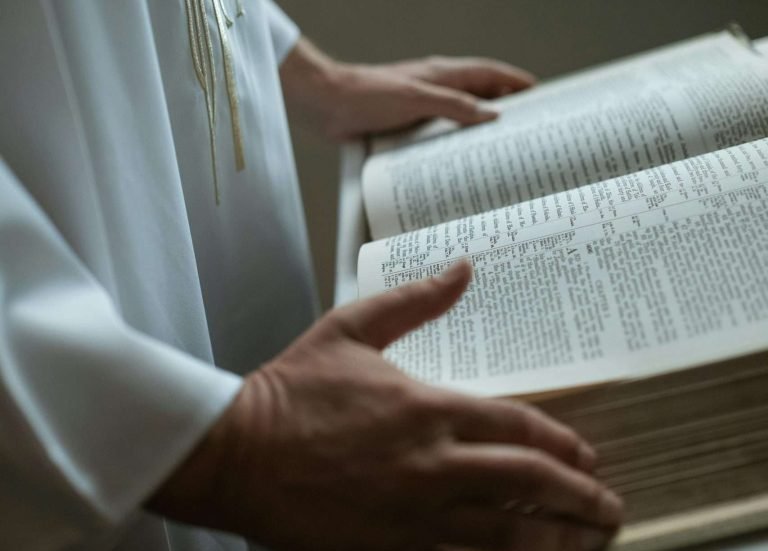
Why doesn’t the Catholic Church emphasize reading the Bible?

138

Full Question

Why doesn’t the Catholic Church emphasize reading the Bible?

Answer

This is a very common misconception. Many non-Catholics believe that the Catholic Church does not value the scriptures but the opposite is the case. Catholics draw every daily readings and meditation from the Scriptures. Responsorial Psalms are also directly from the Bible. Even the prayers and rubrics are from the bible too.

The Catechism of the Catholic Church states:

The Church forcefully and specifically exhorts all the Christian faithful . . . to learn the surpassing knowledge of Jesus Christ, by frequent reading of the divine Scriptures. Ignorance of the Scriptures is ignorance of Christ. (CCC 133)

The Church values the study of the scriptures so much she even grants indulgences for it. The Handbook of Indulgences explains,

“A partial indulgence is granted the Christian faithful who read Sacred Scripture with the veneration due Godโ€™s word and as a form of spiritual reading. The indulgence will be a plenary one when such reading is for at least one-half hour” (p. 80).

Even throughout the Church’s official documents.

There are bible passages in virtually every line. This is particularly true of the Catechism of the Catholic Church. Every line of these documents draws directly from the Bible. Reading this practically means reading the Bible.

The misunderstanding is probably from popular beliefs that the Church prefers Tradition to Scripture. This isn’t really the case. The Church believes that Tradition and Scripture bear equal witness in her life. So, she places equal value on both. Tradition is the spoke teachings of the Apostles passed down from generation to generation. Whilst the Scriptures contain the written form of the same revelation of God. Those who spoke and those who wrote were inspired by the same Spirit. So it would be silly to assume that what is written has more power than what they said verbally.

Why doesn’t the Catholic Church emphasize reading the Bible? Drop a comment below.

Read more