Friday, April 3, 2026
14.7 C
London
Home Blog Page 30

The Real Meaning of “Judge Not”

0

In many of our Facebook posts, when we point out morally wrong behavior—especially those that involve subjective interpretations of Scripture or that go against the Magisterium—we are often accused of “judging.” This article is meant to clarify what judgment means according to both Scripture and Church teaching.

Misconceptions About Judgment

Judging others is often treated as one of the gravest sins, as though it were on par with theft, murder, or fornication. Yet, curiously, those who accuse us of judgment commit the very act they condemn by judging us for pointing out sin. As St. Paul says, “Therefore, you have no excuse, O man, every one of you who judges. For in passing judgment on another you condemn yourself” (Romans 2:1). However, this isn’t the full picture of judgment.

Many people take “judge not” to mean that we should never correct others, even if their actions are sinful. This interpretation is simplistic and incorrect. As Jimmy Akin writes, “Jesus didn’t tell us that we should close our eyes to moral evil in the world” . Jesus never commanded us to ignore sin or stop discerning between good and evil. In fact, He instructed us to recognize people “by their fruits” (Matthew 7:20).

Judging with Charity

While some people sincerely wish to admonish us out of charity, others simply wish to silence us. However, the Church teaches that fraternal correction is an act of mercy. St. Thomas Aquinas reminds us in his Summa Theologica, “To admonish sinners is a spiritual work of mercy,” and that one who corrects another does not sin in doing so, provided it is done out of love and charity.

This aligns with Jesus’ words when He instructs us to help our brother: “If your brother sins, go and tell him his fault, between you and him alone” (Matthew 18:15). Notice that this correction is meant to be private and charitable, aiming for the good of the person, not condemnation.

The Dangers of Misinterpreting “Judge Not”

Some might protest, saying, “No, we should never judge.” But this interpretation is not only impractical, it is also contrary to Scripture. As Jimmy Akin explains, “Admonishing the sinner is a spiritual work of mercy… Whoever brings back a sinner from the error of his way will save his soul from death” (James 5:20).

To follow a literalistic, shallow interpretation of “judge not” would mean abandoning any sense of moral responsibility. How could we vote for candidates, trust business partners, or choose friends if we refused to acknowledge people’s actions? Jesus Himself said, “By their fruits, you shall know them” (Matthew 7:20). We are called to discern the behavior of others, not to turn a blind eye to sin.

Pope Benedict XVI highlighted the Church’s duty to engage in the world, saying, “The Church cannot and must not remain on the sidelines in the fight for justice”.

St. Augustine also emphasized the necessity of proper judgment, writing, “If you understood what ‘judge not’ meant, you would not judge wrongly… You must judge, but with a right judgment” (Homilies on the Gospel of John, 7.24). Thus, the exhortation to “judge not” cannot mean turning a blind eye to sin or refusing to acknowledge evil.

Judgment with Love, Not Condemnation

Jesus’ words, “Judge not, lest you be judged” (Matthew 7:1), do not prohibit us from discerning sin but call us to exercise charity in how we approach others. The key to righteous judgment is to judge with mercy. As Jimmy Akin notes, “Jesus is saying we should take a generous, forgiving attitude with others so God will take a generous, forgiving attitude with us”.

We must avoid condemning others, but we are called to discern good from evil. As Pope Francis has said, “The Lord never tires of forgiving; it is we who tire of asking for forgiveness” (Angelus, March 17, 2013). Even the greatest sinner can be brought to repentance through God’s grace.

Judging others in a spirit of love rather than condemnation reflects the essence of Christ’s command. St. Paul reminds us to “speak the truth in love” (Ephesians 4:15). We must aim to guide others towards the truth while remembering that we, too, are sinners in need of God’s mercy.

Faith is Not a Private Opinion

Our faith is not simply one belief among many. It is the truth revealed by God. To remain silent in the face of sin is not charity but cowardice. St. John Chrysostom said, “He who does not rebuke his neighbor when he sins, makes himself a partner in the sin” (Homily on the Acts of the Apostles, 1:4).

We are called to share the Gospel and the moral truths it contains. As Jimmy Akin explains, “Often the exhortation not to judge is used as a conversation stopper to shut down discussions of immoral behavior”. But we cannot afford to remain silent. Jesus calls us to proclaim the truth, even when it’s uncomfortable.

Distinguishing Judgment from Condemnation

We must also distinguish between judgment and condemnation. It is one thing to say an action is wrong and another to say the person who committed the act is beyond redemption. St. Augustine wisely said, “Hate the sin, love the sinner” (Letter 211). Condemning a person entirely usurps God’s role as the ultimate judge.

As Christians, we are called to condemn sin but not to pass final judgment on the sinner. Pope Francis often emphasizes this distinction: “We must always see the good in others, even when they fall short” (General Audience, April 10, 2013).

Slowness to Judge

We are called to be slow to judge and quick to show mercy. St. James cautions us, “Mercy triumphs over judgment” (James 2:13). We must ensure that we are acting out of a genuine desire for the good of others when we correct them, as St. Philip Neri put it, “Let me not presume to judge others, for I know not myself.”

Conclusion

“Judge not” is not an excuse to turn a blind eye to the sins of others or to promote the dangerous idea that “God sees our hearts” and, therefore, our actions do not matter. Such a belief undermines the importance of God’s laws, leading people to think that they themselves are the ultimate arbiters of good and evil based on personal preferences. When we refuse to speak the truth—even when it is difficult or confrontational—we are complicit in fostering this destructive mindset.

St. Catherine of Siena once said, “We’ve had enough of exhortations to be silent! Cry out with a hundred thousand tongues. I see that the world is rotten because of silence.” When we shy away from proclaiming the truth, we support moral decay. Pope Benedict XVI similarly warned, “Truth is not determined by a majority vote” . Thus, it is never charitable to withhold the truth for fear of offending; it is, rather, a spiritual act of mercy to guide others back to the path of righteousness.

Some claim that the Church’s so-called “judgmentalism” is the reason she is losing members. But this argument is deeply flawed. Is it better for the Church to remain silent in the face of evil, welcoming morally indifferent or spiritually dead individuals into her pews, while allowing relativism and passivity to reign? Should we endanger the souls of the faithful by failing to preach the hard truths? As St. Augustine taught, “Wrong is wrong, even if everyone is doing it. Right is right, even if no one is doing it”.

The solution is not to speak harshly for the sake of hurting others, but neither is it to remain silent out of fear. The proper course is to proclaim the truth with a balance of charity and firmness. As St. Paul advised, “Let your speech always be gracious, seasoned with salt, so that you may know how you ought to answer each person” (Colossians 4:6). We must preach with a force that matches the severity of the sin while always offering a path to redemption and God’s mercy.

Only the message that leads souls to God’s mercy is truly Christian. It reflects Christ’s words to the sinner: “Neither do I condemn you; go, and from now on sin no more” (John 8:11). As Pope Francis has reminded us, “Mercy is the very foundation of the Church’s life” . Thus, the truth we proclaim should always aim to lift sinners up, not tear them down, showing them that God’s grace gives us the strength to live according to His commands.
Why don’t Catholics eat meat on Fridays during Lent, and why fish?

0

The tradition is to abstain from meat, not necessarily to eat fish.

Why Fast from Meat?

The Catholic Encyclopedia states:

Inasmuch as abstinence signifies abstaining from food, the Bible narrative points to the first instance wherein such a course of conduct was imposed by law (Gen. 2:16–17). The obvious purpose of this mandate was to lead the moral head of the human race to recognize the necessary dependence of creature upon Creator. . . . Throughout the Latin church the law of abstinence prohibits all responsible subjects from indulging in meat diet on duly appointed days. Meat diet comprises the flesh, blood, or marrow of such animals and birds as constitute flesh meat according to the appreciation of intelligent and law-abiding Christians.

In the ancient world, meat was often considered to be an indulgence, so abstaining specifically from meat on days of fast and abstinence was intended as a way for Christians to deny themselves an indulgence in recognition of the supreme sacrifice offered by Christ on Good Friday.

The Law

Meat:

According to the USCCB.

“Abstinence laws consider that meat comes only from animals such as chickens, cows, sheep or pigs — all of which live on land. Birds are also considered meat

And Fish:

Fish are a different category of animal. Salt and freshwater species of fish, amphibians, reptiles (cold-blooded animals) and shellfish are permitted.

The Virgin Mary wept at La Salette 177 years ago, but why?

0

The Enigmatic Tears of La Salette

Tears have long held an aura of mystery, originating in the heart and welling up in the eyes, their causes and significance a subject of both intrigue and scientific inquiry. A similar enigma surrounds the phenomenon of Marian apparitions, where a chosen few witness inexplicable events while others remain oblivious.

In the picturesque French Alps, on September 19, 1846, a pivotal encounter unfolded between two humble peasant children, Mélanie Mathieu and Maximin Giraud, and a sorrowful woman. This “beautiful lady,” as the children described her, sat on a hillside with tears streaming down her face, her identity shrouded in mystery.

As the children approached the weeping woman to inquire about the source of her tears, a profound revelation began to take shape. The lady spoke of two significant issues that had driven a wedge between people and her son – blasphemy and the disregard for the Lord’s day.

Much like the ambiguity surrounding her identity, Mary did not immediately introduce herself to the young visionaries. Her true nature unfolded gradually as she engaged the children in conversation.

During this poignant dialogue, the crying woman expressed deep concern over the diminishing attendance at Sunday Mass and the irreverent attitudes among those who still attended. Work and secular activities increasingly overshadowed worship, with some even replacing prayer with frivolous use of her son’s name.

A Message for Our Time

While overshadowed by other famous apparitions like Lourdes and Fatima, the message from La Salette remains incredibly relevant in today’s context. In recent years, surveys in the U.S. and Europe have highlighted the rise of the “nones,” individuals with no religious affiliation, including former Catholics. This trend spans across generations, affecting both millennials and older demographics.

In the wake of the encounter between the two peasant children and the weeping woman, a profound transformation swept through southern France. Churches once bereft of worshipers began to fill, echoing with the faithful’s renewed devotion.

On the 177th anniversary of the La Salette apparition, it is an ideal moment to revisit the lady’s simple yet profound message. The mystery of God’s ways may persist, but His deep concern for His people remains constant.

Responding to Heavenly Tears

Commemorating the La Salette anniversary by heeding the call to return to Mass attendance offers a path to address the tears of the sorrowful Virgin. By emphasizing the importance of Sunday rest and worship, we can strive to bring forth a fruitful response to heavenly tears.

In the quest to console the weeping Virgin and wipe away her tears, it becomes imperative to reflect upon our own lives and how we honor the Sabbath. It is not just about abstaining from labor but creating space for spiritual rejuvenation that can heal both body and soul.

In a world rife with anxiety and depression, perhaps it is time to heed God’s counsel and prioritize rest. Shouldn’t this be an easy and welcome respite for us all?

By exploring these facets of the La Salette apparition and its message, we can unravel the layers of mystery surrounding tears and spirituality, offering a new perspective on an age-old enigma.

Ronaldo Nazario embraces the Catholic faith

0

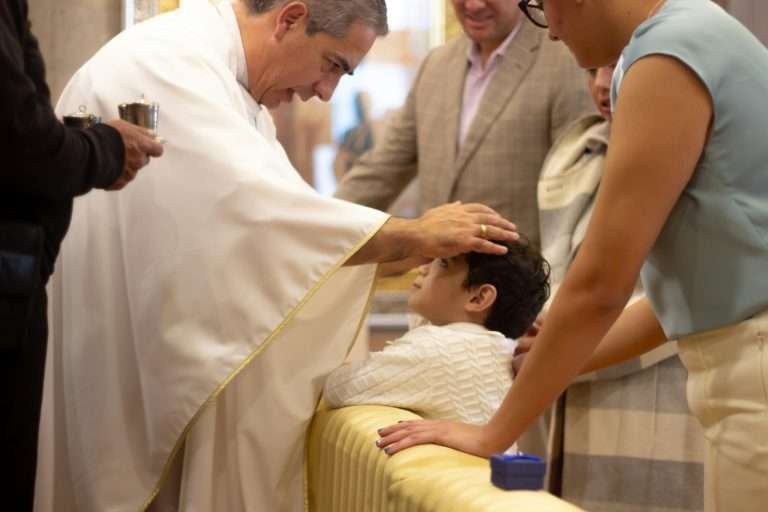
Tuesday was a special day for Ronaldo Luís Nazario da Lima, the Brazilian and world soccer legend nicknamed “O Fenômeno” (“The Phenomenon”), who at the age of 46 took a significant step in his life of faith by receiving the sacrament of baptism. 

After the ceremony at São José (St. Joseph) Parish located in the Jardim Europa neighborhood on São Paulo’s west side, Nazario, two-time world champion with the Brazilian team, shared his experience on social media, highlighting the importance of the momentous moment in his life: “Today is a very special day. I was baptized!”

“The Christian faith has always been a fundamental part of my life, since I was little, although I had not yet been baptized. With the sacrament I feel truly regenerated as a child of God, in a new, more conscious and deeper way,” the Brazilian star wrote on his Instagram account Sept. 12.

In his message, Nazario also renewed his commitment to “follow the path of good, of my own free will, believing in the love of Jesus, in supportive love.”

Accompanying the message, the former soccer player from the Barcelona, Real Madrid, Inter Milan, and other teams, shared several images from his baptism including his godparents Amilcar and Malu.

https://www.instagram.com/p/CxGne10vFX7/?img_index=1

On this important day, Nazario also thanked the priests Fábio de Melo and Dom Oswaldo as well as São José church.

In June 2022, Nazario demonstrated his growing closeness to the Catholic faith by fulfilling his promise to make the Camino de Santiago pilgrimage on a bicycle. 

“I thought about a thousand things during the Camino, but I was grateful for many things that we have achieved with Valladolid,” said the former soccer player who is also president of the Valladolid club.

The various starting points of the Camino de Santiago all end at the tomb of the Apostle James in the Santiago de Compostela cathedral in Spain.

Where In The Bible Did Jesus Talk About Hell?

0

Where In The Bible Did Jesus Talk About Hell?

When Jesus heard this, he was amazed and said to those following him, “Truly I tell you, I have not found anyone in Israel with such great faith.  I say to you that many will come from the east and the west, and will take their places at the feast with Abraham, Isaac and Jacob in the kingdom of heaven. But the subjects of the kingdom will be thrown outside, into the darkness, where there will be weeping and gnashing of teeth.” – Mt 8:10-12

“Then he will say to those on his left, ‘Depart from me, you who are cursed, into the eternal fire prepared for the devil and his angels. For I was hungry and you gave me nothing to eat, I was thirsty and you gave me nothing to drink,  I was a stranger and you did not invite me in, I needed clothes and you did not clothe me, I was sick and in prison and you did not look after me.’ “They also will answer, ‘Lord, when did we see you hungry or thirsty or a stranger or needing clothes or sick or in prison, and did not help you?’ “He will reply, ‘Truly I tell you, whatever you did not do for one of the least of these, you did not do for me.’ “Then they will go away to eternal punishment, but the righteous to eternal life.” Mt 25:41-46

Few Other Parts of the Bible

This will happen when the Lord Jesus is revealed from heaven in blazing fire with his powerful angels.  He will punish those who do not know God and do not obey the gospel of our Lord Jesus.  They will be punished with everlasting destruction and shut out from the presence of the Lord and from the glory of his might. 2 Thes 1:7-9

 In their greed, these teachers will exploit you with fabricated stories. Their condemnation has long been hanging over them, and their destruction has not been sleeping. For if God did not spare angels when they sinned, but sent them to hell, putting them in chains of darkness to be held for judgment. 2 Pt 2:3-4

they, too, will drink the wine of God’s fury, which has been poured full strength into the cup of his wrath. They will be tormented with burning sulfur in the presence of the holy angels and of the Lamb. And the smoke of their torment will rise for ever and ever. There will be no rest day or night for those who worship the beast and its image, or for anyone who receives the mark of its name.” Rv 14:10-11

Do You Know How Many Popes Have Been Canonized?

Do You Know How Many Popes Have Been Canonized?

Approximately one-third of the individuals who succeeded St. Peter have been formally recognized as saints. Out of the 266 popes, including Pope Francis, who have held the position since St. Peter, 82 have achieved universal canonization. It is worth noting that all of the first 35 popes were canonized, with 31 of them being martyrs.

The most recent canonized popes, prior to the canonization of Paul VI, were Pope John XXIII and Pope John Paul II in 2014. Additionally, Pope John Paul I was beatified in 2022, which is one step away from canonization.

Interestingly, out of the 82 canonized popes, only eight have been canonized since the 11th century. It is important to remember that during the first millennium of the Church, there was a lack of formal processes for canonization.

The eight popes canonized since the 11th century are as follows: Pope Benedict IX (#142), Pope Gregory VII (#156), Pope Gregory X (#193), Pope Pius V (#224), Pope Pius X (#256), Pope John XXIII (#260), Pope John Paul II (#264), and Pope Paul VI (#262).

In the early years of the Church, the process for determining sainthood was not as well-defined. However, in 973, Pope Benedict VI canonized Bishop Ulrich of Augsburg, marking the first instance of a person being canonized by a pope. In 1243, Pope Gregory IX affirmed that only the pope possessed the authority to declare someone a saint, a practice that continues to this day. Equivalent canonization, a type of canonization in which the pope confirms devotion to a well-established saint, also exists. Pope Francis recognized Pierre Faber and Pope Benedict XVI recognized Hildegard of Bingen through this process.

The 1917 Code of Canon Law stipulated that the cause for sainthood could not commence until 50 years after the candidate’s death. However, Pope John Paul II reduced this waiting period to five years. In certain cases, such as with the passing of Pope John Paul II, the time frame can be skipped or shortened.

On average, it takes around 180 years for a person to be canonized after their death. Pope St. John Paul II, however, was canonized only nine years after his death.

Let us now explore some of the popes who have been canonized and who have steadfastly protected the Church founded by Christ Himself throughout the centuries.

  • Pope #2: St. Linus (67-76) – St. Linus, succeeding only St. Peter, was entrusted with the office by both St. Peter and St. Paul after the establishment of the Christian Church in Rome. The specific responsibilities given to Linus were somewhat unclear due to the ongoing establishment of the Church hierarchy. However, it is known that Linus was martyred and buried near St. Peter. His name is mentioned in the Roman Canon, and St. Paul also references Linus in his Second Epistle to Timothy.

  • Pope #3: St. Cletus (76-90) – Also known as Anacletus, Pope St. Cletus is believed to have divided Rome into 25 parishes and ordained an unknown number of priests. He is mentioned in the Roman Canon, and there is no record of his martyrdom. He was buried near his predecessor, Pope St. Linus.

  • Pope #4: St. Clement I (88-99) – Born in 35, St. Clement became pope sometime between 88 and 90 and was consecrated by St. Peter himself. St. Paul refers to Clement as a “fellow-worker,” indicating his significant involvement in the early Church’s formation. St. Clement is recognized as the first Apostolic Father, a term for those who lived in the 1st and 2nd centuries and learned from the original Twelve Apostles. He wrote extensively about the teachings of St. Peter and St. Paul, including the authority of the Apostles to ordain bishops, which laid the foundation for the Church hierarchy. Clement was martyred by drowning in the year 99.

  • Pope #64: St. Gregory I (590-604) – Also known as St. Gregory the Great, he played a crucial role in guiding the papacy during the decline of the Roman Empire. With immense intelligence, deep spirituality, and boundless energy, Gregory set the course for the papacy throughout the Middle Ages. Born into wealth in Rome, he became the city’s prefect but eventually renounced worldly possessions. He used his wealth to establish monasteries, even converting his own palatial home into one. Gregory served as a papal envoy to Constantinople before accepting the position of Pope in 590 due to popular pressure. By the time of his death, he had laid the foundation for medieval Christendom. St. Gregory I is revered as the “Father of Christian Worship” for his significant contributions to revising Roman worship, with Gregorian chant named in his honor. He is recognized as a Doctor of the Church and is the patron saint of musicians, singers, students, and teachers.

The Importance of Conversion in the Christian Journey

0

Conversion holds a crucial place in the faith journey of every Christian. However, the concept of conversion is often misunderstood, reduced to a superficial level that fails to penetrate the depths of one’s soul.

In truth, Jesus called upon his disciples to experience a conversion that would profoundly transform their lives. Jesus employed the Greek term “metanoia” to convey the essence of conversion, purposefully selecting this word. Pope St. Paul VI, in his Apostolic Constitution “Paenitemini,” elucidated the weight of Jesus’ choice of language.

“The kingdom of God, proclaimed by Christ, can only be entered through a ‘change of heart’ (‘metanoia’), which denotes an intimate and complete transformation and renewal of the entire person—shaping one’s opinions, judgments, and decisions in the light of God’s holiness and love, the holiness and love revealed to us in the Son and shared in fullness.”

Metanoia is often described as a complete “turning around,” wherein an individual is walking in one direction but then redirects their path toward a different course.

In the early Church, this metanoia found its symbolic expression in the sacrament of Baptism. Prior to receiving baptism, catechumens were required to publicly profess their faith before the priest or bishop and renounce their former way of life. The Catholic Encyclopedia elucidates the practice of this renunciation and profession.

“The catechumen, facing West, symbolizing the abode of darkness, stretched out their hand or even spat in defiance and abhorrence of the devil while making this renunciation. Subsequently, it was customary for the candidate for baptism to make an explicit commitment of obedience to Christ. Among the Greeks, this was referred to as ‘syntassesthai Christo,’ surrendering oneself to the authority of Christ… During this declaration of allegiance to Jesus Christ, the individual to be baptized turned toward the East, signifying the realm of light.”

Consequently, every Christian is challenged to examine their own lives and determine whether they have genuinely turned toward God in their thoughts, words, and actions. Even if they were baptized at a young age, Christians can still undergo a “conversion” (sometimes referred to as a “reversion”), where they willingly embrace the Gospel of Jesus Christ and pledge their obedience to God.

Conversion should never be taken lightly, nor should it remain superficial. It is an encounter that reaches the very core of our existence, effecting a transformative change that molds us into new individuals. This is the true essence of conversion.

Pope Francis condemns the burning of the Quran in Sweden

Pope Francis condemns the burning of the Quran in Sweden, Calls for Fraternity and Concrete Actions

In an interview with the UAE’s Al-Ittihad newspaper, Pope Francis expressed his indignation and disgust over the recent burning of Quran pages in Sweden. He emphasized the importance of respecting sacred texts and denounced the use of freedom of expression as an excuse for despising others. The Pope called for such actions to be rejected and condemned, stating that any book considered sacred by its believers must be respected.

Addressing his own health after a recent abdominal surgery, Pope Francis expressed gratitude for the professionalism of the medical staff and thanked all those who prayed for him. Reflecting on his visit to Abu Dhabi in 2019, he appreciated the commitment of the UAE and Sheikh Mohamed bin Zayed in promoting brotherhood, peace, and tolerance. The Pope urged adults not to leave young people vulnerable to illusions and clashes between civilizations, emphasizing the importance of equipping them with freedom, discernment, and responsibility.

Pope Francis stressed the need to protect young people from negative influences, false news, materialism, hatred, and prejudice. He emphasized that freedom of thought and expression are essential for their growth and learning. The Pontiff urged society not to treat young people as incapable but to provide them with the necessary tools, guiding them towards freedom and responsibility. He highlighted the significance of investing in the present generation to ensure continuity and encouraged adhering to the golden rule of treating others as we would like to be treated.

When asked about the Document on Human Fraternity, Pope Francis mentioned its importance for interreligious dialogue and peaceful coexistence among all human beings. He shared his practice of giving the document to delegations visiting the Vatican, as he believes it holds valuable principles for building a civilization of brotherhood. The Pope affirmed that the future hinges on either a civilization of brotherhood or one of enmity, emphasizing the need for collective effort and cooperation to shape a positive future.

Pope Francis expressed his satisfaction with the global acceptance of the document’s message and objectives. He underscored the significance of human brotherhood as an antidote to heal the wounds of the world. The Pope emphasized reciprocity, respect for others, and the pursuit of truth as the foundation for interreligious cooperation. He called for the transformation of religious sentiments into tangible acts of cooperation, fraternity, and concrete goodwill.

Regarding the increase in terrorist threats, Pope Francis aligned with the document’s condemnation of practices that threaten life, such as genocide, terrorism, forced displacement, organ trafficking, abortion, euthanasia, and policies that support such acts.

The Pope praised the Abrahamic House in Abu Dhabi, which encompasses a Church, Mosque, and Synagogue, as a testament to the realization of human fraternity. Furthermore, Pope Francis addressed the urgent climate and environmental crisis, emphasizing the need to turn declarations into actionable solutions before it is too late. He called for realistic approaches to tackle the ecological crisis effectively.

Did You Know St Anthony of Padua Isn’t From Padua and Isn’t Originally Named Anthony?

Did You Know St Anthony of Padua Isn’t From Padua and Isn’t Originally Named Anthony?

St. Anthony of Padua is widely regarded as one of the most beloved and venerated saints of the Catholic Church. He was born in Lisbon, Portugal in 1195 and was originally named Fernando de Bulhões e Taveira de Azevedo. It was only when he became a Franciscan friar at the age of 25 that he changed his name to Anthony (Antonio). Despite being known as St. Anthony of Padua, he is also venerated as St. Anthony of Lisbon in Portugal.

St. Anthony lived most of his life in Padua, Italy, where he carried out much of his mission. He became immensely loved and famous in the region, performing many miracles that left the people in awe of his faith. One of his most famous miracles was reconnecting the severed foot of a repentant young man named Leonardo. St. Anthony also obtained miracles through his intercession even after his death.

St. Anthony was canonized less than a year after his death by Pope Gregory IX on Pentecost, 1232. His feast day is celebrated on June 13, and he continues to be revered by millions of people around the world. His legacy lives on through the many institutions, churches, and communities that bear his name, and his teachings continue to inspire countless believers to this day.

This May Be The House Jesus Lived

0
1qq 640x400 1

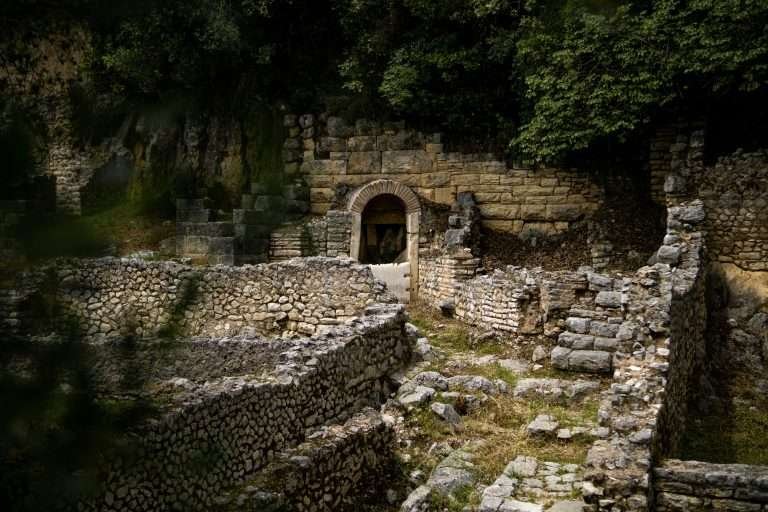
Researchers have made an intriguing discovery regarding the possible childhood home of Jesus. The house in question is located on a hillside in northern Israel and is believed to date back to the early first century CE. Dr. Ken Dark, a British archaeology specialist, has been studying the stone and mortar house since 2006 and has made the claim that it is likely the home where Mary and Joseph raised their son.

The house itself is cut into a limestone hillside, featuring several rooms and a staircase, as well as a surviving chalk floor and doorway. While it’s impossible to know for certain, Dark argues that there is “no good reason” to discount the possibility that the house was where Jesus grew up. In fact, ruins of the house were incorporated into churches during the Byzantine and Crusades periods, which further suggests their significance.

One of the most compelling pieces of evidence in support of Dark’s claim comes from a seventh-century text by Irish abbot Adomnan of Iona. The text chronicles the travels of the Gaulish monk Arculf and describes Jesus’ home in relation to two tombs and below a church. This description matches the location and features of the hillside house, adding even more weight to the possibility that it was indeed the childhood home of Jesus.

Additionally, various limestone artifacts discovered on the site suggest that a Jewish family lived there, which further supports the theory that it was Jesus’ childhood home. While Dark cannot confirm with certainty that the house was indeed where Jesus grew up, he argues that there is no archaeological reason to discount the possibility.

2qq 640x400 1
Nazareth structure believed to be Jesus’ boyhood home (photo credit: YouTube screen capture)

This discovery sheds new light on the life and upbringing of one of the most significant figures in human history. The possibility that the hillside house in northern Israel was the childhood home of Jesus is a fascinating and intriguing idea, one that will undoubtedly be discussed and debated for years to come.