Friday, April 3, 2026
15.3 C
London
Home Blog Page 32

U.S. Bishops Condemn Catholic Democrats’ Pledge to Support Abortion

0

The response from the United States Catholic Conference of Bishops (USCCB) to a group of Catholic lawmakers who invoked Catholic teaching to support abortion has been firm and resolute.

A coalition of 30 Democrats, led by Rep. Rosa DeLauro of Connecticut, referenced their Catholic faith and St. John Paul II’s apostolic exhortation Christifideles Laici as grounds for endorsing abortion.

In their letter, the lawmakers stated, “The core principles of our Catholic faith—social justice, conscience, and religious freedom—compel us to defend a woman’s right to access abortion. Our faith consistently promotes the common good, upholds the dignity of every human being, and emphasizes the necessity of creating a collective safety net for the most vulnerable among us.”

In response to this, Archbishop Timothy P. Broglio, president of the USCCB, along with Bishop Michael F. Burbidge of Arlington, Virginia, chairman of the USCCB’s Committee of Pro-Life Activities, and Bishop Daniel E. Flores of Brownsville, Texas, chairman of the USCCB’s Committee on Doctrine, issued a joint statement to correct the lawmakers’ interpretation:

“Members of Congress who recently justified abortion or supported a supposed right to abortion by invoking teachings of the Catholic faith itself gravely distort the faith. It is incorrect and inconsistent to claim that the intentional termination of innocent human life at its most vulnerable stage can ever align with the values of supporting the dignity and well-being of those in need,” expressed the U.S. bishops.

Referring to the Catechism of the Catholic Church, the bishops emphasized, “Human life must be unconditionally respected and protected from the moment of conception.”

They continued, “Abortion violates this principle with regard to unborn children and inflicts immeasurable suffering on countless women.”

The bishops acknowledged the significance of conscience, both within Church teachings and in the public sphere. They also highlighted the importance of policymakers upholding the freedom of Catholics and others to contribute to the common good based on their beliefs in various areas, ranging from aiding newly arrived migrants to providing healthcare and social services.

However, the bishops stressed, “Conscience is not a license to commit evil or support abortion. It cannot and should not justify such acts.”

Concluding their statement, the bishops urged Congress to “join us in prioritizing authentic and uplifting support for the vulnerable and marginalized, including mothers and families in need, as we work together toward the genuine common good.”

Priest Receives 6-Month Jail Sentence for Obstructing Entrance to New York Abortion Clinic

0

Catholic Priest and Pro-Life Advocate Sentenced to Prison for Obstructing Access to Abortion Facility

Father Fidelis Moscinski, CFR, a Catholic priest, and pro-life activist, has been sentenced to six months in federal prison for his actions in blocking access to a Planned Parenthood abortion facility. Moscinski placed locks and chains on the gated entrance, which led to his conviction for violating the Freedom of Access to Clinic Entrances (FACE) Act.

Judge Steven Tiscione imposed the maximum sentence of six months for the specific offense. During the proceedings, Moscinski, represented by the pro-life organization Red Rose Rescue, appealed for leniency, explaining that his actions were motivated by his belief that Planned Parenthood is involved in ending human lives.

Although Father Moscinski is affiliated with Red Rose Rescue, the organization has clarified that his attempt to obstruct access to the abortion clinic was not sanctioned by them. Red Rose Rescue highlighted that their members are free to engage in pro-life activism independently, acting as individuals rather than representatives of the organization.

In his statement to the judge, Moscinski expressed his view that every abortion performed at Planned Parenthood constitutes the intentional killing of an innocent human being. He further emphasized the emotional and spiritual harm inflicted upon the mothers involved. Moscinski also criticized the FACE Act, describing it as a “pseudo-law” that attempts to legitimize inherently evil and unjust actions by masking them as “reproductive health care.”

Moscinski implored Judge Tiscione to mitigate what he believed to be an unjust ruling by imposing the most lenient sentence possible. However, the judge chose to impose the harshest penalty, citing Moscinski’s prior arrests related to pro-life activism as justification for the sentence.

The incident in question occurred on the morning of July 7, 2022, at the Planned Parenthood clinic in Hempstead, New York. Moscinski effectively disrupted the clinic’s operations for approximately two hours by securing locks and chains on the entrance, some of which were covered in glue. After the locks were removed by the fire and police departments, Moscinski lay down in front of the entrance to prevent vehicles from entering, according to the U.S. Attorney’s Office.

While Moscinski has faced previous arrests for his pro-life activism, this is the first time he has been found guilty of violating the FACE Act. In a separate development, New York Attorney General Letitia James recently filed a lawsuit against Red Rose Rescue, seeking to prohibit Moscinski and other members from approaching within 30 feet of abortion clinics. Although the FACE Act violation was not connected to Red Rose Rescue, the attorney general referenced the incident as one of the justifications for the lawsuit.

State Health Examiner Concurs: McCarrick Declared Unfit for Trial

0

Mental Health Expert Deems Theodore McCarrick Incompetent for Trial in Sexual Abuse Case

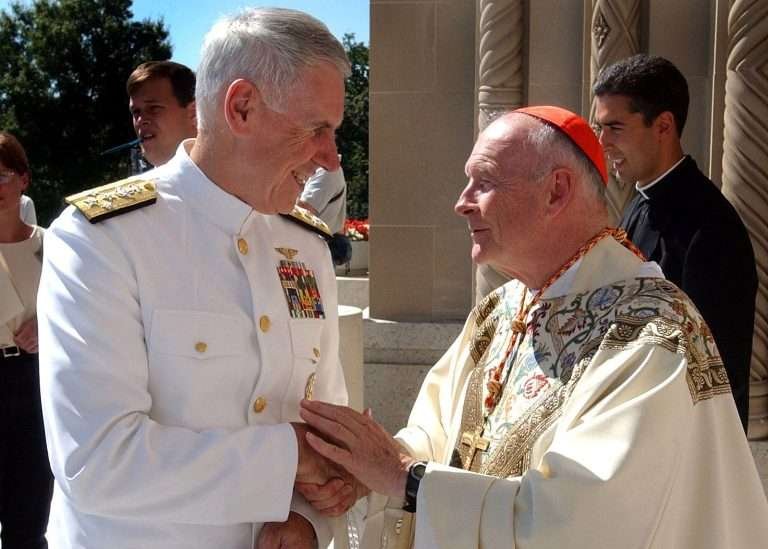
The latest update in the criminal sexual abuse charges against former cardinal Theodore McCarrick reveals that a mental health expert hired by the state of Massachusetts, has determined that McCarrick is not competent to stand trial. This development could potentially lead to the dismissal of the first criminal charges filed against McCarrick, who was removed from the clerical state in 2019 following numerous accusations of sexual abuse involving minors and seminarians. While criminal sexual assault charges against McCarrick in Wisconsin remain pending, several civil lawsuits are also ongoing.

McCarrick currently faces three counts of indecent assault and battery on a person over the age of 14 in state court in Massachusetts. These allegations relate to incidents of sexual abuse that allegedly took place in the 1970s during a wedding ceremony at Wellesley College in Wellesley, Massachusetts. The individual identified as the victim, James Grein, came forward in 2018 with allegations of serial sexual abuse by McCarrick starting when Grein was just 11 years old.

According to a press release from the Norfolk District Attorney’s Office, Massachusetts arranged for a mental health expert to evaluate McCarrick’s condition in Missouri after his legal team filed a motion in February claiming his “legal incompetence” due to “significant, worsening, and irreversible dementia.” This motion was supported by a neurological examination conducted by Dr. David Schretlen, a professor of psychiatry and behavioral sciences at Johns Hopkins University School of Medicine.

Although the final report of the state’s examination is not available to the public, it is currently being evaluated. The next hearing in the case, scheduled for August 30, will likely involve testimony from the state’s examiner.

McCarrick, who had remained silent throughout the case, briefly commented on the charges during a phone call with NorthJersey.com in February. He denied the allegations made by James Grein, stating that they were untrue. McCarrick declined to discuss the ongoing criminal case but directed further inquiries to his lawyer.

Grein, in his interviews with NorthJersey.com, described McCarrick as a close family friend who would attend their gatherings and was affectionately known as “Uncle Ted.” Grein alleged that McCarrick sexually and spiritually abused him in various locations, including their homes, hotels, and during confession.

Pope Francis’ Recovery in John Paul II’s Hospital Room

0

Pope Francis’ Recovery in John Paul II’s Hospital Room


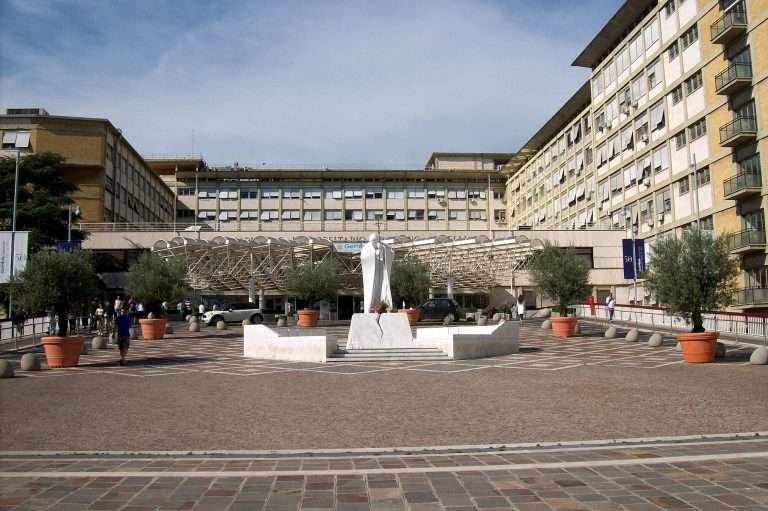
Pope Francis is recovering from abdominal surgery this week in the same hospital room where St. John Paul II was treated throughout his pontificate.

The Vatican said on June 8 that Francis is “in good general condition, alert and breathing naturally” one day after his three-hour surgery to treat an incisional hernia.

Pope Francis is expected to remain for several days in Gemelli University Hospital, located atop Monte Mario, the highest hill in Rome. The Vatican has canceled all of the pope’s scheduled audiences through June 18.

The pope’s hospital room is situated on the 10th floor of the sprawling polyclinic in a wing reserved for papal medical emergencies.

It is the same room where John Paul II stayed during many of his hospital treatments, including for a colon surgery in 1992 and his hospitalization after being shot in an assassination attempt in 1981.

St. John Paul II was admitted to the hospital so many times during his more than 25-year pontificate that he once referred to Gemelli as the “third Vatican” after Vatican City and Castel Gandolfo, the popes’ summer residence.

Family members and patients who come to the hospital’s chapel in search of consolation can now pray before a relic of St. John Paul II, located on the chapel’s right wall.

Pope Francis has been treated at the Gemelli Hospital three times in the past two years. The 86-year-old pope was hospitalized for four days in March for a lung infection and has also dealt this year with a recurrence of diverticulitis, a painful inflammation of bulges in the large intestine following his colon surgery in July 2021.

Religious leaders around the world have expressed their well-wishes and prayers for Pope Francis as he recovers in hospital.

Archbishop Timothy Broglio, the president of the U.S. bishops’ conference, asked Catholics to continue to pray for the pope’s healing.

“As Pope Francis recovers from surgery, he is strengthened by faith in the healing power of our merciful God,” he said.

“Please keep Pope Francis and all those in the hospital in your prayers today and every day. Jesus always walks with us and is even closer whenever we need healing and comfort.”

Why is Our Lady of Guadalupe patroness of the unborn?

0

Why is Our Lady of Guadalupe patroness of the unborn?

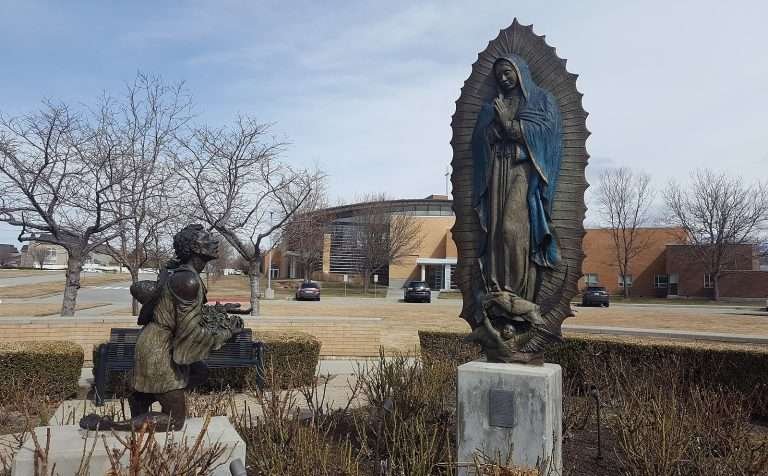
On Dec. 12, we commemorate the feast of Our Lady of Guadalupe, who holds a special place as the protector of the unborn.

When Our Lady appeared to St. Juan Diego almost five centuries ago, her primary role was that of a mother—both the mother of God and our own mother.

In comforting the saint, Our Lady of Guadalupe reassured him, saying, “Listen, my dear little son, and let my words penetrate your heart. Do not be troubled or weighed down with grief. Do not fear any illness or vexation, anxiety or pain. Am I not here, who am your Mother? Are you not under my shadow and protection? Am I not your source of life? Are you not enclosed in the folds of my mantle? In the crossing of my arms? Is there anything else you need?”

She spoke to him not only as a mother but also as the mother of the unborn baby Jesus when she appeared on the Hill of Tepeyac in Mexico City in 1531. Her miraculous image, imprinted on St. Juan Diego’s tilma, depicted her wearing a black sash, symbolizing pregnancy in the indigenous culture.

Our Lady of Guadalupe not only appeared as a native woman but also spoke in the native language. She arrived during a time of conflict between the Spanish and the indigenous peoples, and she asked St. Juan Diego to request the construction of a church from the bishop. As a sign to the bishop, she instructed the saint to gather Castilian roses in full bloom, despite it being winter. When he presented the flowers to the bishop, he discovered her image imprinted on his tilma.

Today, millions of pilgrims visit the Basilica of Our Lady of Guadalupe in Mexico City, where her image is enshrined. She is revered not only as the patroness of the Americas but also as the protector of the unborn. Here’s why.

In 1999, Pope John Paul II declared Dec. 12 as the feast day of Our Lady of Guadalupe.

“This is our cry: life with dignity for all! For all who have been conceived in their mother’s womb, for street children, for Guadalupe!” he declared at the basilica.

Nearly 20 years later, in 2018, Pope Francis entrusted to Our Lady of Guadalupe “in particular, those who are awaiting the birth of their children.”

“St. John Paul II commended to her maternal protection the life and innocence of children, especially those who run the risk of not being born,” he told Polish pilgrims during his general audience. “By her intercession, in this time of Advent, let us implore the gift of children for families without children, respect for the conceived life and the openness of hearts to Gospel values.”

The website of the United States Conference of Catholic Bishops features a prayer asking for the intercession of Our Lady of Guadalupe, as the patroness of unborn children, for “every child at risk of abortion.”

“Help expectant parents to welcome from God the priceless gift of their child’s life,” the prayer reads. “Console parents who have lost that gift through abortion, and lead them to forgiveness and healing through the Divine Mercy of your Son.”

Why Should We Pray to Mary?

Why is it meaningful to pray to Mary? It is because Jesus, in His divine wisdom, has bestowed upon us His Blessed Mother as an exceptional spiritual mother (Rev.12:17). She stands as a heavenly advocate, constantly interceding on our behalf.

Occasionally, some Christians may question the significance of praying to Mary when they believe they can directly approach Jesus. However, they do not hesitate to ask fellow believers on Earth to pray for them, rather than solely relying on their personal communication with Jesus. The Apostle Paul himself acknowledges that God bestows blessings “in answer to many prayers” (2 Cor. 1:11). Moreover, if the prayers of righteous individuals on Earth hold great influence with God (Jas. 5:16–18), then the prayers of those who have completed their earthly journey and now reside in heaven with Christ would undoubtedly hold even greater weight.

Scripture further speaks of “the assembly of the firstborn who are enrolled in heaven” and “the spirits of just men made perfect” (Heb. 12:23, emphasis added). Having achieved perfection in Christ, including a profound love and care for their fellow brothers and sisters in Christ on Earth (see 1 Cor. 2:12-26), it is not surprising to find these holy men and women in heaven presenting our prayers to Jesus, the Lamb (Rev. 5:8). Throughout the history of the early Church, Christians have consistently sought the intercession of these saints who have gone before them into the heavenly realms.

By examining these insights, we come to understand that the saints, as devoted followers of Jesus, work in harmony with Him as co-intercessors for us. Consequently, it should come as no surprise that Mary, the Mother of God and the exemplary disciple (see Luke 1:28, 38), assumes a prominent role as our primary intercessor among the angels and saints.

Did Early Christians Believe in Reincarnation?

0

Did Early Christians Believe in Reincarnation?

The belief that early Christians embraced reincarnation, often promoted by the New Age movement, is historically unfounded. Shirley MacLaine’s claim that reincarnation was removed from the Bible during the Council of Nicaea in A.D. 553 is inaccurate. The Council of Nicaea did not address reincarnation, and neither did any other early ecumenical council. Origen, often misunderstood as a supporter of reincarnation, was actually a strong opponent of it. Claims of Origen’s teachings on reincarnation stem from speculative sources like “Reincarnation in Christianity” by Geddes MacGregor, lacking evidence to support their claims. Early Christian writings provide no support for the concept of reincarnation.

Below are some of the teachings of the Early Church Fathers on this:

Irenaeus

“We may undermine [the Hellenists’] doctrine as to transmigration from body to body by this fact—that souls remember nothing whatever of the events which took place in their previous states of existence. For if they were sent forth with this object, that they should have experience of every kind of action, they must of necessity retain a remembrance of those things which have been previously accomplished, that they might fill up those in which they were still deficient, and not by always hovering, without intermission, through the same pursuits, spend their labor wretchedly in vain. . . . With reference to these objections, Plato . . . attempted no kind of proof, but simply replied dogmatically that when souls enter into this life they are caused to drink of oblivion by that demon who watches their entrance, before they effect an entrance into the bodies. It escaped him that he fell into another, greater perplexity. For if the cup of oblivion, after it has been drunk, can obliterate the memory of all the deeds that have been done, how, O Plato, do you obtain the knowledge of this fact . . . ?” (Against Heresies 2:33:1–2 [A.D. 189]).

Tertullian

“Come now, if some philosopher affirms, as Laberius holds, following an opinion of Pythagoras, that a man may have his origin from a mule, a serpent from a woman, and with skill of speech twists every argument to prove his view, will he not gain an acceptance for it [among the pagans], and work in some conviction that on account of this, they should abstain from eating animal food? May anyone have the persuasion that he should abstain, lest, by chance, in his beef he eats some ancestor of his? But if a Christian promises the return of a man from a man, and the very actual Gaius [resurrected] from Gaius . . . they will not . . . grant him a hearing. If there is any ground for the moving to and fro of human souls into different bodies, why may they not return to the very matter they have left . . . ?” (Apology 48 [A.D. 197]).

Origen

“[Scripture says] ‘And they asked him, “What then? Are you Elijah?” and he said, “I am not”’ [John 1:21]. No one can fail to remember in this connection what Jesus says of John: ‘If you will receive it, this is Elijah, who is to come’ [Matt. 11:14]. How then does John come to say to those who ask him, ‘Are you Elijah?’—‘I am not’? . . . One might say that John did not know that he was Elijah. This will be the explanation of those who find in our passage a support for their doctrine of reincarnation, as if the soul clothed itself in a fresh body and did not quite remember its former lives. . . . [H]owever, a churchman, who repudiates the doctrine of reincarnation as a false one and does not admit that the soul of John was ever Elijah, may appeal to the above-quoted words of the angel, and point out that it is not the soul of Elijah that is spoken of at John’s birth, but the spirit and power of Elijah” (Commentary on John 6:7 [A.D. 229]).

“If the doctrine [of reincarnation] was widely current, ought not John to have hesitated to pronounce upon it, lest his soul had actually been in Elijah? And here our churchman will appeal to history, and will bid his antagonists [to] ask experts of the secret doctrines of the Hebrews if they do really entertain such a belief. For if it should appear that they do not, then the argument based on that supposition is shown to be quite baseless” (ibid.).

“Someone might say, however, that Herod and some of those of the people held the false dogma of the transmigration of souls into bodies, in consequence of which they thought that the former John had appeared again by a fresh birth, and had come from the dead into life as Jesus. But the time between the birth of John and the birth of Jesus, which was not more than six months, does not permit this false opinion to be considered credible. And perhaps rather some such idea as this was in the mind of Herod, that the powers which worked in John had passed over to Jesus, in consequence of which he was thought by the people to be John the Baptist. And one might use the following line of argument: Just as because the spirit and the power of Elijah, and not because of his soul, it is said about John, ‘This is Elijah who is to come’ [Matt. 11:14] . . . so Herod thought that the powers in John’s case worked in him works of baptism and teaching—for John did not do one miracle [John 10:41]—but in Jesus [they worked] miraculous portents” (Commentary on Matthew 10:20 [A.D. 248]).

“Now the Canaanite woman, having come, worshipped Jesus as God, saying, ‘Lord, help me,’ but he answered and said, ‘It is not possible to take the children’s bread and cast it to the little dogs.’ . . . [O]thers, then, who are strangers to the doctrine of the Church, assume that souls pass from the bodies of men into the bodies of dogs, according to their varying degree of wickedness; but we . . . do not find this at all in the divine Scripture” (ibid., 11:17).

“In this place [when Jesus said Elijah was come and referred to John the Baptist] it does not appear to me that by Elijah the soul is spoken of, lest I fall into the doctrine of transmigration, which is foreign to the Church of God, and not handed down by the apostles, nor anywhere set forth in the scriptures” (ibid., 13:1).

Lactantius

“What of Pythagoras, who was first called a philosopher, who judged that souls were indeed immortal, but that they passed into other bodies, either of cattle or of birds or of beasts? Would it not have been better that they should be destroyed, together with their bodies, than thus to be condemned to pass into the bodies of other animals? Would it not be better not to exist at all than, after having had the form of a man, to live as a swine or a dog? And the foolish man, to gain credit for his saying, said that he himself had been Euphorbus in the Trojan war, and that when he had been slain he passed into other figures of animals, and at last became Pythagoras. O happy man!—to whom alone so great a memory was given! Or rather unhappy, who when changed into a sheep was not permitted to be ignorant of what he was! And [I] would to heaven that he [Pythagoras] alone had been thus senseless!” (Epitome of the Divine Institutes 36 [A.D. 317]).

Ambrose of Milan

“It is a cause for wonder that though they [the heathen] . . . say that souls pass and migrate into other bodies. . . . But let those who have not been taught doubt [the resurrection]. For us who have read the law, the prophets, the apostles, and the gospel, it is not lawful to doubt” (Belief in the Resurrection 65–66 [A.D. 380]).

“But is their opinion preferable who say that our souls, when they have passed out of these bodies, migrate into the bodies of beasts or of various other living creatures? . . . For what is so like a marvel as to believe that men could have been changed into the forms of beasts? How much greater a marvel, however, would it be that the soul which rules man should take on itself the nature of a beast so opposed to that of man, and being capable of reason should be able to pass over to an irrational animal, than that the form of the body should have been changed?” (ibid., 127).

John Chrysostom

“As for doctrines on the soul, there is nothing excessively shameful that they [the disciples of Plato and Pythagoras] have left unsaid, asserting that the souls of men become flies and gnats and bushes and that God himself is a [similar] soul, with some other the like indecencies. . . . At one time he says that the soul is of the substance of God; at another, after having exalted it thus immoderately and impiously, he exceeds again in a different way, and treats it with insult, making it pass into swine and asses and other animals of yet less esteem than these” (Homilies on John 2:3, 6 [A.D. 391]).

Basil the Great

“[A]void the nonsense of those arrogant philosophers who do not blush to liken their soul to that of a dog, who say that they have themselves formerly been women, shrubs, or fish. Have they ever been fish? I do not know, but I do not fear to affirm that in their writings they show less sense than fish” (The Six Days’ Work 8:2 [A.D. 393]).

Why Do Priests Study Philosophy?

0

Why Do Priests Study Philosophy?

The study of philosophy is not focused on teaching the Bible, ministering to a congregation, or administering sacraments. However, it is a required component of seminary education, typically spanning two to four years, depending on the diocese and seminary. This aspect of their training may seem impractical at first glance, but it plays a fundamental role in shaping seminarians’ future education and their interactions as pastors, as emphasized by the Congregation for Catholic Education.

In its 2011 decree on the reform of ecclesiastical studies of philosophy, the congregation emphasized the indispensability of philosophy for theological formation. This integration of philosophy and theology is not a recent development; many prominent saints, such as St. Thomas Aquinas, have pursued philosophical studies alongside theology. These theologian-philosophers effectively utilized the logical reasoning and specialized language of philosophy to enhance their understanding of theological concepts, according to Fr. James Wehner, the rector of Notre Dame Seminary.

Philosophy has facilitated theologians in grappling with complex issues like the existence of evil, free will, and the nature of the soul. Their philosophical inquiries have paved the way for theological insights, as evident in their writings. The transition from philosophy to theology has been seamless, as Fr. Harrison Ayre, a priest of the Diocese of Victoria, suggests, owing to the rigorous thinking and logical processes employed in philosophy.

The fusion of philosophical reasoning and faith has resulted in significant contributions to the development of dogma, as exemplified by the philosopher-priests and the ecumenical councils. By using philosophical terminology, these early theologians were able to convey the depth of their theological ideas. Thus, studying philosophy helps contemporary theologians grasp the nuanced meanings behind the philosophical language employed by ancient theologians during the formulation of Church doctrines, asserts Fr. Ayre.

This understanding is crucial because many important conclusions in Church history were reached through ecclesial councils, where philosophy played a pivotal role. Comprehending the historical usage of terms and concepts is essential for fully grasping the writings and teachings of that era. Philosophy has aided theologians in their pursuit of a deeper understanding of faith through logical inquiry, both in the past and in the present, Fr. Ayre affirms.

The Congregation for Catholic Education affirms that “philosophical wisdom forms the summit that reason can reach.” As Fr. Wehner explains, philosophy trains the mind to engage in the work of theology. It is important to embrace the reasonableness of faith and not dismiss rational thought as insignificant. Rationality and philosophy underpin the life of the Church, as Fr. Ayre reminds us. While not everyone will become philosophers or delve into profound existential questions, it is crucial to foster an attitude that appreciates rational thought within the context of the Church’s life.

Why St Jude is Patron of Lost Causes

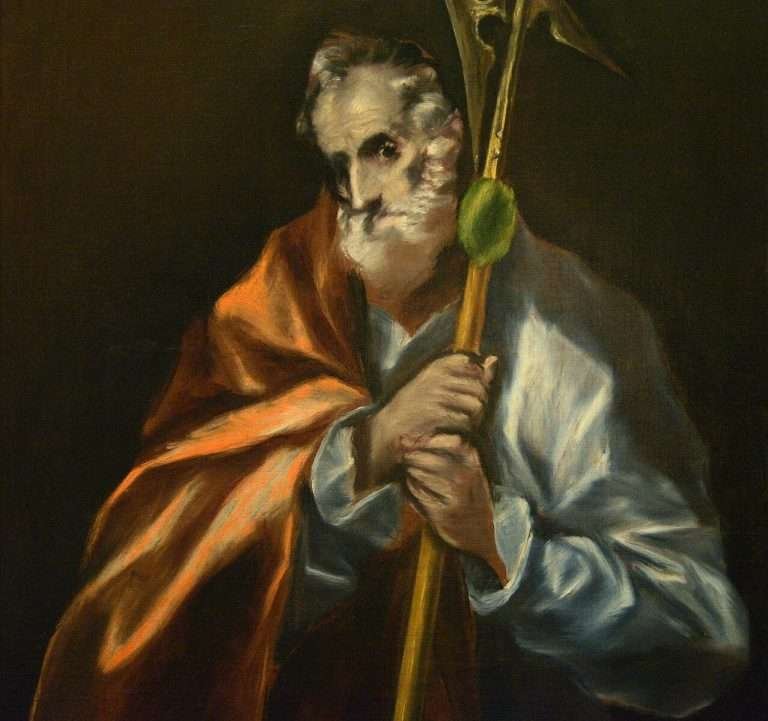
Saint Jude, also known as Thaddeus, was one of the 12 apostles of Jesus Christ. He is credited with authoring the Letter of Jude, which is among the shorter books of the Bible. Saint Jude is believed to have suffered martyrdom in Beirut, Lebanon, around 65 AD. Iconography often portrays him holding a club or axe, symbolizing the manner of his death, and with a flame above his head, representing the occasion of Pentecost.

Despite his limited mentions in the Bible, Saint Jude has garnered significant popularity among contemporary Catholics. This admiration is primarily attributed to his patronage of seemingly hopeless causes. The association of Saint Jude with lost causes originates from an incident during his time in the city of Edessa.

Historical accounts, such as those by Eusebius, an ancient church historian, recount that during Jesus’ lifetime, Abgar V, the ruler of Edessa, suffered from an incurable and agonizing ailment. Having heard of Jesus’ miraculous deeds, Abgar wrote a letter requesting a visit from him. Jesus replied that one of his disciples would be sent instead. Subsequent to Jesus’ Ascension, Saint Jude arrived in Edessa to spread the teachings of Christianity and subsequently paid a visit to Abgar. By laying his hands on the ailing ruler, Saint Jude miraculously healed him.

Many individuals find solace and seek assistance in times of distress and healing by carrying a depiction of Saint Jude on a medal or as a pendant worn on a necklace.

A Prayer to St. Jude

Most holy Apostle, St. Jude, faithful servant and friend of Jesus, the Church honors and invokes you universally, as the patron of difficult cases, of things almost despaired of, Pray for me, I am so helpless and alone.

Intercede with God for me that He brings visible and speedy help where help is almost despaired of. Come to my assistance in this great need that I may receive the consolation and help of heaven in all my necessities, tribulations, and sufferings, particularly -(make your request here)- and that I may praise God with you and all the saints forever. I promise, O Blessed St. Jude, to be ever mindful of this great favor granted me by God and to always honor you as my special and powerful patron, and to gratefully encourage devotion to you.

Amen  

Why is June Dedicated to the Sacred Heart of Jesus?

0

Why is June Dedicated to the Sacred Heart of Jesus?

June is recognized as the month dedicated to the Sacred Heart of Jesus primarily because the solemnity of the Sacred Heart is observed during this month. This year, the solemnity falls on June 16. The specific date varies each year, as it is celebrated on the Friday following the Corpus Christi octave or the Friday after the second Sunday after Pentecost.

Nevertheless, there are additional reasons behind the dedication of June to the Sacred Heart.

The origins of this feast can be traced back to 1673, when a French nun belonging to the Order of the Visitation of Holy Mary (Visitandines) in eastern France began experiencing visions concerning the Sacred Heart.

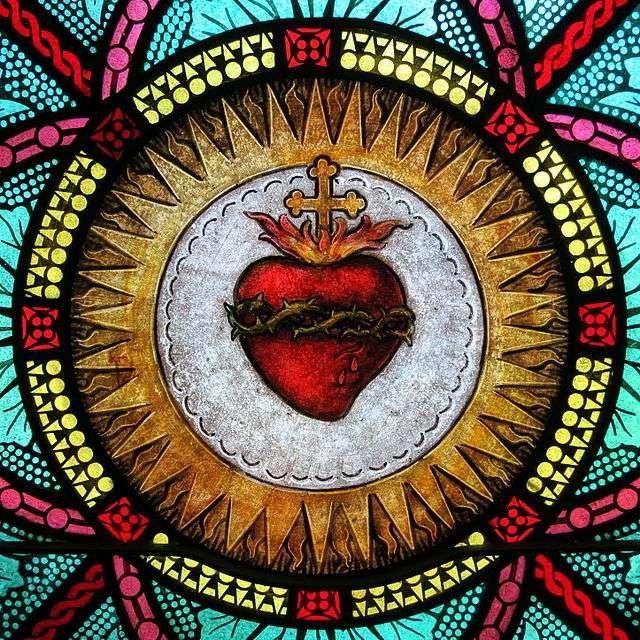
Sister Margaret Mary Alacoque received apparitions of Jesus, who revealed ways to honor His Sacred Heart and expressed His immense love for humanity. In these visions, Jesus appeared with His heart visibly exposed outside His chest, aflame and encircled by a crown of thorns.

These various devotions include participating in a holy hour on Thursdays and receiving the Eucharist on the first Friday of every month.

Jesus conveyed to Sister Margaret Mary: “My Sacred Heart is filled with such intense love for humanity, especially for you, that its ardent charity cannot be contained within it. It must be shared through every means possible.”

These visions continued for a period of 18 months.

On June 16, 1675, Jesus instructed Sister Margaret Mary to promote a feast honoring His Sacred Heart. He also imparted to her 12 promises for all those who venerate and promote devotion to the Sacred Heart.

He said: “I request that the Friday following the octave of Corpus Christi be dedicated as a special feast to honor My heart. On that day, through receiving Communion and making a solemn act of reparation, amends should be made for the indignities My heart has endured while exposed on the altars. I promise that My heart will pour out an abundance of its divine love upon those who honor it in this manner.”

Sister Margaret Mary passed away in 1690 and was canonized by Pope Benedict XV on May 13, 1920.

Initially, the Vatican hesitated to establish a feast dedicated to the Sacred Heart. However, as devotion to the Sacred Heart spread throughout France, the Vatican granted permission for the feast of the Sacred Heart of Jesus to be celebrated in France in 1765.

In 1856, Pope Pius IX designated the Friday following the feast of Corpus Christi as the universal feast of the Sacred Heart for the entire Church. Since then, the month of June has been consecrated to the Sacred Heart of Jesus and His immeasurable love for all of us.

On the current liturgical calendar, the feast of the Sacred Heart of Jesus holds the status of a solemnity, which is the highest-ranking feast. However, it is not considered a holy day of obligation.

These are the promises that the Sacred Heart of Jesus made to St. Margaret Mary Alacoque:

  1. I will grant them all the graces necessary for their state of life.
  2. I will establish peace in their families.
  3. I will console them in all their difficulties.
  4. They shall find in My Heart an assured refuge during life, especially at the hour of death.
  5. I will pour abundant blessings on all their undertakings.
  6. Sinners shall find in My Heart an infinite ocean of mercy.
  7. Tepid souls shall become fervent.
  8. Fervent souls shall quickly mount to high perfection.
  9. I will bless every place where a picture of My Heart shall be set up and honored.
  10. I will give to priests the gift of touching the most hardened hearts.
  11. Those who shall promote this devotion shall have their names written in My Heart, never to be blotted out.
  12. I promise you, in the excessive mercy of My Heart, that My all-powerful love will grant to all those who receive Holy Communion on the first Friday of nine consecutive months, the grace of final perseverance; they shall not die in My disgrace, nor without receiving their sacraments; My Divine Heart shall be their safe refuge in that last hour.