Friday, April 3, 2026
14.2 C
London
Home Blog Page 33

Have you heard of the Theology of the Body?

0

Have you heard of the Theology of the Body?

The Theology of the Body holds a significant place within Catholic discourse on human sexuality. However, many people are unfamiliar with this concept and struggle to find relevant information.

The Theology of the Body encompasses a series of reflections presented by St. John Paul II during his papal audiences from September 1979 to November 1984. Over the course of 129 individual addresses, he covered a wide range of topics.

St. John Paul II began his teachings by meditating on the book of Genesis and exploring the meaning of “Original Nakedness.” He emphasized the inherent value of our bodies as precious gifts.

Building on this foundation, he conducted a comprehensive examination of our bodies and how to live in harmony with the Spirit, using Jesus Christ as an exemplar.

A central focus of these reflections is the sacrament of marriage and the Catholic perspective on sexuality within marital relationships.

The culmination of St. John Paul II’s reflections resulted in the book titled “Man and Woman He Created Them: A Theology of the Body.”

However, comprehending St. John Paul II’s theological writings can be challenging for the average person. As a result, various efforts have been made to translate his teachings into more accessible formats.

The Theology of the Body Institute, for example, offers a range of resources such as courses, podcasts, YouTube videos, and publications aimed at revealing the beauty and depth of St. John Paul II’s teachings.

Renowned author George Weigel, known for “Witness to Hope,” described John Paul II’s Theology of the Body as a “theological time bomb set to go off, with dramatic consequences, sometime in the third millennium of the Church.”

While the Theology of the Body does not introduce new doctrines, it effectively synthesizes the Church’s understanding of sexuality and provides a firm foundation for Catholics to comprehend the underlying rationale behind teachings on subjects like contraception and homosexuality.

When properly understood, the Theology of the Body offers a beautiful framework for appreciating the gift of our bodies and understanding God’s intention in creating us as male and female.

9 Quick Proofs of the True Presence

0

9 Quick Proofs of the True Presence – Guide for further reading

Central to the Catholic faith is the belief in the Eucharistic celebration and Holy Communion. However, recent surveys have shown that a significant number of American Catholics do not believe in the Real Presence of Jesus in the Blessed Sacrament. To address this issue, the bishops of the American Church have initiated a two-year Eucharistic Revival. In preparation for this revival, the blog post presents nine proofs supporting the belief in the True Presence of Jesus in the Eucharist.

The first proof refers to Jesus’ own words in the “Bread of Life discourse” from the Gospel of John. Jesus emphatically states the need to eat His flesh and drink His blood to attain eternal life, emphasizing the literal nature of His words.

The second proof relates to Jesus’ reaction when many of His followers left Him after hearing the Bread of Life discourse. He challenges His closest disciples, asking if they, too, will abandon Him. This implies that acceptance of this teaching is crucial for remaining as His disciples.

The third proof involves typology, which is the study of Old Testament figures that foreshadow their fulfillment in the New Testament. The author highlights the manna from heaven as a type that prefigures the Blessed Sacrament. If the Blessed Sacrament is not truly present, it would make the manna from heaven more significant than its fulfillment, which goes against the principle that the anti-type is always greater than the type.

The fourth proof examines the Lord’s Prayer, specifically the phrase “give us this day our daily bread.” The author explains that the Greek word “epiousios,” which means “daily,” can be translated as “super-natural” or “above nature.” This suggests that Jesus taught His disciples to pray for the reception of the super-natural bread, referring to the Blessed Sacrament.

The fifth proof focuses on the words of institution spoken by Jesus during the Last Supper, where He institutes the Eucharist by declaring the bread to be His body and the wine to be His blood. These words, coupled with the Bread of Life discourse, reinforce the literal understanding of His flesh and blood in the Eucharist.

The sixth proof comes from Paul’s Letter to the Corinthians, where he warns against receiving Holy Communion unworthily, emphasizing the need for proper disposition and discernment. This warning would only make sense if the Eucharist is more than a mere piece of bread.

Moving beyond biblical proofs, the seventh proof explores the writings of St. Ignatius of Antioch, a revered early Christian figure who learned from the apostles themselves. Ignatius affirms the True Presence of Jesus in the Eucharist, which reflects the beliefs of the early Church.

The eighth proof delves into a surprising perspective—Satanists. Despite their worship of Satan, they perform a twisted ritual known as the “black mass,” where they mock the Catholic Mass. Importantly, they desecrate only a consecrated host obtained from a Catholic liturgy, implying their recognition of the True Presence in the Eucharist.

Finally, the ninth and final proof refers to Eucharistic miracles, where consecrated hosts have undergone physical changes, often appearing as flesh and blood. These miracles serve as tangible evidence of the Real Presence and have been scientifically studied and documented.

These proofs collectively support the belief in the True Presence of Jesus in the Eucharist and aim to address the lack of belief among Catholics through the Eucharistic Revival initiated by the bishops.

What is the most effective way to pray

0

What is the most effective way to pray?

One Gospel passage offers valuable guidance through the story of a foreign woman who, though outside the tradition of Israel, seeks Jesus out of despair for her suffering daughter. She pleads, “‘Have mercy on me, Lord, Son of David! My daughter is tormented by a demon.’ But Jesus did not respond to her.”

The mention of Jesus’ silence may appear disheartening, but we should not be surprised, for many of us have experienced moments of perceived distance and indifference from God. It is during these very moments that we question the efficacy of our prayers or even the value of prayer itself.

This foreign woman, however, imparts a profound lesson to us all. Instead of giving up and leaving, she chooses to remain steadfast. In the face of all contrary evidence, she persists in her prayers, saying, “‘Lord, help me.’ In response, Jesus says, ‘It is not right to take the children’s bread and toss it to the dogs.’ She replies, ‘Yes, Lord, but even the dogs eat the crumbs that fall from their masters’ table.’ Then Jesus commends her faith, saying, ‘Woman, you have great faith! Let it be done for you as you wish.’ And her daughter was healed from that very moment.”

Prayer necessitates perseverance. We must continue in prayer even when it appears fruitless. Despite any evidence to the contrary, we should pray with unwavering hope.

Pope Francis Bounces Back from Fever, Embracing His Busy Schedule Again!

0

Pope Francis resumed his regular appointments on Saturday morning, as reported by a Vatican communications official. Andrea Tornielli, the editorial director of the Vatican’s Dicastery for Communication, shared on Twitter that the Pope had resumed his usual audiences on the morning of May 27.

A spokesperson from the Vatican confirmed that the Pope had canceled his meetings on the morning of May 26 due to a fever. Matteo Bruni, the director of the Holy See Press Office, stated that Pope Francis was unable to receive any visitors that morning due to his feverish condition.

According to the Vatican’s daily news bulletin, the Pope proceeded with his regular Saturday morning meeting with Archbishop Robert Prevost, the prefect of the Dicastery for Bishops. Additionally, he met with delegations from the Orthodox Church of Athens and Loyola University of Seville. He also had an audience with Father Wagner Ferreira da Silva, the president of the Brazilian Catholic community Canção Nova.

Furthermore, the Pope held an audience with participants of a conference organized by the Jesuit magazine “La Civiltà Cattolica” and Georgetown University, focusing on “The Global Aesthetics of the Catholic Imagination.” Esteemed film director Martin Scorsese and his wife Helen Morris attended the conference and participated in the audience with the Pope.

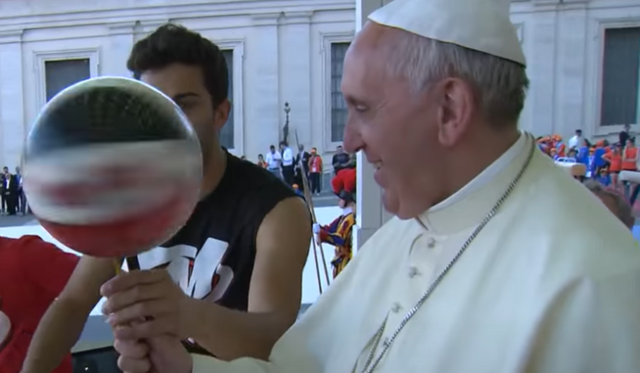
Cardinal Pietro Parolin, the Vatican’s Secretary of State, briefly addressed journalists on Friday afternoon regarding the Pope’s condition. Parolin mentioned that the Pope was tired and had an extremely busy day prior. He explained that during his meeting with Scholas Occurrentes, the Pope desired to greet everyone, but his stamina might have faltered.

Pope Francis has a scheduled Mass in St. Peter’s Basilica for the solemnity of Pentecost on May 28, followed by the recitation of the Regina Caeli antiphon. It is worth noting that the Pope had been hospitalized for four days at the end of March due to a lung infection.

Things Every Catholic Must Know

Things Every Catholic Must Know contains truths every Catholic has to believe, memorize, practice, remember, and proclaim to the world.

“What really matters in life is that we are loved by Christ and that we love Him in return. In
comparison to the love of Jesus, everything else is secondary. And, without the love of Jesus,
everything is useless.” – Pope Saint John Paul II

“No one has greater love than this, to lay down one’s life for one’s friends” (John 15:13).

THE GREAT COMMANDMENT

“You shall love…God with all your heart, with all your soul, with all your mind, and with all your strength. You shall love your neighbor as yourself.” (Mark 12:30-31)

THE NEW COMMANDMENT

“Love one another. As I have loved you, so you also should love one another” (John 13:34).

ON THE HOLY EUCHARIST

  1. The bread and wine of the Eucharist become the true transubstantiated body and blood
    of Christ. It is not a mere symbol.
  2. The Eucharist is the body, blood, soul, and divinity of Christ Jesus.
  3. The reception of Holy Communion is the center of the Catholic Faith.
  4. Communion is by definition to be in union with God and with His Church, to be one in
    faith.
  5. To receive Communion, a person must be a practicing Catholic in the state of grace.
  6. Only an ordained Catholic priest, in the person of Jesus Christ, the High Priest, can
    transform bread and wine into the body and blood of Christ.

TRUTHS THAT MUST BE BELIEVED

  1. There is one God, who created, who preserves and governs all things.
  2. God is a just Judge, who rewards the good and punishes the wicked.
  3. In God, there are three Persons: God the Father, God the Son, and God the Holy Spirit.
  4. The Second Person, Jesus Christ, became man and died on the cross to save us.
  5. The soul of man is immortal.
  6. Grace is necessary for salvation.

THE TEN COMMANDMENTS OF GOD

  1. I am the Lord thy God, who brought you out of the land of Egypt, out of the house of
    bondage. Thou shalt not have strange gods before Me. Thou shalt not make to yourself a
    graven thing, not the likeness of anything that is in heaven above, or in the earth beneath, nor of
    those things that are in the waters under the earth. Thou shalt not adore them nor serve them.
  2. Thou shalt not take the name of the Lord thy God in vain.
  3. Remember that thou keep holy the Sabbath – day.
  4. Honor thy father and thy mother.
  5. Thou shalt not kill.
  6. Thou shalt not commit adultery.
  7. Thou shalt not steal.
  8. Thou shalt not bear false witness against thy neighbor.
  9. Thou shalt not covet thy neighbor’s wife.
  10. Thou shalt not covet thy neighbor’s goods.

THE BEATITUDES

  1. Blessed are the poor in spirit, for theirs, is the kingdom of heaven.
  2. Blessed are the meek, for they shall possess the land
  3. Blessed are they that mourn, for they shall be comforted.
  4. Blessed are they that hunger and thirst after justice, for they shall be filled.
  5. Blessed are the merciful, for they shall obtain mercy.
  6. Blessed are the clean of heart, for they shall see God.
  7. Blessed are the peacemakers, for they shall be called the children of God.
  8. Blessed are they that suffer persecution for justice’s sake, for theirs is the kingdom of heaven.

PRECEPTS OF THE CHURCH

  1. Attend Mass on Sundays and Holy days of obligation.
  2. Fast and abstain on the days appointed.
  3. Confess at least once a year.
  4. Receive the Most Blessed Sacrament during Easter time.
  5. Contribute to the support of our pastors.
  6. Matrimony is a Sacrament between one Man and one Woman.

HOLY DAYS OF OBLIGATION

  1. January 1 – Mary, Mother of God.
  2. Ascension – 40 days after Easter
  3. August 15 – The Assumption of the Blessed Virgin Mary.
  4. November 1 – The feast of All Saints.
  5. December 8 – The Immaculate Conception of the Blessed Virgin.
  6. December 25 – Christmas

(Some exceptions depending on country, check yours online)

THE SEVEN SACRAMENTS

  1. Baptism
  2. Confirmation
  3. Holy Eucharist
  4. Penance
  5. Anointing of the Sick
  6. Holy Order.
  7. Matrimony

THE CARDINAL VIRTUES

  1. Prudence
  2. Justice
  3. Fortitude
  4. Temperance

EMINENT SPIRITUAL PRACTICES

  1. Prayer
  2. Fasting
  3. Alms-giving

THE EVANGELICAL COUNSELS.

  1. Voluntary Poverty
  2. Perpetual Chastity
  3. Obedience

CORPORAL WORKS OF MERCY

  1. Feeding the hungry
  2. Giving drink to the thirsty
  3. Clothing the naked
  4. Rescuing the captive
  5. Sheltering the homeless
  6. Visiting the sick
  7. Burying the dead

SPIRITUAL WORKS OF MERCY

  1. Admonishing the sinners
  2. Instructing the ignorant
  3. Counseling the doubtful
  4. Comforting the sorrowful
  5. Bearing wrongs patiently
  6. Forgiving injuries
  7. Praying for the living and the dead

THE GIFTS OF THE HOLY SPIRIT

  1. Wisdom
  2. Understanding
  3. Counsel
  4. Fortitude
  5. Knowledge
  6. Piety
  7. Fear of the Lord

THE FRUITS OF THE HOLY SPIRIT

  1. Charity
  2. Joy
  3. Peace
  4. Patience
  5. Benignity
  6. Goodness
  7. Long-Suffering
  8. Mildness
  9. Faith
  10. Modesty
  11. Continence
  12. Chastity

From The Catechism of the Catholic Church

1854:

Sins are rightly evaluated according to their gravity. The distinction between mortal
and venial sin, already evident in Scripture,129 became part of the tradition of the
Church. It is corroborated by human experience.


1855:

Mortal sin destroys charity in the heart of man by a grave violation of God’s law; it
turns man away from God, who is his ultimate end and his beatitude, by preferring an
inferior good to him. Venial sin allows charity to subsist, even though it offends and
wounds it.

1856:

Mortal sin, by attacking the vital principle within us – that is, charity – necessitates anew initiative of God’s mercy and a conversion of heart which is normally accomplished
within the setting of the sacrament of reconciliation.


1857:

For a sin to be mortal, three conditions must together be met: “Mortal sin is sin
whose object is grave matter and which is also committed with full knowledge and
deliberate consent.”

BAPTISMAL VOWS

“I renounce Satan. I renounce all his works. I renounce all his pomps.”
By these words, we renounce all suggestions and snares of the evil one, all deliberate sins, all
the follies and vanities of worldly-minded men and women.

THE CAPITAL SINS AND THEIR OPPOSING VIRTUES

  1. Pride – Humility
  2. Covetousness – Liberality
  3. Lust – Chastity
  4. Anger – Meekness
  5. Gluttony – Temperance
  6. Envy – Brotherly Love
  7. Sloth – Diligence

CONDITIONS FOR FORGIVENESS OF SIN

  1. Contrition
  2. Confession (and Absolution by a priest)
  3. Satisfaction.

SINS AGAINST THE HOLY SPIRIT

  1. Presumption of God’s mercy
  2. Despair
  3. Resisting the known truth
  4. Envy of another’s spiritual good
  5. Obstinacy in sin
  6. Final Impenitence

WAYS OF BEING AN ACCESSORY TO ANOTHER’S SINS

  1. By Counsel
  2. By Command
  3. By Consent
  4. By Provocation
  5. Praise or Flattery
  6. By Concealment
  7. By Taking Part in the sin
  8. By Silence
  9. By Defending the evil

Diocese of Columbus Announces Church Closures

0

The Catholic Diocese of Columbus in Ohio has announced plans to close 15 churches as part of a strategic reorganization and merger initiative. However, Bishop Earl K. Fernandes has emphasized the potential for growth and encouraged greater involvement of lay Catholics in shaping the future of the Church.

Bishop Fernandes expressed his commitment to fostering growth within the diocese, stating, “I am determined to prevent a prolonged decline and instead work towards expanding the Church, not for personal recognition, but for the glory of God.” He emphasized that the reorganization plan aimed to find the best possible solution for the entire Diocese of Columbus.

The bishop underscored the importance of an engaged laity who share responsibility for the Church’s mission of evangelization and collaborate closely with the clergy to ensure the future well-being of their parishes. The Diocese of Columbus currently serves over 278,000 Catholics across 108 churches spanning 23 counties in central Ohio.

The need for these changes arises from declining church attendance, a shortage of young priests, and population shifts both in rural areas and within the Columbus region, according to WOSU 89.7 NPR News. Additionally, two Catholic schools will be closed as part of this reorganization effort.

Despite these challenges, there are also signs of growth within the diocese. Bishop Fernandes highlighted an increase in the number of Spanish-speaking and French-speaking African congregants over the past decade. Moreover, the diocese has seen the enrollment of 15 new prospective seminarians this year, although their ordination will require several years of study and preparation.

Bishop Fernandes noted that Columbus is experiencing growth as a city with numerous employment opportunities in the Midwest. However, like many other dioceses, it faces the challenge of an aging clergy. Therefore, action was necessary not only to address the diocese’s contraction but also to advance its mission of evangelization.

The bishop expressed optimism that the planned changes would pave the way for a brighter future for the diocese. He envisioned parishes that, in 10 or 15 years, would not merely maintain their current status but actively engage in evangelization and discipleship. Bishop Fernandes envisioned a “culture of vocations” within the parishes, complemented by beautiful churches and inspiring liturgical experiences.

Bishop Fernandes acknowledged that the diocese had a disproportionately large number of aging clergy, with 12 parish pastors over the age of 70. He stressed the importance of allowing these priests to enjoy a well-deserved retirement and acknowledged the need for energetic and capable leaders who can help parishes unite, evangelize, and minister to multiple communities.

To address the changing landscape, religious orders are increasingly involved in serving various parishes, especially those catering to ethnic communities and Spanish speakers. The Catholic Times, the diocese’s newspaper, reported that Capuchin Franciscan priests would join the diocese this summer to support two churches within a newly merged parish.

The diocese’s reorganization process, known as “Real Presence, Real Future,” began in 2019 under the leadership of Bishop Robert Brennan, Bishop Fernandes’ predecessor. The initial draft of the reorganization plan was released in the fall of 2021, and final recommendations were presented to Bishop Fernandes in the fall of 2022. Adjustments were made based on feedback from parishioners and priests, resulting in the current plan for church closures.

The Diocese of Columbus shares a border with the Diocese of Steubenville. However, a proposal to merge the two dioceses, which was under consideration in November 2022, has been put on hold.

What does the Catholic Church say about Euthanasia?

0

In recent times, several countries have granted approvals for assisted suicide, albeit with differing levels of regulation. However, it is crucial for us to recognize that any involvement in this practice is considered a grave evil by the Catholic Church. Such actions directly contradict the inherent dignity of the Human Person and the fundamental truth that life is solely entrusted to God. Let us revisit some of the Church’s teachings on this subject to reacquaint ourselves with their profound wisdom:

Those whose lives are diminished or weakened deserve special respect. Sick or handicapped persons should be helped to lead lives as normal as possible.

Whatever its motives and means, direct euthanasia consists in putting an end to the lives of handicapped, sick, or dying persons. It is morally unacceptable. – CCC 2276-2277

This is not to be confused with:

Discontinuing medical procedures that are burdensome, dangerous, extraordinary, or disproportionate to the expected outcome can be legitimate; it is the refusal of “over-zealous” treatment. Here one does not will to cause death; one’s inability to impede it is merely accepted. The decisions should be made by the patient if he is competent and able or, if not, by those legally entitled to act for the patient, whose reasonable will and legitimate interests must always be respected. – CCC 2278

Furthermore, “ordinary care” for a dying individual is not to be withheld.

Even if death is thought imminent, the ordinary care owed to a sick person cannot be legitimately interrupted. The use of painkillers to alleviate the sufferings of the dying, even at the risk of shortening their days, can be morally in conformity with human dignity if death is not willed as either an end or a means, but only foreseen and tolerated as inevitable Palliative care is a special form of disinterested charity. As such it should be encouraged. – CCC 2279 

Pope Francis:

We must accompany people towards death, but not provoke death or facilitate any form of suicide. I would point out that the right to care and treatment for all must always be prioritized, so that the weakest, particularly the elderly and the sick, are never discarded. Life is a right, not death, which must be welcomed, not administered. And this ethical principle applies to everyone, not just Christians or believers.

Quote from Popes and the Catechism on Gender Theory

0

Pope Benedict XVI


“[I]t is now becoming clear that the very notion of being – of what being human really means – is being called into question. [The Chief Rabbi of France, Gilles Bernheim] quotes the famous saying of Simone de Beauvoir: “one is not born a woman, one becomes so” (on ne naît pas femme, on le devient). These words lay the foundation for what is put forward today under the term ‘gender’ as a new philosophy of sexuality.

“According to this philosophy, sex is no longer a given element of nature, that man has to accept and personally make sense of: it is a social role that we choose for ourselves, while in the past it was chosen for us by society.

“The profound falsehood of this theory and of the anthropological revolution contained within it is obvious. People dispute the idea that they have a nature, given by their bodily identity, that serves as a defining element of the human being. They deny their nature and decide that it is not something previously given to them, but that they make it for themselves.

“According to the biblical creation account, being created by God as male and female pertains to the essence of the human creature. This duality is an essential aspect of what being human is all about, as ordained by God. This very duality as something previously given is what is now disputed. The words of the creation account: “male and female he created them” (Gen 1.27) no longer apply. No, what applies now is this: it was not God who created them male and female – hitherto society did this, now we decide for ourselves.

“Man and woman as created realities, as the nature of the human being, no longer exist. Man calls his nature into question. From now on he is merely spirit and will. The manipulation of nature, which we deplore today where our environment is concerned, now becomes man’s fundamental choice where he himself is concerned.

“From now on there is only the abstract human being, who chooses for himself what his nature is to be. Man and woman in their created state as complementary versions of what it means to be human are disputed. But if there is no pre-ordained duality of man and woman in creation, then neither is the family any longer a reality established by creation.”

– Address to the Curia, December 21, 2012

Pope Francis


“I ask myself if the so-called gender theory is not, at the same time, an expression of frustration and resignation, which seeks to cancel out sexual difference because it no longer knows how to confront it. Yes, we risk taking a step backwards. The removal of difference in fact creates a problem, not a solution.”

– General Audience, April 15th, 2015

“The crisis of the family is a societal fact. There are also ideological colonializations of the family, different paths and proposals in Europe and also coming from overseas. Then, there is the mistake of the human mind — gender theory — creating so much confusion. So, the family really is under attack.”

– Meeting with young people in Naples, Italy, March, 21 2015

“[There are modern-day Herods that] destroy, that plot designs of death, that disfigure the face of man and woman, destroying creation. Let’s think of the nuclear arms, of the possibility to annihilate in a few instants a very high number of human beings. Let’s think also of genetic manipulation, of the manipulation of life, or of gender theory, that does not recognize the order of creation. With this attitude, man commits a new sin, that against God the Creator. … God has placed man and woman and the summit of creation and has entrusted them with the earth. … The design of the Creator is written in nature.”

– Papa Francesco: questa economia uccide, January 2015

Catechism of the Catholic Church


“Sexuality affects all aspects of the human person in the unity of his body and soul. It especially concerns affectivity, the capacity to love and to procreate, and in a more general way the aptitude for forming bonds of communion with others.” (2332)

“Everyone, man and woman, should acknowledge and accept his sexual identity. Physical, moral, and spiritual difference and complementarity are oriented toward the goods of marriage and the flourishing of family life. The harmony of the couple and of society depends in part on the way in which the complementarity, needs, and mutual support between the sexes are lived out.” (2333)

“By creating the human being man and woman, God gives personal dignity equally to the one and the other. Each of them, man and woman, should acknowledge and accept his sexual identity.” (2393)

What is a Sacramental?

0

The distinction between sacraments and sacramentals in the Catholic Church can sometimes cause confusion. So, what exactly is a sacramental?

In simple terms, sacramentals are objects or items that have been set apart or blessed by the Church with the purpose of sanctifying our lives and guiding us towards the sacraments. These sacred signs serve as channels of grace, providing spiritual assistance through the intercession of the Church.

Examples of sacramentals include scapulars, medals, holy cards, rosaries, crucifixes, and essentially anything that a priest blesses with holy water.

One way to understand sacramentals is to see them as extensions of the sacraments. Although they are not sacraments in themselves, they are closely associated with the seven sacraments and derive their significance from them, ultimately leading us back to the sacraments.

Sacramentals act as instruments that God employs to direct us on the right path. However, it is crucial to use them properly and in accordance with the Church’s guidance. They are not mere “lucky charms” or objects that function independently. Their efficacy relies on our disposition and openness to God’s grace. If our hearts are closed to Him, how can His grace reach us? To fully receive the graces intended through sacramentals and avoid superstitious practices, it is important to prepare ourselves by regularly participating in the sacraments of Confession and the Holy Eucharist.

The Difference Between a Mortal and a Venial Sin

0

Sins are often uncomfortable to dwell on, as they serve as reminders of our flaws and shortcomings. Nevertheless, the Church emphasizes the importance of acknowledging the gravity of our sins and seeking reconciliation with the Father through the sacrament of confession. This act of confession reunites us with God and restores our relationship with Him.

Within the context of sin, the Catholic Church distinguishes between mortal sins and venial sins.

Mortal Sins

The Catholic Church defines mortal sin, according to the Catechism, as a “serious violation of God’s law.” Such a sin turns us away from God, who is our ultimate purpose and source of true happiness, by choosing an inferior good over Him (CCC 1855).

For a sin to be considered mortal and sever our relationship with God, it must fulfill three specific criteria outlined by the Catechism.

Firstly, it requires full knowledge and complete consent. This implies awareness of the sinful nature of the act and its contradiction to God’s law. It also necessitates a deliberate consent that reflects a personal choice. Feigned ignorance and a hardened heart do not diminish, but rather intensify, the voluntary nature of a sin (CCC 1859).

In summary, a mortal sin must involve grave matter, be committed with full knowledge, and require complete consent.

Venial Sins

Venial sins, on the other hand, encompass acts that offend charity, which refers to both God’s love for us and our love for our neighbor. While they do not sever our relationship with God or our state of grace, venial sins can still have significant consequences. Frequent indulgence in venial sins weakens our resolve and increases the likelihood of committing mortal sins.

The Church encourages us to confess these “venial” sins because they damage our relationship with God and others. Additionally, the regular confession of venial sins helps us form our conscience, resist evil tendencies, experience Christ’s healing, and progress in the spiritual life (CCC 1458).

The fundamental distinction between mortal and venial sins lies in the obligation to confess all mortal sins in the sacrament of confession, whereas confessing all venial sins is encouraged but not obligatory.

Venial sins typically encompass our everyday weaknesses, while mortal sins are those actions that create a separation between us and God, as well as the Church.