Friday, April 3, 2026
11.6 C
London
Home Blog Page 35

The Church on having a personal relationship with Jesus

1

“Let the risen Jesus enter your life, welcome him as a friend, with trust: he is life! If up till now you have kept him at a distance, step forward. He will receive you with open arms. If you have been indifferent, take a risk: you won’t be disappointed. If following him seems difficult, don’t be afraid, trust him, be confident that he is close to you, he is with you and he will give you the peace you are looking for and the strength to live as he would have you do.” -Pope Francis


“Being a Christian means having a living relationship with the person of Jesus; it means putting on Christ, being conformed to him.” -Pope Francis

“It is necessary to awaken again in believers a full relationship with Christ, mankind’s only Savior.” Pope Saint John Paul II

“Christian faith is not only a matter of believing that certain things are true, but above all a personal relationship with Jesus Christ.” -Pope Benedict XVI

“Only in this personal relationship with Christ, only in this encounter with the Risen One do we truly become Christians.” -Pope Benedict XVI

“This mystery (of faith), then, requires that the faithful believe in it, that they celebrate it, and that they live from it in a vital and personal relationship with the living and true God. This relationship is prayer.” -CCC 2558″This conversion must be taken as an initial one, yet sufficient to make a man realize that he has been snatched away from sin and led into the mystery of God’s love, who called him to enter into a personal relationship with Him in Christ. For, by the workings of divine grace, the new convert sets out on a spiritual journey, by means of which, already sharing through faith in the mystery of Christ’s Death and Resurrection, he passes from the old man to the new one, perfected in Christ.” -Decree on Missionary Activity, §13. Vatican II

Should you, my child, ever be attacked by this evil spirit of sadness, make use of the following remedies. “Is any among you afflicted?” says Saint James, “let him pray.”Prayer is a sovereign remedy, it lifts the mind to God, Who is our only Joy and Consolation. But when you pray let your words and affections, whether interior or exterior, all tend to love and trust in God. “O God of Mercy, most Loving Lord, Sweet Saviour, Lord of my heart, my Joy, my Hope, my Beloved, my Bridegroom.” St Francis de Sales

“You cannot live well without a friend, and if Jesus be not your friend above all else, you will be very sad and desolate. Thus, you are acting foolishly if you trust or rejoice in any other. Choose the opposition of the whole world rather than offend Jesus. Of all those who are dear to you, let Him be your special love. Let all things be loved for the sake of Jesus, but Jesus for His own sake. Jesus Christ must be loved alone with a special love for He alone, of all friends, is good and faithful. For Him and in Him you must love friends and foes alike, and pray to Him that all may know and love Him.” – Thomas a Kempis
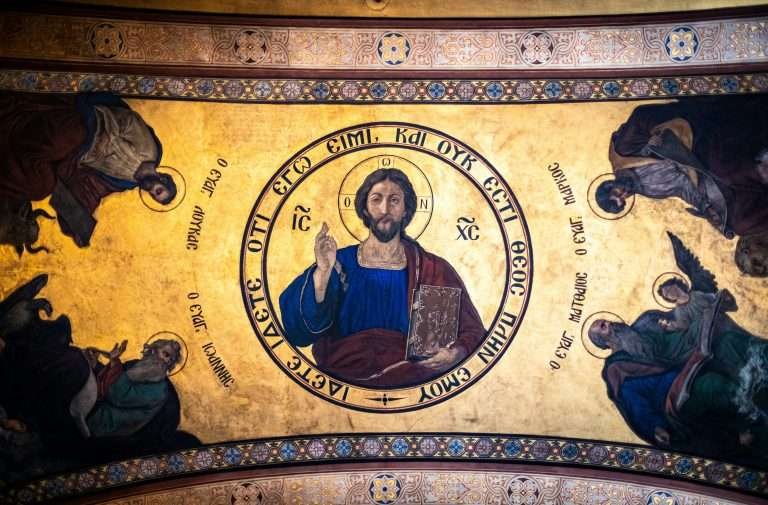
Prayer for the Morning (March 24, 2023)

Prayer for the Morning

We are saved by the Lord, saved for ever!
Let us give thanks and praise.

Glory to the Father, and to the Son,
and to the Holy Spirit, as it was in the beginning,
is now, and will be for ever. Amen.

Hymn

Meter: LM
This hymn can be sung to the tune used for
Praise God, from Whom All Blessings Flow

Nature with open volume stands
To spread her Maker’s praise abroad:
And every labor of his hands
Shows something worthy of a God.

But in the grace that rescued man
His brightest form of glory shines;
Here on the cross ’tis fairest drawn
In precious Blood, and crimson lines.

Here his whole name appears complete:
Nor wit can guess nor reason prove
Which of the letters best is writ,
The power, the wisdom, or the love.

O the sweet wonders of that Cross,
Where God the Savior loved and died!
Her noblest life our spirit draws
From his dear wounds and bleeding side.

May we for ever speak his name
In sounds to mortal ears unknown,
With angels join to praise the Lamb
And worship at his Father’s throne.

Canticle of Isaiah 45:15-19, 23

I did not come on my own, but the one who sent me, whom you do not know, is true. (Jn 7:28)

Familiarity can breed illusion. Let us not imagine we can plumb or manage the mystery of God, even by prayer and penance. Jesus reminds us in today’s Gospel that there are depths to God we cannot fathom but in which we put our trust.

Truly with you God is hidden,
the God of Israel, the savior!
Those are put to shame and disgrace
who vent their anger against him.
Those go in disgrace
who carve images.

Israel, you are saved by the Lord, saved for ever!
You shall never be put to shame or disgrace
in future ages.

For thus says the Lord,
the creator of the heavens,
who is God,
the designer and maker of the earth
who established it,
not creating it to be a waste,
but designing it to be lived in:

I am the Lord, and there is no other.
I have not spoken from hiding
nor from some dark place of the earth.
And I have not said to the descendants of Jacob,
“Look for me in an empty waste.”
I, the Lord, promise justice,
I foretell what is right.

By myself I swear,
uttering my just decree
and my unalterable word:
To me every knee shall bend;
by me every tongue shall swear.

Glory to the Father….

Word of God (Romans 11:33-34)

Oh, the depth of the riches and wisdom and know­ledge of God! How inscrutable are his judgments and how unsearchable his ways!

“For who has known the mind of the Lord/ or who has been his counselor?”

To him be glory for ever. Amen. (Rom 11:36)

Canticle of Zechariah

I know him, because I am from him, and he sent me. (Jn 7:29)

Blessed be the Lord, the God of Israel;
he has come to his people and set them free.
He has raised up for us a mighty savior,
born of the house of his servant David.

Through his holy prophets he promised of old
that he would save us from our enemies,
from the hands of all who hate us.

He promised to show mercy to our fathers
and to remember his holy covenant.

This was the oath he swore to our father Abraham:
to set us free from the hands of our enemies,
free to worship him without fear,
holy and righteous in his sight
all the days of our life.

You, my child, shall be called the prophet
of the Most High;
for you will go before the Lord to prepare his way,
to give his people knowledge of salvation
by the forgiveness of their sins.

In the tender compassion of our God
the dawn from on high shall break upon us,
to shine on those who dwell in darkness
and the shadow of death,
and to guide our feet into the way of peace.

Glory to the Father…

Intercessions

In humility we pray:

R/Lord, we seek your face!

Against the presumption that can come with knowledge:
– protect us, O Lord! R/

Against the pride that can destroy prayer:
– protect us, O Lord! R/

Against the temptation to take you for granted:
– protect us, O Lord! R/

Personal intentions

Our Father….

O God of mystery and majesty, the enemies of Jesus imagined that they knew him, and yet they knew him not. Deliver us from pride of spirit and grant us the humility that always seeks your face, through Christ our Lord. Amen.

Read More

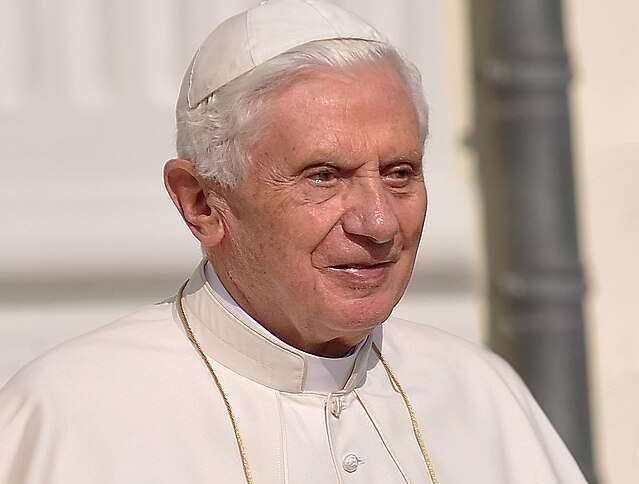
Pope Benedict XVI explains the choice of his papal name

0

In his first general audience after being elected, Pope Benedict XVI unveiled the reasoning behind his choice of name. He shared that there were two significant reasons for his decision to be called Benedict XVI.

The first reason he cited was his admiration for his predecessor, Benedict XV, who led the Church through the turbulence of the First World War. Pope Benedict XVI expressed his desire to establish a spiritual connection with the courageous prophet of peace, and follow in his footsteps by dedicating his ministry to fostering reconciliation and harmony between individuals and nations. He believed that peace is a precious but fragile gift of God that must be prayed for, protected, and cultivated day after day.

The second reason for his choice of name was his deep devotion to St. Benedict of Nursia, who founded the Benedictine Order and is considered the Patriarch of Western Monasticism. St. Benedict’s teachings and legacy had a profound impact on the spread of Christianity across Europe, making him a fundamental reference point for European unity and a powerful reminder of the essential Christian roots of its culture and civilization. Pope Benedict XVI was particularly moved by the Rule that St. Benedict left for his monks, which urged them to prioritize the love of Christ above all else.

Pope Benedict XVI’s decision to adopt the name Benedict XVI was a unique and significant choice that reflected his profound spirituality and commitment to following in the footsteps of his revered predecessors. It provided him with a guiding light and deep sense of purpose throughout his pontificate.

What the Church Teaches About the Souls of Miscarried Children

0

Question: Do miscarried children have souls, and what does the Church teach about their eternal destiny?

Answer:

Every living being possesses a soul, and in the case of human beings, this soul is spiritual and rational, made in the image and likeness of God. The moment of conception marks the beginning of a person’s existence, and with it comes the formation of their spiritual and rational soul. Therefore, it is true that even miscarried children have human souls.

What then of their eternal destiny? According to the teachings of the Church, unbaptized children share in the same hope for heaven as all innocent souls.

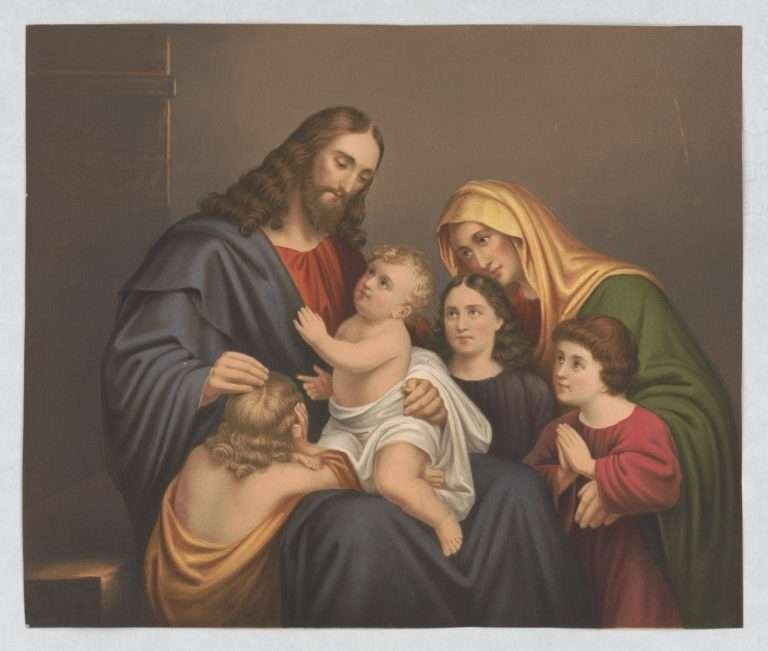
As regards children who have died without Baptism, the Church can only entrust them to the mercy of God, as she does in her funeral rites for them. Indeed, the great mercy of God who desires that all men should be saved, and Jesus’ tenderness toward children which caused him to say: “Let the children come to me, do not hinder them,” allow us to hope that there is a way of salvation for children who have died without Baptism. All the more urgent is the Church’s call not to prevent little children coming to Christ through the gift of holy Baptism.

CCC 1261

This means that we can trust in the mercy and love of God to provide for them in the afterlife, just as we do for all those who pass from this world too soon. As we mourn their loss, we can take comfort in the knowledge that they are held in the arms of a loving God, who has prepared a place for them in His kingdom.

What do I do about people who talk in Church?

0

So, what can be done about the issue of talkers in church? My advice is to offer up your annoyance, frustration, and pain as a sacrifice to God. Compared to the weight of our sins and those of others, our discomfort is small. As Christians, we must set an example of patience and understanding. Shushing or giving angry looks to talkers will not bring them closer to God; in fact, it may push them away, especially if they are already hesitant to attend church.

Instead, we must recognize that we cannot control the actions of others, but we can control our reactions to them. It’s important to pray for those who are talking and to be thankful that they are in Mass, rather than not attending at all. Offering up our personal frustrations can lead to meaningful prayer time and a deeper connection to God.

If the issue persists, it may be appropriate to speak to your pastor about the situation. Ultimately, it is their responsibility to address the behavior of their congregation.

To those who engage in conversations before, during, or after Mass: please remember that such behavior is generally inappropriate in the sanctuary. Even if you are visiting, bored, or not praying, there are others around you who would appreciate a quiet, reflective environment. If you must converse, please do so outside of the church or in designated areas like the Narthex. Let us all strive to be respectful of one another and cultivate an environment of reverence and devotion in our place of worship.

Can Christians believe in reincarnation?

0

In the realm of Christian belief, the notion of reincarnation cannot coexist. The book of Hebrews firmly asserts that “man is destined to die once and after that to face judgment” (Heb 9:27). Throughout history, the Church has maintained that our time on earth serves as a test, a probationary period during which our adherence to the laws of God and teachings of Christ will determine our ultimate, eternal fate (as detailed in Matthew 13 and 25 regarding judgment and the separation of good and evil).

It’s no wonder that reincarnation has gained traction in the popular imagination. It offers the tantalizing prospect of evading the responsibility of adhering to a divine moral code. Most New Age adherents have an individualistic, personalized concept of right and wrong, leaving them free to judge themselves accordingly. The allure of the belief that there’s always another chance to get things right is powerful – or perhaps, equally, disheartening.

Regardless, reincarnation is simply incompatible with the truth of Christ’s message of salvation and perfection. It fails to acknowledge the transformative power of Christ’s redemption and the possibility of achieving true spiritual fulfillment in a single lifetime.

The Truth Behind Saul’s Name Change in the Bible

0

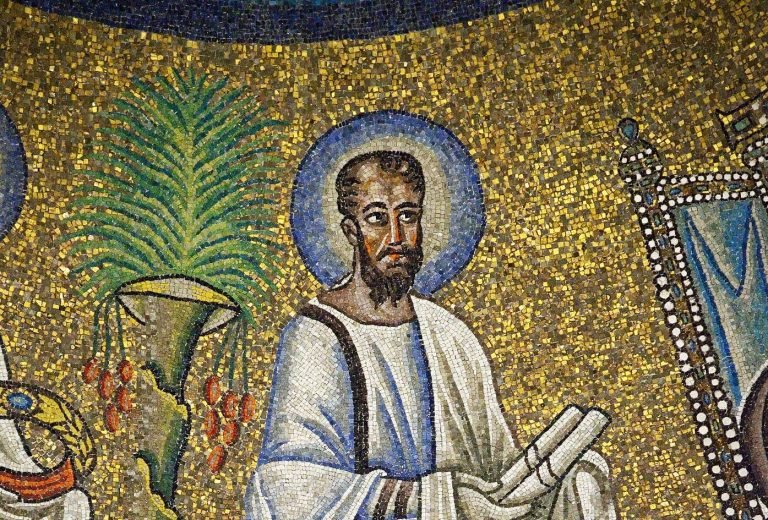
Within the New Testament, there exists a common misconception regarding the name change of Saul, the persecutor of the early Christian Church, to Paul upon his conversion to Christianity. Many believe that this change was ordained by God himself. However, upon closer inspection of the biblical text, it becomes evident that God never alters Saul’s name to Paul, as he consistently addresses him by his Hebrew name. When Saul encounters Jesus on the road to Damascus, the Lord calls him by his Hebrew name, “Saul, Saul, why do you persecute me?” It is not until much later, in the Acts of the Apostles, that Saul is referred to as Paul.

Some scholars have suggested that Saul had two names, one Hebrew and one Latin, as was customary among the Jews of that time. His Hebrew name was given to him at birth, while his Latin name, “Paul,” was likely adopted later in life as he embarked on his mission to spread the teachings of Jesus Christ to the Gentiles. It was natural for him to use his Roman name in his travels among those who spoke Latin or Greek.

Despite the confusion surrounding the name change of Saul, one thing remains clear: it was not a divine intervention. Rather, it was a practical choice made by a man on a mission to share the gospel with the world.

I attended Mass celebrated by a woman, is this valid?

0

No. If what you attended was presented as a Catholic Mass in which a woman attempted to consecrate the bread and wine, it was not valid.

The Catholic Church teaches definitively that only a validly ordained priest can confect the Eucharist. This is not a matter of discipline that can change; it concerns the sacrament itself.

The Code of Canon Law states clearly:

“Only a validly ordained priest can confect the sacrament of the Eucharist.” (Code of Canon Law, can. 900 §1)

This means that without a validly ordained priest, there is no consecration. No matter the intention, sincerity, or ceremony, the bread and wine do not become the Body and Blood of Christ.

The Church also teaches definitively that the Church has no authority to ordain women. In Ordinatio Sacerdotalis, Pope St. John Paul II wrote:

“Wherefore, in order that all doubt may be removed regarding a matter of great importance… I declare that the Church has no authority whatsoever to confer priestly ordination on women and that this judgment is to be definitively held by all the Church’s faithful.”
— John Paul II, Ordinatio Sacerdotalis (1994)

Therefore, a woman cannot be validly ordained a priest. And since only a validly ordained priest can consecrate the Eucharist, a woman cannot celebrate a valid Mass.

The Catechism of the Catholic Church also states:

“The minister of the Eucharist is a validly ordained priest (bishop or priest).” (CCC 1411)

What about a Communion service?

In some places, when no priest is available, a Communion service may be led by a deacon or even a layperson (including a woman). In that case, Holy Communion is distributed from hosts that were consecrated previously at a valid Mass. No consecration happens during that service.

So if you attended:

  1. A Communion service led by a laywoman, where previously consecrated hosts were distributed — that is permitted in certain circumstances, and the Eucharist would be valid because it was consecrated earlier by a priest.
  2. A ceremony in which a woman attempted to celebrate Mass and consecrate bread and wine — that was not valid. No Eucharist was confected.

The distinction is essential. A Communion service is not a Mass. On Good Friday, for example, the Church does not celebrate Mass. The hosts distributed were consecrated the previous day, on Holy Thursday.

If you truly witnessed someone attempting to simulate the Mass without valid ordination, especially publicly as a Catholic liturgy, this is a serious matter. It would be appropriate to inform the diocesan bishop so he can investigate and clarify the situation.

The Eucharist is not symbolic in Catholic teaching. It is the true Body and Blood of Christ. And because it is so sacred, the Church guards the sacrament carefully.

If you’d like, tell me exactly what happened — was it inside a Catholic parish? Was it advertised as a Mass? That will help clarify the situation more precisely.

Can Catholics hunt for sport?

0

According to the Catechism of the Catholic Church, God entrusted man with the responsibility of stewardship over animals, which includes using them for just purposes such as food, clothing, medical and scientific experimentation, and work and leisure activities (CCC 2417-8). However, it is crucial that man does not cause animals to suffer and die unnecessarily as this would be contrary to human dignity. While animals do not have rights as humans do, man has a human responsibility to treat them with reasonable care.

So, does this mean that sport hunting is excluded? The answer is no. While deliberately causing an animal to suffer for entertainment purposes would be contrary to the principles of stewardship, the vast majority of hunters do not engage in such practices. Some hunters use the meat and skins of the animals they hunt, while others help to maintain the balance of nature through carefully regulated licensing procedures to control animal overpopulation. Some hunt for sport, but the sport lies in the tracking, gun skills, and trophy hunting rather than in causing unnecessary suffering and death to animals. Responsible hunters ensure that they do not leave a wounded animal injured by a badly aimed shot to suffer and make sure to track it down and end its suffering.

Therefore, in summary, the Church does not oppose sport hunting as long as it is conducted in a responsible and ethical manner, and the principles of stewardship and reasonable care are observed.

May I buy a rosary purely for artistic display?

0

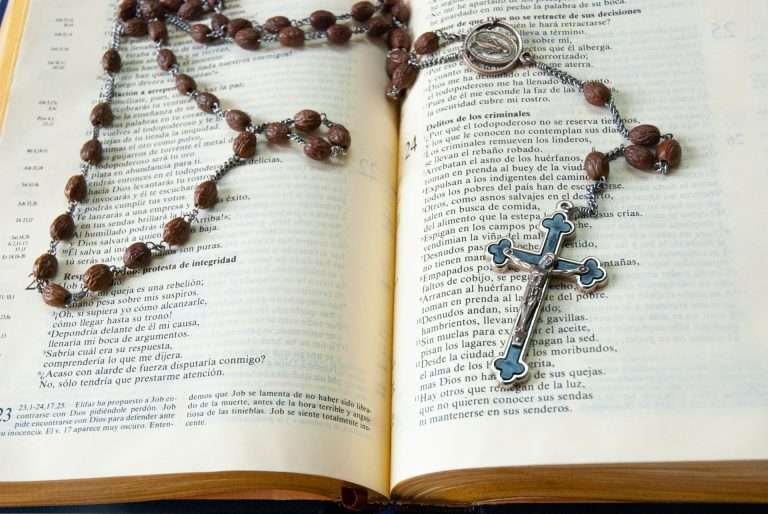
Answer:

I am assuming you are not a Catholic. As a collector of religious artifacts, you may find yourself drawn to the beauty and craftsmanship of a rosary, even if you do not belong to the religion that it represents. It is important to recognize that there is nothing wrong with appreciating the artistry of a religious emblem, so long as it is treated with respect and dignity. In fact, many reasonable and open-minded individuals of faith may be flattered by your admiration of their religious symbol, and see it as a sign of cultural appreciation. Therefore, feel free to display your rosary with pride in your home, and celebrate the beauty of religious art in all its forms.