Saturday, April 4, 2026
11.6 C
London
Home Blog Page 36

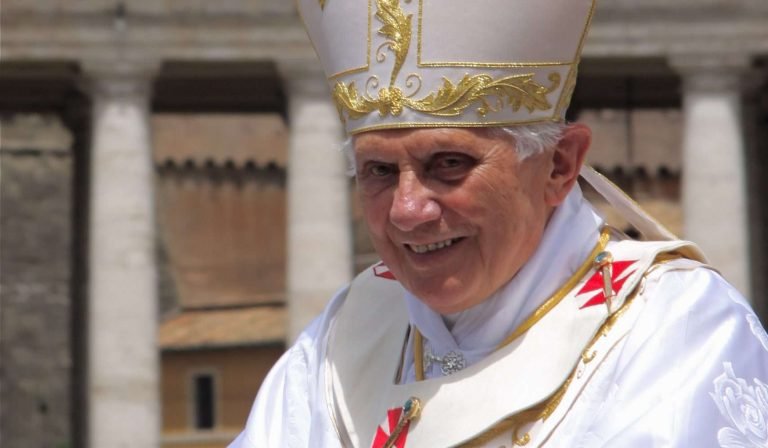
Do you know why Pope Benedict kept a Crucifix on the Altar?

0

The placement of a crucifix in the Roman Rite of the Catholic Church is mandated to be either on or near the altar. However, there is no precise guideline as to where exactly it should be situated. The crucifix could be a processional cross, a small cross placed flat on the altar, or mounted on the wall.

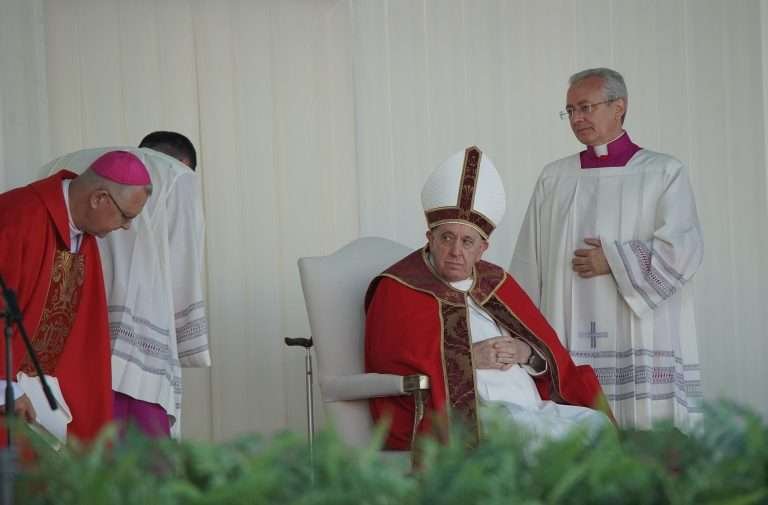
Nevertheless, Pope Benedict XVI was a fervent advocate for a large and conspicuous crucifix on the altar. His successor, Pope Francis, has continued this tradition, drawing inspiration from Benedict XVI’s example.

In his book, Spirit of the Liturgy, Benedict XVI explained his rationale for his strong belief. The Vatican quotes him as challenging the claim that a crucifix on the altar could obstruct the view of the priest by the congregation.

He elaborated that the crucifix is not a hindrance to prayer, nor is it inappropriate for the faithful to look at the cross. Rather, it is an invitation to collectively gaze upon the Lord. Benedict XVI viewed the crucifix as a unifying symbol for all, rather than an impediment to communal worship.

He emphasized the importance of the altar cross, calling it the “preliminary condition” for a celebration facing the people. Benedict XVI believed that the crucifix distinguished between the liturgy of the Word and the Eucharistic prayer. The former was about proclamation and an immediate reciprocal relationship, whereas the latter was about community adoration.

Benedict XVI expressed his dismay at the trend of moving the altar cross to the side to provide an unobstructed view of the priest. He found it “absurd” and questioned the priority of the priest over Our Lord.

The Liturgy of the Eucharist is an opportunity for both the priest and the congregation to turn towards the Lord and gaze upon Christ, whose sacrifice is made present through the words of the priest.
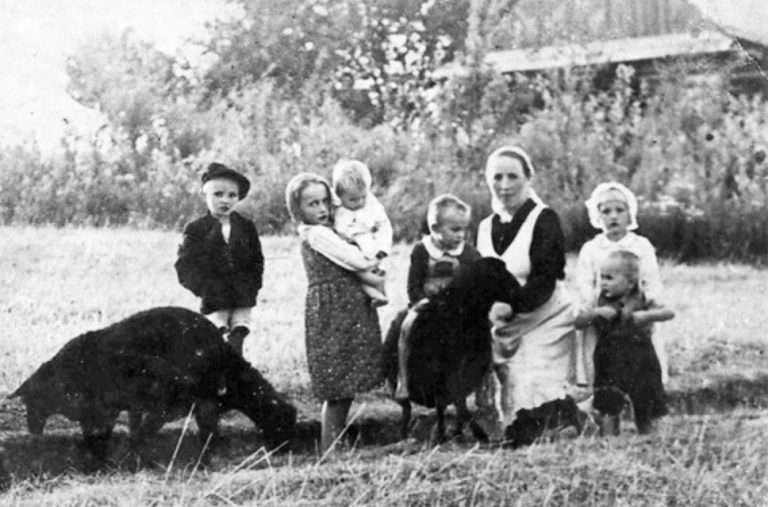
Martyred Ulm family will be beatified in September

0

In their hometown of Markowa, Poland, the Ulm family of nine, including parents Jozef and Wiktoria and their seven children, were brutally murdered by the Nazis during World War II. Despite the risks and financial difficulties, the Ulms hid a Jewish family in their home for a year and a half until they were discovered and met their tragic fate.

Their story of selflessness and courage has earned them the title of Venerable Servants of God, and on September 10, 2023, the entire Ulm family, including the unborn child in Wiktoria’s womb, will be beatified in a rare and momentous event. While it is not uncommon for a married couple or several martyrs to be beatified on the same day, it is exceedingly rare for parents and their children to be honored together in this way. Pope Francis approved a decree on the martyrdom of the Ulm family in December 2022, cementing their place in history as models of faith and devotion.

Use this Lent to take stock of your life

0

Lent is a sacred time of year that offers us a unique opportunity for introspection, a chance to examine our spiritual lives and take stock of our strengths and weaknesses. It can be a daunting task, one that requires us to confront the good and the bad that lies within us, but it is an essential step towards true growth and transformation.

As we journey through this season of repentance and reflection, we are called to be brutally honest with ourselves, to acknowledge the areas in which we fall short, and to commit to making real, lasting changes in our lives. It is a humbling process, one that requires us to set aside our pride and our egos, but it is also a deeply rewarding one, as it allows us to draw closer to God and to experience His boundless love and mercy.

The great theologian Pope Benedict XVI spoke eloquently of the importance of this spiritual inventory in his message for Lent in 2011. He reminded us that Lent is a time to contemplate the Mystery of the Cross and to allow its transformative power to work within us, to effect a deep conversion in our hearts and minds.

For some of us, this process may be more difficult than others, as we may be afraid of what we will find when we look too closely at ourselves. But we need not fear, for God is always there to guide us and to offer us His forgiveness and His love. Lent is a time of renewal, a time to let go of our old ways and to embrace the new life that God has in store for us. So let us approach this holy season with open hearts and minds, ready to receive the grace and mercy that God so generously offers to us all.

What about loud kids at mass?

0

The age-old debate about crying children in church is something that has affected every parent and every Mass-goer at some point. While some might find the noise irritating, it’s important to remember that children are not trying to ruin anyone’s experience. From a parent’s perspective, it can be challenging to keep a crying child quiet during Mass, and from the perspective of those attending Mass, it can be difficult to stay focused when there are disruptions.

So, how can we approach this issue? It all comes down to love and charity. When we attend Mass, we are part of one Mystical Body of Christ – the Church – who come together to partake of the one sacrifice of Christ on the Cross, which is most profoundly offered to us, once again, in The Eucharist. 

Children have just as much of a need for grace as we do and as much right to be there as we do.

It is important to remember that crying children are not doing anything wrong; they are just being themselves. It is up to parents to react quickly and take their children to the back or cry room when they start making loud noises. Most people understand that kids are going to get loud, and the vast majority don’t have a problem with a crying baby or a toddler throwing a fit if it doesn’t go on for too long. The problem most people have is with parents who seem to wait forever to take their kids to the back of church or cry room where they will be less of a distraction.

Disciplining your children from a young age is a good thing for them, but it starts by being disciplined yourself in how you parent.  It’s important to set boundaries and stick to them. If the baby is under one year old, then take them to the back when they start to cry after a short period of seeing if you can quiet them and they still make noise. Once they are quiet, return to your seat. If the child is over one, then take them to the back after a short time of crying or throwing a fit but do not allow them to get on the floor or play. If you give them what they want, they will learn that throwing a fit or crying gets them playtime in the back of the church.

In conclusion, the noise of crying children in church is a reality that we all have to deal with. It’s important to approach the situation with love and charity, understanding that we are all part of the same Mystical Body of Christ. Parents can help by reacting quickly and taking their children to the back or cry room when they start to get loud. And for those attending Mass, it’s important to remember that crying children are not trying to ruin anyone’s experience, but rather they are just being themselves. Let us embrace the chaos and find hope for the future in the sound of children’s cries.

Why is M*sturbation Wrong?

0

The Catholic Church’s teachings on sexuality are rooted in the fact that God designed sexual expression to be a sacred, unifying act between a man and woman in the context of marriage. The marital act is the beautiful, God-given expression of becoming “one flesh” in marriage and renewing the marriage covenant. Therefore, m*sturbation is a violation of the God-inscribed unbreakable bond between the love-giving and life-giving aspects of the marital act.

Fecundity is a gift, an end of marriage, for conjugal love naturally tends to be fruitful. A child does not come from outside as something added on to the mutual love of the spouses, but springs from the very heart of that mutual giving, as its fruit and fulfillment. So the Church, which is “on the side of life,” teaches that “it is necessary that each and every marriage act remain ordered per se to the procreation of human life.” “This particular doctrine, expounded on numerous occasions by the Magisterium, is based on the inseparable connection, established by God, which man on his own initiative may not break, between the unitive significance and the procreative significance which are both inherent to the marriage act.”

CCC 2366 

M*sturbation is a self-indulgent activity that uses the body solely for personal gratification, rather than integrating one’s gift of sexuality into a sincere self-gift to another person. According to the Church, our bodies are not simply things we have, but are essential to who we are and how we express ourselves as human persons.

The Church also teaches that m*sturbation is a mortal sin when committed with full knowledge and complete consent. The Church encourages the use of God’s grace, particularly through the sacrament of Reconciliation and the Eucharist, as well as natural remedies, to overcome sinful sexual desires. Additionally, the Church provides support and guidance for individuals seeking to live a chaste and pure life.

What would I do that would cause me to enter Purgatory?

0

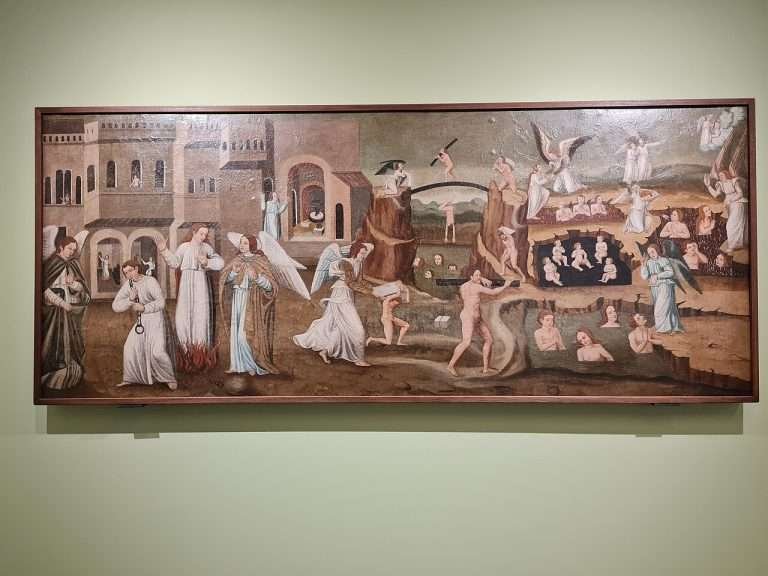
What would I do that would cause me to enter Purgatory?

Answer:

Its more than just what sin, but what the state of your soul would be that could warrant this. And the simplest answer is: if you are less than perfectly clean from all sin and attachment to sin.

Let’s start with the painful truth. The only way to enter into the full glory and splendor of the Beatific Vision, thus seeing God face-to-face and being in perfect communion with Him, is to be forgiven of every sin AND to be purified of every attachment to sin. This is a glorious invitation and a demanding endeavor! Purgation of all sin and all attachment to sin is not an option.

Only when we are perfect in every way will we be ready to enter into what the saints have called “Divine Union” or “Mystical Marriage.” Think of it this way: If you are attached to sin in your life, even the smallest imperfection, that attachment cannot enter into the presence of God. God is all holy and pure love. God wants you to be in union with Him, but He will not accept your sinful attachments.

The first step is forgiveness, but that’s the easy part. God, in His mercy, will forgive us of our sins if we are sorry and ask for forgiveness. The second step is to become completely detached from all remnants of sin. For example, if you have a habit of being critical of others in your speech and you confess this, then you can be assured you are forgiven of all past sins of being critical. But forgiveness does not mean you have been purified of the “attachment” you have to that sin.

In this case, an attachment to the sin of being critical is the disordered tendency to find fault with others. An attachment is different from a temptation. An attachment is a habit you voluntarily formed. Purgation is the process of breaking every sinful habit you have and detaching from all habitual sins and even imperfections so that you can be attached to God and His holy will alone. But how on Earth do you do this? In the end, you don’t do it by yourself.

Instead, you allow God to come into your soul and purify it of all sinful habits and attachments. And that will hurt! But it will be a purifying hurt that will be freeing. Purgatory refers to the purification process of all attachments we still have when we die. Ideally, we would go through the process of purification here on Earth, before death, so as to enjoy Divine Union here and now. But when we do not complete the process here on Earth, Purgatory will complete this process after death.

It is worth restating that purgatory is not a place for “sinners”, i.e people who die with unforgiven mortal sins in their hearts. That is why they are called “Holy Souls”, because they have been forgiven of every mortal sins and are dealing with attachments to sin.

Do you know why priests add water and bread to the wine?

0

Both actions are very ancient and began as practical necessities, but eventually the necessities disappeared and were even forgotten.

Later when Christians started to ask what these two gestures meant, they began to interpret the actions symbolically. While these symbols may never have been intended in the beginning, the better ones made sense and became part of our rich tradition.

In the ancient world, the Greeks added water to wine because it was often thick, gritty, and too strong. It was simply good taste to add water to wine before drinking it. The Romans loved all things Greek, so they adopted Greek manners and spread them to the lands they conquered. And even though it was not originally a Jewish custom to add water to wine, it soon became part of the Passover meal itself and, hence, part of our Mass.

As early as the fourth century, catechists explained that the water represented humanity and the wine, divinity. Once you put the water into the wine, it’s impossible to take it out again. Because of Jesus, humanity can never again be separated permanently from God. So the custom continues.

The practice of dropping a piece of consecrated bread into the cup may have started because of the ancient Roman custom of the fermentum. Christians in the suburbs could not always travel to Rome for Eucharist. So when the bishop broke the bread before Communion, he would set aside a piece for each missing group. A minister brought this fermentum to each place later, where the priest would drop it into the chalice to be swallowed—and most everyone drank from the cup in those days. Thus the bishop’s Eucharist “fermented” this celebration.

Eventually, the pope also began to set aside a piece for his next celebration. This was called the sacra, and it, too, was added to the chalice to show that this Mass is a continuation of the one before it—the one sacrifice of Christ.

Priests began imitating the pope by breaking off a piece of the bread just consecrated. Some then explained this as a sign of Christ’s resurrection. A body without blood is dead, but when Christ’s body is “reunited” with his blood, Christ is risen. This gesture also continues to this day, being preserved probably because it is so ancient a custom.

Why does the Pope wear white?

0

Pope Pius V, formerly known as Antonio Ghislieri, was the 224th pope and took on the name when he was elected in 1566. Despite being pope, he continued to wear the white robes of the Dominican Order of Preachers, also known as the Order of Saint Dominic, as a sign of humility and affection for the order.

According to tradition, the pope’s white robes symbolize the purity and holiness of life, while the red accessories represent the blood of Christ and his sacrifice.

The first papal ceremony involving specific papal robes was prepared for Pope Gregory X in 1272, and the precise regulations were codified in the 1400s by Agostino Patrizi Piccolomini and John Burchard. Pope Pius V is also known for his involvement in the Counter-Reformation and for his role in the establishment of the feast of “Our Lady of Victory,” later known as the feast of the “Holy Rosary,” following the Christian victory in the Battle of Lepanto in 1571.

How to visit the tomb of Benedict XVI

0

Benedict XVI was buried in the crypt under St. Peter’s Basilica after his funeral Mass on Jan. 5.

The late pope’s coffin was interred in the former burial place of both St. John Paul II and St. John XXIII, whose remains were moved to the upper part of the basilica at the time of their beatifications.

image 6
The coffin of Pope Benedict XVI is prepared for interment in the crypt of St. Peter’s Basilica on Jan. 5, 2023. Vatican Media

After being closed for several days, from 9 a.m. on Sunday, Jan. 8, the Vatican crypt, which has small chapels and the tombs of popes and royals, will reopen to the public.

To visit the tomb of Benedict XVI, first enter St. Peter’s Basilica.

Proceed to the front of the basilica and the central altar and Baldachin, a Baroque bronze canopy sculpted by Gian Lorenzo Bernini.

The papal altar and Baldachin as seen during Pope Francis' Mass for the World Day of the Poor on Nov. 13, 2022. Daniel Ibanez/CNA.
The papal altar and Baldachin as seen during Pope Francis’ Mass for the World Day of the Poor on Nov. 13, 2022. Daniel Ibanez/CNA.

The bones of St. Peter, the Church’s first pope, are under the papal altar in the central part of the crypt, called the Confessio.

Turn left in front of the papal altar. In front of the first column on the left, below a statue of St. Andrew, are the stairs giving access to the crypt.

image 8
Pope Francis prays at the Confessio, the place where St. Peter’s bones are buried in the crypt beneath St. Peter’s Basilica, Nov. 2, 2021. Vatican Media.

Benedict XVI’s tomb is on the north side of the crypt, on the other side of the Confessio from the stairs. On the marble slab covering the tomb is written: Benedictus PP. XVI.

Queen Christina of Sweden, who died on April 19, 1689, is buried in a sarcophagus immediately to the right of Benedict.

On the wall above Benedict’s tomb, there is a bas-relief sculpture of the Virgin Mary and the child Jesus flanked by angels.

Pope Francis: Resignation already signed ‘in case of medical impediment’

2

Pope Francis said that in case of not being able to continue governing the Catholic Church due to an impediment to his health, he has already signed his resignation and has given it to one of the Vatican cardinals.

During an interview given to the Spanish newspaper ABC and published early Sunday morning in Spain, the Holy Father responded to the question of what would happen “if a pontiff is suddenly disabled due to health problems or an accident.”

“I have already signed my resignation,” Pope Francis replied, adding that he did so when the Vatican secretary of state was Cardinal Tarcisio Bertone.

“I signed it and told him: ‘In case of impediment for medical reasons or whatever it may be, here is my resignation.’ They already have it. I don’t know who Cardinal Bertone gave it to, but I gave it to him when he was secretary of state,” he said.

Cardinal Bertone was appointed secretary of state by Benedict XVI in 2006 and continued in office until Aug. 31, 2013, during the pontificate of Pope Francis.

When asked if he wanted this to become known, Francis replied, “That’s why I’m saying it.” 

“Now someone will go to ask Bertone for it: ‘Give me that piece of paper!’” the pope said, laughing. “He probably handed it over to Cardinal Pietro Parolin, the new secretary of state. I gave it to Bertone as he was the secretary of Sstate,” he said.

During the interview, Francis said that he hasn’t delved “at all” into a statute to specify the definition of pope emeritus. 

“I didn’t even have the idea of doing it. It must be that the Holy Spirit has no interest in me being concerned about those things,” he said.