
Saturday, April 4, 2026
13.9 C
London
Home Blog Page 45

Is It a Sin to Waste Food?

0

Question:

Is it a sin to waste food?

Answer:

Yes, it is wrong to waste food. Even non-Christians believe this too since it goes against a natural inclination toward global solidarity. The Church indirectly talks about our responsibility to help provide for those around us.

“The works of mercy are charitable actions by which we come to the aid of our neighbor in his spiritual and bodily necessities. Instructing, advising, consoling, comforting are spiritual works of mercy, as are forgiving and bearing wrongs patiently. The corporal works of mercy consist especially in feeding the hungry, sheltering the homeless, clothing the naked, visiting the sick and imprisoned, and burying the dead. Among all these, giving alms to the poor is one of the chief witnesses to fraternal charity: it is also a work of justice pleasing to God: He who has two coats, let him share with him who has none and he who has food must do likewise. But give for alms those things which are within; and behold, everything is clean for you. If a brother or sister is ill-clad and in lack of daily food, and one of you says to them, “Go in peace, be warmed and filled,” without giving them the things needed for the body, what does it profit?”

CCC 2447

A lot of restaurants and families waste a great deal of food that could have easily fed other people. So as Catholics we cannot be casual about such things. One of the first things is to ensure that we order or cook what we can consume. And if they remain to preserve them for future consumption or give them to someone else who doesn’t have any. There are programs where donations of non-perishable foods can be made for those in need or cash gifts to support those who are starving. These are ways we can fulfill our obligation to give to the poor. Remember that this is the standard Jesus suggests we shall be judged with. (Matthew 25).


When is drinking alcohol mortally sinful?

0

Question:

When is drinking alcohol a mortal sin?

Answer:

Over drinking to the point that the drinker loses the use of reason, i.e. not having the freedom to think responsibly and follow through on reasonable conclusions. But in order for this to be gravely sinful, the act has to be deliberate, not something that happened by accident or something. If this freedom is lacking, then the act of intoxication would be a venial sin.

But another thing to remember is that if any mortal sins are committed while drunk, even if they were not freely willed in themselves, they were willed in their cause. This means the drinker chooses to be drunk, and this drunkenness is the primary cause of said sinful act. So the drinker is still responsible for those acts as though they were chosen deliberately.

Then another point to remember is that damaging your health may also be sinful. Since you are charged to take care of the body you have received. Exposing yourself to an unnecessary danger that might cause you to lose your life is sinful. The gravity will depend on the circumstances. Drinking is good in moderation but can cause grave harm when abused.

Drinking and driving is another potentially grave evil that can cause the loss of lives. As we said above, exposing yourself (and in this case others), to unnecessary grave danger is also sinful. The blood alcohol limit established by law in most countries is usually low, but they are set because it’s at that point that some reflexes may be impaired which will make driving unsafe. So, ignoring these can be a grave matter even if the driver does not fit what you’d classically call “drunk”.

Is it sinful to be a surrogate mother?

0

Question:

Does the Catholic Church consider it sinful to be a surrogate mother?

Answer:

The pain associated with sterility or loss can be heavy on married couples. So heavy that they start considering alternative means of obtaining a child. But according to the Catholic Church surrogate motherhood is gravely wrong:

Techniques that entail the dissociation of husband and wife, by the intrusion of a person other than the couple (donation of sperm or ovum, surrogate uterus), are gravely immoral. These techniques (heterologous artificial insemination and fertilization) infringe the child’s right to be born of a father and mother known to him and bound to each other by marriage. They betray the spouses’ “right to become a father and a mother only through each other” (CCC 2376; cf. CCC 2377-79).

Is It OK to Take Pictures at Mass?

0

Question:

Is it okay to have photographers and videographers at Mass?

Answer:

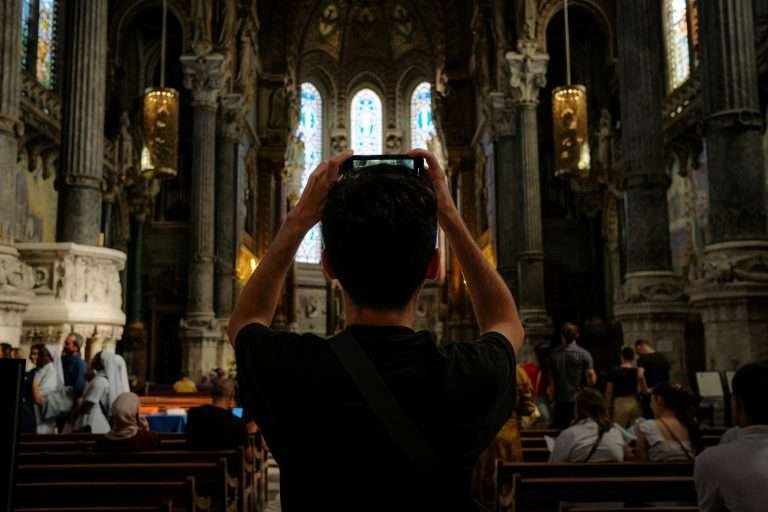
Any form of distraction at mass should be discouraged. Most times photographers and videographers can be such a distraction. However, there are some cases where their presence can add some value for the faithful. For instance during weddings, confirmations, etc. In those cases having professionals means that the people can focus on the mass and get their copies of the pictures and videos later instead of pulling their phones. The latter should always be discouraged since when a lot of people are doing it, it affects everyone. Also, the professionals need to be instructed on how to move around during the Mass so as not to disrupt or cause distraction especially during consecretion.

Am I Required to Forgive Someone Who Hasn’t Asked for Forgiveness?

0

Question:

If someone has not asked for mercy, are we obligated to pardon them?

Answer:

When Jesus was giving the Sermon on the Mount, he made it clear that we must forgive unconditionally. He says “For if you forgive men their trespasses, your heavenly Father also will forgive you; but if you do not forgive men their trespasses, neither will your Father forgive your trespasses” (Matt. 6:14-15). This is also why unconditional forgiveness that Jesus showed on the cross has become a standard and sign of holiness among martyrs too. Like St Stephen who, like Jesus, prayed for his killers.

This does not necessarily mean that we need to keep up relationships with those we have forgiven. There are cases where associating with some people might endanger us or cause us spiritual harm. We can decide to forgive those people and reduce our association with them or cut ties with them permanently. We forgive everyone, but we must not be close friends with everyone.

If you are ever confused or are in a complicated situation you should ask your priest.

Does ‘Sabachthani’ Really Mean Forsaken?

0

Question:

I heard that the word “sabachthani” does not mean “forsaken.” Is this true?

Answer:

If you know more than one language you will realize how tricky translations can be. So, for the word above it depends on the context.

Sabachthani is usually used to mean abandoned or left behind, it is abandoned for a purpose.

The Aramaic word for the “forsaken” we are accustomed to is taani, which is forsaking for the sake of a lack of care. The Aramaic word for being abandoned for the sake of being forgotten is nashatani.

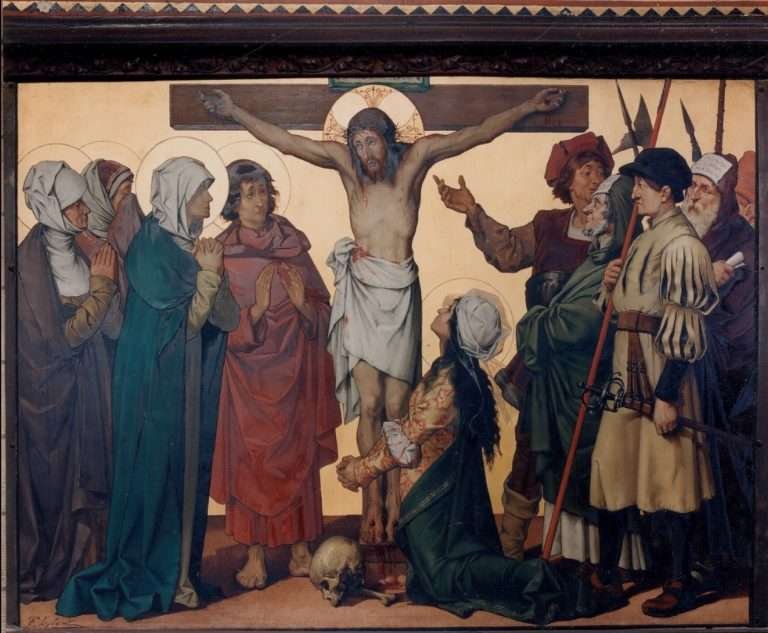
In the context of Jesus’ cry on the cross, it is referring to being abandoned but not in the context of being forsaken carelessly by the Father.

Jesus had to go through all he did in order to earn salvation for us so that in the end we will be members of the Divine community of heaven. His abandonment was for the purpose of our salvation not based on carelessness.

At least 40 people killed in church fire in Egypt according to reports

0

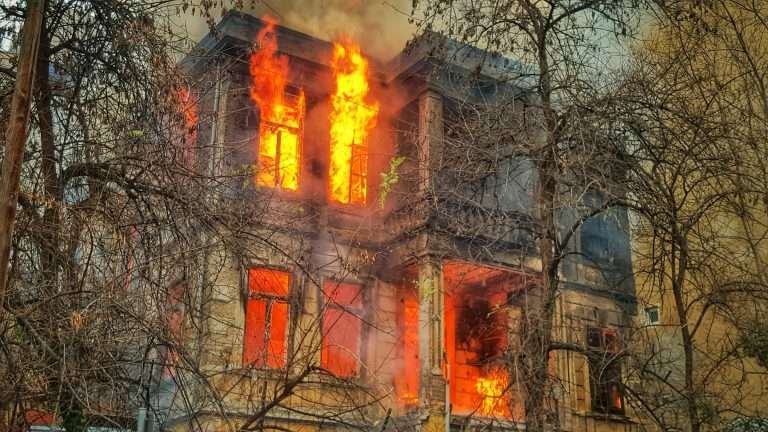
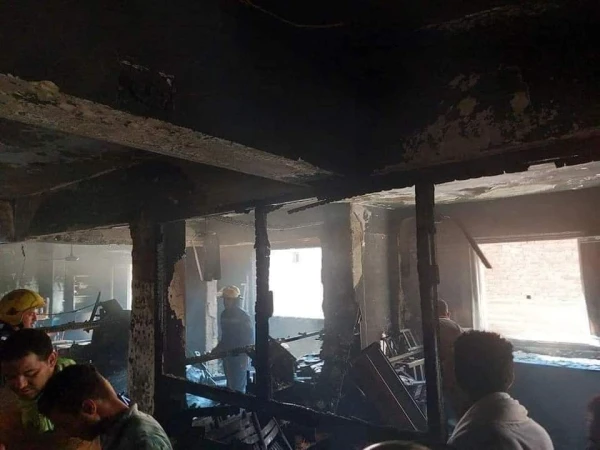
At least 40 people — most of them children — have died in a fire in a Coptic Orthodox church in Giza Governorate, Egypt, on Sunday, according to government and church officials.

Thirty-five children between two and six years of age were among the victims of the blaze that ripped through the Church of Saint Mercurius (known in Arabic as Abu Sefein), reported ACI MENA, CNA’s partner agency for the Middle East and Northern Africa.

The cause of the blaze has so far not been established. Reuters reported that an electrical fire broke out at the church where people gathered during the Divine Liturgy celebration. The blaze reportedly blocked the exit from the church and caused a stampede. 

The parish priest, Fr. Abdul Masih Bakhit, also died during the fire.

The injured were transferred to Imbaba General Hospital and Agouza General Hospital after 30 ambulances attended the scene. 

The Patriarch of the Coptic Orthodox Church, Pope Tawadros II, offered condolences to the families of the victims, according to a media statement, saying: “We are following with sorrow the tragic incident that occurred this morning in the Church of the Great Martyr Mercurius Abo Sefein in the Imbabah Airport area, north of Giza.”

“As we offer our condolences to the victims’ families, we pray for the injured and wounded, trusting that the hand of God will have mercy on us all.”

A blaze ripped through the St. Mercurius (Abu Sefein) Coptic Orthodox Church in Egypt on Sunday, Aug. 14 2022. ACI MENA

Offering his condolences to the head of the Coptic Church in Egypt, President Abdel Fattah el-Sissi said his thoughts were with “the families of the innocent victims that have passed on to be with their Lord in one of his houses of worship.”

Can I wear New Age jewelry?

0

Question:

Someone gave me a piece of jewelry with the inscription “Lava stone is a grounding stone that helps us connect to the energies of Mother Earth and the element of fire. It can help to dissipate anger and absorbs negative energy.” and i am conflicted as to what to do with it. Is it bad to use it?

Answer:

Those are lava rock deposits and do not contain any special healing properties despite what the New Agers say. So insofar as you do not attach any magical meaning to it, i do not see why you cannot use it.

The issue would be if you are overly attracted to the symbols and go after them yourself. If you received this as a gift, there’s nothing in it that should stop you from using it.

St John Paul II’s powerful words to women who choose motherhood

0

Gianna Beretta Molla, crowning an exemplary existence as a student, as a girl committed to the ecclesial community and as a happy wife and mother, knew how to offer her life as a sacrifice, so that the creature she carried in her womb could live – and who is here with us today! She, as a surgeon, was well aware of what she was facing, but she did not flinch from her sacrifice, thereby confirming the heroic nature of her virtues.

Motherhood can be a source of joy, but it can also become a source of suffering, and sometimes of great disappointments. In this case, love becomes a test, often heroic, which costs so much to a mother’s heart … these heroic women do not always find support in the world around them. On the contrary, the cultural models frequently promoted and broadcast by the media do not encourage motherhood. In the name of progress and modernity the values of fidelity, chastity, sacrifice, to which a host of Christian wives and mothers have borne and continue to bear outstanding witness, are presented as obsolete.

Thus it happens that a woman who is determined to be consistent with her principles often feels deeply alone … Her guiding principle is Christ, who revealed what love is bestowed on us by the Father. A woman who believes in Christ finds powerful support in precisely such love that endures everything.

We thank you, heroic mothers, for your invincible love! We thank you for your intrepid trust in God and in his love. We thank you for the sacrifice of your life … In the Paschal Mystery, Christ restores to you the gift you gave him. Indeed, he has the power to give you back the life you gave him as an offering.

John Paul II on the canonization of St. Gianna Molla.

How many times does the Bible mention Angel Gabriel’s appearance?

0

DANIEL 8:15-17:

While I, Daniel, sought the meaning of the vision I had seen, one who looked like a man stood before me, and on the Ulai I heard a human voice that cried out, “Gabriel, explain the vision to this man.” When he came near where I was standing, I fell prostrate in terror. But he said to me, “Understand, O son of man, that the vision refers to the end time.”


DANIEL 9:20-22

I was still praying to the Lord, my God, confessing my sin and the sin of my people Israel, presenting my petition concerning the holy mountain of my God—I was still praying, when the man, Gabriel, whom I had seen in vision before, came to me in flight at the time of the evening offering. He instructed me in these words: “Daniel, I have now come to give you understanding.”

LUKE 1:18-20

Then Zechariah said to the angel, “How shall I know this? For I am an old man, and my wife is advanced in years.” And the angel said to him in reply, “I am Gabriel, who stand before God. I was sent to speak to you and to announce to you this good news. But now you will be speechless and unable to talk until the day these things take place, because you did not believe my words, which will be fulfilled at their proper time.”

LUKE 1:26-27

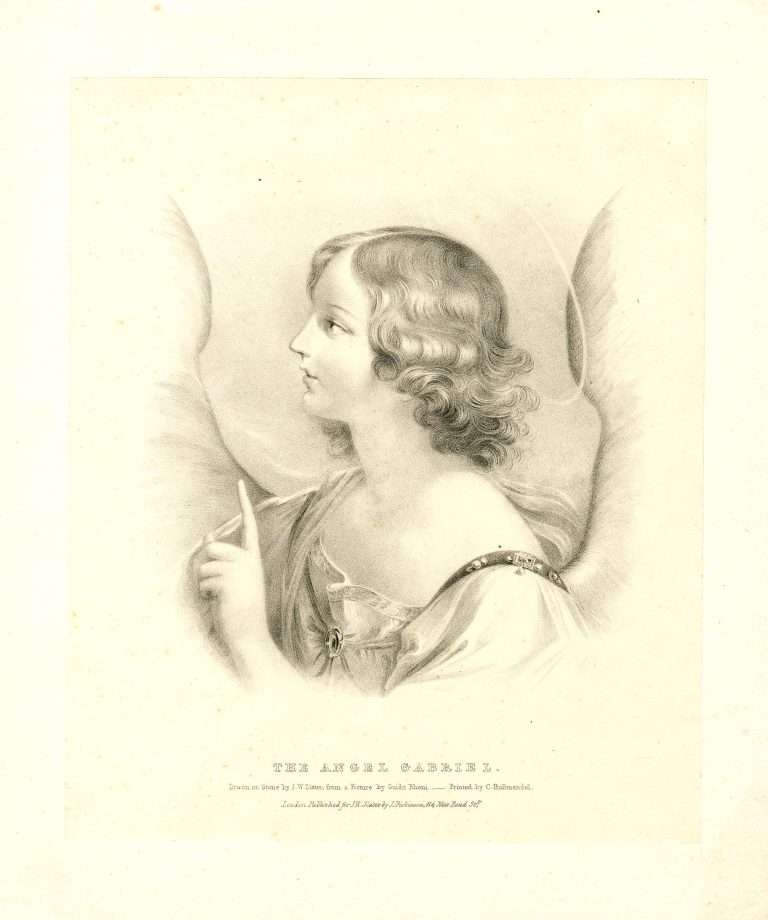
In the sixth month, the angel Gabriel was sent from God to a town of Galilee called Nazareth, to a virgin betrothed to a man named Joseph, of the house of David, and the virgin’s name was Mary.

New Advent Catholic Encyclopaedia says:

As remarked above, Gabriel is mentioned only twice in the New Testament, but it is not unreasonable to suppose with Christian tradition that it is he who appeared to St. Joseph and to the shepherds, and also that it was he who “strengthened” Our Lord in the garden (cf. the Hymn for Lauds on 24 March). Gabriel is generally termed only an archangel, but the expression used by St. Raphael, “I am the angel Raphael, one of the seven, who stand before the Lord” (Tobit 12:15) and St. Gabriel’s own words, “I am Gabriel, who stand before God” (Luke 1:19), have led some to think that these angels must belong to the highest rank; but this is generally explained as referring to their rank as the highest of God’s messengers, and not as placing them among the Seraphim and Cherubim (cf. St. Thomas, I.112.3; III.30.2 ad 4um).