Saturday, April 4, 2026
13.9 C
London
Home Blog Page 44

Prayer for when you are lonely

0

What causes loneliness, and does a prayer for when you are lonely work?

When feeling isolated or depressed, prayer for when you are lonely can be a way to go. During an ongoing global pandemic that’s kept loved ones apart and made it potentially unsafe to socialize in many of the ways we’re accustomed to doing, loneliness is becoming salient. Thirty-six percent of Americans felt “serious loneliness” in 2020 (or felt lonely “frequently” or “almost all the time or all the time” in the previous month), according to Harvard research.
A large-scale Cigna survey that same year pegged loneliness in the United States as being as high as 61 percent.
U.S. surgeon general Vivek Murthy warned of a “loneliness epidemic” sweeping the country back in 2017, in an article he authored on the subject — and that was before “social distancing” became part of our daily lexicon.
Loneliness is a universal emotion that many of us experience at times, whether you lack companionship in your daily life, feel left out and without a connection to those around you, or you’ve moved across the country away from family and friends.
“You feel alone, even empty, and you want to connect with others, but your feelings of loneliness make it harder to do so,” says Jacqueline Olds, MD, a psychiatry consultant at Massachusetts General Hospital and coauthor The Lonely American and Overcoming Loneliness in Everyday Life.
Even the days when we are surrounded by loved ones and we still feel lonely, remember that God is always with you. Say the prayer for when you are lonely to regain your emotional strength.

Prayer for when you are lonely

Dearest Lord, make us remember, when the world is cold and dreary,

and we know not where to turn for comfort, that there is always one

spot bright and cheerful—the Sanctuary. When we are in desolation of

spirit, when all who are dear to us have passed away, like summer

flowers, and none are left to love us and care for us, whisper to our

troubled souls that there is one friend who dies not—one whose love

never changes—Jesus on the altar. When sorrows thicken and crush us

with their burden, when we look in vain for comfort, let thy dear words

come forth with full force from the tabernacle, “Come to me all you who

labor and are heavily burdened, and I will refresh you.”
Prayer for when you are lonely or depressed? Read More:

ST. LONGINUS, THE ROMAN SOLDIER WHO PIERCED THE SIDE OF JESUS CONVERTED AND BECAME A SAINT

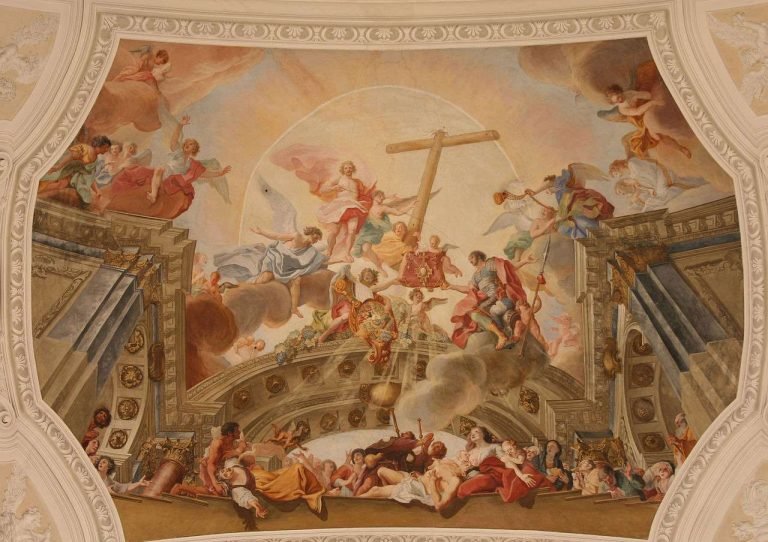
St. Longinus, the Roman soldier who pierced the side of Jesus converted and became a saint.

St. Longinus is the centurion who pierced the side of Our Lord Jesus while He was hanging on the Cross. St. Longinus, who was nearly blind, was healed when some of the blood and water from Jesus fell into his eyes. It was then he exclaimed, “Indeed, this was the Son of God!” [Mark 15:39].

St. Longinus then converted, Left the army, took instruction from the apostles, and became a monk in Cappadocia. There he was arrested for his faith, his teeth forced out and tongue cut off. However, St. Longinus miraculously continued to speak clearly and managed to destroy several idols in the presence of the governor.

The governor, who was made blind by the demons that came from the idols, had his sight restored when St. Longinus was being beheaded because his blood came in contact with the governors’ eyes.

His Lance is contained in one of the four pillars over the altar in the Basilica.

St. Longinus, Pray for us!

PRAYER TO THE WOUND IN THE SACRED SIDE

Act of Contrition (traditional)

O my God, I am heartily sorry for having offended Thee, and I detest all my sins because of thy just punishments, but most of all because they offend Thee, my God, who art all good and deserving of all my love.

I firmly resolve with the help of Thy grace to sin no more and to avoid the near occasion of sin. Amen.

TO THE WOUND IN THE SACRED SIDE

Holy wound in the side of my Jesus! I adore
thee. My Jesus, I compassionate thee in the cruel
insults which thou didst suffer. I thank thee for the
love whereby thou didst let them cleave thy breast
and heart, that so the last drops of blood and water
might issue forth, and my redemption overflow.

I offer to the eternal Father this outrage, and the love
of thy most holy humanity, that into that most loving
heart, eager and ready to receive the greatest sinners,
my poor soul may enter once for all, and never
more depart.

Our Father, Hail Mary, Glory be to the Father…

Holy mother, pierce me through,
In my heart each wound renew
Of my Saviour crucified.

Read More


Is it really sinful to gamble?

0

Question:

Someone said gambling is sinful but i had never heard anything about this before. Is it true?

Answer:

The Catholic Church teaches that gambling or any form of game of chance isn’t sinful in itself:

“Games of chance (card games, etc.) or wagers are not in themselves contrary to justice. They become morally unacceptable when they deprive someone of what is necessary to provide for his needs and those of others. The passion for gambling risks becoming an enslavement. Unfair wagers and cheating at games constitute grave matter, unless the damage inflicted is so slight that the one who suffers it cannot reasonably consider it significant.”

CCC 2413

Gambling can be a form of entertainment but as with all forms of entertainment, overdoing it can become a problem.

It becomes sinful when the gambler pays too much for such entertainment. For instance, in cases of people paying thousands or losing millions while their families and people under their care are suffering are definitely committing sin. It is so too when a person spends so much on other forms of entertainment when their families are in need. So it is about financial morality and this is a serious thing.

It also becomes a sin if an attachment to gambling is formed to the point of preventing one from contributing meaningfully to their family and immediate society. In such case, the person needs to seek psychological help.

Isn’t it pointless to attend Mass while in mortal sin?

0

Question:

I feel there is no point in attending mass when I am in mortal sin. Does this make sense?

Answer:

This is not an uncommon sentiment, but I can tell you it does not come from a good place. One of the things the enemy wants isn’t simply to see us fall in sin, but most importantly to cut us off from all Sacraments since he knows this would revive us again.

The issue is, missing Mass on Sunday is a sin itself, and basically worsens our situation rather than helping it. So, why injure yourself more when you are already sick? The tactic is to keep you from the sacraments that will pave the way for sincere repentance. We need God, and we need our spiritual communion with our brethren to help us.

I recommend doing everything you can to go closer to the Sacraments and attend masses as frequently as possible. But ensure never to miss Sunday mass.

Whether you are in the state to receive communion or not, it doesn’t factor into if you should attend at all.

I also counsel people to speak with their priests. Even if you are not ready to receive sacramental absolution yet, going close to the Church, especially if you have a spiritually gifted priest, will be an amazing help to not only help you get up but to fortify you to stay up.

What is attachment to sin?

0

Question:

What does it mean to be “attached” to sin?

Answer:

It means not fully giving up sin; not detecting sin enough to distance ourselves from it and every occasion surrounding it. It can also mean entangling ourselves in sin to the point where it becomes practically difficult to let go of sin, its occasions or to discard everything acquired sinfully. An example of such entanglement is cohabiting with an illicit sexual partner or building a business empire with stolen wealth.

St Francis de Sale discusses purifying the soul of affection to sin using a brilliant analogy of the Israelites fleeing from Egypt:

“ALL the children of Israel went forth from the land of Egypt, but not all went forth heartily, and so, when wandering in the desert, some of them sighed after the leeks and onions,—the fleshpots of Egypt. Even so there are penitents who forsake sin, yet without forsaking their sinful affections; that is to say, they intend to sin no more, but it goes sorely against them to abstain from the pleasures of sin;—they formally renounce and forsake sinful acts, but they turn back many a fond lingering look to what they have left, like Lot’s wife as she fled from Sodom. They are like a sick man who abstains from eating melon when the doctor says it would kill him, but who all the while longs for it, talks about it, bargains when he may have it, would at least like just to sniff the perfume, and thinks those who are free to eat of it very fortunate. And so these weak cowardly penitents abstain awhile from sin, but reluctantly;—they would fain be able to sin without incurring damnation;—they talk with a lingering taste of their sinful deeds, and envy those who are yet indulging in the like.

Thus a man who has meditated some revenge gives it up in confession, but soon after he is to be found talking about the quarrel, averring that but for the fear of God he would do this or that; complaining that it is hard to keep the Divine rule of forgiveness; would to God it were lawful to avenge one’s self! Who can fail to see that even if this poor man is not actually committing sin, he is altogether bound with the affections thereof, and although he may have come out of Egypt, he yet hungers after it, and longs for the leeks and onions he was wont to feed upon there! It is the same with the woman who, though she has given up her life of sin, yet takes delight in being sought after and admired. Alas! of a truth, all such are in great peril”.

St Francis de Sales, Introduction to the Devout Life Chapter VII. The Second Purification, from all Sinful Affections.

Should I refuse to have kids with my atheist husband?

0

Question:

When I met my husband I knew he struggled with his faith and relentlessly questioned Catholicism and Christianity in general. I felt it was a phase but now he’s an atheist and i am scared. I wanted to ask if the Church considers it sinful to procreate under these conditions.

Answer:

No, you should not refuse to procreate with your husband because of his lack of faith. It is indeed a confusing situation but what you need to do for him is pray and study (Advanced Catechism). The Church expects you, and every parent to welcome children and do everything within your power to raise them Catholic.

Why I mentioned study is so that you can answer some of his questions. If he is an honest man, there is still hope for him. In my experience, pride and lies are basically the enemies of faith, and anyone who is humble and honest is closer to God than you think. Another reason I mentioned study is your children will be challenged when it comes to faith, so you must be ready to do more than the average, you should build yourself to be extraordinary in faith and in spirituality. Basically: be a holy mother and God will keep your children to himself.

As for your husband, sit down with him from time to time and discuss these things. Pray for him and be patient.

Can it be a sin to massage my husband?

0

There is no simple answer to this. But if there is pleasure derived the end of such a pleasure will be examined in the right context to determine its morality. But if there is no sexual pleasure derived then it is fine.

But generally speaking, insofar as the pleasure gained is not a deliberate move to forego the marital act, for instance culminating in masturbation or any other sexual action which is opposed to the ends of marriage then it might be an issue.

But these things are difficult to determine with one blanket response which is why you need to consult your priest to help you with a response proper to your specific situation. But it is important to read the following just to have an idea of the general teachings of the Church on Marital sexual morality.

Lust is disordered desire for or inordinate enjoyment of sexual pleasure. Sexual pleasure is morally disordered when sought for itself, isolated from its procreative and unitive purposes.”

By masturbation is to be understood the deliberate stimulation of the genital organs in order to derive sexual pleasure. “Both the Magisterium of the Church, in the course of a constant tradition, and the moral sense of the faithful have been in no doubt and have firmly maintained that masturbation is an intrinsically and gravely disordered action.” “The deliberate use of the sexual faculty, for whatever reason, outside of marriage is essentially contrary to its purpose.” For here sexual pleasure is sought outside of “the sexual relationship which is demanded by the moral order and in which the total meaning of mutual self-giving and human procreation in the context of true love is achieved.”

To form an equitable judgment about the subjects’ moral responsibility and to guide pastoral action, one must take into account the affective immaturity, force of acquired habit, conditions of anxiety or other psychological or social factors that lessen, if not even reduce to a minimum, moral culpability. CCC 2351-52,

See also CCC 2360-65; Gen. 2:23-24; Matt. 19:1-12).

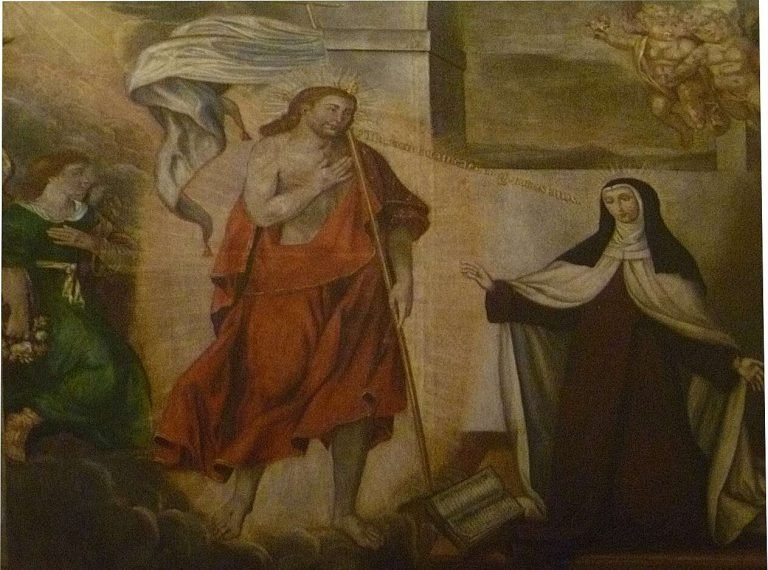
St. Teresa of Avila’s word to the depressed

October 15th is the feast day of St. Teresa of Avila.   Most if not all of the posts written about her tend to focus on her mystical experiences.  I want to focus on the Saint who had much common sense and kept both feet firmly on the ground.  After all, she was the Saint that told the depressed sisters under her charge to go out for a walk rather than sit in chapel meditating –likely on their sufferings.

Here are some words of St. Teresa of Avila.  I took the liberty to apply her wisdom to those struggling with depression.

When we think depressingly all of life can seem like one long unremitting painful day and we can easily fall into the trap of thinking depression is our life.   We say things like, “I will always feel this way,” “I’ll never get well,” and “I am destined to be lonely.”   St. Teresa of Avila would tell you, “Pain is never permanent.”

When we think depressively we tend to beat ourselves up over real and imagined mistakes, sins.  St. Teresa of Avila’s comment to you would be, “To reach something good it is very useful to have gone astray, and thus acquire experience.”  How’s that for turning a negative to a positive.

When we think depressively we tend to want to escape to new places, and new situations.  We forget that God is wherever we happen to be NOW and speaks to us regardless of whether we are happy or unhappy with the way our lives are going.  St. Teresa of Avila would remind you, “All things must come to the soul from its roots, from where it is planted.”

When we can’t concentrate or form thoughts because we are depressed and so think we don’t have it in us to pray, Teresa of Avila would say, “Prayer is an act of love, words are not needed.  Even if sickness distracts from thoughts, all that is needed is the WILL to love.”

Here is a brief biography of St. Theresa of Avila.  It is my favorite brief biography.  http://www.catholic.org/saints/saint.php?saint_id=208

Someone said God created evil, how do i respond to them?

0

Question:

My friends keep telling me that since God created everything, it means he also created evil. How do i respond to them? Is this true?

Answer:

No, it is not true. God did not create evil, no one “created” evil per se. Evil isn’t a thing, but an absence of a perfection that is due to a creature. Evil is understood as a void. It is like darkness which is simply an absence of light and not a ‘thing’ in itself.

I assume you are specifically referring to moral evil which is sin. The devil and his fellow demons brought evil into the created world when they initially decided to irrevocably turn against their creator. It was irrevocable since they had perfect foresight and foreknowledge of the implication of their choices; they’re spirits with perfect understanding and for this reason, they cannot be forgiven, neither can they ask for mercy. They chose to eternally exclude themselves from God (which is essentially what hell means) It is through them that evil crept into the created world. Then our first parents – Adam and Eve – are also responsible for bringing moral evil into the world by their initial disobedience to God.

Evil was isn’t a “thing” that existed somewhere, that then decided to enter the world and the lives of people. Evil was a product of the free choice of angels and men and not of God. Because God, who created man free, gave him freedom so he can enjoy goodness and be fulfilled.

However, if you are talking about the absolute origin of evil, there is actually no such thing. Some people misunderstood the devil as the absolute symbol or embodiment of evil as God is goodness itself but this is wrong, because the devil didn’t exist of himself, he is a limited creature who was created by God who himself is infinite good.

To understand more, read this article on Evil from the Catholic Encyclopedia.

Will a child that commits suicide go to heaven?

0

Question:

Will a child that commits suicide go to heaven?

Answer:

Catechism of the Catholic Church:

2282 …Grave psychological disturbances, anguish, or grave fear of hardship, suffering, or torture can diminish the responsibility of the one committing suicide.

2283 We should not despair of the eternal salvation of persons who have taken their own lives. By ways known to him alone, God can provide the opportunity for salutary repentance. The Church prays for persons who have taken their own lives.

But for a person to be guilty of mortal sin, the individual must know the act is mortally sinful and freely chooses it. People who commit suicide are usually suffering from some kind of emotional or psychological condition that at a point overwhelms them and thereby limits their ability to be realistic about the issues they face or the ‘remedy’ they choose, in this case ending their lives.

It is even more so for children who even on a normal day do not understand the full implication of their actions.

The other thing to remember is that God is a Father, Our Father. He loves us greatly and wants us to be saved. It is very safe to believe that God will embrace such a child with great love and compassion.