Saturday, April 4, 2026
8.4 C
London
Home Blog Page 39

Prayer for theย Morning. December 22, 2022.

Prayer for theย Morning. December 22, 2022.

In Jesus Christ, God has done great things for us:
let us give thanks and praise!

Glory to the Father, and to the Son,
and to the Holy Spirit, as it was in the beginning,
is now, and will be for ever. Amen. Alleluia!

Hymn. Meter: LM

Creator of the stars of night,
Your peopleโ€™s everlasting light,
O Christ, Redeemer of us all,
We pray you hear us when we call.

In sorrow that the ancient curse
Should doom to death a universe,
You came, O Savior, to set free
Your own in glorious liberty.

You came, the Bridegroom of the bride,
As drew the world to eventide:
Proceeding from a Virgin shrine,
The spotless Victim all divine.

When this old world drew on toward night,
You came; but not in splendor bright,
Not as a monarch, but the child
Of Mary, blameless mother mild.

At your great Name, O Jesus, now
All knees must bend, all hearts must bow;
All things on earth with one accord,
Like those in heavโ€™n, shall call you Lord.

Come in your holy might, we pray,
Redeem us for eternal day;
Defend us while we dwell below
From all assaults of our dread foe.

Psalm 113

The Mighty One has done great things for me,/ and holy is his name. (Lk 1:49)

Mary gives voice to the rejoicing of the redeemed world: Christ was born among the poor to a Virgin, a childless wife; he was put to death, where dust returns to dust; he rose on high to the throne of glory at the right hand of the Father. Our Savior comes to raise us up!

Praise, O servants of the Lord,
praise the name of the Lord!
May the name of the Lord be blessed
both now and for evermore!
From the rising of the sun to its setting
praised be the name of the Lord!

High above all nations is the Lord,
above the heavens his glory.
Who is like the Lord, our God,
who has risen on high to his throne
yet stoops from the heights to look down,
to look down upon heaven and earth?

From the dust he lifts up the lowly,
from his misery he raises the poor
to set him in the company of princes,
yes, with the princes of his people.
To the childless wife he gives a home
and gladdens her heart with children.

Glory to the Fatherโ€ฆ.

Word of God. Isaiah 11:1, 4

A shoot shall sprout from the stump of Jesse,/ and from his roots a bud shall blossom./ He shall judge the poor with justice,/ and decide aright for the landโ€™s ยญafflicted.

His mercy is from age to age/ to those who fear him.
(Lk 1:50)

Canticle of Zechariah

My soul proclaims the greatness of the Lord;/ my spirit rejoices in God my savior. (Lk 1:46-47)

Blessed be the Lord, the God of Israel;
he has come to his people and set them free.
He has raised up for us a mighty savior,
born of the house of his servant David.

Through his holy prophets he promised of old
that he would save us from our enemies,
from the hands of all who hate us.

He promised to show mercy to our fathers
and to remember his holy covenant.

This was the oath he swore to our father Abraham:
to set us free from the hands of our enemies,
free to worship him without fear,
holy and righteous in his sight
all the days of our life.

You, my child, shall be called the prophet
of the Most High;
for you will go before the Lord to prepare his way,
to give his people knowledge of salvation
by the forgiveness of their sins.

In the tender compassion of our God
the dawn from on high shall break upon us,
to shine on those who dwell in darkness
and the shadow of death,
and to guide our feet into the way of peace.

Glory to the Fatherโ€ฆ

Intercessions

To the bread of Life sent to feed the hungry, we pray:

R/Come and reward your peopleโ€™s hope.

Your Birth was announced by the prophets:
โ€“ strengthen those reborn in you. R/

You came to heal the contrite of heart:
โ€“ deliver your people from their sorrows. R/

You came to bring life to all the lowly, the afflicted, and the poor:
โ€“ console the childless, the aging, the hungry, and the oppressed. R/

Personal intentions

Our Fatherโ€ฆ.

God our Father, you so loved the world that you sent your only Son to bring life to those who were without life. Raise up in him all those who long to be delivered from the oppression of sin and death. We rejoice in hope as we look forward to the celebration of his ยญcoming, who lives and reigns with you in the unity of the Holy Spirit, God, for ever and ever. Amen.

Read More

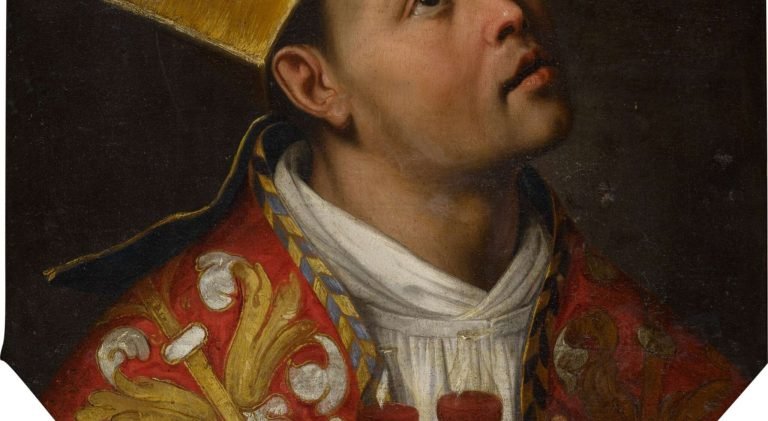
The miracle of the Blood of St. Januarius occurs in Naples for the third time in 2022

0

The miracle of the Blood of St. Januarius occurs in Naples for the third time in 2022

The blood of St. Januarius liquefied in Naples on Friday for the third time this year. 

The newspaper Corriere della Sera reported on Dec. 16 that the โ€œmiracle of the liquefactionโ€ occurred at 10:56 a.m. in the Chapel Treasury of St. Januarius in the Naples Cathedral.

When Monsignor Vincenzo De Gregorio, the abbot of the chapel treasury, first opened the safe containing the Saint Januariusโ€™ reliquary,  the blood inside appeared completely solid in the morning, but a phase change occurred two hours later.

Dec. 16 marks the anniversary of Naples’ preservation from the 1631 eruption of Mount Vesuvius. It is just one of three days each year when the reliquary is displayed and local Neapolitans gather to see if the dried, red-colored mass confined to one side of a reliquary changes to cover the entire glass.ย 

The reputed miracle is locally known and accepted, though it is yet to receive official Church recognition.

St. Januarius, known as San Gennaro in Italian, is the patron saint of Naples. The bishop is believed to have been martyred during the Christian persecution of Emperor Diocletian.

In local lore, the failure of the blood to liquefy signals war, famine, disease, or other disaster.

The liquefaction traditionally happens at least three times a year: Sept. 19, the saintโ€™s feast day, the first Saturday of May, and Dec. 16, the anniversary of the 1631 eruption of nearby Mount Vesuvius.

The third-century bishopโ€™s blood, contained in a circular sealed vial, liquefied in both May and September this year, but did not change its state in December 2020.

Speaking to the people who had gathered in the chapel for the December anniversary, Monsignor De Gregorio shared a story of a miraculous healing attributed to the intercession of St. Januarius this year.

โ€œThere was a very young father with a baby girl only a few months old in his arms and his tearful wife next to him. They explained that this little girl had been diagnosed with a malignant tumor, and one can imagine the bewilderment and heartbreak,โ€ he said, according to Il Mattino.

โ€œThey were here today, giving thanks to St. Januarius because shortly after while they prayed to the patron saint on September 19, the news came that the tumor was benign and the baby was safe.”

Saint Olympias of Constantinople

Saint Olympias of Constantinople was a 4th-century Christian saint and ascetic who was known for her charitable works and her support of the Church. She was born into a wealthy family in Constantinople (present-day Istanbul, Turkey) and was married to a wealthy senator named Nebridius. However, after the death of her husband, Olympias dedicated her life to charitable works and became known for her generosity towards the poor and her support of the Church.

Olympias was a close friend of Saint John Chrysostom, the Patriarch of Constantinople, and supported him during his time of exile. She also provided financial support for the construction of the Church of the Holy Apostles in Constantinople and was known for her devotion to the Virgin Mary.

Saint Olympias is remembered as a model of Christian charity and is honored as a saint in the Catholic and Eastern Orthodox churches. Her feast day is celebrated on December 17th.

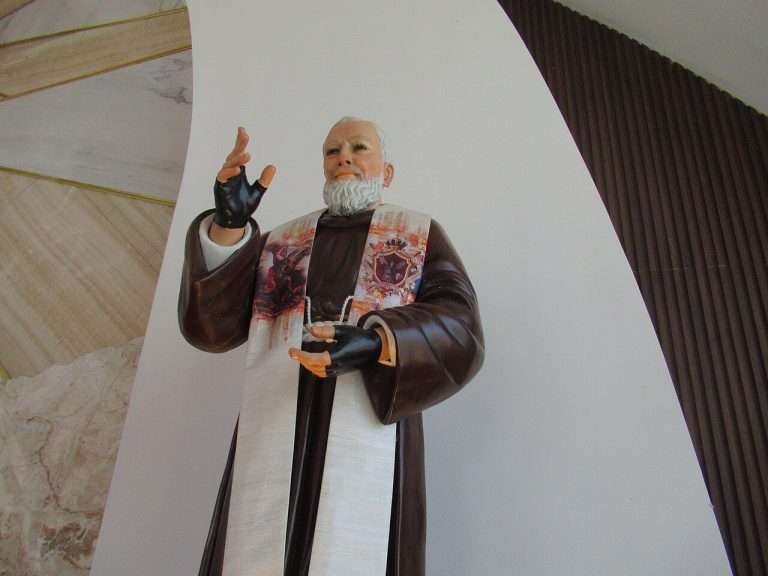
Prayer of trust and confidence in God by St Padre Pio

0

Prayer of trust and confidence in God by St Padre Pio

O Lord, we ask for a boundless confidence and trust in Your divine mercy, and the courage to accept the crosses and sufferings which bring immense goodness to our souls and that of Your Church.

Help us to love You with a pure and contrite heart, and to humble ourselves beneath Your cross, as we climb the mountain of holiness, carrying our cross that leads to heavenly glory.

May we receive You with great faith and love in Holy Communion, and allow You to act in us, as You desire, for Your greater glory.

O Jesus, most adorable heart and eternal fountain of Divine Love, may our prayer find favor before the Divine Majesty of Your Heavenly Father. Amen.

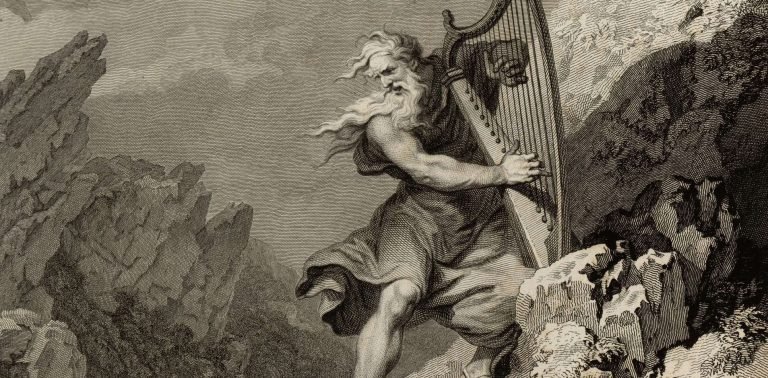
Here’s why St Ephrem is called “Harp of the Holy Spirit”

Here’s why St Ephrem is called “Harp of the Holy Spirit”

St. Ephrem, also known as Ephrem the Syrian, is a prominent figure in the history of the Syrian Orthodox Church and is often referred to as the “Harp of the Holy Spirit” due to his eloquence and the spiritual depth of his writings.

Ephrem was born in the city of Nisibis (present-day Nusaybin, Turkey) in the early 4th century and was a contemporary of St. Basil the Great and St. Gregory of Nyssa. He is best known for his hymns, which are considered to be some of the most beautiful and profound examples of Christian poetry in the Eastern tradition.

Ephrem’s hymns were written in the Syriac language and were characterized by their rich imagery, devotional tone, and spiritual depth. They were highly influential in the development of Christian worship in the Eastern Church, and many of them are still used in liturgical settings today. Ephrem is also known for his theological treatises and commentaries on the Bible, which demonstrate his deep understanding of the faith and his ability to communicate complex ideas in a clear and compelling way.

In recognition of his contributions to the Church, Ephrem was canonized as a saint and has been honored for centuries as a Doctor of the Church, a title given to individuals who have made significant contributions to the Church through their teaching or writing. The “Harp of the Holy Spirit” is a nickname that reflects Ephrem’s role as a spiritual guide and the inspiration that he provided to others through his writings and teachings. But also because of his musical contributions:

Most of Ephraemโ€™s sermons and exhortations are in verse, though a few sermons in prose have been preserved. If we put aside his exegetical writings, the rest of his works may be divided into homilies and hymns. The homilies are written in seven-syllable verse, often divided into two parts of three and four syllables respectively. He celebrates in them the feast of Our Lord and of the saints; sometimes he expounds a Scriptural narrative or takes up a spiritual or edifying theme.

Catholic Encyclopedia

Powerful words of Saints on Charity

Powerful words of Saints on Charity

“Love is patient, is kind; charity does not envy, it does not boast, it is not proud. It does not dishonor others, it is not self-seeking, it is not easily angered, it keeps no record of wrongs. Love does not delight in evil but rejoices with the truth. It always protects, always trusts, always hopes, always perseveres.” (1 Corinthians 13:4-7)

In this passage, St. Paul describes the qualities and characteristics of charity, or love. He begins by stating that charity is patient and kind, which means that it is slow to anger and is marked by gentleness and kindness towards others. Charity does not envy, which means that it does not feel jealous or resentful of what others have or do. It also does not boast or act in a proud or arrogant manner, and it does not seek to dishonor or belittle others.

Furthermore, charity is selfless and is not motivated by self-interest or self-gain. It is not easily angered, which means that it is able to control its emotions and reactions to difficult situations. It also does not keep a record of wrongs or hold grudges, but rather strives to forgive and show mercy.

Finally, charity does not delight in evil or wrongdoing, but rather rejoices in the truth and in what is good. It always protects and supports others, trusts in them and in God, hopes for the best for them, and perseveres in love, even in difficult times.

Charity is the virtue that brings us closer to God and helps us to form a deeper connection with Him. This connection with God is essential to our spiritual growth and development, as it allows us to experience His love, mercy, and grace, and to respond to His call to love and serve others.

Charity is often described as the highest virtue, because it is the virtue that enables us to love God above all things and to love our neighbor as ourselves (Mark 12:30-31). By loving God and others selflessly and sincerely, we are able to grow in holiness and to become more like Jesus, who is the perfect embodiment of love. In loving God and others, we also fulfill the two greatest commandments given to us by Jesus (Matthew 22:37-40).

Thus, charity is an essential virtue that helps us to grow closer to God and to live out His call to love and serve others.


“Charity is the virtue that unites us to God.” – St. Thomas Aquinas

“Charity is the most important of all the virtues, because without it all the others are useless.” – St. Vincent de Paul

“Charity is the door through which the Trinity enters the soul.” – St. Augustine

“Charity is the bond of perfection.” – St. Paul (Colossians 3:14)

“Charity is the virtue by which we love God above all things for His own sake, and our neighbor as ourselves for the love of God.” – St. Thomas Aquinas

“Charity is the virtue that inclines us to give freely to God and neighbor out of love.” – St. John Paul II

“Charity is the highest of the virtues, because it is the love of God, and it implies all the other virtues.” – St. Augustine

How to find out if are called to the priestly ministry

0

How to find out if are called to the priestly ministry

Deciding whether or not to pursue the priesthood is a deeply personal and spiritual decision that requires prayer, reflection, and discernment. You have ticked the first box by having interest. That is the first indication you may be called to a vocation. If you have zero interest in it, that interest can never grow into a passion and that means that life is probably not for you.

Here are a few steps that might help you determine if you are called to the priesthood:

Pray about it:

Take some time to pray and ask God to reveal His will for your life. This is an important first step in discernment, as it helps you to open your heart and mind to the possibilities that God may be calling you to. As you pray, try to be open and receptive to any thoughts or feelings that come to you.

You may also want to read and meditate on passages from the Bible or other spiritual texts that speak to you. It can also be helpful to spend time in quiet contemplation, listening for any promptings or guidance from the Holy Spirit. Remember to be patient, as it may take time for God to reveal His will for your life. It is important to be persistent in your prayer and to continue seeking guidance as you discern your vocation.

Reflect on your passions and gifts:

Think about what you are passionate about and what gifts and talents you have. Consider how these align with the ministry of a priest. For example, do you have a love for preaching or teaching? Do you have a particular talent for counseling or comforting others? Are you drawn to working with youth or young adults? These passions and gifts can be a good indication of where your strengths and interests lie, and how they may be used in the ministry of a priest.

It can also be helpful to consider your personality and how it might fit with the life and work of a priest. For example, do you enjoy being around people and building relationships? Do you have a calm and patient personality that would allow you to handle the challenges and demands of priesthood? Reflecting on these qualities can help you determine if the priesthood is a good fit for you.

Talk to a spiritual director or mentor:

A spiritual director or mentor is a trusted person who can provide guidance and support as you discern your vocation. This might be a priest, a religious sister or brother, or a lay person who has experience in spiritual direction. They can provide a listening ear, ask thought-provoking questions, and offer guidance and insights as you consider the priesthood.

It is important to choose a spiritual director or mentor who is knowledgeable about the priesthood and the discernment process, and who can provide a safe and non-judgmental space for you to share your thoughts and feelings. Meeting with a spiritual director or mentor on a regular basis can help you to stay focused and grounded in your discernment journey.

If you are not sure where to find a spiritual director or mentor, you can ask your pastor, a trusted member of your faith community, or your diocese’s vocation director for recommendations. You may also be able to find resources online or through your local Catholic community.

Meet with a vocation director:

Many dioceses have a vocation director whose role is to help men and women discern their vocations. A vocation director can provide information about the priesthood and the discernment process and can answer any questions you may have. They can also provide resources and connections to help you learn more about the priesthood and the life of a priest.

Meeting with a vocation director can be a helpful step in your discernment journey, as they can provide a wealth of information and support as you consider the priesthood. They can help you to understand the requirements and expectations of the priesthood and can provide guidance on how to move forward in your discernment process.

To find a vocation director in your area, you can contact your diocese or search online for resources in your local Catholic community. You may also be able to find information through your parish or by contacting your local bishop’s office.

Spend time with priests:

Consider spending time with priests, either through volunteering or by shadowing them in their ministry. This can give you a sense of what life as a priest is like and whether it is something you feel called to pursue.

Spending time with priests can be a valuable way to learn more about the priesthood and the life of a priest. You can ask questions and get a firsthand look at what their daily work involves. You might also consider volunteering in a ministry or service that is led by a priest, such as helping with a youth group or assisting with liturgical celebrations.

It is important to approach this step with an open mind and a willingness to learn. Remember that every priest’s experience is unique and that your own experience as a priest may be different from what you see during your time with other priests. However, spending time with priests can be a helpful way to gain a better understanding of the priesthood and to determine if it is something you feel called to pursue.

Conclusion

Ultimately, the decision to pursue the priesthood is one that only you can make. It is important to listen to the promptings of the Holy Spirit and to seek guidance from trusted spiritual advisors as you discern your vocation. You can only do this if you hold onto the truth. If you tell lies to yourself or your spiritual director or vocation director, you may end up being stuck in a life that isn’t meant for you. So be open and honest and you will figure out where God wants you to be for him.

Eleven More Facts about the Catholic Church

0

Eleven More Facts about the Catholic Church

Ancient

The Catholic Church is the oldest institution in the world, founded by Jesus Christ and his apostles. According to the New Testament of the Bible, Jesus founded the Church after his resurrection and ascension into heaven. He appointed Peter, one of his apostles, as the leader of the Church and gave him the keys to the kingdom of heaven.

Over the centuries, the Church has spread throughout the world, with a presence in almost every country on earth. It is headquartered in the Vatican City, a sovereign city-state within Rome, Italy, and is led by the Pope, the Bishop of Rome, who is the successor of St. Peter. The Catholic Church has a long and rich history, with a complex organizational structure and a tradition of liturgical practices, sacraments, and teachings that have shaped the spiritual lives of millions of believers around the world.

Members

The Catholic Church has over 1.3 billion members, making it the largest Christian denomination in the world. The Catholic Church has a global presence, with a significant presence in every continent and a wide diversity of cultures and traditions.

The majority of Catholics live in Latin America, Europe, and the Philippines, but there are also large Catholic populations in Africa, Asia, and the United States. The Catholic Church is organized into various territorial units called dioceses, each headed by a bishop. There are over 2,800 dioceses around the world, and each is responsible for the spiritual care of the Catholics within its jurisdiction.

The Catholic Church also has a number of religious orders, including monks, nuns, and friars, who live and work in communities dedicated to prayer, service, and evangelization. The Catholic Church is a major force in the global community, with a significant role in education, healthcare, and charitable works. It is also an influential player in international relations, with the Pope often serving as a mediator in conflicts and a voice for peace and justice.

The Pope

The Pope, the Bishop of Rome, is the leader of the Catholic Church and is the successor of St. Peter, one of Jesus’ apostles. The Pope is the head of the Catholic Church and serves as the spiritual leader for Catholics around the world. He is the head of the Vatican City State and the sovereign of the Vatican City. The Pope is elected by the College of Cardinals, a body of high-ranking clergy who are responsible for advising the Pope and helping to govern the Church.

The Pope is elected for life and holds supreme authority over the Church, including the power to appoint bishops and cardinals and to make decisions on matters of doctrine and practice. The Pope is also the head of state of the Vatican City, a small independent city-state within Rome, Italy. The Pope is often referred to as the “Vicar of Christ,” meaning that he acts as the representative of Jesus on earth.

Vatican City

The Catholic Church is headquartered in the Vatican City, a sovereign city-state within Rome, Italy. Vatican City is the smallest country in the world, both in terms of size and population, with an area of about 44 hectares (110 acres) and a population of about 800 people. The Vatican City is the spiritual and administrative center of the Catholic Church and is home to the Pope and the Roman Curia, the central governing body of the Church.

The Vatican City is a unique and independent sovereign state, with its own government, laws, and diplomatic relations. It is not a part of Italy or any other country, but it has special agreements with Italy and the European Union that allow it to function as a sovereign state. The Vatican City is home to many important landmarks, including the Vatican Library, the Vatican Museums, and the Sistine Chapel, which is famous for its Michelangelo frescoes. Vatican City is a major tourist attraction, with millions of visitors each year.

Rites and Traditions

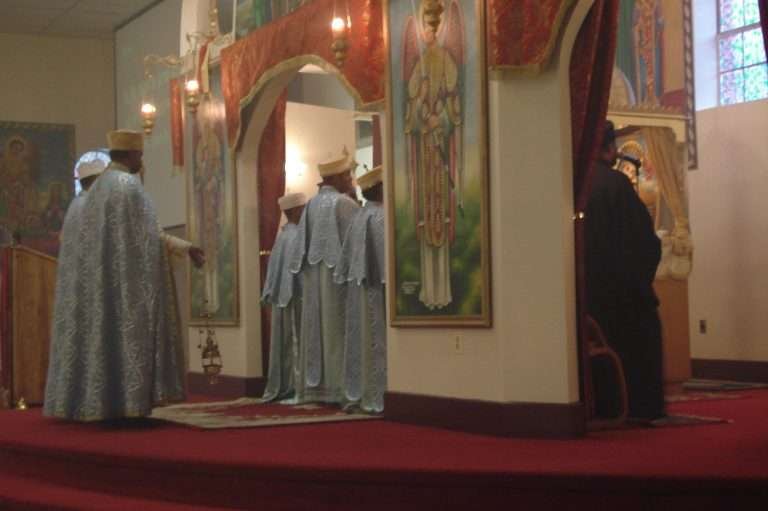
The Catholic Church is divided into various rites, including the Roman Rite, the Byzantine Rite, the Maronite Rite, and the Ethiopian Rite, among others. A rite is a liturgical, theological, and spiritual tradition within the Catholic Church. Each rite has its own distinct practices, rituals, and customs that are rooted in the cultural and historical context of the region where it is practiced.

The Roman Rite is the most widespread rite within the Catholic Church and is used by the majority of Catholics around the world. It is based on the Latin liturgical tradition and is used in the Western Church. The Byzantine Rite is used by Eastern Catholic churches that are in full communion with the Pope, but have their own distinctive liturgical, spiritual, and theological traditions.

The Maronite Rite is used by the Maronite Church, an Eastern Catholic church of the Byzantine tradition that is in full communion with the Pope. The Ethiopian Rite is used by the Ethiopian Catholic Church, an Eastern Catholic church of the Coptic tradition that is in full communion with the Pope. There are also other rites within the Catholic Church, including the Ambrosian Rite, the Mozarabic Rite, and the Chaldean Rite, among others.

Art and Architecture

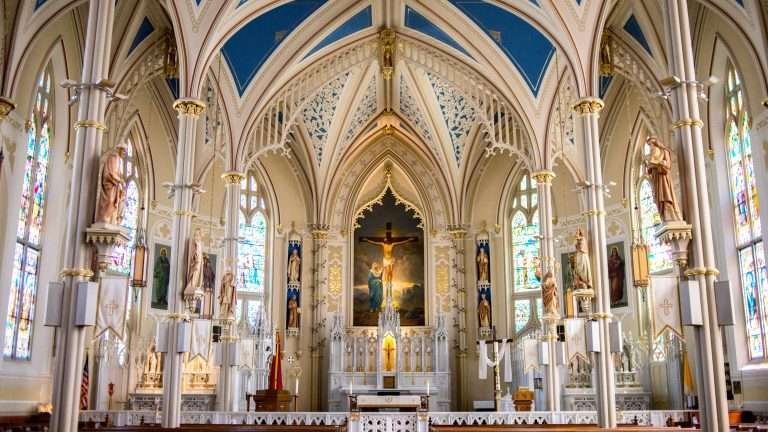
The Catholic Church has a rich tradition of art and architecture, with many famous works of art and buildings throughout the world. Some of the most famous examples of Catholic art and architecture include the Sistine Chapel, St. Peter’s Basilica, and Notre Dame Cathedral.

The Sistine Chapel is a famous chapel located in Vatican City, home to the Pope and the Roman Curia. It is famous for its Michelangelo frescoes, including the ceiling frescoes depicting the story of Genesis and the Last Judgment fresco on the altar wall. The Sistine Chapel is one of the most visited tourist attractions in Rome and is a UNESCO World Heritage site.

St. Peter’s Basilica is the largest and most important basilica in the Catholic Church, located in Vatican City. It is the burial site of St. Peter, one of Jesus’ apostles, and is one of the holiest sites in Christianity. The basilica is famous for its architectural and artistic treasures, including Michelangelo’s Pietร  and the massive dome designed by Michelangelo.

The Notre Dame Cathedral is a famous cathedral located in Paris, France. It is a masterpiece of Gothic architecture and is famous for its stained glass windows, flying buttresses, and famous bell towers. The Notre Dame Cathedral is a UNESCO World Heritage site and is one of the most visited tourist attractions in Paris.

These are just a few examples of the many famous works of art and buildings that can be found in the Catholic Church. The Church has a long and rich history of artistic and architectural achievement, with many other examples of beautiful and significant works of art and buildings throughout the world.

Charity

The Catholic Church has a long history of charitable works and is involved in various social justice and humanitarian efforts around the world. The Church teaches that serving the poor and marginalized is a central part of its mission, and it has a long tradition of charitable works, including caring for the sick, feeding the hungry, and providing education and other resources to those in need.

One example of the Church’s charitable work is the Catholic Relief Services (CRS), an international humanitarian agency that works to alleviate suffering, promote development, and support the poor and marginalized around the world. CRS works in over 100 countries, providing emergency assistance, long-term development programs, and advocacy for social justice.

Another example of the Church’s charitable work is Caritas, a federation of Catholic relief, development, and social service organizations that work to promote human dignity and combat poverty, injustice, and violence. Caritas operates in over 200 countries, providing emergency assistance, healthcare, education, and other resources to those in need.

These are just a few examples of the many charitable works carried out by the Catholic Church. The Church is committed to promoting social justice and serving the poor and marginalized, and it works to make a positive impact on the world through its charitable efforts.

Culture

The Catholic Church has contributed significantly to the development of Western culture, including the spread of education, science, and the arts. The Church has a long history of promoting education and learning, and it has played a central role in the development of the education systems in many countries. The Church has established universities, schools, and other educational institutions throughout the world, and many of these institutions are still in operation today.

The Church has also played a significant role in the advancement of science and technology. Many famous scientists, including Copernicus, Galileo, and Pascal, were Catholics, and their work has contributed significantly to our understanding of the natural world. The Church has supported scientific research and promoted the pursuit of knowledge, and it has encouraged dialogue between science and faith.

The Church has also had a significant impact on the arts, with many famous artists, writers, and musicians being Catholics or being inspired by their faith. The Church has a rich tradition of artistic expression, with a wide range of styles and forms, including music, painting, sculpture, and literature. The Church has also supported and promoted the arts, and many famous works of art, including Michelangelo’s Sistine Chapel frescoes and the Notre Dame Cathedral, are closely associated with the Church.

Overall, the Catholic Church has played a significant role in the development of Western culture and has contributed to many important advances in education, science, and the arts.

Hierarchy

The Catholic Church has a hierarchical structure, with the Pope at the top followed by cardinals, bishops, priests, and deacons. The Pope is the leader of the Catholic Church and serves as the spiritual leader for Catholics around the world.

Cardinals are high-ranking clergy who are responsible for advising the Pope and helping to govern the Church. They are appointed by the Pope and serve as his closest advisors. Cardinals are responsible for electing the Pope and for helping to govern the Church during a papal vacancy.

Bishops are clergy who are responsible for the spiritual care of a particular geographic region, called a diocese. Bishops are responsible for ordaining priests, overseeing the liturgical and pastoral life of the diocese, and representing the Church to the wider community.

Priests are clergy who are responsible for ministering to the spiritual needs of Catholics in a particular community, called a parish. Priests are responsible for celebrating Mass, administering the sacraments, and providing spiritual guidance to the faithful.

Deacons are clergy who are ordained to assist bishops and priests in their ministry. Deacons may perform some of the same duties as priests, including preaching and administering the sacraments, but they do not have the same ordination as priests and are not able to celebrate Mass.

This hierarchical structure is intended to provide spiritual guidance and support for Catholics around the world, and it is an important part of the organization and governance of the Catholic Church.

Canon Law

The Catholic Church has a complex system of canon law, which is the body of laws and regulations that govern the Church. Canon law is a system of laws and regulations that is specific to the Catholic Church and is separate from the civil laws of individual countries. Canon law covers a wide range of topics, including the organization and governance of the Church, the administration of the sacraments, the rights and responsibilities of clergy and laity, and the procedures for resolving disputes and handling offenses within the Church.

Canon law is based on the teachings of the Bible and the Church’s tradition, and it is intended to help the Church fulfill its mission of spreading the Gospel and promoting the spiritual well-being of Catholics around the world. Canon law is primarily concerned with the internal life of the Church, but it can also have an impact on the broader society, particularly in matters related to marriage, family life, and education.

Canon law is codified in a document called the Code of Canon Law, which was last revised in 1983. The Code of Canon Law is the primary source of canon law for the Latin Church, which is the largest rite within the Catholic Church and is followed by the majority of Catholics around the world. There are also separate codes of canon law for the Eastern Catholic churches, which have their own distinctive liturgical, spiritual, and theological traditions.

Canon law is an important part of the Catholic Church’s organization and governance, and it helps to ensure that the Church is able to fulfill its mission in a consistent and orderly way.

Music

The Catholic Church has a rich tradition of music, including the use of Gregorian chant and polyphonic music in liturgical celebrations. Gregorian chant is a form of monophonic, or single-line, music that originated in the Catholic Church in the medieval period. It is named after Pope St. Gregory the Great, who is credited with collecting and codifying the chant tradition. Gregorian chant is characterized by its simple, austere melody and its use of Latin texts. It is used in the liturgical celebrations of the Roman Rite, and it is considered an important part of the Church’s musical heritage.

Polyphonic music, also known as choral music, is a type of music that involves multiple independent melodic lines. It is a more complex and harmonically rich style of music than Gregorian chant, and it developed in the medieval period alongside the development of the Roman Rite. Polyphonic music was used in the liturgical celebrations of the Roman Rite, and it became an important part of the Church’s musical tradition. Some famous composers of polyphonic music include Giovanni Pierluigi da Palestrina, Tomรกs Luis de Victoria, and Johann Sebastian Bach.

The Catholic Church has a long tradition of using music in its liturgical celebrations, and it has contributed significantly to the development of Western music. Music plays an important role in the liturgical life of the Church and is considered an important means of expressing faith and devotion.

St. Adelaide of Burgundy – Saint of the Day

St. Adelaide of Burgundy – Saint of the Day

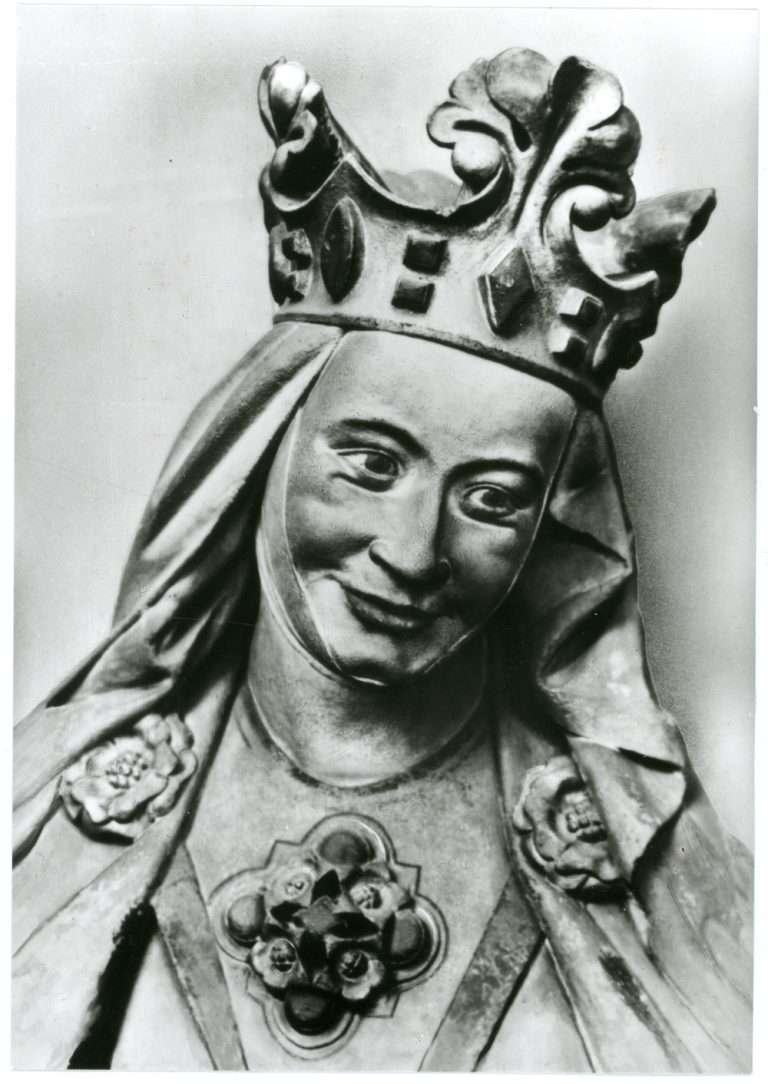
St. Adelaide of Burgundy was a French princess who lived in the 10th century. She was the daughter of Rudolf II, King of Burgundy, and Bertilla of Provence. After her father’s death, Adelaide’s mother married King Hugh of Italy, and Adelaide became the queen consort of Italy. She was known for her charitable works and her devotion to the Church, and she is remembered as a saint in the Roman Catholic and Eastern Orthodox traditions.

Adelaide was married several times throughout her life, but she is most famous for her marriage to Otto the Great, the Holy Roman Emperor. Otto and Adelaide had a strong marriage and were known for their mutual respect and love for one another. Together, they worked to spread Christianity throughout the Holy Roman Empire and to promote peace and prosperity in Europe.

After Otto’s death, Adelaide retired to a convent and devoted herself to a life of prayer and contemplation. She is remembered for her kindness, her generosity, and her devotion to the poor and the sick. She is the patron saint of brides, widows, and second marriages, and her feast day is December 16.

Prayer

O God, the exaltation of the lowly, who willed that blessed Adelaide should excel in the beauty of her charity and patience, grant, through her merits and intercession, that, carrying our cross each day, we may always persevere in love for you. Through our Lord Jesus Christ, your Son, who lives and reigns with you in the unity of the Holy Spirit, God, for ever and ever. Amen.

(from The Roman Missal: Common of Holy Men and Womenโ€”For a Holy Woman)

(from The Roman Missal: Common of Holy Men and Womenโ€”For Several Saints)

Saint profiles prepared by Brother Silas Henderson, S.D.S.

Consecration prayer to the Trinity by St Francis de Sales

0

I vow and consecrate to God
all that is in me:
my memory and my actions to God the Father;
my understanding and my words to God the Son;
my will and my thoughts to God the Holy Spirit.

I consecrate my heart, my body,
my tongue, my senses and all my sorrows
to the sacred Humanity of Jesus Christ,
who consented to be betrayed
into the hands of wicked men
and to suffer the torment of the Cross for me.