Sunday, April 5, 2026
9.2 C
London
Home Blog Page 49

The lie that the pro-life view is religious is a carefully targeted blow

0

I had an argument on Facebook about this issue when someone said, “keep your religion in your pants,” and it dawned on me: people actually believe pro-life views are primarily religious.

I had never thought of it that way before I saw that comment, so I decided to respond to it. After a few back and forths, the guy stopped commenting. It won’t be shocking to note that he got more positive reactions from people than I did since the post was on a pro-choice platform.

My argument was simple: Pro-life people believe they’re fighting for life; this is not a religious thing. There has never been anyone on earth who believed that fighting for a person’s fundamental rights to life is an exclusively religious thing or even came from a primarily religious place. It is commonsense.

I also argued that the denial by pro-choice rhetorics about the real motive behind all these is appalling and creates more division. They’re (pro-choice people) usually more closed-off, confrontational and aggressive, and more likely to get violent. All because of the pro-choice rhetoric, religious people are dictating to women how to care for their own bodies. By religious people, I mean “religious men.” 

And this is a shamefully low blow. It plays right into the whole “oppressive patriarchy” narrative and makes more women feel the need to be more aggressive in this “men v women” fight. But this is far from the truth. To show just how delusional these rhetorics can be, I went to the planned parenthood website, and here’s what I saw:

“People who oppose abortion often call themselves pro-life. However, the only life many of them are concerned with is the life of the fertilized egg, embryo, or fetus. They are much less concerned about the life of women who have unintended pregnancies or the welfare of children after they’re born. In fact, many people who call themselves “pro-life” support capital punishment (AKA the death penalty) and oppose child welfare legislation.”

After this totally false representation above, they go on below:

The black-and-white labels of “pro-life” and “pro-choice” pit people against each other as if they’re on two different teams. But we agree more than we disagree.

How anyone can slander and make peace simultaneously is beyond me.

The idea is to use lies to discredit the validity of the concern from the pro-life camp. I also despise any lies coming from any purported pro-life people too. Honesty is the only way forward.

So if we say “pro-life,” it does not mean “Your body, our choice,” or “save the baby, kill the mother,” or any other horrible interpretation anyone with an agenda will want to give it. But you can see how making it look like that will favor the pro-choice camp.

Pro-life people believe life begins at conception and are fighting to preserve the life of the mother and the child. Not one life at the expense of the other. We want both mother and child to be healthy; we want young people to value sex and take it seriously. We want responsibility for every sexual activity and a sane world where truth is sought and spread. This is not a religious fight but a social fight; a fight every sane human being will agree is worth it.

So, pro-choice people believe in a person’s fundamental right to choose what happens to them. We all agree on this point, and in this way, pro-life people are also pro-choice. But once there is no longer one life to consider but two: one who can choose (the woman) and another who is vulnerable they cannot choose (the baby), then we choose to defend their rights as we do the mother’s. The current fight is only collateral “damage” resulting from a more universal fight for everyone’s right to life: mothers and children alike.

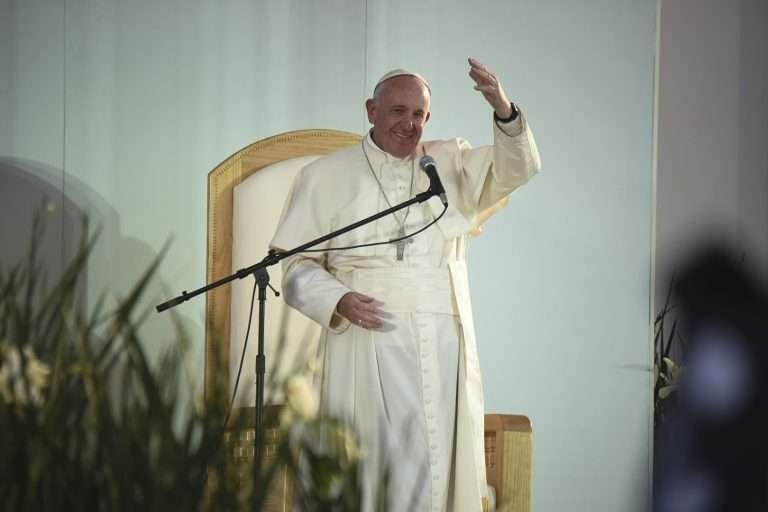
Pope Francis

Is it fair to eliminate a human life in order to solve a problem? The answer to which is: no. Second question: Is it fair to pay a sniper to solve a problem? No. Abortion is not a religious problem in the sense that just because I am Catholic I must not seek an abortion. It is a human problem. It is a problem of eliminating a human life. Period.

Pope Francis, 2019

[M]odern genetic science brings valuable confirmation. It has demonstrated that, from the first instant, there is established the program of what this living being will be: a human, this individual human with his characteristic aspects already well determined. Right from fertilization is begun the adventure of a human life, and each of its capacities requires time–a rather lengthy time–to find its place and to be in a position to act. The least that can be said is that present science, in its most evolved state, does not give any substantial support to those who defend abortion.

Declaration on Procured Abortion, Sacred Congregation for the Doctrine of the Faith
November 18, 1974

Read More

It would be “my body, my choice” if it were just your body, St John Paul II answers.

0

Pro-choice and pro-life rhetorics have one fundamental disagreement: when does life begin?

For the pro-life and the Catholic Church, human life begins from the moment of conception. But for the prochoice, they do not know when exactly human life begins for the individual but do not view a baby in the womb as a baby until they can live outside the mother’s womb.

This idea fuels the wrong notion that the rights to be protected is only that of the woman and not the baby’s. The idea is: since the baby depends on the mother in this manner, they are part of the woman’s body. So, she can choose to do whatever she likes with and to the baby until the child reaches fetal viability.

St. John Paul II quotes the Declaration on Procured Abortion in his encyclical Evangelium Vitae.

Some people try to justify abortion by claiming that the result of conception, at least up to a certain number of days, cannot yet be considered a personal human life. But in fact, “from the time that the ovum is fertilized, a life is begun which is neither that of the father nor the mother; it is rather the life of a new human being with his own growth. It would never be made human if it were not human already. This has always been clear, and … modern genetic science offers clear confirmation. It has demonstrated that from the first instant there is established the program of what this living being will be: a person, this individual person with his characteristic aspects already well determined. Right from fertilization the adventure of a human life begins, and each of its capacities requires time-a rather lengthy time-to find its place and to be in a position to act.”

Pro-abortionists believe that the child has no individuality or personality, that it’s basically as viable as an egg or a sperm. But this is also not true. The fetus is neither egg nor sperm but the very beginning of an individual organism, a human person with a unique soul. If you cannot pinpoint when a person becomes a person, doesn’t it make more sense not to nuke that fetus until you’re absolutely sure? 

“Even if the presence of a spiritual soul cannot be ascertained by empirical data, the results themselves of scientific research on the human embryo provide “a valuable indication for discerning by the use of reason a personal presence at the moment of the first appearance of a human life: how could a human individual not be a human person? “

Read More

St John Paul II’s Compelling Observation about the issue behind Abortion

0

I have long believed that whenever there’s a wildly held belief or trend, especially something as understandably sickening as abortion, three’s always a few things behind them.

Some people have pointed out the massive financial drive behind the recent movements: Abortion “rights” and Transgender issues. It is not hard to see how much people gain from the enormous support these have garnered over the years. But St John Paul II turned his eyes to something even more profound; he believed that at the root of the pro-abortion fight are two monsters: the degradation of the sexual act and the idea that children are an obstacle to success and happiness.

“[I]n very many other instances, such practices [abortion and contraception] are rooted in a hedonistic mentality unwilling to accept responsibility in matters of sexuality, and they imply a self-centered concept of freedom, which regards procreation as an obstacle to personal fulfillment. The life which could result from a sexual encounter thus becomes an enemy to be avoided at all costs, and abortion becomes the only possible decisive response to failed contraception.”

Evangelium Vitae

When our culture moves so much to personal gratification in all areas, it is not surprising that the sexual act becomes removed from its place in marriage. Like everything else, the current cultural trend is about self-seeking above everything else. This is also why people are willing to sacrifice everything meaningful, scientific, and true for people’s selfish feelings.

The Saintly Pope also gave a powerful solution to the problem. He said the only way to counter this issue is to promote an authentic view of sexuality.

“Sexuality, which enriches the whole person, “manifests its inmost meaning in leading the person to the gift of self in love.” The trivialization of sexuality is among the principal factors which have led to contempt for new life. Only a true love is able to protect life. There can be no avoiding the duty to offer, especially to adolescents and young adults, an authentic education in sexuality and in love, an education which involves training in chastity as a virtue which fosters personal maturity and makes one capable of respecting the “spousal” meaning of the body”

If we do not educate our young ones on basic truths about human sexuality, then people will keep finding meaning in pro-abortion rhetorics. Those false “meanings” are only found in each individual’s selfish feelings and not in truth or in God.

Read More

Can God ever refuse forgiveness?

0

Question: Is it possible for God to refuse to forgive a sinner?

Answer: Yes, God can. But No, He does not.

The answer is a little complicated because it depends on how you view it. If you mean whether God can say no to a sincerely repentant sinner, the answer is always no. No matter how many times the person has fallen and come back, God always says yes. 

Remember the parable of the Prodigal Son? The Father’s forgiveness wasn’t simply restorative but was elevational. The sinner wasn’t merely restored to their previous state but was elevated because of the sincerity of their repentance. The son never lost his place as a son in reality. He once reduced himself to a swine and fed with them. But when he rediscovered his identity as a son, he forgave himself and sought his father.

His father remained his father to him even while in exile; he remembers his own identity as son and said, “I shall arise and return to my father.” Luke 15.

Once he made an effort, the father did the rest by running toward him.

His father also ignored his plea, showing that his forgiveness is always available to the son whenever he forgives himself and seeks forgiveness from his father. In a way, his father’s forgiveness was a “constant.” The only movement necessary to gain this forgiveness was that of his son. 

This parable is deep and profound and illustrates how God himself forgives his children. The child must first forgive himself, humble himself, and seek out his father. Once that effort is made, the Father ALWAYS forgives. 

The Sacrifice of Jesus and the institution of the Sacraments are many ways God has made sure that his mercy is abundant to us, so in this way, God can NEVER turn away a penitent who seeks him.

However, when considered differently, it might look like God can reject a sinner. But in reality, it is the sinner who rejects the mercy of God. Either by refusing to forgive himself and seeing how much God loves him. Or by betraying the mercy of God by planning his sins around his mercy.

No matter the sin, forgive yourself enough to seek the mercy of God, and you can be absolutely sure that God will never turn away a sincerely repentant sinner.

Read More

The true power of the Mass when considered as an act of obedience

0

The whole sacrifice of the Mass has so many dimensions and parts, but they’re all like one Act. One Act of obedience to God. What we have been doing from the beginning is to join in the sacrifice of Jesus. That Sacrifice of Jesus which was a perfect counteraction to the initial disobedience of our First Parents, Adam and Eve. So, in a way, Jesus “overcorrected”, in an excellent way. He did not just “restore” us the way we were, but it elevated us higher than our initial condition. That’s why when we sing during Easter, we exclaim “Oh Felix Culpa” – “Oh Happy Fault, that brought us so great a redeemer”.

So when we participate actively, we are uniting our acts of obedience with that of Jesus’ perfect Act of Obedience. This is why when I see people who say the Mass is boring, you are not going there to do your will. So if you understand the place of obedience in these, you will appreciate how beautiful it is to participate in this sacrifice. And I believe it should be a bit difficult and not so easy. Sometimes it can be enjoyable if you understand the Mass. But sometimes, when you are going through some spiritual difficulties, doubts, for instance, you still unite that suffering to the suffering of Christ. So it is a beautiful thing.

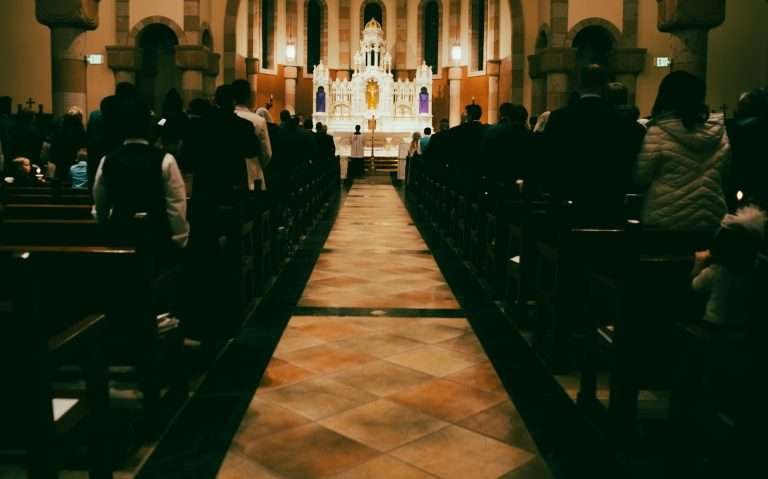
The last time I watched my Archbishop celebrate the Mass, it hit me: all these things we do at Mass: people uniting in the recitation of prayers, gestures; sitting, standing, kneeling. Reading the Bible, listening, clapping, singing, it’s like one giant Act of obedience with which we are uniting our wills with the will of the Son who does the will of the Father.

It is a beautiful sacrifice, and the presence of the Holy Spirit in the Church makes it powerful in the presence of God. We all bear the identity of Jesus, who has given us the Holy Spirit; that is why the Sacrifice of the Mass is so powerful. The celebrant is Jesus, and he is also the Sacrificial victim. How beautiful!

See more in the video:

The true power of Faith you probably didn’t know about

0

The Catechism of the Catholic Church we learned as kids says that:

“Faith is a supernatural gift of God which enables us to believe without doubting whatever God has revealed.”

It sounds simple enough, but faith is bigger than that. Faith is an “enabling” gift. A gift that opens our eyes to “see.”

It is more powerful than simply believing. It is about sight. Seeing the new world that Jesus is creating by his death and resurrection. Seeing the Church in her glory, on earth, and in heaven. Witnessing what many saints saw that made them break into song. It is a supernatural gift from God himself and a mark of predestination. So faith is an enabling gift from God that opens our eyes to see. So when we walk into the Church, we actually “see” Jesus seated in his glory in the Eucharist. This has nothing to do with having a temporary vision of Jesus, but more of a permanent “vision”, with the eyes of faith that makes you act and live as a person who sees Jesus in the world.
One time a prayer group was in the habit of praying loudly behind the Church; this was an issue for our Parish priest, who, after many attempts, failed to get them to stop.

One time I was speaking with them, and I asked them: “where is Jesus,” and after many attempts, one of them said, “In the Eucharist.” Then I asked them, “If you have faith, and you believe Jesus is in the Eucharist, then why do you genuflect poorly and hurry behind the Church to scream for Jesus to come down again?”. Everyone saw the ridiculousness and laughed.

It is like you believe but not strongly that your life does not change at all. But if your faith is strong, it will open a new layer with which to see the world clearly. It is like wearing an AR headset (this is a horrible example, BTW), enabling you to see “more” than your ordinary eyes can. The difference is: that AR doesn’t allow us to see “real” things, but faith does.
So, you change because you see Jesus in everyone and everything. It helps you treat people better, love more, and see Jesus in the weak and needy. Faith, hope, and charity are linked together to the point they cannot be separated from each other.

Watch the video below for more:

Reporter Megyn Kelly Says Pope Francis May Resign, is she right?

0

In a recent now-viral video, Megyn Kelly claims that Pope Francis will resign. 

She tweeted the following:

 “Unusual activity at the Vatican as reports break that Pope Francis may be about to resign. (And we are there!).”

So far, the video has been watched over 2 million times on Twitter. Take a look at the video here.

As of this writing, the video generated more than two million views.

Here’s what she said in the video:

“Hey guys, live here at the Vatican. We just happened to be here today on a family vacation when we just read that news broke about this pope – Pope Francis – possibly getting ready to resign.

“Unconfirmed, but I’ll tell you, inside the Vatican, moments ago, we saw a ton of cardinals, which our guy tells us is highly unusual. They’re not used to seeing that. That’s not normal.”

“Moments earlier, when we were in the Sistine Chapel, a priest or a bishop…came in and gave us a blessing. Also highly unusual. What was he doing there? Why was he doing that? What did he know? But there’s a lot of buzz going on right here. So news as we get it.”

Is her suspicion true?

There is no evidence to support her claims since the “unusual” activities she refers to are the beginning of the World Meeting of Families in Rome. This is why there seem to be a lot of cardinals in the Vatican.

“Megyn, you are weeks behind the first reports (including mine) on Joan’s Rome! Many cardinals and bishops actually work in Rome! Many others in town for World Meeting of Families. Many will be here for [the] June 29 feast of Sts. Peter and Paul!” Joan Lewis of EWTN.

@joansrome, Twitter

How can God punish someone forever?

0

Question:

How can a good God punish someone forever? I find it hard to believe.

Answer:

It depends on how you look at it. If you believe that hell is God continually punishing people and deriving pleasure from such, then I can see why it will be hard to accept. It is hard to accept since this isn’t reasonable since God is loving.

A better way to look at it is the damned do not want to be saved and do not want to receive help from God. While on earth, the person receives countless graces and inspirations to turn to God, but they refuse. At death, God respects their final wish to be “left alone.” They do not stop sinning even at death; since their souls are far from God’s light, all they can conceive for themselves is hopelessness and unjust anger towards God and creation.

So, they keep relighting the fires of their own hells with hatred and other countless sins they dwell in for all eternity. I have always believed that if a soul in hell were to lift their hearts to heaven and ask for mercy sincerely, God would respond. This is impossible, however, not because God wouldn’t forgive but because the souls in hell would never ask for mercy. 

A person who has spent most of his life loathing God’s presence and choosing self-love will no doubt hate to behold or be in God’s presence where everything is made clear. I feel like this has everything to do with love and truth. Dwelling in darkness makes the light unbearable to the eyes already accustomed to the “ease” of darkness and runs from the revelation and initial harshness of the light.

I recommend reading this article too.

And this piece from Catholic answers

How can God punish someone forever?

Read More

Did you know this month of June is dedicated to the Sacred Heart?

0

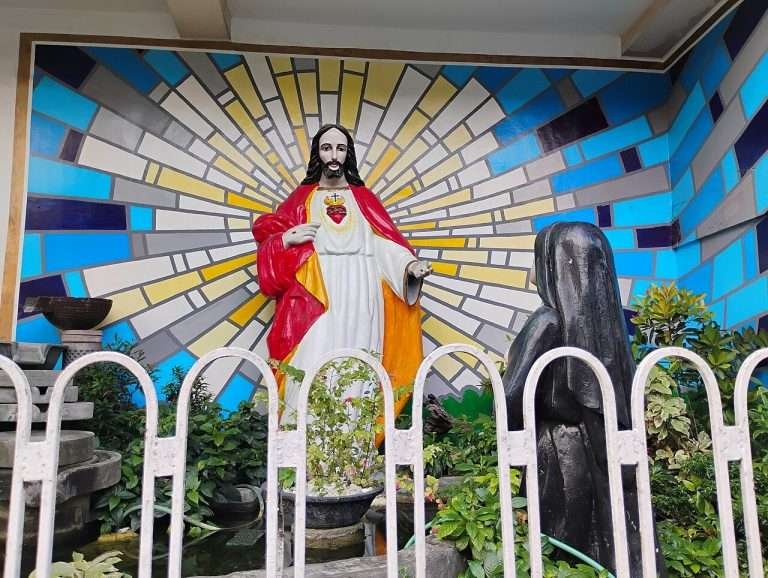
‘Today we begin the month dedicated to the Sacred Heart of Jesus, source of love and peace,’ Pope Francis, June 1.

On June 1, Pope Francis urged Catholics to look to the Sacred Heart of Jesus as a source of love and to bring Christ’s love “to the ends of the earth.”

“Open yourselves to this love and take it to the ends of the earth,’ witnessing to the goodness and mercy that flow from the Heart of Jesus.”

Speaking in St. Peter’s Square at the end of his Wednesday general audience, the pope said this message targetted young people, particularly those who will meet next weekend in Lednica, west-central Poland.

Tens of thousands of Catholic young people gather near Lake Lednica each June to pray and worship God together. The youth festival dates back to 1997 and has drawn up to 180,000 participants in past years.

The entire month of June in the Catholic Church is traditionally dedicated to the Sacred Heart of Jesus.

The feast of the Sacred Heart of Jesus falls on the Friday after the second Sunday after Pentecost in the Church’s calendar.

Many Catholics prepare for this feast by beginning a novena to the Sacred Heart on the feast of Corpus Christi, the week prior.

Devotion to Christ’s Sacred Heart became popularized when St. Margaret Mary Alacoque (1647-1690), a Visitation nun, had a personal revelation involving a series of visions of Christ as she prayed before the Blessed Sacrament.

During her visions, St. Margaret Mary learned ways to venerate the Sacred Heart of Christ.

These devotions include the concept of a holy hour on Thursdays, the creation of the feast of the Sacred Heart after Corpus Christi, and the reception of the Eucharist on the first Friday of every month.

Alacoque wrote: 

“He disclosed to me the marvels of his Love and the inexplicable secrets of his Sacred Heart.”

Pope Leo XIII promulgated the encyclical Annum sacrum, which consecrated the entire world to the Sacred Heart of Jesus, in 1899. He called the encyclical and the subsequent consecration the “great act” of his papacy.

Heard of the powerful First Saturday Devotion?

0

History

On the third visit of Our Lady in Fatima, on July 13, 1917, she revealed that she would come to ask for the consecration of Russia to her Immaculate Heart and the Communion of Reparation of the Five First Saturdays. So, she asked for the devotion in 1925 and the consecration in 1929.

On December 10, 1925, Sister Lucia received a vision of Our Blessed Mother appearing alongside a Boy standing over a luminous cloud. One hand resting on the Boy’s shoulder and the other holding a heart pierced with thorns around it.

The Boy said:

“Have pity on the Heart of your Most Holy Mother, which is covered with thorns with which ingrate men pierce it at every moment with no one to make an act of reparation to pull them out.”

Our Lady expressed her request saying:

“See, my daughter, My Heart surrounded with thorns with which ingrates pierce me at every moment with blasphemies and ingratitude. You, at least, make sure to console me and announce that all those who for five months, on the first Saturdays, go to Confession, receive Communion, say five decades of the Rosary, and keep me company for 15 minutes meditating on the mysteries of the Rosary, with the purpose of making reparation to Me, I promise to assist them at the hour of death with all the graces necessary for the salvation of their souls.”

— Our Lady, December 10, 1925

After a few days, Sister Lucia wrote a letter detailing the vision to Monsignor Manuel Pereira Lopes, her confessor.

The Devotion:

  1. Go to Confession (can be within 8 days)
  2. Receive Holy Communion
  3. Pray five decades of the Rosary
  4. Keep Our Lady company for 15 minutes while meditating on the mysteries of the Rosary.

The Promise

Our Lady promised to assist at the hour of death, with all the graces necessary for salvation, all those who practice the First Saturday devotion on five consecutive months, with the intention of making reparation to her Immaculate Heart.

You can join the Blue Army devotion in your parish, for a deeper commitment to this devotion. You can ask your catechist or priest about this group.

If you are in the United States, you can find out about the group here.

Read More