Wednesday, April 8, 2026
25.3 C
London
Home Blog Page 77

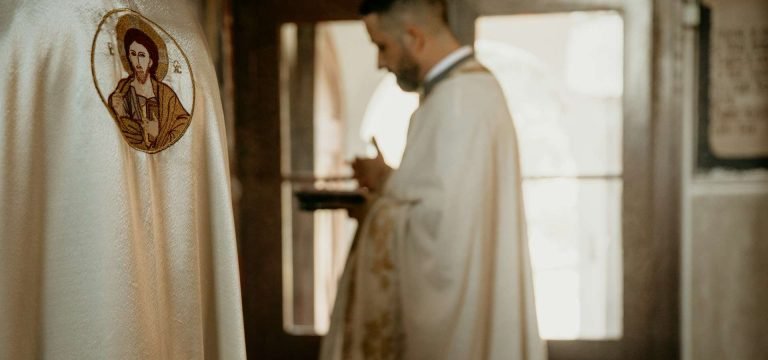
Why are priests not allowed to marry?

0

Why are priests not allowed to marry?

Reply:

Simply broken down, the ministerial Priesthood as it is now, shows forth the seriousness of the Call of Christ to repentance and salvation. If priests were allowed to marry, it would look ordinary and their families will definitely affect their ministry. Think how it would be when you are not sure why a priest is asking for financial aid, you wonder if it’s for family luxury or something.

Imagine how it would have been with those heroic priests who answer sick calls in the middle of the night, how possible would it have been if they were wrapped by a woman’s embrace? Imagine how it would have been transferring a Priest from parish to parish with his whole family. A priest has NO LAND, NO PROPERTY. He is a wayfarer, an itinerant preacher, this would have been rendered impossible by Marriage and family.

Besides, neither his ministry as a priest or as a husband/father would florish seeing that one requires the readiness to move, the other requires being in one place for a long time. The kids cannot keep registering in new schools every time you know. Then, imagine that because of the marriage in the priesthood, he gets to stay very long in a parish, imagine how this would affect his ministry. People without knowing it, get tired of a priest (especially when he is viewed as being at the same level as them in terms of holiness and worries). Those transfers make an old priest new and appreciated in a new place.

They are called to “.. Abandon Father, Mother, Homeland, wife, children, for the sake of Christ/the Kingdom of God”

Matthew 19:29.

Again

” For there are eunuchs who were born that way, and there are eunuchs who have been made eunuchs by others–and there are those who choose to live like eunuchs for the sake of the kingdom of heaven. The one who can accept this should accept it.” Matthew 19:12.

Priests go to the priesthood knowing they won’t be allowed marriage, and this is not bad. It would have been evil, if someone were told he’ll marry and later forced not to.

Finally, they are called to be like Christ; Alter Christus, and to act “in persona Christi Capitis”, in the Person of Christ the Head. So common sense justice demands that they emulate the footsteps of their master, even as the Apostles and the early Christian clergymen emulated him.

From a more theological perspective:

Priests aren’t negative symbols, they’re not “prohibited” from something, they are rather geared or given to another. It is not that their celibacy is a privation, its actually a marriage to Christ. They make the future present before our eyes by symbolizing the world we hope to live in when the Lord’s Kingdom comes. We know that through them the Lord nourishes and governs his Church. It is not simply a calling to reject marriage but to actually embrace it.

The priesthood is always a scandal; one of true love and heroic self-giving. Whenever people consider priesthood from a worldly standpoint, it seems to be a “running away” from the responsibility of marriage or a rejection of love. But how can a person possibly survive the priesthood if he isn’t a person of love and sacrifice? Who else makes the bond of marriage more “romantic” and more alive than the priest whose very life speaks volumes of the indissolubility of the sacraments of Order and matrimony. He is another Christ, from whom all the sacraments spring.

A priest is a symbol of Christ, of all the sacraments. It is a gift of love and a symbol of the future. The priesthood isn’t for the lazy or the selfish, it is for the courageous, for people of faith, of hope and of intense love.

Why are priests not allowed to marry?
Read more

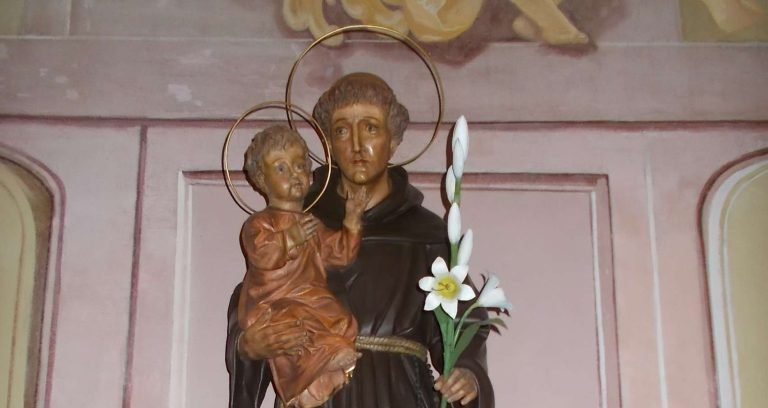
Why is Saint Anthony depicted holding the Child Jesus?

1

Why is Saint Anthony depicted holding the Child Jesus?

There are about three Saints popularly depicted holding the Child Jesus. The Blessed Virgin Mary, because she’s his mother. St Joseph, because he was his foster father and St Anthony for his unique mystical experience during his life.

The tradition of depicting him this way honors said mystical experience St Anthony had, which was witnessed by someone who offered him a place to stay for the night.

In the book The Life of Saint Anthony, one version of the story reads:

While traveling through Limoges a pious benefactor gave [St. Anthony] lodging, and … assigned him a room separated from the others. It was night when the owner, either by chance or on purpose, passed near the room of the Saint, and he observed that rays of unusual light came through the cracks of the door. He was curious to know the reason of that light, and approached the door very slowly. He saw Anthony kneeling, as if in ecstasy, and, full of wonder, admiring and caressing a loving child of rare beauty, who was tenderly embracing the Saint. Then the man knew, from the affectionate conversation, and from the superhuman beauty, that it was Jesus Christ who, under the appearance of a loving child, was pleased to visit His faithful servant and fill him with His ineffable consolation.

In other depictions of this encounter, the Child caressed the Saint full of love for him. This image probably points to the Saint’s childlike simplicity and faith. He was known for his humility, his moving sermons, and his burning love for the poor. He was so known throughout the Church as a holy man that he was canonized just months after death.

When he was at death’s door, the friars noticed he was looking at something attentively, and when they asked, he responded, “I see my Lord.” Shortly after this, he passed away at only 36 years old. According to some accounts, even though the friars kept his death secrets, little children immediately started running around the streets calling out, “The Saint is dead, Friar Anthony is dead.” And Church bells rang all over the place by themselves.

Read more

How to send a letter to the Pope

0

How to send a letter to the Pope

The Pope is the head of the Catholic Church and the universal pastor who has taken over from Peter in responding to the singular call by Christ to “take care of my flock.”

The Pope is usually busy, but this does not mean you cannot write to him; he has been known to respond to people personally, even calling them up on the phone! Pope Francis is down-to-earth, and from what I can see, it seems like he would have loved to talk to each person individually. Since this is not possible, it’s going to be a long shot since there’d likely be lots of mail screened out. So, what if you can be one of the lucky ones who got to speak to him? It might be worth the try, if you think so, here’s how to reach him:

The Mailing Address

The website for the US Embassy to the Holy See recommends that mail for Pope Francis be sent to this address:

His Holiness, Pope Francis

Apostolic Palace

00120 Vatican City

Remember that Italy or Rome are not necessary since Vatican City is a sovereign state; it is its own country.

However, since the Pope is living in the Casa Santa Martha instead of the papal apartments, you could modify by trying this:

His Holiness, Pope Francis

Saint Martha House

00120 Città del Vaticano, Vatican City

Another thing is to be sure to use the correct postage. If you are not sure what you need, do ask your local office. If you are sending from the United States, check out this online calculator to estimate the required postage.

The Letter

Just a tip on how to make a good impact; remember they get a lot of mails. So if you do not want yours to be thrown away, not that following these is any guarantee, but.

We think your letter needs to reflect three things: respect for the Holy Father, the office he occupies, personal honesty, and most importantly, brevity. We do not think the Pope will receive any long mails; if I were the one proofreading before sending to him, I might get tired halfway and not even consider delivering to him. So be nice, be honest and be brief.

Remember to leave a return address and your phone number. Maybe you will get a phone call! We know you might not, but it’s good to dream, no?

Good luck!

Read More

A Night prayer to Our Blessed Mother

9

A Night prayer to Our Blessed Mother

Night is falling dear Mother, long day is o’er;
Before thy image I am kneeling once more
To thank thee for keeping me safe this day,
To ask thee this night to keep evil away.

Many times have I fallen Mother dear;
Many graces neglected since last I knelt here;
Wilt thou not in pity, my own Mother Mild,
Ask Jesus to pardon the sins of thy child?

I am going to sleep now, day’s work is done;
Its hours and its moments have passed one by one.
God Who will judge me, has counted them all;
He has numbered each grace, He has counted each fall;

In His book they are written against the last day.
Oh! Mother Ask Jesus to wash them away.
For one drop of His Blood for sinners was spilt,
Is sufficient to cleanse the world of its guilt.

And if er’ the dawn I should draw my last breath;
The sleep I take be the long sleep of death;
Be near me Mother for dear Jesus’ sake.
When at eternity shore my soul shall awake.

Amen.

A Night prayer to Our Blessed Mother

——-

Mary’s prayer is revealed to us at the dawning of the fullness of time. Before the incarnation of the Son of God, and before the outpouring of the Holy Spirit, her prayer cooperates in a unique way with the Father’s plan of loving kindness: at the Annunciation, for Christ’s conception; at Pentecost, for the formation of the Church, his Body [see Luke 1:38; Acts 1:14]. In the faith of his humble handmaid, the Gift of God found the accep-tance he had awaited from the beginning of time.

CCC, 2617

Read More

Why do Catholics bow at the Name of Jesus?

0

Catholics and gestures, right? There are so many bodily gestures performed during the Eucharistic Celebration, and this one, like many other, have been practiced for centuries. Bowing at the mention of the Name of Jesus has not been as emphasized as it used to be but is still a big practice with many Catholics worldwide.

The origin has roots in the words of St Paul in his letter to the Philippian Church:

Therefore God has highly exalted him and bestowed on him the name which is above every name, that at the Name of Jesus every knee should bow, in heaven and on earth and under the earth, and every tongue confess that Jesus Christ is Lord, to the glory of God the Father. (Philippians 2:9-11)

Seeing how it might have been challenging to kneel every time Jesus’ Name is mentioned, Pope Gregory X found a more practical solution. When he wrote to the Order of Preachers in 1274, he shared with them his desire to make some gesture in reverence to the Name of Jesus.

In the book With God: A Book of Prayers and Reflections by Francis Xavier Lasance, a portion of the letter was printed:

Recently, during the Council held at Lyons, we deemed it a useful commendation to exhort the faithful to enter the house of God with humility and devotion and to conduct themselves while there in a becoming manner so as to merit the divine favor and at the same time give edification. We have also judged it proper to persuade the faithful to demonstrate more reverence for that Name above all names, the only Name in which we claim salvation — the Name of Jesus Christ, who has redeemed us from the bondage of sin. Consequently, in obedience to that apostolic precept, ‘In the Name of Jesus let every knee, be bent,’ we wish that at the pronouncing of that Name, chiefly at the Holy Sacrifice, everyone would bow his head in token that interiorly he bends the knee of his heart.

This gesture is not only to honor his Name but to submit our hearts in an act of love and reverence. The Dominicans accepted the Pope’s request and took it seriously. They became the foremost promoters of the Holy Name in the Church; they preached about it and formed societies, and placed altars in their churches that had been dedicated to Jesus’ Holy Name.

Did you know Church bells get “Baptized”

0

Did you know Church bells get “Baptized”

Bells have a significant place in the life of the Church, and for centuries, these have been the primary method for priests and religious in calling the people to prayer.

These were so important that a whole ceremony was developed to bless bells, and many called this a baptism.

The Catholic Encyclopedia gives a brief background to the ceremony.

This name has been given to the blessing of bells, at least in France, since the eleventh century. It is derived from the washing of the Bell with holy water by the bishop before he anoints it with the oil of the infirm without and with chrism within. A fuming censer is then placed under it. The bishop prays that these sacramentals of the Church may, at the sound of the Bell, put the demons to flight, protect from storms, and call the faithful to prayer.

The Church does not officially call it baptism, but this is a common way of describing the special ceremony used for many centuries. Even though the ceremony is not as extensive as before, bishops today still use holy water to bless a new bell.

Bells have deep sacramental power, and these ceremonies remind us of this. Anything the Church blesses for the sake of sanctifying the lives of her members and leading them to the sacraments is a sacramental. They are also an extension of the Sacraments and ultimately lead back to them.

These bells lead us to worship and prayer, calling us to the celebration of the Eucharist. When I was in a Monastery, the Bell was viewed as “God’s voice,” calling us to spend time in prayer with him.

During the solemn blessing of bells another purpose is uncovered: driving away evil spirits and protecting the faithful from storms.

Let the people’s faith and piety wax stronger whenever they hear its melodious peals. At its sound let all evil spirits be driven afarlet thunder and lightning, hail and storm be banished; let the power of your hand put down the evil powers of the air, causing them to tremble at the sound of this Bell, and to flee at the sight of the holy cross engraved thereon … when the peal of this Bell resounds in the clouds may a legion of angels stand watch over the assembly of your Church, the first-fruits of the faithful, and afford your ever-abiding protection to them in body and spirit.

So when you hear the bell toll in your parish, call these to mind and lift your heart to God.

Did you know Church bells get “Baptized”

Read More

Why do Catholics call it the Mass?

1

Why do Catholics call it the Mass?

Question:

What is the origin of the word “Mass” in the context of the Church?

Answer:

The name comes from the Latin word “Missa,” it is from the Latin mass ending “ite missa est” which translated to English means “Go, it is sent.” The “It” means the Church, you, and me. So, the Mass gets its name from the liturgical dismissal of the Eucharistic celebration.

Missa was used at the end of the liturgy of the word at the dismissal of the catechumens, and at the end of the Eucharistic celebration. It was around the 6th century that the term was applied to the entire liturgical celebration.

Aside from the possibly more straightforward cultural reasons why Mass became the name, but we focus on the more powerful theological meaning. 

In Matthew 28:19-20, The Great Commission, Jesus said:

Therefore go and make disciples of all nations, baptizing them in the name of the Father and of the Son and of the Holy Spirit, 20 and teaching them to obey everything I have commanded you. And surely I am with you always, to the very end of the age.”

This was the call for all Christians to go and spread the Gospel. After the transformational experience of receiving the life of Grace, we must go and spread the discovery abroad. Just like the disciples, when they discovered Jesus, they usually ran and told someone else. So, the call is for us to preach with our lives after we have experienced Jesus in the Eucharist. Those are not two different things, but basically, the former informs and is directly tied to the latter. So we can say the most crucial aspect of the Mass is the “Going” and spreading; living the Life of Jesus in the world and setting it on fire with his love!

Why do Catholics call it the Mass?

Read More

Prayer to St. Brigid for protection from evil

Prayer to St. Brigid for protection from evil

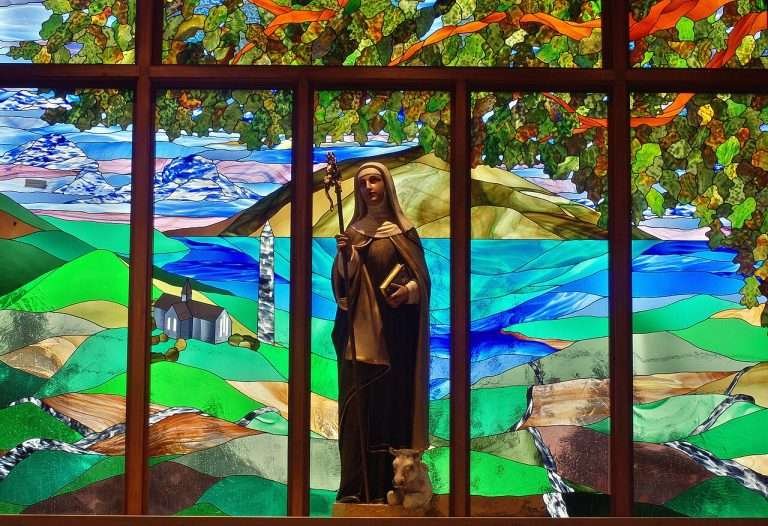
Next to St Patrick, St Brigid has a very special place in the hearts of the Irish people and is regarded as Patroness of Ireland. She lived in the 6th century and founded many monasteries throughout the Emerald Isle. She was so loved and highly regarded that the people nicknamed her the “Mary of Erin”.

Her intercession has brought about several miracles over the years.

Here is a prayer to ask her for protection from evil and all danger:

O Glorious St. Brigid, Mother of the Churches of Erin, patroness of our missionary race, wherever their lot may be cast, be thou our guide in the paths of virtue, protect us amid temptation, shield us from danger. Preserve to us the heritage of chastity and temperance; keep ever brightly burning on the altar of our hearts the sacred Fire of Faith, Charity, and Hope, that thus we may emulate the ancient piety of Ireland’s children, and the Church of Erin may shine with peerless glory as of old. Thou wert styled by our fathers “The Mary of Erin,” secure for us by thy prayers the all-powerful protection of the Blessed Virgin, that we may be numbered here among her most fervent clients, and may hereafter merit a place together with Thee and the countless Saints of Ireland, in the ranks of her triumphant children in Paradise. Amen.

Prayer to St. Brigid for protection from evil

Read More

What was God doing before he created the universe?

0

Question:

What was God doing before he created the universe?

Answer:

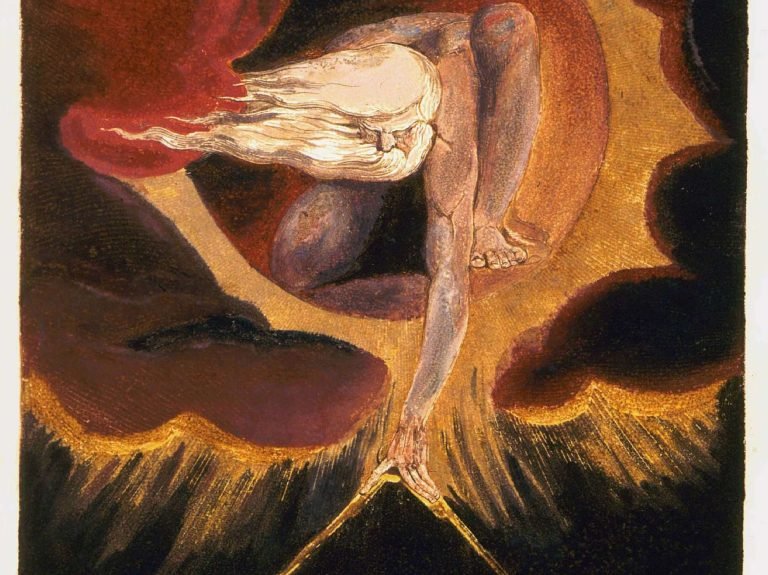
St Augustine had a very interesting response to this question in the 5th century. He says that before God made the world there was no time. It does not make sense to ask the question to begin with because before the creation of the world there was no time. Time was created by God when he made the universe, so there was no “before” or “after” before the world was made; the creation of the world included the first moment in time.

It can be difficult to understand time, but the simple view is to think of time as a measurement of change. God, who is unchangeable and and is in perfect state is so without the universe or anything outside of himself. So the image which most times prompt the question which is of a lonely God is flawed. God exists outside of time because he does not change just as the bible says:

“Every good endowment and every perfect gift is from above, coming down from the Father of lights with whom there is no variation or shadow due to change”


Jas. 1:17

“For I am the Lord, I do not change; Therefore you are not consumed, O sons of Jacob.” G

Malachi 3:6

Have you not known? Have you not heard? The Lord is the everlasting God, the Creator of the ends of the earth. He does not faint or grow weary; his understanding is unsearchable.

Isaiah 40:28

Read More

Is confession valid if I don’t remember how many times I committed a sin?

1

Is confession valid if I don’t remember how many times I committed a sin?

Full Question

Is confession valid if the penitent doesn’t remember how many times he committed a mortal sin?

Answer

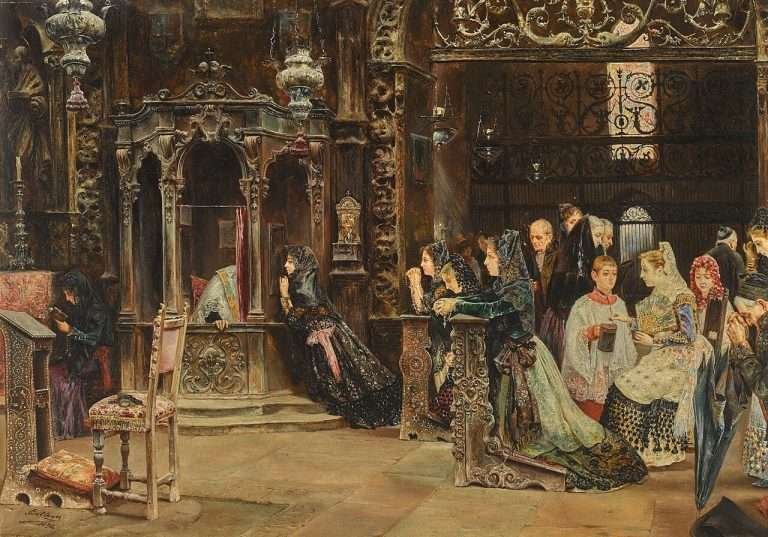
Yes, it is. The important thing is not just to remember the number of times but to be truly sorry for sins committed. There’s a need for sincere repentance and for the person to confess everything they remember. If the number cannot be remembered, what the priest needs is to get an estimation to know the state of things with you.

The Baltimore Catechism:

Q. 792. What should we do if we cannot remember the number of our sins?
A. If we cannot remember the number of our sins, we should tell the number as nearly as possible, and say how often we may have sinned in a day, a week, or a month, and how long the habit or practice has lasted.

Conditions for forgiveness

We believe that God does not forgive those who are insincere before Him, only those who meet these conditions are actually forgiven:

  • Recognition of the evil of one’s sin
  • Sincerely confessing them to the priest without wilfully withholding any detail.
  • Being truly sorry, which precludes, the clear intention to be better, to discard all instruments of sin one possesses, and to restore what one has damaged or unjustly taken.
  • To do penance and to struggle against such sins afterwards.

Those who kneel before God’s throne of mercy only to tell him lies, to “trick” forgiveness out of him only worsen their conditions, since, far from freeing them from sin, their bonds are actually made worse.

Is confession valid if I don’t remember how many times I committed a sin?

Read More