Wednesday, April 8, 2026
25.3 C
London
Home Blog Page 78

If you are living in habitual sin, Pope John Paul wants you to know this

0

If you are living in habitual sin, Pope John Paul wants you to know this. These words of St John Paul II is not a new Catholic teaching or anything; it is a reaffirmation of the Church’s thousand-year belief in forgiveness. This teaching can be summarized thus: If you are genuinely sorry and try to change your life. God will forgive you and keep forgiving you. However, if you choose to hold onto your sins, you cannot be forgiven. Because you do not want to forgive yourself enough to receive divine mercy.

In his 2002 Apostolic letter entitled Misericordia Dei, he writes:

“It is clear that penitents living in a habitual state of serious sin and who do not intend to change their situation cannot validly receive absolution” (#7(c)). 

The Church believes that for a person to receive absolution validly, the following conditions must be met:

Conditions:

  1. Contrition: meaning that one must be sorry for offending God who loves him. Not just about being afraid of hell, but remorse born out of love. Repentance born out of fear isn’t perfect but still suffices.
  2. Confession: the penitent confesses everything to the priest without willfully withholding any tiny detail. Once one is unwilling to confess appropriately, it indicates they’re not very sorry for their sins and cannot receive valid absolution.
  3. Satisfaction: after one has been forgiven, they have to make up for their sins. They have to do penance and restore all they have damaged by their sins. Get rid of all instruments of sins in their possessions and stay far away from anything tainted with corruption to avoid future temptations.

These conditions are necessary for receiving a sacramental pardon, but one could still see a confessor help them discern their hearts. If you have doubts about how you feel about your sins, an experienced confessor would be very helpful.

The Council of Trent defines contrition as: 

“sorrow of the soul and detestation for the sin committed, together with the resolution not to sin again” (#1451). 

There is perfect contrition motivated by a sincere love of God; the penitent feels sorry for offending God, who their soul loves deeply. Then there is imperfect contrition called “attrition,” which is motivated either by the ugliness of sin, fear of divine punishment, and eternal damnation, or both. 

Another type of sinner who isn’t part of the John Paul II category is the penitent who makes honest efforts, who try to free themselves from sin and everything related to it. This person sometimes slips into sin or other potentially sinful habits but keeps trying. 

So, on the one hand, you have someone who, for instance, lives in an adulterous union. They go to confession and return to their homes, where they live in sin. If they do not do something to free themselves from this situation, they cannot receive forgiveness.

Then on the other, a person who confesses anger or cursing. Then after a while, they find themselves overcome by sinful passion again and feel bad once more. 

In his Holy Thursday Letter to Priests in 2002, Pope John Paul II stated:

“Unless it appears otherwise, the priest must assume that, in confessing his or her sins, the penitent is genuinely sorry and is determined to make amends…. Clearly, when there is no sorrow and amendment, the confessor is obliged to tell the penitent that he or she is not yet ready for absolution. If absolution were given to those who actually say that they have no intention of making amends, the rite would become a mere fiction; indeed, it would look almost like magic, capable perhaps of creating the semblance of peace, but certainly not that deep peace of conscience which God’s embrace guarantees” . 

#8

If you are living in habitual sin, Pope John Paul wants you to know this
Read More

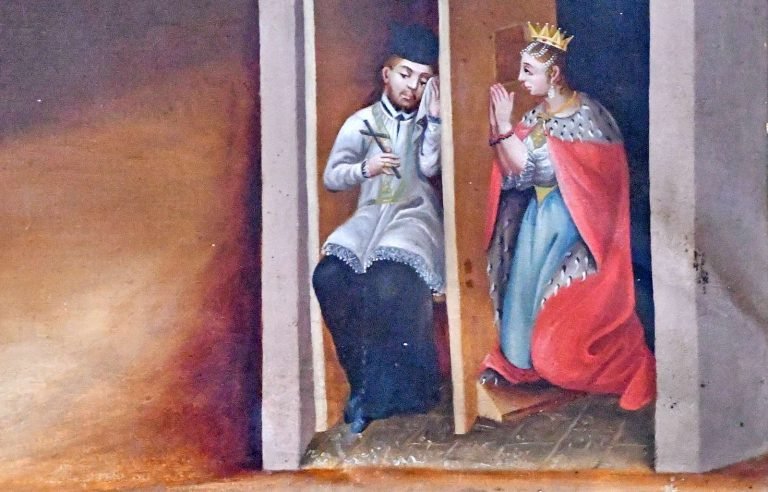
No, God does not forgive everyone who goes to confession, unless…

0

No, God does not forgive everyone who goes to confession, unless…

Confession, like every other sacrament, has specific conditions for valid reception attached to them. For instance, before receiving the Sacrament of Matrimony validly, it must be a free decision, and between one man and one woman, among other conditions. Let’s say someone coerces a woman into marriage. Will they have a valid sacramental union? NO, because the woman’s free choice is lacking.

What Confession is and what it’s not

Some Protestants and, sadly, even Catholics believe Confession is a place to go and free yourself from your sins from time to time only to be clean enough for more sins. They think that the very concept of Confession means that a habitual, unrepentant sinner has a shot at heaven even though he does not rid himself of his instruments of sin. He can keep living with an illicit sexual partner, can keep stealing, gossiping, and killing as long as he goes to Confession from time to time. But this is not what the Church teaches.

Confession is NOT where anyone goes to receive forgiveness for sin, any time they choose to, intending to return to their sins afterward. Abuse of sacrament is a sacrilege, one of which is maliciously lying to a priest at Confession, insincere repentance; having the intention of sinning again while confessing; having a willful attachment to sin; refusing to let go of sin even while confessing. However, this does not mean that if one struggles with sin, they are refusing; this only applies to the rare occasion where someone feels they can mock God in the confessional.

We believe that God does not forgive those who are insincere to Him; those are forgiven who:

1. Recognize the evil of sin.

2. Sincerely confess them to the priest without wilfully withholding any detail.

3. Are genuinely sorry, which precludes the clear intention to be better, discard all instruments of sin one possesses, and restore what one has damaged or unjustly taken.

4. Are willing to do penance and struggle to lead a holy life. “Struggle” is an essential word there. It does not mean everyone who repents will never be forgiven if they should fall; it means they utilize everything at their disposal to stay connected to God’s spiritual life. 

Among the penitent’s acts, contrition occupies the first place. Contrition is “sorrow of the soul and detestation for the sin committed, together with the resolution not to sin again.

CCC 1451

The Confession (or disclosure) of sins, even from a simply human point of view, frees us and facilitates our reconciliation with others. Through such an admission, man looks squarely at the sins he is guilty of, takes responsibility for them, and thereby opens himself again to God and to the communion of the Church in order to make a new future possible.

CCC 1455

Many sins wrong our neighbor. One must do what is possible in order to repair the harm (e.g., return stolen goods, restore the reputation of someone slandered, pay compensation for injuries). Simple justice requires as much.

CCC 1459

What about habitual sins?

Someone who finds himself trapped in the same sin but sincerely struggles to avoid both the act and occasions leading to them is ALWAYS forgiven whenever they sincerely ask for pardon. What is essential to God is not the number of sins but his sincerity of heart. God loves everyone, yes, even with all our sins. However, no liar stands a chance before God. 

He forgives those who beat their chests and says, “have mercy on me, a sinner.”God is ALWAYS merciful; he can never deny us forgiveness whenever we come to him. He called us even while we were still in our sins. Immediately we fell at the Garden of Eden. He promised, no, he SWORE to save us. All we need to do is accept this grace, this free gi he offers us for nothing. 

We accept it when we choose to come to him with sincere hearts, to repair our relationship with him, and renew our communion in his Church. God is UNABLE to say “No” to his Children. Just be sincere in your efforts, be honest with him; that’s all he wants from us.

No, God does not forgive everyone who goes to confession, unless…

Read More

Prayer to Heal a Relationship

0

Prayer to Heal a Relationship

Dear Lord, 

I offer you this prayer, to help me with my current relationship situation. Please take away all the pain and hurt in my heart. Fill it with love, joy, patience, and understanding. Bless me and my partner, so that we may never surrender to whatever challenges that come our way. Fill our hearts with love for each other, and may you make each one of us realize each other’s worth. Please touch the heart of my partner, fill it with much love for me.

Make our complicated relationship become uncomplicated. I seek your mercy and blessing that you may allow us to spend the rest of our lives with each other. Please make this feeling mutual for both of us. Lead us not into temptations.

Guide us wherever we go. Always put us in each other’s hearts and minds. Thank you, Lord, for hearing my prayer. I love you. Amen.

Prayer to Heal a Relationship

Also say:

Dear God,
I struggle in my relationship with ______. I need You to give me wisdom on how to love ____ well. You are my shield and defender. Show me how, when and where to erect boundaries in our relationship. I believe You are my healer and I trust You to guard my heart and mind.
I need Your specific directions on how to interact with ______.
I want to love _____ with a pure heart and a good conscience and a sincere faith. (1 Timothy 1:5)
I forgive ______ for hurting me and forgive me for ______. Help me to love ______ courageously. Fill me with Your truth and compel me to fearlessly tell the truth with love. Let Your perfect love cast out all of my fears related to our relationship.
I surrender what I think our relationship should be. Please transform it so that it honors You.
In Jesus, I pray. Amen

Read More

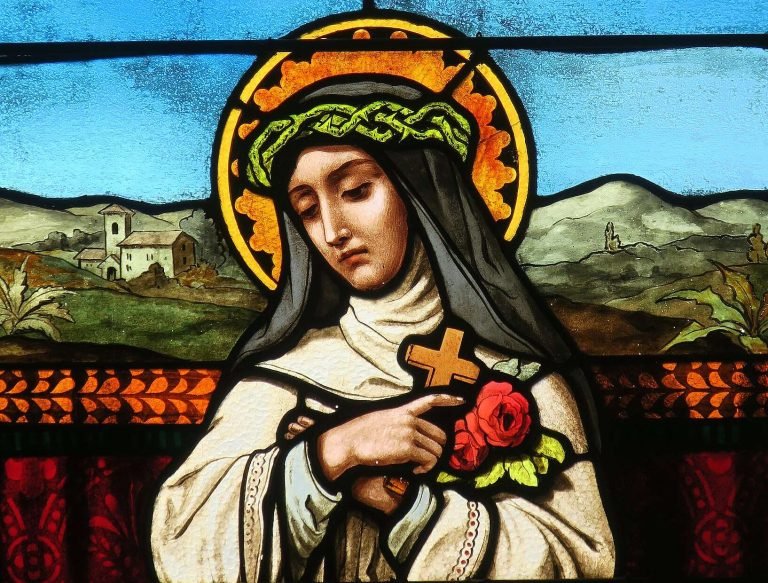
If you are an Exhausted mother say this prayer for strength to St Rose

If you are an Exhausted mother say this prayer for strength to St Rose

St Rose of Lima wanted to become a nun but faced great opposition from her parents. They wanted her to get married and have kids. Some records show they resorted to ridicule but she kept her peace and respected them. Here is a prayer to invoke this wonderful saint who, even when her parents did not treat her well, helped them when they were in dire financial needs by working all day and all night to help out the family.

So if you feel exhausted, ask God for more heavenly strength with these words:

St. Rose, devout Virgin, fragrant rose in the garden of God, sweetly blooming amid the thorns of distressing tribulation and severe mortification, white as snow in the immaculate innocence of your heart, glowing in the love of God that consumed you. 

Your devotedness to your parents was so great that you labored night and day to relieve their poverty, and most tenderly cared for them in their sickness.

Most grateful, most humble daughter, have pity on me and my children. Teach me, by conduct truly Christian, to deserve the warmhearted gratitude of my children. Teach my children to appreciate my love and the numerous sacrifices that I cheerfully make for their sake; teach them to repay the same by filial love and obedience, and chiefly by fervent prayers for me. 

Bless me and my entire family. May our hearts be intimately united even in adversity. Let us not place our happiness in temporal prosperity, but rather in the hope of a future eternal blessedness. 

Pray, likewise, O sainted patroness of America, for all Christian mothers in particular, that Christian life and sentiments may everywhere be awakened among them. May these sentiments spread far and wide, uniting all families into the one great family of God, in which Jesus Christ may live and rule with God the Father and the Holy Spirit. Amen

If you are an Exhausted mother say this prayer for strength to St Rose

Read More

Are Catholics cannibals for consuming Jesus’ flesh and blood?

0

Are Catholics cannibals for consuming Jesus’ flesh and blood?

Question:

Wouldn’t it be cannibalism to take these words of Jesus literally:

“unless you eat the flesh of the Son of Man and drink his blood, you have no life in you.”

John 6:53

Answer:

No. Firstly, Catholics do not receive the Body and Blood of Jesus under the form of flesh and blood; we receive the body and blood under the appearances of bread and wine. Cannibalism would be eating the flesh or organs of another human being, i.e., after killing said human, of course.

When we receive Jesus in communion, Jesus does not die. He is not torn apart, nor is he changed in any way. The person who receives him gains spiritual nourishment and is changed by this encounter.

Jesus was literal:

The truth is there is no need to argue about it much, but the thing to understand is: it was understood as literal when Jesus said it. This is why people were alarmed when they heard this; they got angry and wondered why Jesus would say these things. Many people left his fold and walked away.

“From that time on, many of His disciples turned back and no longer walked with Him.”

John 6:66

So if it were immoral in any sense for us to eat his flesh and drink his blood, this would be contrary to the holiness of Christ to issue the command. So no matter how you interpret this, even in the symbolic sense of the word, it would have still been wrong.

Walk with Jesus

Jesus wants to nourish our souls on the long and arduous journey to heaven. He wants to be with us to be the friend we need who not only walks with us in life but journeys with us in death. This is why we always pray and hope we have the grace of receiving Jesus when we are at death’s door. Once we have received the new life of Christ at baptism, his flesh will nourish us in this life until we can be united with him, where we share in his life of glory in the next.

Are Catholics cannibals for consuming Jesus’ flesh and blood?

Read More

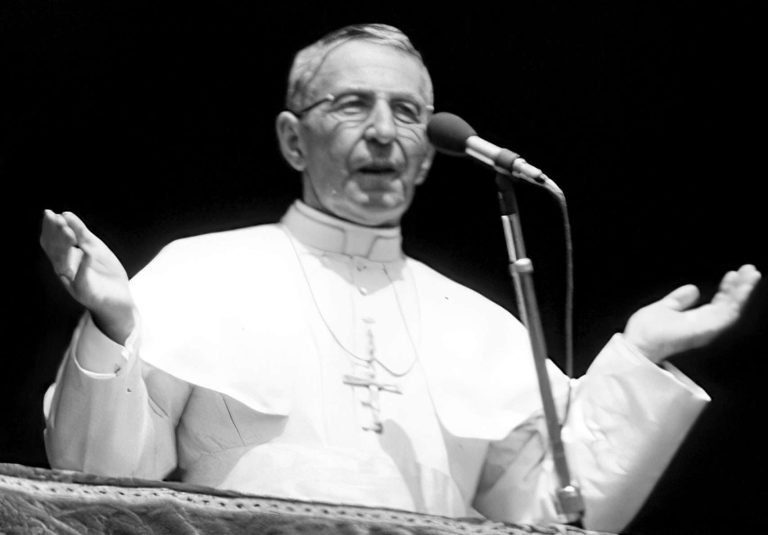
John Paul I who was Pope for 33 days could be beatified by 2022

0

John Paul I who was Pope for 33 days could be beatified by 2022. Albino Luciani, who has been dubbed “the smiling pope” might be beatified by Easter next year according to reports. He was a pope for only 33 days before suffering a fatal heart attack in 1978.

According to Il Messaggero all that remains now is the final approval of Pope Francis so a date can be set for the ceremony.

The cause for John Paul I’s beatification was opened in his home diocese of Belluno, Italy, in November 2003. And is based on the testimony of 188 witnesses, including Benedict XVI. After the usual process of investigations at the Vatican’s Congregation for the Causes of Saints, the Pope issued a decree recognizing that John Paul I had lived the theological virtues of faith, hope, and charity to a heroic degree and declared him venerable.

Interestingly, the miracle that paved the way for his beatification took place in the home diocese of Pope Francis. A girl was healed from encephalopathy, in 2011 in the Buenos Aires Diocese.

Bio

Luciani became a priest in 1935, appointed deputy director of the seminary in the Belluno diocese; he taught moral theology, canon law, and sacred art. Made vicar general of his diocese the following year and wrote Catechetica Bricoile (Catechism in Crumbs) to instruct the less-educated Catholics. 

In 1958 he was appointed bishop of Vittorio Veneto. Was made Archbishop of Venice in 1969, and then Cardinal in 1973. He was elected Pope on August 26th, 1978, and died about a month later.

John Paul I who was Pope for 33 days could be beatified by 2022

Read More

Are Mormons Christians?

0

Question:

I have heard them say this, but Are Mormons Christians?

Answer:

When you come close to Mormons and hear what they believe, you can see a vast difference from what other Christians believe, even if you are without any theological knowledge. But the problem isn’t just that their beliefs are different; it is because of something fundamental that unites every Christian believer: Jesus is fully God and fully man.

The Mormons do not believe that Jesus is the eternally Begotten Son of God, present with the Father from all eternity. We believe He is the Second Person of the Blessed Trinity. However, they hold that Jesus was not always divine, but he was once an “intelligence” such as us, who existed from eternity. They believe God chose him to become the “firstborn” among the intelligences and gave him the first spirit body.

Their leadership released the following statement in 1909: 

“The Father of Jesus is our Father also. . . . Jesus, however, is the firstborn among all the sons of God—the first begotten in the spirit, and the only begotten in the flesh. He is our elder brother, and we, like him, are in the image of God.”

Talking to Mary Magdalene when he rose from the dead, Jesus made an unusual statement: 

“Do not hold on to me, for I have not yet ascended to the Father. Go instead to my brothers and tell them, ‘I am ascending to my Father and your Father, to my God and your God.'”

John 20:17

He made this statement this way because Jesus’s sonship is not only hierarchically different but essentially different from our sonship with God. Jesus is Son of God by Nature, which means he is God too. We are children of God by Grace. 

But the Mormons believe Jesus is like us but only hierarchically higher, which reduces him from being the Eternal Creator of the universe to being merely one highly praised part of it. This belief is not a Christian one.

Are Mormons Christians?

Read More

Why do priests drop a piece of host into the chalice?

0

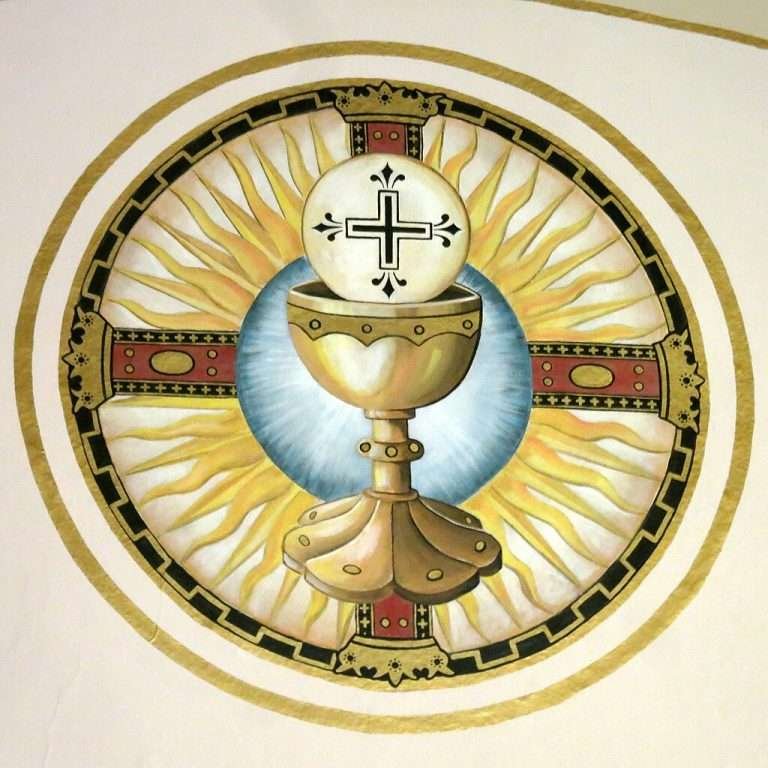
Why do priests drop a piece of host into the chalice? If you have been paying attention at Mass, you will notice the priest breaks a small piece of the consecrated host and drop it into the chalice. This ritual is one of those things that happens silently and quickly that a lot of people miss. 

Even though this might seem like an insignificant tradition, the truth is the symbolism behind this is quite profound.

Unity to the Hierarchy

Participation in the same Holy Sacrifice was regarded as a sign and pledge of ecclesiastical Communion; mutually to prove and maintain this, Popes and bishops sent to other bishops, or priests too, parts of Consecrated Hosts, which the recipients dropped into the chalice and consumed. This custom existed in Rome until about the ninth century. There the Pope on Sundays and feast-days sent to those priests who had charge of Divine service at the churches within the city, the Eucharist as a symbol of Communion with the ecclesiastical Head, and as a sign that they were empowered to celebrate. 

Nikolaus Gihr, The Holy Sacrifice of the Mass

This ritual reminds the celebrant they are united to the bishop and the Pope. This interpretation makes sense since the Pope personally approves the ordination of every bishop in the world, and the latter himself ordains his priest; Holy Order flows from the Head to every member of the Church. Everyone ordained in the Church receives Holy Orders from the Apostles, and the Pope is the Head.

The One Sacrifice

Also, the ritual signified the unity of the celebration of Mass. We believe the Mass is a reenactment of the one Sacrifice of Jesus on the cross. Jesus is not dying, again and again, each time we celebrate Mass. However, the Eucharist is mystical participation in that same Sacrifice that occurred at Calvary.

We believe that God is above time and space. He can apply the merits of the Sacrifice of Jesus before and after its historical occurrence. 

Formerly the usage was somewhat different. As the Hosts were much larger, one of these three parts was subdivided into several particles and used differently, that is, distributed to those present, or sent to the absent, or put into the chalice at the next sacrificial celebration… A particle previously consecrated was preserved and united to the Precious Blood at the following Sacrifice to represent, in all probability, the continual succession of the Sacrifice, as well as the unity of the last with the present celebration.

Nikolaus Gihr, The Holy Sacrifice of the Mass

Thanksgiving

This was the reason many believed that for a few centuries, the practice was to put two pieces in the chalice instead of one. One from the pope/bishop and another from a previous celebration.

This ritual also points to the unity of the body and blood of Jesus in the host because both host and wine contain the whole presence of Jesus after consecration: body, blood, soul, and divinity. 

The Mass manifests years of witnessing by the faithful bride of Christ, the Church. Each participant should remember to participate in:

“giving thanks that you have held us worthy to be in your presence and minister to you.

Why do priests drop a piece of host into the chalice?

Read More

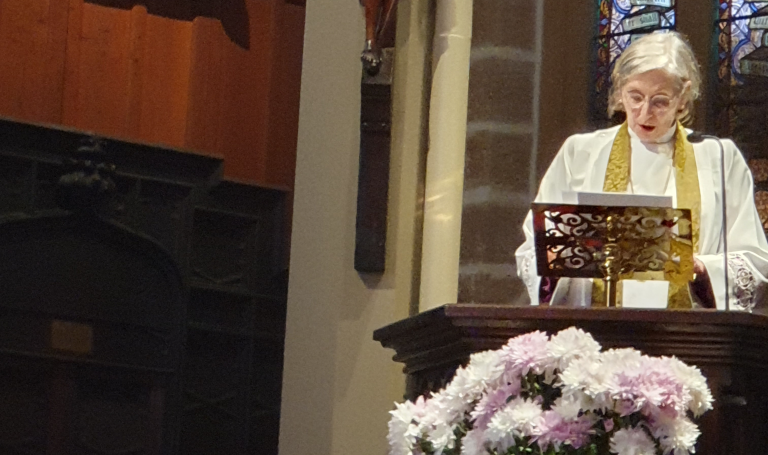
Can a Woman preach at Mass?

0

Can a Woman preach at Mass? The Catholic Church is clear on this matter.

The Code of Canon Law states:

“Among the forms of preaching, the homily, which is part of the liturgy itself and is reserved to a priest or deacon, is pre-eminent” (No. 767).

Also, the General Instruction of the Roman Missal reaffirms:

“The homily should ordinarily be given by the priest celebrant himself or be entrusted by him to a concelebrating Priest, or from time to time and, if appropriate, to the deacon, but never to a layperson” (No. 66)

The Church generally wants priests to shepherd their flocks. The homily is an essential aspect of the Mass.

However, nothing prevents a well-trained lay-faithful man or woman from preaching in other Church settings: Parish missions, lay-led Communion services, other prayer services. We are called to preach the word of God and can share in such situations in the absence of a priest.

The USCCB says:

Preaching the Word of God is among the principal duties of those who have received the sacrament of orders (cc. 762-764). The lay faithful can be called to cooperate in the exercise of the Ministry of the Word (c. 759). In accord with canon 766, the National Conference of Catholic Bishops hereby decrees that the lay faithful may be permitted to exercise this ministry in churches and oratories, with due regard for the following provisions: If necessity requires it in certain circumstances or it seems useful in particular cases, the diocesan bishop can admit lay faithful to preach, to offer spiritual conferences or give instructions in churches, oratories or other sacred places within his diocese, when he judges it to be to the spiritual advantage of the faithful.

In order to assist the diocesan bishop in making an appropriate pastoral decision (Interdicasterial Instruction, Ecclesiae de Mysterio, Article 2 §3), the following circumstances and cases are illustrative: the absence or shortage of clergy, particular language requirements, or the demonstrated expertise or experience of the lay faithful concerned.

The lay faithful who are to be admitted to preach in a church or oratory must be orthodox in faith, and well-qualified, both by the witness of their lives as Christians and by a preparation for preaching appropriate to the circumstances. The diocesan bishop will determine the appropriate situations in accord with canon 772, §1. In providing for preaching by the lay faithful the diocesan bishop may never dispense from the norm which reserves the homily to the sacred ministers (c. 767, §1; cfr. Pontifical Commission for the Authentic Interpretation of the Code of Canon Law, 26 May 1987, in AAS 79 [1987], 1249). Preaching by the lay faithful may not take place within the Celebration of the Eucharist at the moment reserved for the homily.

Can a Woman preach at Mass?

Read More

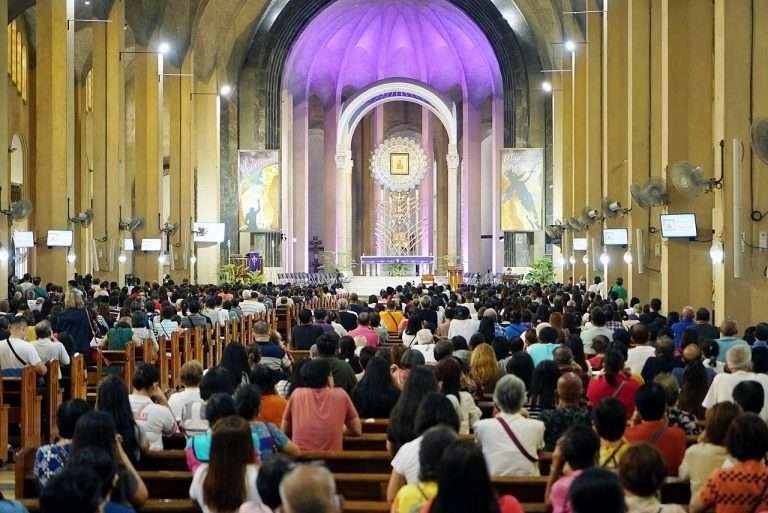
7 Tips to Help You Stay Focused at Mass

1

7 Tips to Help You Stay Focused at Mass is similar to our previous article 11 Great Ways To Prepare For Mass. Read both for a more complete guide on the subject.

The Catholic Church has always understood prayer to be a battle:

Prayer is both a gift of grace and a determined response on our part. It always presupposes effort. The great figures of prayer of the Old Covenant before Christ, as well as the Mother of God, the saints, and he himself, all teach us this: prayer is a battle. Against whom? Against ourselves and against the wiles of the tempter who does all he can to turn man away from prayer, away from union with God. We pray as we live because we live as we pray. If we do not want to act habitually according to the Spirit of Christ, neither can we pray habitually in his name. The “spiritual battle” of the Christian’s new life is inseparable from the battle of prayer.

CCC 2725

A Struggle:

There is a constant effort from hell to keep us from prayer. The good news is, we do not need to offer what we think is “perfect” prayer free of every distraction that does not exist. Perfect prayer is a prayer prayed by God to God. That may sound weird but think about it, the Holy Spirit in our heart helps us pray, and the most powerful prayer we can offer to God is joining at Mass. The Holy Mass is possible because of Christ’s power acting through the priest. Without union with God, praying to God would have been more challenging and less perfect. Therefore now we rejoice that whenever we offer Mass, God sees his own Son in our Community and hears us.

But just because it is humanly impossible to achieve perfect focus at Mass does not mean we cannot come as close as is humanly possible.

Here are 7 Tips to Help You Stay Focused at Mass

1. Quiet your mind on the way to Mass:

Turn off any form of mundane music or talk show on the way to Mass. If you have anything more spiritual, like the music of John Michael Talbot, you can listen to this. If you do not have any music rich in Catholic theology, then meditate on the meaning of Mass. Gather your heart so you can enter that space in your heart where you have more control of your thoughts.

2. Get to Mass early:

Remember going early to Mass does not mean going before the Sign of the Cross. I recommend arriving at least 10 minutes before the procession. The procession is the beginning of the Mass, so arrive minutes before to collect your thoughts more. Say a few preparatory prayers, or call on the help of our Mother Mary, who is arguably the only human to offer perfect prayer to God while on earth. Remind yourself that now you are in the presence of God. Meditate on his glory as right now you are covered in his light and powerful presence. Let this fill you with humility, remorse for sin, and joy for his abundant gift of forgiveness. Most importantly, prepare to receive him in the Eucharist, be thrilled, and let your heart move with joy for this. Or with sorry for the sin causing you to skip communion for that day. 

3. Sit in front:

Sit as close to the altar as possible so you can participate more fully. You can hear the priest better and meditate on the gestures and rituals of the Mass. Sitting too far off the back is okay but should not be your first choice if you come early. Remember also that sitting in front limits distractions.

4. Prayer posture:

When you pray, remember that your posture matters and can help your mind focus. Keeping your hands folded is a good practice and can be a way to teach your kids the beauty and seriousness of the Mass.

5. Participate fully:

Sing heartily, follow the gestures; they have deep spiritual meanings. Say the words with faith, and rejoice while saying the creed that you are privileged to have such faith for whom many have given their lives. Remember the struggles of the ages that prompted the writing of the Nicene Creed. I usually think of that, which fills my heart with joy and gratitude for such a gift.

6. Listen with your whole being:

Pay attention to every word, listen to the readings and pay attention during the sermon too. That is a critical way to have something of a take-home after Mass. If you are blessed to have a particularly outstanding homilist, you can take home a lot; if not, learn anything new.

7. Ask your Guardian Angel for help:

Remember that your Angel is participating at Mass with you, and he is crushing it! Ask him for help in achieving better concentration while praying. Remember that you are supposed to be his responsibility and trust he will help you.

Above are the 7 Tips to Help You Stay Focused at Mass. Have you tried any? Add yours in the comments. Remain blessed!

Read More